September 16, 2010
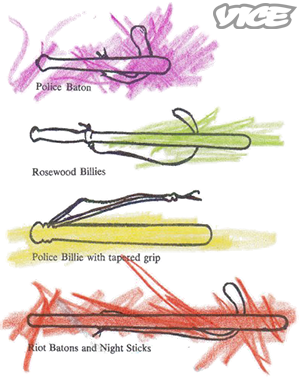
The Anarchist Cookbook, first published in 1971, is a book that contains instructions for the manufacture of explosives, rudimentary telecommunications hacking devices, and other quasi-legal and contraband items.
It was written by William Powell to protest United States involvement in the Vietnam War. Since writing the book, Powell has converted to Anglican Christianity and attempted to have the book removed from circulation.
Posted in Language, Politics, War |
Leave a Comment »
September 16, 2010

Esperanto [es-puh-rahn-toh] is the most widely spoken constructed language. Its name derives from Doktoro Esperanto, the pseudonym under which L. L. Zamenhof published the first book detailing Esperanto, the Unua Libro, in 1887. The word esperanto means ‘one who hopes’ in the language itself. Zamenhof’s goal was to create an easy to learn and politically neutral language that would serve as a universal second language to foster peace and international understanding.
Esperanto has approximately one thousand native speakers, i.e. people who learned Esperanto as one of their native languages from their parents. There is controversy over the number of people who are fluent in Esperanto. Estimates range from 10,000 to as high as two million. The users are spread in about 115 countries. Although no country has adopted the language officially, Esperanto was officially recognized by UNESCO in 1954, and is also the language of instruction in one university, the Akademio Internacia de la Sciencoj in San Marino.
Posted in Language, World |
1 Comment »
September 15, 2010

Smegma [smeg-muh] (Greek for ‘soap’), sometimes described as a ‘cheesy substance,’ is a combination of exfoliated (shed) epithelial cells, transudated skin oils, and moisture. It occurs in both female and male mammalian genitalia. In human females, it collects around the clitoris and in the folds of the labia minora.
In human males, smegma is produced and can collect under the foreskin. In healthy animals, smegma helps clean and lubricate the genitals. In veterinary medicine, analysis of this smegma is sometimes used for detection of urogenital tract pathogens.
Posted in Health, Language |
Leave a Comment »
September 14, 2010

In psychology, the term jamais vu (from the French, meaning ‘never seen’) is used to describe any familiar situation which is not recognized by the observer. Often described as the opposite of déjà vu, jamais vu involves a sense of eeriness and the observer’s impression of seeing the situation for the first time, despite rationally knowing that he or she has been in the situation before. It is linked to the linguistic concept of semantic satiation (a cognitive phenomenon in which repetition causes a word or phrase to temporarily lose meaning for the listener).
Posted in Language, Science |
Leave a Comment »
September 13, 2010
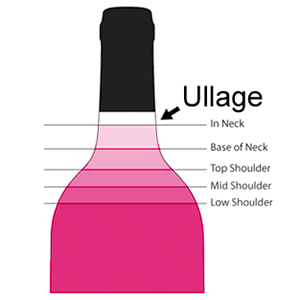
Ullage [uhl-ij] refers to the unfilled space in a container of liquid. In wine making, ullage also refers to the process of evaporation that creates a headspace itself or it can be used as a past tense verb to describe a wine barrel or bottle that has gone through the evaporation process (to be ullaged, etc). The headspace of air is a mixture mostly of alcohol and water vapors with carbon dioxide that is a by-product of the fermentation process.
In containers that are not completely air-tight (such as an oak wine barrel or a cork-stoppered wine bottle), oxygen can also seep into this space. While some oxygen is beneficial to the aging process of wine, excessive amounts can lead to oxidation and other various wine faults. This is why wine in the barrels is regularly ‘topped up’ and refilled to the top with wine in order to minimize the head space. In the bottle, the ullage or ‘fill level’of the wine can be an important indicator of the kind of care and storage conditions that the wine was kept in. After-market resellers and wine auction houses will often inspect the ullage levels of older vintages to determine the potential quality and value of wine.
Posted in Food, Language |
Leave a Comment »
September 13, 2010

Shin-Lamedh-Mem are the three letter root of many Semitic words, including shalom and salām, which mean ‘peace’ (among other things) in Hebrew and Arabic respectively. The root itself translates as ‘whole, safe, intact.’
Posted in Language, World |
Leave a Comment »
September 13, 2010

A stalking horse is a person who acts on the behalf of an anonymous third party. The expression is generally used in politics and business. The term originally derived from the practice of hunting wildfowl, which flee immediately on the approach of humans, but tolerate the close presence of animals such as horses and cattle. Hunters slowly approach their quarry by walking alongside their horses, keeping out of sight until the flock is within firing range. Animals or devices used for this purpose are called stalking horses.
The phenomenon occurs particularly in politics, where a junior politician acts as the stalking horse to promote the interests of a senior politician who remains unseen in case the actions would damage him or her but nevertheless wants to provoke a debate or challenge to a party colleague. In some cases stalking horses are not working for a particular individual but may wish to provoke a response that leads others to join in. In politics, the truth about the relationship between an individual stalking horse and a candidate may never be known, as both sides may claim that the (alleged) stalking horse acted without the agreement of anyone else.
Posted in Language, Money, Politics |
Leave a Comment »
September 12, 2010

Bebop [bee-bop] or bop is a style of jazz characterized by fast tempo, instrumental virtuosity and improvisation based on the combination of harmonic structure and melody. It was developed in the early and mid-1940s. It first surfaced in musicians’ argot some time during the first two years of American involvement in WWII. This style of jazz ultimately became synonymous with modern jazz, as either category reached a certain final maturity in the 1960s.
read more »
Posted in Art, Language |
Leave a Comment »
September 10, 2010

The Streisand effect is a phenomenon in which an attempt to censor or remove a piece of information has the unintended consequence of causing the information to be publicized widely and to a greater extent than would have occurred if no censorship had been attempted. It is named after American entertainer Barbra Streisand, following a 2003 incident in which her attempts to suppress photographs of her residence inadvertently generated further publicity.
Posted in Humor, Language |
Leave a Comment »
September 10, 2010

A rōnin [roh-nin] was a samurai with no lord or master during the feudal period (1185–1868) of Japan. A samurai became masterless from the death or fall of his master, or after the loss of his master’s favor or privilege. The word rōnin literally means ‘wave man.’ The term originally referred to a serf who had fled or deserted his master’s land, and later came to be used for a samurai who had lost his master. According to the Bushido Shoshinshu (the Code of the Samurai), a samurai was supposed to commit oibara seppuku (also ‘hara kiri’ – ritual suicide) upon the loss of his master. One who chose not to honor the code was ‘on his own’ and was meant to suffer great shame.
The term rōnin is also used in modern Japan for students who fail the entrance examination for the high school or university of their choice, and then decide to spend the next year studying to retake the exam.
Posted in Language, World |
Leave a Comment »
September 3, 2010

The albedo [al-bee-doh] of an object is a measure of how strongly it reflects light from light sources such as the Sun. It is therefore a more specific form of the term reflectivity. Albedo is an important concept in climatology and astronomy, as well as in computer graphics.
Posted in Language, Science |
Leave a Comment »
August 29, 2010

Mammon [mam-uhn] is a term, derived from the Christian Bible, used to describe material wealth or greed, most often personified as a deity.
Posted in Language, Money, Philosophy |
Leave a Comment »