November 12, 2014
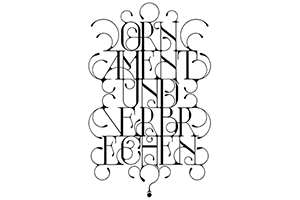

Form follows function, a principle associated with modernist architecture and industrial design in the 20th century, holds that the shape of a building or object should be primarily based upon its intended purpose, not aesthetics or tradition. The authorship of the phrase is often, though wrongly, ascribed to the American sculptor Horatio Greenough, whose thinking to a large extent predates the later functionalist approach to architecture. Greenough’s writings were for a long time largely forgotten, and were rediscovered only in the 1930s; in 1947 a selection of his essays was published under the title ‘Form and Function: Remarks on Art by Horatio Greenough.’
American architect, Louis Sullivan, Greenough’s much younger compatriot, who admired rationalist thinkers like Greenough, Thoreau, Emerson, Whitman, and Melville, coined the phrase in his article ‘The Tall Office Building Artistically Considered’ in 1896 (some fifty years after Greenough’s death), though Sullivan later attributed the core idea to Marcus Vitruvius Pollio the Roman architect, engineer and author who first asserted in his book ‘De architectura’ that a structure must exhibit the three qualities of ‘firmitas, utilitas, venustas’ – that is, it must be solid, useful, beautiful. Here Sullivan actually said ‘form ever follows function,’ but the simpler (and less emphatic) phrase is the one usually remembered.
read more »
Posted in Art, Language, Technology |
1 Comment »
November 12, 2014
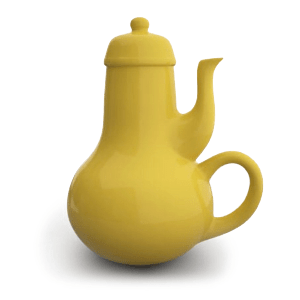
An affordance is something that provides the opportunity to perform an action. It is often described as a relationship between an object (or environment) and an organism. For example, a knob affords twisting, and perhaps pushing, while a cord affords pulling. As a relation, an affordance exhibits the possibility of some action, and is not a property of either an organism or its environment alone.
Different definitions of the term have developed. The original definition described all actions that are physically possible, but was later limited to only those an actor is aware of. The term has further evolved for use in the context of human–computer interaction (HCI) to indicate the easy discoverability of possible actions. The concept has application in several fields: perceptual, cognitive, and environmental psychology, industrial design, instructional design, science, technology and society (STS), and artificial intelligence.
read more »
Posted in Language, Science, Technology |
Leave a Comment »
November 11, 2014
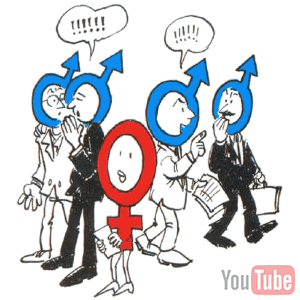
The Master suppression techniques (also known as domination techniques), articulated in 1945 by Norwegian psychologist and philosopher Ingjald Nissen, is an outline of ways to indirectly suppress and humiliate opponents. In the late 1970s the framework was popularized by Norwegian social psychologist Berit Ås, who reduced Nissen’s original nine means to five, and claimed this was a technique mostly used in the workplace by men against women. Master suppression techniques are defined as strategies of social manipulation by which a dominant group maintains such a position in a (established or unexposed) hierarchy. They are very prominent in Scandinavian scholarly and public debate.
The five master suppression techniques are: Making Invisible (silencing or otherwise marginalizing persons in opposition by ignoring them), Ridiculing (portraying opponents and their arguments as absurd and worthy of mocking), Withholding Information (excluding opponents from the decision making process, or limiting their access to information so as to make them less able to make an informed choice), Double Binding (punishing or otherwise belittling the actions of opponents, regardless of how they act), and Blaming and Shaming (embarrassing opponents by insinuating that they are themselves to blame for their position).
read more »
Posted in Language, Politics, World |
Leave a Comment »
November 10, 2014
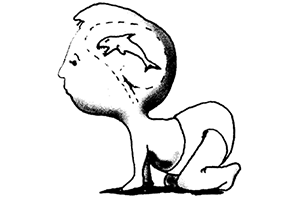
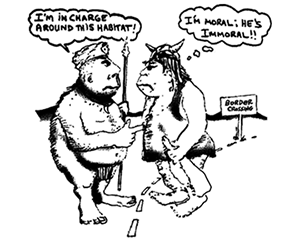
‘Prometheus Rising‘ is a book by Robert Anton Wilson first published in 1983. It is a guide book of ‘how to get from here to there,’ an amalgam of psychonaut Timothy Leary’s 8-circuit model of consciousness, spiritualist Georges Gurdjieff’s self-observation exercises, Polish semiotician Alfred Korzybski’s general semantics, occultist Aleister Crowley’s magical theorems, Sociobiology (the study of the evolutionary bases of behavior), Yoga, relativity, and quantum mechanics among other approaches to understanding the world around us. Wilson describes it as an ‘owner’s manual for the human brain.’
The book, which examines many aspects of social mind control and mental imprinting, provides mind exercises at the end of every chapter, with the goal of giving the reader more control over how one’s mind works. Wilson also discusses the effect of certain psychoactive substances and how these affect the brain, tantric breathing techniques, and other methods and holistic approaches to expanding consciousness. The book’s take on transactional analysis became the main seed thought for ‘The Sekhmet Hypothesis’ (suggesting a link between the emergence of youth culture archetypes in relation to the 11 year solar cycle), specifically the idea of applying the life scripts to pop cultural trends.
Posted in Art, Language, Philosophy |
Leave a Comment »
November 9, 2014
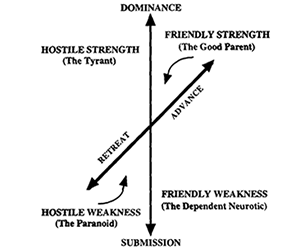
The Sekhmet Hypothesis was first published in 1995 by author Iain Spence. It suggested a possible link between the emergence of youth culture archetypes in relation to the 11 year solar cycles. The hypothesis was published again in 1997 in ‘Towards 2012’ and covered in 1999 in ‘Sleazenation’ magazine. Spence eventually abandoned the idea as not based in scientific fact, pointing to Strauss-Howe generational theory as a better model of social change.
The origins of the hypothesis can be traced back to philosopher Robert Anton Wilson’s book, ‘Prometheus Rising,’ in which he makes a singular correlation between the archetype of the flower child with the mood of friendly weakness. Spence extended the comment into a study of various youth archetypes and linked in their behavior to transactional analysis (a theory of human interaction). The idea of linking pop culture to the solar cycles had been influenced from remarks made by modern occultist Peter J. Carroll, in his book, ‘Psychonaut.’ Sekhmet is the Egyptian goddess of the sun.
read more »
Posted in Art, Language, Philosophy |
Leave a Comment »
November 6, 2014

In American suburban communities, McMansion is a pejorative for a type of large, new luxury house which is judged to be oversized for the parcel or incongruous and out-of-place for its neighborhood. Alternatively, a McMansion can be a large, new house in a subdivision of similarly large houses, which all seem mass-produced and lacking in distinguishing characteristics, as well as appearing at odds with the traditional local architecture.
The neologism seems to have been coined sometime in the early 1980s. It first appeared in print the ‘Los Angeles Times’ in 1990. Related terms include ‘Persian palace,’ ‘garage Mahal,’ ‘starter castle,’ and ‘Hummer house.’ Marketing parlance often uses the term ‘tract mansion’ or ‘executive home.’ An example of a McWord, ‘McMansion’ associates the generic quality of these luxury homes with that of mass-produced fast food by evoking the McDonald’s restaurant chain.
read more »
Posted in Language, Money |
Leave a Comment »
November 5, 2014


Cover your ass (CYA) describes activity, usually in a work-related or bureaucratic context, done by an individual to protect himself or herself from possible subsequent legal penalties or criticism. According to lexicographer William Safire, it describes the bureaucratic technique of ‘deflecting responsibility in advance,’ that is, diffusing responsibility for one’s actions as a form of insurance against possible negative repercussions. It can denote a type of institutional risk-averse mentality which works against accountability and responsibility, often characterized by excessive paperwork and documentation (red tape), which can be harmful to the institution’s overall effectiveness.
The activity, sometimes seen as instinctive, is generally unnecessary towards accomplishing the goals of the organization, but helpful to protect a particular individual’s career within it, and it can be seen as a type of institutional corruption working against individual initiative. In a slightly different sense, it can be used to describe rightful steps to protect oneself properly while in a difficult situation, such as what steps to take to protect oneself after being fired (due diligence).
read more »
Posted in Humor, Language, Politics |
Leave a Comment »
November 4, 2014


Commedia [kuh-mey-dee-uh] dell’arte [del-ahr-tee] is a form of improvisational theater that began in Italy in the 16th century. The actors often wore masks and the stories were often about the cunning pursuit of love, money, or simply food. The genre developed several stock characters that represent fixed social types, such as foolish old men, devious servants, or military officers full of false bravado including Harlequin (comic servant), Pantalone (rich old miser), Colombina (tricky slave wife), Pulcinella (disfigured trickster), Pierrot (unrequited clown), and Scaramuccia (roguish clown).
Stock characters can be divided into three groups, ‘Innamorati’ (‘The Lovers,’ who are never masked nor well developed as characters), ‘Vecchi’ (‘The Old People,’ often the Lovers’ parents, who get in the way of their romance), and ‘Zanni’ (‘The Servants/ Commoners,’ always hungry, and often responsible for the Lovers finding their way to the altar). Characters such as Pantalone, the Venetian merchant; Dottore Gratiano, the pedant from Bologna; or Arlecchino, the mischievous servant from Bergamo, began as satires on Italian ‘types’ and became the archetypes of many of the favorite characters of 17th- and 18th-century European theater.
read more »
Posted in Art, Humor, Language |
1 Comment »
October 31, 2014

Muditā [moo-dee-tah] means ‘joy’ in sanskrit, especially sympathetic or vicarious joy. it is the pleasure that comes from delighting in other people’s well-being rather than begrudging it. The traditional paradigmatic example of this mind-state is the attitude of a parent observing a growing child’s successes, but it is not to be confounded with pride as the person feeling mudita must not have any interest or direct income from the accomplishments of the other. Its antonym is the German word ‘schadenfreude’ (‘pleasure derived from the misfortunes of others’).
Many Buddhist teachers interpret joy more broadly as an inner spring of infinite joy that is available to everyone at all times, regardless of circumstances. The more deeply one drinks of this spring, the more secure one becomes in one’s own abundant happiness, and the easier it then becomes to relish the joy of other people as well. Joy is also traditionally regarded as the most difficult to cultivate of the four immeasurables (the ‘four sublime attitudes’). To show joy is to celebrate happiness and achievement in others even when we are facing tragedy ourselves.
Posted in Language, Philosophy, World |
Leave a Comment »
October 28, 2014

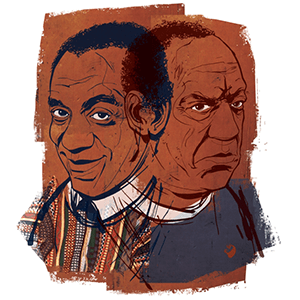
The ‘Pound Cake speech‘ was an address given by comedian Bill Cosby in May 2004 during an NAACP awards ceremony in Washington, D.C., to commemorate the 50th anniversary of the ‘Brown v. Board of Education Supreme Court’ decision which desegregated US schools. In it, Cosby was highly critical of members of subsets of the black community. He criticized the use of ebonics (African American Vernacular English), the prevalence of single-parent families, the emphasis on frivolous and conspicuous consumption at the expense of necessities, lack of responsibility, and other behaviors.
Cosby accused the African American community of treating people who had robbed convenience stores like political activists: ‘But these people, the ones up here in the balcony fought so hard. Looking at the incarcerated, these are not political criminals. These are people going around stealing Coca-Cola. People getting shot in the back of the head over a piece of pound cake! And then we all run out and are outraged, ‘The cops shouldn’t have shot him.’ What the hell was he doing with the pound cake in his hand? I wanted a piece of pound cake just as bad as anybody else, and I looked at it and I had no money. And something called parenting said, ‘If you get caught with it you’re going to embarrass your mother.’ Not ‘You’re going to get your butt kicked.’ No. ‘You’re going to embarrass your family.”
read more »
Posted in Language, Politics |
1 Comment »
October 23, 2014
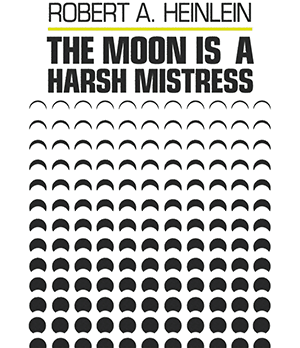
‘There ain’t no such thing as a free lunch’ (TANSTAAFL) is a popular adage communicating the idea that it is impossible to get something for nothing. The phrase dates to the 1930s and 1940s, but its first appearance is unknown. The ‘free lunch’ in the saying refers to the nineteenth-century practice in American bars of offering a ‘free lunch’ in order to entice drinking customers.
The phrase and the acronym are central to Robert Heinlein’s 1966 science-fiction novel ‘The Moon Is a Harsh Mistress,’ about the revolt of a lunar colony and the installation of a libertarian regime. Free-market economist Milton Friedman used it as the title of a 1975 book, and it is often mentioned in economics literature to describe opportunity cost (the value of the next best thing you give up whenever you make a decision). Macroeconomist Campbell McConnell writes that the idea is ‘at the core of economics.’
read more »
Posted in Language, Money, Science |
Leave a Comment »
October 21, 2014

Handwaving is a pejorative label applied to the action of displaying the appearance of doing something, when actually doing little, or nothing. It is often used in working situations where results are expected, but no work is actually accomplished. Handwaving can be an idiomatic term, and it can also be a literal descriptive term for the use of excessive body language gestures that may be perceived as lacking productivity in communication or other effort. If the opponent in a debate uses the term, it is meant as a shorthand way to accuse the proponent of having committed an informal fallacy. In this sense, it is also as if a participant is waving their hands as to discourage an insect that is flying around their head, so are they waving away questions. The superlative expressions for the term, such as ‘vigorous handwaving’ or ‘furious handwaving,’ are used to imply that the handwaver lacks confidence in the information being conveyed, and cannot actually convey the essence or core of his argument.
Handwaving arguments often include order-of-magnitude estimates and dimensional analysis. Competent well-intentioned researchers and professors rely on handwaving when, given a limited time, a large result must be shown and minor technical details cannot be given much attention. ‘Back-of-the-envelope’ calculations are approximate ways to get an answer by over-simplification and are compatible with handwaving. By extension, handwaving is used in speculative fiction criticism to refer to a plot device (e.g., a scientific discovery, a political development, or rules governing the behavior of a fictional creature) that is left unexplained or sloppily explained because it is convenient to the story, with the implication that the writer is aware of the logical weakness but hopes the reader will not notice or will suspend disbelief. The fictional material ‘handwavium’ is sometimes referred to in situations where the solution requires access to a substance that is physically impossible to create as it defies physics but is convenient to solving a problem in the story.
Posted in Language, Politics |
Leave a Comment »




