June 2, 2014

The genre of Menippean [meh-nip-pee-uhn] satire is a form of satire (ridicule of foolishness and moral failings), usually in prose, which has a length and structure similar to a novel and is characterized by attacking mental attitudes instead of specific individuals. Other features found in Menippean satire are different forms of parody and mythological burlesque (humorous caricatures of the gods), a critique of the myths inherited from traditional culture, a rhapsodic nature, a fragmented narrative, the combination of many different targets, and the rapid moving between styles and points of view.
The term is used by classical grammarians and by philologists mostly to refer to satires in prose. Typical mental attitudes attacked and ridiculed by Menippean satires are ‘pedants, bigots, cranks, parvenus, virtuosi, enthusiasts, rapacious and incompetent professional men of all kinds,’ which are treated as diseases of the intellect. The term Menippean satire distinguishes it from the earlier satire pioneered by Aristophanes, which was based on personal attacks.
read more »
Posted in Art, Humor, Language |
1 Comment »
May 21, 2014
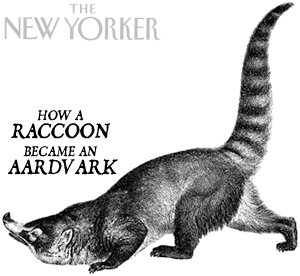
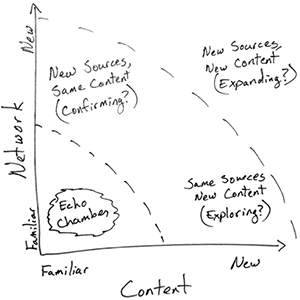
In source criticism, circular reporting or false confirmation is a situation where a piece of information appears to come from multiple independent sources, but in fact is coming from only one source. In most cases, the problem happens mistakenly through sloppy intelligence gathering practices, but in a few cases, the situation is intentionally caused by the original source. This problem occurs in variety of fields, including intelligence gathering, journalism, and scholarly research. It is of particular concern in military intelligence because the original source has a higher likelihood of wanting to pass on misinformation, and because the chain of reporting is more liable to being obscured.
Wikipedia is sometimes criticized for being used as a source of circular reporting, and thus advises all researchers and journalists to be wary of using it as a direct source, and to instead focus on verifiable information found in an article’s cited references. In 2008 an American student edited wikipedia in jest, writing that the coati (a small mammal in the raccoon family) was ‘also known as….the Brazilian aardvark,’ resulting in many subsequently citing and using that unsubstantiated nickname as part of the general consensus, including an article in ‘The Independent.’
Posted in Language, Technology |
Leave a Comment »
May 13, 2014

Mirrors for princes refers to a genre of political writing during the Middle Ages (5th to the 15th century) and the Renaissance (14th to the 17th century). They are best known in the form of textbooks which directly instruct kings or lesser rulers on certain aspects of rule and behavior, but in a broader sense, the term is also used to cover histories or literary works aimed at creating images of kings for imitation or avoidance.
They were often composed at the accession of a new king, when a young and inexperienced ruler was about to come to power. They could be viewed as a species of self-help book. Possibly the best known European ‘mirror’ is ‘Il Principe’ (‘The Prince’) (c. 1513) by Machiavelli, although this was not a typical example.
Posted in Language, Politics |
Leave a Comment »
May 13, 2014


Wisdom literature is a genre of literature common to the Ancient Near East characterized by sayings of wisdom intended to teach about divinity and about virtue. While techniques of traditional storytelling are used, books also presume to offer insight and wisdom about nature and reality.
The genre of ‘mirrors for princes’ (textbooks which directly instruct monarchs on certain aspects of rule and behavior), which has a long history in Islamic and Western Renaissance literature, represents a secular cognate of biblical wisdom literature. In Classical Antiquity, the advice poetry of Hesiod, particularly his ‘Works and Days’ (ca. 700 BCE, a farmer’s almanac in which Hesiod instructs his brother Perses in the agricultural arts) has been seen as a like-genre to Near Eastern wisdom literature.
read more »
Posted in Language, Philosophy |
1 Comment »
April 23, 2014
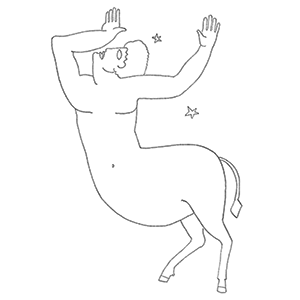
‘The Metamorphoses’ by Apuleius (Lucius Apuleius Madaurensis, a Roman writer) which St. Augustine referred to as ‘The Golden Ass‘ (Asinus aureus), is the only Ancient Roman novel in Latin to survive in its entirety. The protagonist of the novel is called Lucius, like the author. At the end of the novel, he is revealed to be from Madaurus (present day Algeria), the hometown of Apuleius himself.
The plot revolves around the protagonist’s curiosity (curiositas) and insatiable desire to see and practice magic. While trying to perform a spell to transform into a bird, he is accidentally transformed into an ass. This leads to a long journey, literal and metaphorical, filled with inset tales (short stories told by characters encountered by the protagonist; some act as independent narratives, while others interlock with plot developments). He finally finds salvation through the intervention of the goddess Isis, whose cult he joins.
read more »
Posted in Art, Language |
Leave a Comment »
April 22, 2014

Neil Gaiman (b. 1960) is an English author of short fiction, novels, comic books, graphic novels, audio theatre and films. His notable works include the comic book series ‘The Sandman’ and novels ‘Stardust,’ ‘American Gods,’ ‘Coraline,’ and ‘The Graveyard Book.’
Though his work is frequently seen as exemplifying the monomyth structure laid out by mythologist Joseph Campbell, Gaiman says that he started reading Campbell’s book on the common structure of myths but refused to finish it: ‘I think I got about halfway through ‘The Hero with a Thousand Faces’ and found myself thinking if this is true – I don’t want to know. I really would rather not know this stuff. I’d rather do it because it’s true and because I accidentally wind up creating something that falls into this pattern than be told what the pattern is.’
read more »
Posted in Art, Language |
1 Comment »
March 25, 2014

Ietsism [eets-iz-uhm] (Dutch: ‘somethingism’) is an unspecified belief in some higher force. In some Eastern European censuses (Albanian, for example), those having ietsistic beliefs are counted as believers without religion. An opinion poll conducted by the Dutch daily newspaper ‘Trouw’ in 2004 indicated that some 40% of its readership felt broadly this way.
It indicates a range of beliefs held by people who, on the one hand, inwardly suspect – or indeed believe – that there is ‘More between Heaven and Earth’ than we know about, but on the other hand do not necessarily accept or subscribe to the established belief system, dogma or view of the nature of God offered by any particular religion. Some of the English language equivalent terms are agnostic theism (the belief that one or more gods exist, but that a person cannot know that god or those gods) and deism (the belief that while a higher being exists, people should rely on logic and reason and not religious traditions).
read more »
Posted in Language, Philosophy, World |
Leave a Comment »
March 20, 2014

Gaydar is a colloquialism referring to the intuitive ability of a person to assess others’ sexual orientations as gay, bisexual or heterosexual. Gaydar relies almost exclusively on non-verbal clues and LGBT stereotypes. These include (but are not limited to) the sensitivity to social behaviors and mannerisms; for instance, acknowledging flamboyant body language, the tone of voice used by a person when speaking, overtly rejecting traditional gender roles, a person’s occupation, and grooming habits.
The detection of sexual orientation by outward appearance or behavior is frequently challenged by situations in which masculine gay men who do not act in a stereotypically ‘gay’ fashion, or with metrosexual men (regardless of sexuality) who exhibit a lifestyle, spending habits, and concern for personal appearance stereotypical of fashionable urban gay men.
read more »
Posted in Language, Science, Sex |
Leave a Comment »
March 18, 2014
‘Here be dragons‘ means dangerous or unexplored territories, in imitation of the medieval practice of putting dragons, sea serpents and other mythological creatures in uncharted areas of maps. There are just two known historical use of this phrase in the Latin form ‘HC SVNT DRACONES.’ The term appeared on the 16th century Lenox Globe around the east coast of Asia, and might be related to the Komodo dragons in the Indonesian islands, tales of which were quite common throughout East Asia.
It also appeared on another globe of that era engraved on two conjoined halves of ostrich eggs. Earlier maps contain a variety of references to mythical and real creatures, but the Lenox Globe and the egg globe are the only known surviving maps to bear this phrase. An investigation of the egg globe performed by collector Stefaan Missinne concluded that the Hunt-Lenox Globe is a cast of the egg globe.
read more »
Posted in Language, Philosophy, World |
Leave a Comment »
March 8, 2014
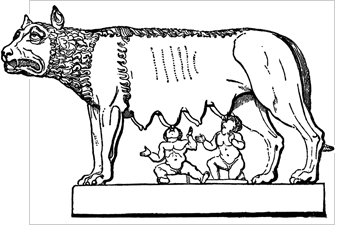
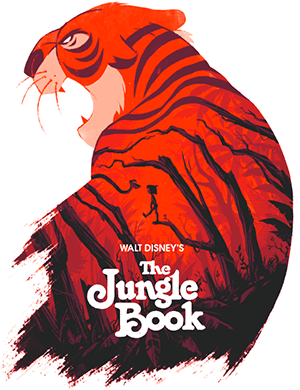
A feral child (also, colloquially, wild child) is a human child who has lived isolated from human contact from a very young age, and has no (or little) experience of human care, loving or social behavior, and crucially, of human language. Some feral children have been confined by people (usually their own parents); in some cases this child abandonment was due to the parents’ rejection of a child’s severe intellectual or physical impairment. Feral children may have experienced severe child abuse or trauma before being abandoned or running away.
Feral children are sometimes the subjects of folklore and legends, typically portrayed as having been brought up by animals. Myths and fictional stories have depicted feral children reared by wild animals such as wolves, apes, and bears. Famous examples include Ibn Tufail’s Hayy, Ibn al-Nafis’ Kamil, Rudyard Kipling’s Mowgli, Edgar Rice Burroughs’s Tarzan, and the legends of Atalanta, Enkidu and Romulus and Remus.
read more »
Posted in Health, Language |
Leave a Comment »
March 6, 2014

Hard to be a God is a 1964 science fiction novel by Arkady and Boris Strugatsky set in their ‘Noon Universe (a fictional setting in the 22nd century). The novel follows Anton, an undercover operative from the future planet Earth, in his mission on an alien planet, that is populated by human beings, whose society has not advanced beyond the Middle Ages. The novel’s core idea is that human progress throughout the centuries is often cruel and bloody, and that religion and blind faith can be effective tools of oppression, working to destroy the emerging scientific disciplines and enlightenment.
The title ‘Hard to be a God’ refers to Anton’s (known by his alias ‘don Rumata’ throughout the book) perception of his precarious role as an observer on the planet, for while he has far more advance knowledge than the people around him, he is forbidden to assist too actively, as it would interfere with the natural progress of history. The book pays a lot of attention to the internal world of the main character, showing his own evolution from an emotionally uninvolved ‘observer’ to the person who rejects the blind belief in theory when confronted with the cruelty of real events.
read more »
Posted in Language, Philosophy, Science |
Leave a Comment »
March 5, 2014
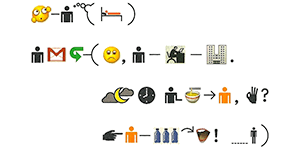
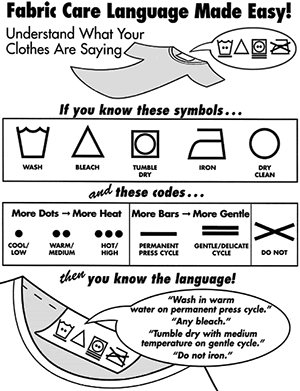
Pictograms [pik-tuh-gram] are small images that convey their meaning through a pictorial resemblance to a physical object. Early written symbols were based on pictograms (pictures which resemble what they signify) and ideograms (symbols which represent ideas). Ancient Sumerian, Egyptian, and Chinese civilizations developed them into logographic (word-based) writing systems including cuneiform and hieroglyphics, which also uses drawings as phonetic letters or determinative rhymes.
Pictograms are still in use as the main medium of written communication in some non-literate cultures in Africa, the Americas, and Oceania. In certain modern use, pictograms participate to a formal language (e.g. hazards pictograms such as the skull and crossbones, a common warning for poison). Pictograms have also been popularized in use on the web and in software, better known as ‘icons’ displayed on a computer screen in order to help user navigate a computer system or mobile device.
read more »
Posted in Language |
Leave a Comment »


 The Daily Omnivore