March 25, 2014

Ietsism [eets-iz-uhm] (Dutch: ‘somethingism’) is an unspecified belief in some higher force. In some Eastern European censuses (Albanian, for example), those having ietsistic beliefs are counted as believers without religion. An opinion poll conducted by the Dutch daily newspaper ‘Trouw’ in 2004 indicated that some 40% of its readership felt broadly this way.
It indicates a range of beliefs held by people who, on the one hand, inwardly suspect – or indeed believe – that there is ‘More between Heaven and Earth’ than we know about, but on the other hand do not necessarily accept or subscribe to the established belief system, dogma or view of the nature of God offered by any particular religion. Some of the English language equivalent terms are agnostic theism (the belief that one or more gods exist, but that a person cannot know that god or those gods) and deism (the belief that while a higher being exists, people should rely on logic and reason and not religious traditions).
read more »
Posted in Language, Philosophy, World |
Leave a Comment »
March 20, 2014

Gaydar is a colloquialism referring to the intuitive ability of a person to assess others’ sexual orientations as gay, bisexual or heterosexual. Gaydar relies almost exclusively on non-verbal clues and LGBT stereotypes. These include (but are not limited to) the sensitivity to social behaviors and mannerisms; for instance, acknowledging flamboyant body language, the tone of voice used by a person when speaking, overtly rejecting traditional gender roles, a person’s occupation, and grooming habits.
The detection of sexual orientation by outward appearance or behavior is frequently challenged by situations in which masculine gay men who do not act in a stereotypically ‘gay’ fashion, or with metrosexual men (regardless of sexuality) who exhibit a lifestyle, spending habits, and concern for personal appearance stereotypical of fashionable urban gay men.
read more »
Posted in Language, Science, Sex |
Leave a Comment »
March 18, 2014
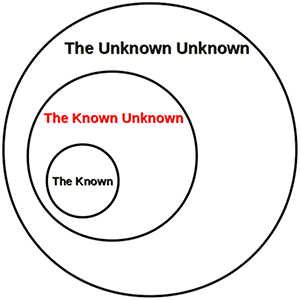
‘Here be dragons‘ means dangerous or unexplored territories, in imitation of the medieval practice of putting dragons, sea serpents and other mythological creatures in uncharted areas of maps. There are just two known historical use of this phrase in the Latin form ‘HC SVNT DRACONES.’ The term appeared on the 16th century Lenox Globe around the east coast of Asia, and might be related to the Komodo dragons in the Indonesian islands, tales of which were quite common throughout East Asia.
It also appeared on another globe of that era engraved on two conjoined halves of ostrich eggs. Earlier maps contain a variety of references to mythical and real creatures, but the Lenox Globe and the egg globe are the only known surviving maps to bear this phrase. An investigation of the egg globe performed by collector Stefaan Missinne concluded that the Hunt-Lenox Globe is a cast of the egg globe.
read more »
Posted in Language, Philosophy, World |
Leave a Comment »
March 8, 2014
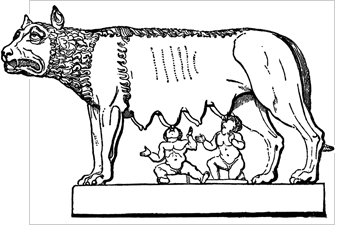
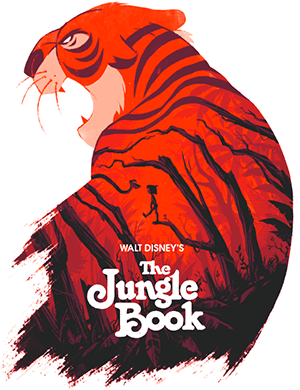
A feral child (also, colloquially, wild child) is a human child who has lived isolated from human contact from a very young age, and has no (or little) experience of human care, loving or social behavior, and crucially, of human language. Some feral children have been confined by people (usually their own parents); in some cases this child abandonment was due to the parents’ rejection of a child’s severe intellectual or physical impairment. Feral children may have experienced severe child abuse or trauma before being abandoned or running away.
Feral children are sometimes the subjects of folklore and legends, typically portrayed as having been brought up by animals. Myths and fictional stories have depicted feral children reared by wild animals such as wolves, apes, and bears. Famous examples include Ibn Tufail’s Hayy, Ibn al-Nafis’ Kamil, Rudyard Kipling’s Mowgli, Edgar Rice Burroughs’s Tarzan, and the legends of Atalanta, Enkidu and Romulus and Remus.
read more »
Posted in Health, Language |
Leave a Comment »
March 6, 2014
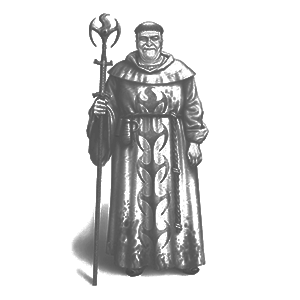
Hard to be a God is a 1964 science fiction novel by Arkady and Boris Strugatsky set in their ‘Noon Universe (a fictional setting in the 22nd century). The novel follows Anton, an undercover operative from the future planet Earth, in his mission on an alien planet, that is populated by human beings, whose society has not advanced beyond the Middle Ages. The novel’s core idea is that human progress throughout the centuries is often cruel and bloody, and that religion and blind faith can be effective tools of oppression, working to destroy the emerging scientific disciplines and enlightenment.
The title ‘Hard to be a God’ refers to Anton’s (known by his alias ‘don Rumata’ throughout the book) perception of his precarious role as an observer on the planet, for while he has far more advance knowledge than the people around him, he is forbidden to assist too actively, as it would interfere with the natural progress of history. The book pays a lot of attention to the internal world of the main character, showing his own evolution from an emotionally uninvolved ‘observer’ to the person who rejects the blind belief in theory when confronted with the cruelty of real events.
read more »
Posted in Language, Philosophy, Science |
Leave a Comment »
March 5, 2014
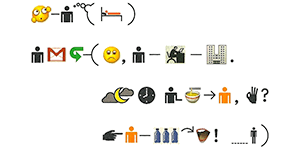
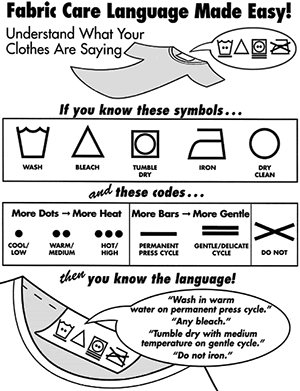
Pictograms [pik-tuh-gram] are small images that convey their meaning through a pictorial resemblance to a physical object. Early written symbols were based on pictograms (pictures which resemble what they signify) and ideograms (symbols which represent ideas). Ancient Sumerian, Egyptian, and Chinese civilizations developed them into logographic (word-based) writing systems including cuneiform and hieroglyphics, which also uses drawings as phonetic letters or determinative rhymes.
Pictograms are still in use as the main medium of written communication in some non-literate cultures in Africa, the Americas, and Oceania. In certain modern use, pictograms participate to a formal language (e.g. hazards pictograms such as the skull and crossbones, a common warning for poison). Pictograms have also been popularized in use on the web and in software, better known as ‘icons’ displayed on a computer screen in order to help user navigate a computer system or mobile device.
read more »
Posted in Language |
Leave a Comment »
March 1, 2014
Comics studies is an academic field that focuses on comics and graphic novels. Formerly dismissed as less relevant pop culture texts, scholars in fields such as Semiotics and Composition Studies are now re-considering comics and graphic novels as complex texts deserving of serious scholarly study.
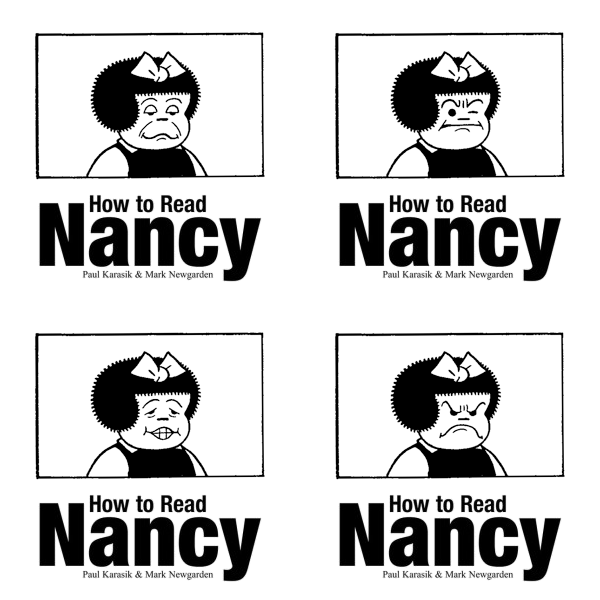
‘How to Read Nancy’ is a 1988 essay by underground cartoonists Mark Newgarden and Paul Karasik. The piece examines the comic strip ‘Nancy,’ focusing on creator Ernie Bushmiller’s use of the comics language in to deliver a gag. Finding correspondences to the minimalist architecture of Mies Van Der Rohe, the essay calls ‘Nancy’ ‘a complex amalgam of formal rules laid out by [its] designer.’
read more »
Posted in Art, Education, Language |
Leave a Comment »
February 27, 2014
Bill Watterson (b. 1958) is an American artist and the author of the comic strip ‘Calvin and Hobbes,’ which was syndicated from 1985 to 1995. Watterson stopped drawing the strip at the end of 1995 with a short statement to newspaper editors and his readers that he felt he had achieved all he could in the medium.
Watterson is known for his views on licensing (he refused to merchandise his creations on the grounds that displaying their images on commercially sold mugs, stickers and T-shirts would devalue the characters and their personalities) and his move back into private life after ‘Calvin and Hobbes.’
read more »
Posted in Art, Humor, Language |
1 Comment »
February 26, 2014

The Tube Bar prank calls are a series of prank calls made in the mid-1970s to the Tube Bar in Jersey City, in which pranksters would ask the proprietor of the bar if they could speak to a fictitiously named customer. The fictitious names given by the pranksters were pun-like/homophones for other—oftentimes more offensive—phrases. Recordings of the calls were circulated widely on duped cassette tapes and may have been the inspiration for a running gag in ‘The Simpsons.’
John Elmo and Jim Davidson, later known collectively as ‘Bum Bar Bastards,’ would call the Tube Bar, operated by heavyweight boxer Louis ‘Red’ Deutsch, asking for customers such as ‘Pepe Roni’ (pepperoni), ‘Hal Ja-Like-a-Kick’ (how’d you like a kick), ‘Phil My-Pockets’ (fill my pockets), ‘Al Coholic’ (alcoholic), and ‘Mike Hunt’ (my cunt). Most of the time, Deutsch would call out the names.
read more »
Posted in Humor, Language |
Leave a Comment »
February 20, 2014
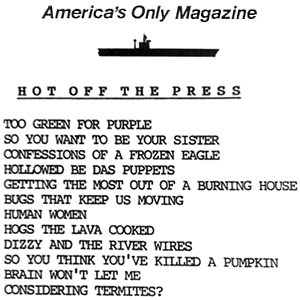
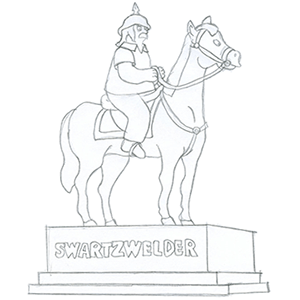
‘Army Man‘ (tagline: ‘America’s Only Magazine’) was a short-lived comedy magazine published in the late 1980s by George Meyer, the acclaimed writer for ‘The Simpsons.’ The magazine consisted mostly of very short and very surreal jokes, along with some cartoons. Each issue also featured Jack Handey’s ‘Deep Thoughts,’ as well as other pieces written by him. Only three issues were ever published. Although Army Man was never widely distributed, it gathered a lot of attention in the comedy world.
Two of its writers (John Swartzwelder and Jon Vitti) were picked up alongside Meyer to be part of the original writing staff of ‘The Simpsons’ by the show’s developer and show-runner Sam Simon, an enormous fan of the magazine. Eventually other ‘Army Man’ writers would go on to write for ‘The Simpsons’ in later seasons. The writers were usually people Meyer knew from his years at the ‘Harvard Lampoon’ or who worked with him in TV shows like ‘Late Night with David Letterman,’ ‘The New Show,’ ‘Not Necessarily The News,’ and ‘Saturday Night Live.’
Posted in Art, Humor, Language |
Leave a Comment »
February 19, 2014
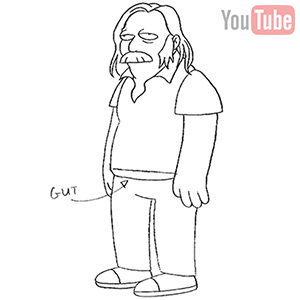
John Swartzwelder (b. 1950) is an American comedy writer and novelist, best known for his work on the animated television series ‘The Simpsons,’ as well as a number of novels. He is credited with writing the largest number of ‘Simpsons’ episodes by a large margin (59 full episodes, with contributions to several others). Swartzwelder was one of several writers recruited to show from the pages of George Meyer’s ‘Army Man’ magazine (a short-lived comedy periodical published in the late 1980s; Meyer would also go on to become an acclaimed ‘Simpsons’ writer).
Swartzwelder has been animated in the background of several episodes of ‘The Simpsons.’ His animated likeness closely resembles musician David Crosby, which prompted Matt Groening to state that anytime that David Crosby appears in a scene for no apparent reason, it is really John Swartzwelder. Additionally, Matt Groening has stated that the recurring character ‘Herman Hermann’ (the owner of Herman’s Military Antiques) was originally physically based on Swartzwelder–with the exception of his one arm.
read more »
Posted in Art, Humor, Language |
Leave a Comment »
February 18, 2014

‘Battle Hymn of the Tiger Mother‘ is a 2011 book by Yale law professor Amy Chua. The complete subtitle of the book is: ‘This is a story about a mother, two daughters, and two dogs. This was supposed to be a story of how Chinese parents are better at raising kids than Western ones. But instead, it’s about a bitter clash of cultures, a fleeting taste of glory, and how I was humbled by a thirteen-year-old.’
Chua reported that in one study of 48 Chinese immigrant mothers, the vast majority ‘said that they believe their children can be ‘the best’ students, that ‘academic achievement reflects successful parenting,’ and that if children did not excel at school then there was ‘a problem’ and parents ‘were not doing their job.” Chua contrasts them with the view she labels ‘Western’ – that a child’s self-esteem is paramount.
read more »
Posted in Education, Language, World |
Leave a Comment »



