May 7, 2013
Libertarian science fiction is a sub-genre of science fiction that focuses on the politics and social order implied by libertarian philosophies with an emphasis on individualism and a limited state—and in some cases, no state whatsoever.
As a category, libertarian fiction is unusual because the vast majority of its authors are self-identified as science fiction authors. This contrasts with the authors of much other social criticism who are largely academic or mainstream novelists who tend to dismiss any genre classification.
read more »
Posted in Language, Politics, Science |
Leave a Comment »
May 7, 2013

Walden Two is a utopian novel written by behavioral psychologist B. F. Skinner, first published in 1948. In its time, it could have been considered to be science fiction, since science-based methods for altering people’s behavior did not yet exist. (Such methods exist now and are known as applied behavior analysis, formerly behavior modification).
‘Walden Two’ is controversial because it includes a rejection of free will, the proposition that human behavior is controlled by a non-corporeal entity, such as a spirit or a soul. The book embraces the proposition that the behavior of organisms, including humans, is determined by genetic and environmental variables, and that systematically altering environmental variables can generate a sociocultural system that very closely approximates utopia.
read more »
Posted in Language, Politics, Science |
Leave a Comment »
May 7, 2013

The term Dumbing down describes the deliberate diminishment of the intellectual level of the content of schooling and education, of literature and cinema, and of news and culture. The idea of and the term dumbing down originated in 1933 as slang, used by motion picture screenplay writers, to mean: ‘revise so as to appeal to those of little education or intelligence.’ Sociologist Pierre Bourdieu noted cultural capital as a means of social mobility, which is diminished by the processes of dumbing down.
The occurrences of dumbing down vary in nature, according to the subject matter under discussion and the purpose of the simplifier, but the dumbing-down usually involves the over-simplification of critical thought to the degree of conceptually undermining the intellectual standards of language and of learning of a society; by such simplistic means the writer and the speaker justifies the trivialization of cultural, artistic, and academic standards, as in the case of popular culture.
read more »
Posted in Education, Language, Politics |
Leave a Comment »
May 7, 2013

The subject of the damsel in distress, or persecuted maiden, is a classic theme in world literature, art, film and video games. She is usually a beautiful young woman placed in a dire predicament by a villain or monster and who requires a hero to achieve her rescue. She has become a stock character of fiction, particularly of melodrama.
Though she is usually human, she can also be of any other species, including fictional or folkloric species; and even divine figures such as an angel or deity. The word ‘damsel’ derives from the French ‘demoiselle,’ meaning ‘young lady,’ and the term ‘damsel in distress’ in turn is a translation of the French ‘demoiselle en détresse.’
read more »
Posted in Language, Politics, Sex |
1 Comment »
May 6, 2013

A paracosm [par-uh-kozm] is a detailed imaginary world, or fantasy world, involving humans and/or animals, or perhaps even fantasy or alien creations. Commonly having its own geography, history, and language, it is an experience that is often developed during childhood and continues over a long period of time: months or even years.
The concept was first described by a researcher for the BBC, Robert Silvey, with later research by British psychiatrist Stephen A. MacKeith, and British psychologist David Cohen. The term was coined by Ben Vincent, a participant in Silvey’s 1976 study and a self-professed ‘paracosmist.’
read more »
Posted in Art, Health, Language |
Leave a Comment »
May 6, 2013

A rebus [ree-buhs] is an allusional device that uses pictures to represent words or parts of words. It was a favorite form of heraldic expression used in the Middle Ages to denote surnames, for example in its basic form three salmon fish to denote the name ‘Salmon.’
A more sophisticated example was the rebus of Bishop Walter Lyhart of Norwich, consisting of a stag (or hart) lying down in a conventional representation of water. The composition alludes to the name, profession or personal characteristics of the bearer, and speaks to the beholder ‘Non verbis, sed rebus’ (Latin: ‘not by words but by things’).
read more »
Posted in Games, Humor, Language |
Leave a Comment »
May 2, 2013

Brooklyn has played a major role in various aspects of American culture including literature, cinema and theater as well as being home to the world renowned Brooklyn Academy of Music and to the second largest public art collection in the United States which is housed in the Brooklyn Museum. Walt Whitman wrote of the Brooklyn waterfront in his classic poem ‘Crossing Brooklyn Ferry.’ Harlem Renaissance playwright Eulalie Spence taught at Eastern District High School in Brooklyn from 1927 to 1938, a time during which she wrote her critically acclaimed plays ‘Fool’s Errand,’ and ‘Her.’
In 1930, poet Hart Crane published the epic poem ‘The Bridge,’ using the Brooklyn Bridge as central symbol and poetic starting point. The novels of Henry Miller include reflections on several of the ethnic German and Jewish neighborhoods of Brooklyn during the 1890s and early 20th century; his novels ‘Tropic of Capricorn’ and ‘The Rosy Crucifixion’ include long tracts describing his childhood and young adulthood spent in the Borough.
read more »
Posted in Art, Language, World |
1 Comment »
May 2, 2013

The phrases ‘no homo‘ and ‘pause’ are slang terms. They parenthetically assert that the speaker of such does not have any homosexual intent and are usually used after an utterance that may have given that impression. The term originated in East Harlem slang of the early 1990s.
It was used by many to distance themselves from the stereotype of closeted gay and bisexual men. Several social commentators have criticized the use of both ‘no homo’ and ‘pause’ in hip hop and in the mainstream. It has been said that the phrases, ‘uphold an unhealthy relationship with homosexuality, a relationship based in fear.’ Fox News commentator Marc Lamont Hill encouraged the hip-hop community to stop using the terms.
read more »
Posted in Language, Politics, Sex |
Leave a Comment »
May 1, 2013

An intuition pump is a thought experiment structured to elicit intuitive answers about a problem. The term was coined by Daniel Dennett. In ‘Consciousness Explained,’ he uses the term pejoratively to describe John Searle’s ‘Chinese room’ thought experiment, characterizing it as designed to elicit intuitive but incorrect answers by formulating the description in such a way that important implications of the experiment would be difficult to imagine and tend to be ignored.
Searle’s experiment supposes that there is a program that gives a computer the ability to carry on an intelligent conversation in written Chinese. If the program is given to someone who speaks only English to execute the instructions of the program by hand, then in theory, the English speaker would also be able to carry on a conversation in written Chinese. However, the English speaker would not be able to understand the conversation.
read more »
Posted in Language, Philosophy, Science |
Leave a Comment »
April 29, 2013

An angry white male (AWM) is a pejorative reference to someone with what is typically known as a traditional conservative viewpoint, especially in the context of U.S. politics, characterized by opposition to racial quotas, political correctness, affirmative action, and other liberal policies.
The movies ‘Joe,’ ‘Falling Down,’ and Clint Eastwood’s performances in both the ‘Dirty Harry’ series and ‘Gran Torino’ have been described as definitive explorations of the angry white male. The protagonist of ‘Falling Down,’ a former defense worker who descends into a spiral of increasing rage and violence, was widely reported upon as a representative of the stereotype.
Posted in Language, Politics |
Leave a Comment »
April 29, 2013
Reverse racism is a term which refers to racial prejudice or discrimination directed against members of one’s own race. The term came into use as the struggle for African-American rights divided the white community.
In 1966, Hosea Williams of the Southern Christian Leadership Conference (SCLC), publicly accused members of the Student Nonviolent Coordinating Committee (SNCC) of reverse racism in their efforts to exclude or expel whites from local government in Alabama to make room for blacks. Williams argued that SNCC’s (unsuccessful) ‘all-black’ campaign in Alabama would drive white moderates out of the civil rights movement. ‘Black racism’ was a more common term in this era, used to describe SNCC and groups like the Black Panthers.
read more »
Posted in Language, Politics, World |
2 Comments »
April 26, 2013
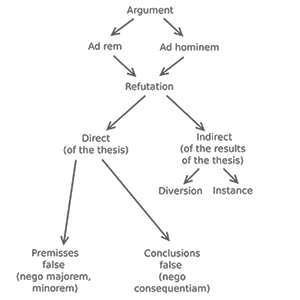
‘The Art of Being Right: 38 Ways to Win an Argument’ (1831) is an acidulous (biting) treatise written by the German philosopher Arthur Schopenhauer in sarcastic deadpan. He examines a total of thirty-eight methods of showing up one’s opponent in a debate. Schopenhauer introduces his essay with the idea that philosophers have concentrated in ample measure on the rules of logic, but have not (especially since the time of Immanuel Kant) engaged with the darker art of the dialectic, of controversy.
Whereas the purpose of logic is classically said to be a method of arriving at the truth, dialectic, says Schopenhauer, ‘…on the other hand, would treat of the intercourse between two rational beings who, because they are rational, ought to think in common, but who, as soon as they cease to agree like two clocks keeping exactly the same time, create a disputation, or intellectual contest.’
read more »
Posted in Humor, Language, Politics |
1 Comment »


 The Daily Omnivore