May 31, 2013
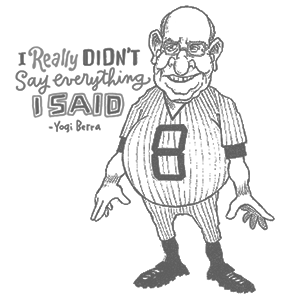
A howler is a glaring blunder, typically an amusing one. Eric Partridge’s ‘A Dictionary of Slang and Unconventional English’ (1951) defined it in part as: ‘… A glaring (and amusing) blunder: from before 1890; … also, a tremendous lie … Literally something that howls or cries for notice, or perhaps … by way of contracting howling blunder.’ Another common interpretation of this usage is that a howler is a mistake fit to make one howl with laughter.
All over the world, probably in all natural languages, there are many informal terms for blunders; the English term ‘howler’ occurs in many translating dictionaries. There are other colloquial English words for howler, in particular the mainly United States and Canadian slang term ‘boner’ which has various interpretations, including that of blunder. Like howler, boner can be used in any sense to mean an ignominious and usually laughable blunder, and also like howler, it has been used in the titles of published collections of largely schoolboy blunders since at least the 1930s.
read more »
Posted in Humor, Language |
Leave a Comment »
May 31, 2013
Kathryn Schulz is an American journalist and author, and the book critic for ‘New York’ magazine. She also wrote ‘The Wrong Stuff,’ a blog on ‘Slate,’ and contributes to the ‘Freakonomics blog’ at ‘The New York Times.’ Schulz began her career in journalism writing for the now-defunct ‘Feed Magazine,’ one of the earliest online magazines. From 2001 to 2006, she was the editor of the online environmental magazine ‘Grist.’
Before that, she was a reporter and editor for ‘The Santiago Times,’ of Santiago, Chile, where she covered environmental, labor, and human rights issues. She was a 2004 recipient of the Pew Fellowship in International Journalism (now the International Reporting Project), and has reported from throughout Central and South America, Japan and the Middle East. Schulz is a graduate of Brown University. Schulz was born and raised in Shaker Heights, Ohio, and currently resides in New York state.
Posted in Language |
Leave a Comment »
May 30, 2013
Post-feminism is a reaction against some perceived contradictions and absences of second-wave feminism (a period of feminist activity that first began in the early 1960s in the United States, and eventually spread throughout the Western world). The term post-feminism is ill-defined and is used in inconsistent ways.
However, it generally connotes the belief that feminism has succeeded in its goal of ameliorating sexism, making it fundamentally opposed to the third-wave intention of broadening feminist struggle by focusing on diversity and change.
read more »
Posted in Language, Politics, Sex |
1 Comment »
May 29, 2013
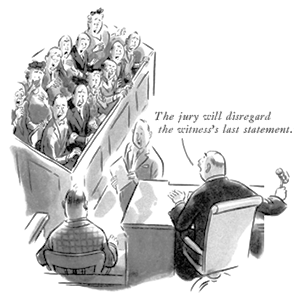
In law, unring the bell is an analogy used to suggest the difficulty of forgetting information once it is known. When discussing jury trials, the phrase is sometimes used to describe the judge’s instructions to the jury to ignore inadmissible evidence or statements they have heard. It may also be used if inadmissible evidence has been brought before a jury and the judge subsequently declares a mistrial.
Commenting on Court TV about the pre-trial release of nearly 200 pages of documents from a hearing on the sexual activities of the accuser in the Kobe Bryant sexual assault case, jury consultant Idgi D’Andrea said, ‘It’s really hard to unring the bell, once that bell has been rung, and ask people to forget what they’ve heard.’ In a more recent case, judge Reggie Walton said that he could not ‘unring the bell’ when he declared a mistrial in the Roger Clemens perjury trial.
read more »
Posted in Language, Politics |
1 Comment »
May 29, 2013
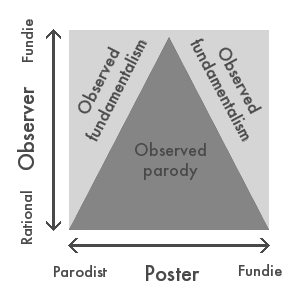
Poe’s law is an Internet adage reflecting the idea that without a clear indication of the author’s intent, it is difficult or impossible to tell the difference between an expression of sincere extremism and a parody of extremism. A corollary of Poe’s law is the reverse phenomenon: sincere fundamentalist beliefs can be mistaken for a parody of those beliefs.
The statement was formulated in 2005 by Nathan Poe on the website christianforums.com in a debate about creationism. The original sentence read: ‘Without a winking smiley or other blatant display of humor, it is utterly impossible to parody a Creationist in such a way that someone won’t mistake [it] for the genuine article.’
read more »
Posted in Humor, Language, Philosophy |
Leave a Comment »
May 24, 2013

‘The Ethical Slut: A Guide to Infinite Sexual Possibilities’ is a 1997 non-fiction book written by family therapist Dossie Easton and sex educator Janet Hardy (given as pseudonym Catherine A. Liszt for the book’s first edition).
The book discusses consensual non-monogamy as a lifestyle, and provides practical guidance on how such long-term relationships work and are put into practice.
read more »
Posted in Health, Language, Sex |
1 Comment »
May 24, 2013

Reaganomics or ‘voodoo economics’ is a negative term which critics use to criticize supply-side economics. The term originated from George H.W. Bush, who criticized Ronald Reagan’s plan for the economy during the Republican presidential primaries in 1980. Reagan’s attitude towards the Federal Government Budget was to drastically reduce taxes – primarily for the wealthy – while greatly increasing spending – primarily for the military. Bush Sr. and others recognized that this could not possibly produce a balanced budget, and would result in great national debt.
The four pillars of Reagan’s economic policy were to reduce the growth of government spending, reduce the federal income tax and capital gains tax, reduce government regulation, and control the money supply in order to reduce inflation.
read more »
Posted in Language, Money, Politics |
2 Comments »
May 23, 2013

A false dilemma (also called the fallacy of the false alternative, false dichotomy, the either-or fallacy, fallacy of the excluded middle, fallacy of false choice, black-and/or-white thinking, or the fallacy of exhaustive hypotheses) is a type of informal fallacy that involves a situation in which limited alternatives are considered, when in fact there is at least one additional option. The options may be a position that is between two extremes (such as when there are shades of grey) or may be completely different alternatives. The opposite of this fallacy is ‘argument to moderation.’
False dilemma can arise intentionally, when fallacy is used in an attempt to force a choice (such as, in some contexts, the assertion that ‘if you are not with us, you are against us’). But the fallacy can also arise simply by accidental omission of additional options rather than by deliberate deception.
read more »
Posted in Language, Philosophy |
1 Comment »
May 23, 2013

The nirvana fallacy is the informal fallacy of comparing actual things with unrealistic, idealized alternatives. It can also refer to the tendency to assume that there is a perfect solution to a particular problem. A closely related concept is the perfect solution fallacy.
By creating a false dichotomy that presents one option which is obviously advantageous—while at the same time being completely implausible—a person using the nirvana fallacy can attack any opposing idea because it is imperfect. The choice is not between real world solutions and utopia; it is, rather, a choice between one realistic possibility and another which is merely better.
read more »
Posted in Language, Philosophy |
Leave a Comment »
May 22, 2013
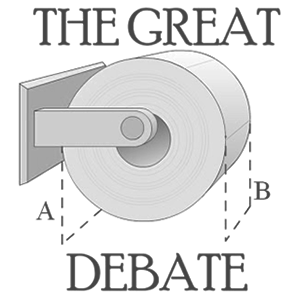
The concept of irreconcilable differences (sometimes called irremediable breakdown, irretrievable breakdown, or incompatibility) provides possible grounds for divorce in a number of jurisdictions. Australian family law uses a no-fault divorce approach, and irreconcilable differences is the sole grounds for divorce, with adequate proof being that the estranged couple have been separated for more than 12 months. In the United States, this is one of several possible grounds.
Often, it is used as justification for a no-fault divorce. In many cases, irreconcilable differences were the original and only grounds for no-fault divorce, such as in California, which enacted America’s first purely no-fault divorce law in 1969. California now lists one other possible basis, ‘incurable insanity,’ on its divorce petition form.
Posted in Humor, Language, Politics |
Leave a Comment »
May 22, 2013

Transcreation is a term used chiefly by advertising and marketing professionals to refer to the process of adapting a message from one language to another, while maintaining its intent, style, tone and context. A successfully transcreated message evokes the same emotions and carries the same implications in the target language as it does in the source language.
Increasingly, transcreation is used in global marketing and advertising campaigns as advertisers seek to transcend the boundaries of culture and language. It also takes account of images which are used within a creative message, ensuring that they are suitable for the target local market.
read more »
Posted in Language, Money, World |
Leave a Comment »
May 20, 2013

‘Captive Audience: the Telecom Industry and Monopoly Power in the New Gilded Age’ is an American non-fiction book by legal expert Susan P. Crawford. It describes high-speed internet access in the United States as essential (like electricity) but currently too slow and too expensive. To ensure national competitiveness ‘most Americans should have access to reasonably priced 1-Gb symmetric fiber-to-the-home networks.’
Crawford explains why the United States should revise national policy to increase competition in a market currently dominated by Comcast, Verizon Wireless, AT&T, and Time Warner Cable. Meanwhile towns and cities should consider setting up local networks after the example of pioneers such as Lafayette, Louisiana’s LUSFiber and Chattanooga, Tennessee’s EPB.
Posted in Language, Money, Technology |
2 Comments »



