May 14, 2013

‘The Gift of Fear‘ (1997) is a nonfiction self-help book by security consultant Gavin de Becker. The book provides strategies to help readers avoid trauma and violence by teaching them various warning signs and precursors to violence.
De Becker’s book presents a paradox of genre: described as a ‘how-to book that reads like a thriller.’ By finding patterns in stories of violence and abuse, de Becker seeks to highlight the inherent predictability of violence.
read more »
Posted in Health, Language |
Leave a Comment »
May 13, 2013

The selective exposure theory is a concept in media and communication research that refers to individuals’ tendency to favor information that reinforces pre-existing views while avoiding contradictory information. In this theory people tend to select specific aspects of exposed information based on their perspective, beliefs, attitudes and decisions.
People can determine the information exposed to them and select favorable evidence, while ignoring the unfavorable. This theory has been explored using the cognitive dissonance theory, which suggests information consumers strive for results of cognitive equilibrium (consistent rather than conflicting thoughts). In order to attain this equilibrium, individuals may either reinterpret the information they are exposed to or select information that are consonant with their view.
read more »
Posted in Language, Money, Science |
1 Comment »
May 13, 2013

Countersignaling is the behavior where agents with the highest level of a given property invest less into proving it than individuals with a medium level of the same property. This concept is primarily useful for analyzing human behavior and thus relevant to economics, sociology and psychology; there is no known animal behavior which conforms to the predictions of the countersignaling model.
Many of the things – such as toughness, cooperativeness or fertility – that people and animals want to know about each other are not directly observable. Instead, observable indicators of these unobservable properties must be used to communicate them to others. These are signals. Signaling theory deals with predicting the level of effort that individuals, the signalers, should invest to communicate their properties to other individuals, the receivers, and how these receivers interpret the signals.
read more »
Posted in Language, Money, Science |
Leave a Comment »
May 13, 2013
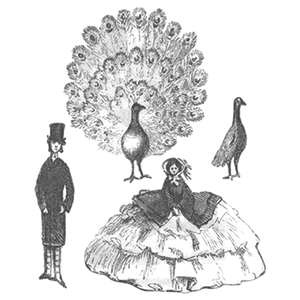
Within evolutionary biology, signalling theory is a body of theoretical work examining communication between individuals. The central question is when organisms with conflicting interests should be expected to communicate honestly (no presumption being made of conscious intention) rather than cheating. Mathematical models in which organisms signal their condition to other individuals as part of an evolutionarily stable strategy are important for research in this field.
Signals are given in contexts such as mate selection by females, which subjects the males’ signals to selective pressure. Signals thus evolve because they modify the behaviour of the receiver to benefit the signaller. Signals may be honest, on average conveying information that is actually useful to the receiver, increasing its fitness, or dishonest. A cheat can give a dishonest signal, gaining an advantage, but potentially undermining the signalling system for all.
read more »
Posted in Language, Science, Sex |
Leave a Comment »
May 12, 2013

The word ‘tomato‘ may refer to the plant (Solanum lycopersicum) or the edible, typically red, fruit that it bears. Having originated in America, the tomato was spread around the world following the Spanish colonization of the Americas, and its many varieties are now widely grown, often in greenhouses in cooler climates.
The tomato is consumed in diverse ways, including raw, as an ingredient in many dishes and sauces, and in drinks. While it is botanically a fruit (a plant structure that contains its seeds), it is considered a vegetable for culinary purposes. The fruit is rich in lycopene (a carotene), which may have beneficial health effects.
read more »
Posted in Food, Language, World |
Leave a Comment »
May 8, 2013

‘Colorless green ideas sleep furiously‘ is a sentence composed by linguist Noam Chomsky in his 1957 book ‘Syntactic Structures’ as an example of a sentence that is grammatically correct, but semantically nonsensical. The term was originally used in his 1955 thesis ‘Logical Structures of Linguistic Theory.’
Although the sentence is grammatically correct, no obvious understandable meaning can be derived from it, and thus it demonstrates the distinction between syntax (linguistic rules) and semantics (symbolic meaning). As an example of a category mistake (a property is ascribed to a thing that could not possibly have that property), it was used to show inadequacy of the then-popular probabilistic models of grammar, and the need for more structured models.
read more »
Posted in Games, Language, Philosophy |
1 Comment »
May 7, 2013
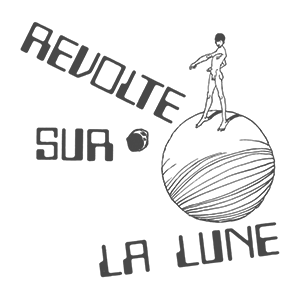
Libertarian science fiction is a sub-genre of science fiction that focuses on the politics and social order implied by libertarian philosophies with an emphasis on individualism and a limited state—and in some cases, no state whatsoever.
As a category, libertarian fiction is unusual because the vast majority of its authors are self-identified as science fiction authors. This contrasts with the authors of much other social criticism who are largely academic or mainstream novelists who tend to dismiss any genre classification.
read more »
Posted in Language, Politics, Science |
Leave a Comment »
May 7, 2013

Walden Two is a utopian novel written by behavioral psychologist B. F. Skinner, first published in 1948. In its time, it could have been considered to be science fiction, since science-based methods for altering people’s behavior did not yet exist. (Such methods exist now and are known as applied behavior analysis, formerly behavior modification).
‘Walden Two’ is controversial because it includes a rejection of free will, the proposition that human behavior is controlled by a non-corporeal entity, such as a spirit or a soul. The book embraces the proposition that the behavior of organisms, including humans, is determined by genetic and environmental variables, and that systematically altering environmental variables can generate a sociocultural system that very closely approximates utopia.
read more »
Posted in Language, Politics, Science |
Leave a Comment »
May 7, 2013

The term Dumbing down describes the deliberate diminishment of the intellectual level of the content of schooling and education, of literature and cinema, and of news and culture. The idea of and the term dumbing down originated in 1933 as slang, used by motion picture screenplay writers, to mean: ‘revise so as to appeal to those of little education or intelligence.’ Sociologist Pierre Bourdieu noted cultural capital as a means of social mobility, which is diminished by the processes of dumbing down.
The occurrences of dumbing down vary in nature, according to the subject matter under discussion and the purpose of the simplifier, but the dumbing-down usually involves the over-simplification of critical thought to the degree of conceptually undermining the intellectual standards of language and of learning of a society; by such simplistic means the writer and the speaker justifies the trivialization of cultural, artistic, and academic standards, as in the case of popular culture.
read more »
Posted in Education, Language, Politics |
Leave a Comment »
May 7, 2013

The subject of the damsel in distress, or persecuted maiden, is a classic theme in world literature, art, film and video games. She is usually a beautiful young woman placed in a dire predicament by a villain or monster and who requires a hero to achieve her rescue. She has become a stock character of fiction, particularly of melodrama.
Though she is usually human, she can also be of any other species, including fictional or folkloric species; and even divine figures such as an angel or deity. The word ‘damsel’ derives from the French ‘demoiselle,’ meaning ‘young lady,’ and the term ‘damsel in distress’ in turn is a translation of the French ‘demoiselle en détresse.’
read more »
Posted in Language, Politics, Sex |
1 Comment »
May 6, 2013

A paracosm [par-uh-kozm] is a detailed imaginary world, or fantasy world, involving humans and/or animals, or perhaps even fantasy or alien creations. Commonly having its own geography, history, and language, it is an experience that is often developed during childhood and continues over a long period of time: months or even years.
The concept was first described by a researcher for the BBC, Robert Silvey, with later research by British psychiatrist Stephen A. MacKeith, and British psychologist David Cohen. The term was coined by Ben Vincent, a participant in Silvey’s 1976 study and a self-professed ‘paracosmist.’
read more »
Posted in Art, Health, Language |
Leave a Comment »
May 6, 2013

A rebus [ree-buhs] is an allusional device that uses pictures to represent words or parts of words. It was a favorite form of heraldic expression used in the Middle Ages to denote surnames, for example in its basic form three salmon fish to denote the name ‘Salmon.’
A more sophisticated example was the rebus of Bishop Walter Lyhart of Norwich, consisting of a stag (or hart) lying down in a conventional representation of water. The composition alludes to the name, profession or personal characteristics of the bearer, and speaks to the beholder ‘Non verbis, sed rebus’ (Latin: ‘not by words but by things’).
read more »
Posted in Games, Humor, Language |
Leave a Comment »



