February 5, 2013

‘The 48 Laws of Power‘ (2000) is the first book by American author Robert Greene. The book, an international bestseller, is a practical guide for anyone who wants power, observes power, or wants to arm himself against power, and is popular with famous rappers, entrepreneurs, celebrities, athletes and actors including 50 Cent, Jay-Z, Kanye West, Dov Charney, Brian Grazer, Chris Bosh, and Will Smith. ‘The 48 Laws of Power’ is taught in business management classes and is one of the most requested books in American prison libraries.
The 48 Laws of Power are a distillation of 3,000 years of the history of power, drawing on the lives of strategists and historical figures like Niccolò Machiavelli, Sun Tzu, Carl von Clausewitz, Queen Elizabeth I, Henry Kissinger, and P.T. Barnum. The book is intended to show people how to gain power, preserve it, and defend themselves against power manipulators.
read more »
Posted in Language, Money, Politics |
Leave a Comment »
February 4, 2013
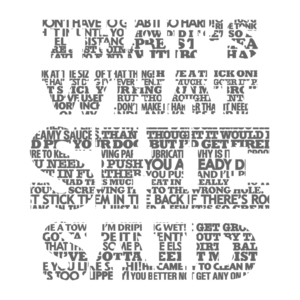
A double entendre is a figure of speech in which a spoken phrase is devised to be understood in either of two ways. Typically one of the interpretations is rather obvious whereas the other is more subtle. The more subtle of the interpretations may have a humorous, ironic, or risqué purpose. It may also convey a message that would be socially awkward, or even offensive, to state directly (the Oxford English Dictionary describes a double entendre as being used to ‘convey an indelicate meaning’).
A double entendre may exploit puns to convey the second meaning. Double entendres generally rely on multiple meanings of words, or different interpretations of the same primary meaning. They often exploit ambiguity and may be used to introduce it deliberately in a text. Sometimes a homophone (i.e. a different spelling that yields the same pronunciation) can be used as a pun as well as a ‘double entendre’ of the subject.
read more »
Posted in Humor, Language, Sex |
Leave a Comment »
February 4, 2013

A paraprosdokian [par-uh-pros-doke-ee-uhn] is a figure of speech in which the latter part of a sentence or phrase is surprising or unexpected in a way that causes the reader or listener to reframe or reinterpret the first part. It is frequently used for humorous or dramatic effect, sometimes producing an anticlimax. For this reason, it is extremely popular among comedians and satirists. Some paraprosdokians not only change the meaning of an early phrase, but they also play on the double meaning of a particular word, creating a form of syllepsis.
‘Paraprosdokian’ comes from Greek for ‘against ‘expectation.’ Canadian linguist and etymology author William Gordon Casselman argues that, while the word is now in wide circulation, it is not a term of classical (or medieval) Greek or Latin rhetoric, but a late 20th century neologism. However, it occurs—with the same meaning—in Greek rhetorical writers of the 1st century BCE and the 1st and 2nd centuries CE.
Posted in Humor, Language |
2 Comments »
January 29, 2013

In the mathematics of probability, a stochastic [stuh-kas-tik] process is a random function, such as stock market and exchange rate fluctuations; signals such as speech, audio, and video; medical data such as a patient’s EKG, EEG, blood pressure, or temperature; and random movement such as Brownian motion (random moving of particles suspended in a fluid) or random walks (random, computer generated paths).
Other examples of random fields include static images, random topographies (landscapes), or composition variations of an inhomogeneous material. The stochastic process is the probabilistic counterpart to deterministic systems (in which no randomness is involved in the development of future states of the system). Instead of describing a process which can only evolve in one way, in a stochastic or random process there is some indeterminacy: even if the initial condition (or starting point) is known, there are several (often infinitely many) directions in which the process may evolve.
Posted in Language, Science |
Leave a Comment »
January 28, 2013

Mary Roach is an American author, specializing in popular science. She currently resides in Oakland, California. To date, she has published four books: ‘Stiff: The Curious Lives of Human Cadavers’ (2003), ‘Spook: Science Tackles the Afterlife’ (2005), ‘Bonk: The Curious Coupling of Science and Sex’ (2008) and ‘Packing for Mars: The Curious Science of Life in the Void’ (2010). Roach was raised in Etna, New Hampshire.
She received a bachelor’s degree in psychology from Wesleyan University in 1981. After college, Roach moved to San Francisco and spent a few years working as a freelance copy editor. She worked as a columnist, and also worked in public relations for a brief time. Her writing career began while working part-time at the San Francisco Zoological Society, producing press releases on topics such as elephant wart surgery.
read more »
Posted in Humor, Language, Science |
Leave a Comment »
January 28, 2013
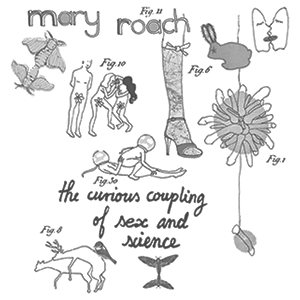
Bonk: The Curious Coupling of Science and Sex was written by Mary Roach in 2008. The book follows the winding history of science and its exploration of human sexuality, going back as far as Aristotle and finally ending with recent discoveries about the origination and anatomy of the female orgasm. Throughout, Mary Roach provides a humorous and often very personal view—both as a participant and observer—of humans, scientists, animals, and sex machines.
Of the book’s numerous accounts, Roach discusses artificial insemination of sows in Denmark, the notorious history of sex machines, as well as much discussion and commentary on Kinsey’s notorious attic sex experiments. Her footnotes provide additional humor; as in a sentence which includes several DSM diagnoses listed as acronyms she adds ‘And from HAFD (hyperactive acronym formation disorder).’ In the book, Mary Roach describes a session in which she and her husband Ed volunteer to have sex in a 20-inch-diameter (510 mm) MRI tube in the interests of science. During the experiment, a doctor looks on, making suggestions, and finally telling Ed that he ‘may ejaculate now.’
Posted in Humor, Language, Sex |
Leave a Comment »
January 28, 2013
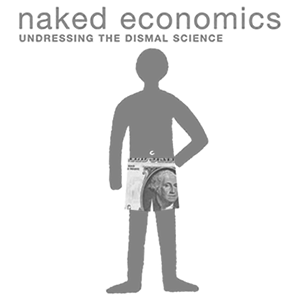
Charles Wheelan is the author of ‘Naked Economics: Undressing the Dismal Science,’ a 2002 book that attempts to translate basic economic issues into a format that can be easily read by people with little or no previous knowledge of economics. In 2013, he published a follow-up called ‘Naked Statistics: Stripping the Dread from the Data.’
In 2009, he was an unsuccessful Democratic candidate in the special election for Illinois’s 5th congressional district, the seat vacated by Rahm Emanuel. Wheelan graduated from Dartmouth College, where he was a member of Alpha Delta fraternity. From 1997 to 2002, he was the Midwest correspondent for ‘The Economist.’ Wheelan is a regular contributor to the ‘Motley Fool Radio Show’ on National Public Radio and to the ‘Eight Forty-Eight’ program on WBEZ, Chicago Public Radio.
Posted in Education, Language, Money |
Leave a Comment »
January 28, 2013

The First law of holes is a proverb attributed to British politician Denis Healey. It states, ‘If you find yourself in a hole, stop digging.’
The meaning behind this proverb is that if you find yourself in an undesirable situation (‘the hole’), such as an argument with others, you should not ignore the situation or attempt to continue what you were doing (the ‘digging’), as it can make the situation worse. It has been cited numerous times by other politicians and in books.
Posted in Humor, Language, Politics |
Leave a Comment »
January 24, 2013

Animutation is a form of web-based computer animation, typically created in Adobe Flash and characterized by unpredictable montages of pop-culture images set to music, often in a language foreign to the intended viewers. It is not to be confused with manual collage animation (e.g., the work of Stan Vanderbeek and Terry Gilliam) which predates the Internet.
Animutation was ‘invented’ by American comedian Neil Cicierega. Cicierega claims to have been inspired by several sources, notably bizarre Japanese commercials (parodied, for example, by the Simpsons’ Mr. Sparkle), and Martin Holmström’s ‘Hatten är din’ Soramimi video (interpreting lyrics in one language as similar-sounding lyrics in another language) made for the ‘Habbeetik’ song by Azar Habib.
read more »
Posted in Humor, Language, World |
Leave a Comment »
January 23, 2013

Soramimi (‘mishearing’; [feigned] ‘deafness’) and Soramimi kashi (‘misheard lyrics’) are Japanese terms for homophonic translation of song lyrics, that is, interpreting lyrics in one language as similar-sounding lyrics in another language. A bilingual soramimi word play contrasts with a monolingual mondegreen (mishearing a phrase as a result of near-homophony, in a way that gives it a new meaning).
And example of Soramimi kashi is the Moldovan band O-Zone’s song ‘Dragostea din tei’ (named from the words in the opening of the song), known on the web as the ‘Numa Numa’ song. The refrain of the original song (in Romanian) is: ‘Vrei să pleci dar nu mă, nu mă iei…’ (‘You want to leave but you don’t want, don’t want to take me…’) A soramimi version, from the Japanese flash animation ‘Maiyahi,’ translates these words as: ‘Bei sa, beishu ka, nomanoma-yei!’ (‘Rice, is it, rice wine, drink it drink it yeah!’)
read more »
Posted in Humor, Language, World |
Leave a Comment »
January 23, 2013

A mondegreen [mon-di-green] is the mishearing or misinterpretation of a phrase as a result of near-homophony, in a way that gives it a new meaning. It most commonly is applied to a line in a poem or a lyric in a song. American writer Sylvia Wright coined the term in her essay ‘The Death of Lady Mondegreen,’ published in ‘Harper’s Magazine’ in 1954. The phenomenon is not limited to English, with examples cited by Fyodor Dostoyevsky, in the Hebrew song ‘Háva Nagíla’ (‘Let’s Be Happy’), and in Bollywood movies.
A closely related category is ‘soramimi’—songs that produce unintended meanings when homophonically translated to another language. The unintentionally incorrect use of similar-sounding words or phrases in speaking is a malapropism. If there is a connection in meaning, it can be called an ‘eggcorn.’ If a person stubbornly sticks to a mispronunciation after being corrected, that can be described as ‘mumpsimus.’
read more »
Posted in Humor, Language |
Leave a Comment »
January 23, 2013
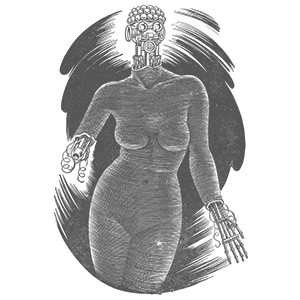
Second Variety is an influential short story by Philip K. Dick first published in ‘Space Science Fiction’ magazine in 1953. A nuclear war between the Soviet Union and the West has reduced much of the world to a barren wasteland.
The war continues however among the scattered remains of humanity. The Western forces have recently developed ‘claws,’ which are autonomous self-replicating robots to fight on their side. It is one of Dick’s many stories in which nuclear war has rendered the Earth’s surface uninhabitable. The story was adapted to the movie ‘Screamers’ in 1995.
Posted in Art, Language, Technology |
Leave a Comment »


 The Daily Omnivore