February 26, 2013
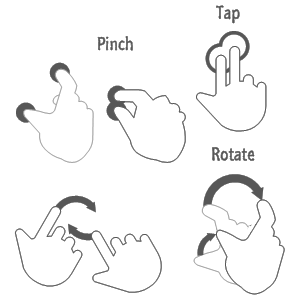
Gesture recognition is a topic in computer science and language technology with the goal of interpreting human gestures via mathematical algorithms. Gestures can originate from any bodily motion or state but commonly originate from the face or hand. Current focuses in the field include emotion recognition from the face and hand gesture recognition. Many approaches have been made using cameras and computer vision algorithms to interpret sign language.
However, the identification and recognition of posture, gait, proxemics (culture-specific, personal boundaries), and human behaviors is also the subject of gesture recognition techniques. Gesture recognition can be seen as a way for computers to begin to understand human body language, offering richer interaction between machines and humans than that afforded by a mouse and keyboard.
read more »
Posted in Language, Technology |
Leave a Comment »
February 25, 2013
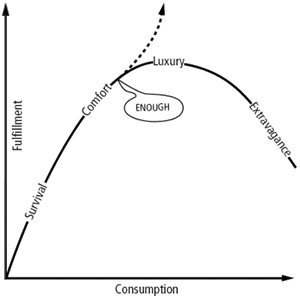
Growth Fetish is a 2003 book about economics and politics by the Australian liberal political theorist Clive Hamilton. The book argues that the policies of unfettered capitalism pursued by the west for the last 50 years has largely failed, since the underlying purpose of the creation of wealth is happiness, and Hamilton contends that people in general are no happier now than 50 years ago, despite the huge increase in personal wealth. In fact, he suggests that the reverse is true. He states that the pursuit of growth has become a fetish, in that it is seen as a universal magic cure for all of society’s ills.
Hamilton also proposes that the pursuit of growth has been at a tremendous cost in terms of the environment, erosion of democracy, and the values of society as a whole. One result is that we, as a society, have become obsessed with materialism and consumerism. Hamilton’s catchphrase ‘People buy things they don’t need, with money they don’t have, to impress people they don’t like’ neatly sums up his philosophy on consumerism.
read more »
Posted in Language, Money |
Leave a Comment »
February 25, 2013
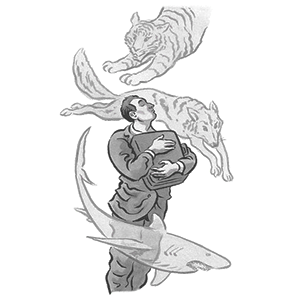
‘Animal spirits‘ is the term economist John Maynard Keynes used in his 1936 book ‘The General Theory of Employment, Interest and Money’ to describe emotions which influence human behavior and can be measured in terms of consumer confidence. It has since been argued that trust is also included or produced by ‘animal spirits.’ Several articles and at least two books with a focus on “animal spirits” were published in 2008 and 2009 as a part of the Keynesian resurgence.
According to Keynes: ‘Even apart from the instability due to speculation, there is the instability due to the characteristic of human nature that a large proportion of our positive activities depend on spontaneous optimism rather than mathematical expectations, whether moral or hedonistic or economic. Most, probably, of our decisions to do something positive, the full consequences of which will be drawn out over many days to come, can only be taken as the result of animal spirits – a spontaneous urge to action rather than inaction, and not as the outcome of a weighted average of quantitative benefits multiplied by quantitative probabilities.’
read more »
Posted in Language, Money |
Leave a Comment »
February 19, 2013

Jejemon is a pop culture phenomenon in the Philippines. According to ‘Urban Dictionary,’ a Jejemon is a person ‘who has managed to subvert the English language to the point of incomprehensibility.’ ‘The Philippine Daily Inquirer’ describes Jejemons as a ‘new breed of hipster who have developed not only their own language and written text but also their own subculture and fashion.’ Short-hand typing was first popularized by text messaging (limited to 160 characters per text). As a result, an ‘SMS language’ developed in which words were shortened in order to fit the 160-character limit.
The Jejemons are said to be the new jologs, a term used for Filipinos of the lower income class. The sociolect of the Jejemons, called Jejenese, is derived from English, Filipino and their code-switched variant, Taglish. It has its own, albeit unofficial, orthography, known as Jejebet, which uses the Filipino variant of the Roman alphabet, Arabic numerals and other special characters. Words are created by rearranging letters in a word, alternating capitalization, with an over-usage of the letters H, X or Z, and silent letters. It has similarities with Leetspeak, primarily the alphanumeric nature of its writing.
Posted in Humor, Language, World |
Leave a Comment »
February 19, 2013

2600: The Hacker Quarterly is an American publication that specializes in publishing technical information on a variety of subjects including telephone switching systems, Internet protocols and services, as well as general news concerning the computer ‘underground’ and left wing, and sometimes (but not recently), anarchist issues.
The magazine’s name comes from the phreaker discovery in the 1960s that the transmission of a 2600 hertz tone (which could be produced perfectly with a plastic toy whistle given away free with Cap’n Crunch cereal—discovered by friends of John Draper) over a long-distance trunk connection gained access to ‘operator mode’ and allowed the user to explore aspects of the telephone system that were not otherwise accessible.
read more »
Posted in Language, Politics, Technology |
Leave a Comment »
February 18, 2013

‘Private Guns, Public Health‘ is a 2004 non-fiction book by David Hemenway, an economist who has served as Professor of Health Policy at the Harvard School of Public Health as well as the Director of Harvard’s Injury Control Research Center. He argues that the widespread ownership of firearms in private hands in the U.S. promotes the spread of the ‘disease’ of gun violence, and he takes a collective interpretation of the Second Amendment while stating that increased regulations are absolutely necessary in the purposes of public safety. Hemenway makes the central case that ‘more guns in a community lead to more homicide.’
Hemenway interprets the issues of gun violence and gun politics in the U.S. through a public health lens, which he believes ’emphasizes prevention rather than fault-finding, blame, or revenge.’ He writes that he is not ‘anti-gun’ or ‘anti-gun owner’ any more than people who advocate for consumer safety measures in cars are ‘anti-cars.’ He sums the goal of the book up as ‘injury prevention.’
read more »
Posted in Health, Language, Politics |
Leave a Comment »
February 18, 2013

‘More Guns, Less Crime‘ is a book by economist John Lott that says violent crime rates go down when states permit the concealed carry of guns. He presents the results of his statistical analysis of crime data for every county in the United States during 29 years from 1977 to 2005. The book examines city, county and state level data from the entire United States and measures the impact of 11 different types of gun control laws on crime rates. The book expands on an earlier study published in 1997 by Lott and his co-author David Mustard in ‘The Journal of Legal Studies.’
Lott also examines the effects of gun control laws, including the Brady Law. His conclusion is that ‘shall issue’ laws, which allow citizens to carry concealed weapons, steadily decrease violent crime. He explains that this result makes sense because criminals are deterred by the risk of attacking an armed victim. As more citizens arm themselves, the danger to criminals increases. Lott also examines the effects of training requirements on crime rate and accident rate. He finds that training requirements have very little effect on both crime rates and accident rates.
read more »
Posted in Language, Politics |
Leave a Comment »
February 17, 2013
Coolness is an admired aesthetic of attitude, behavior, comportment, appearance and style, influenced by and a product of the Zeitgeist (‘spirit of the age’). Because of the varied and changing connotations of cool, as well its subjective nature, the word has no single meaning.
It has associations of composure and self-control and often is used as an expression of approval. Although commonly regarded as slang, it is widely used among disparate social groups, and has endured in usage for generations. Because there is no single concept of cool, one of its essential characteristics is mutability—what is considered cool changes over time and varies among cultures and generations.
read more »
Posted in Language, Money, Philosophy |
Leave a Comment »
February 14, 2013

‘The Rebel Sell: Why the culture can’t be jammed’ (published in the US as ‘Nation of Rebels: Why Counterculture Became Consumer Culture’) is a non-fiction book written by University of Toronto philosopher Joseph Heath and Canadian journalist Andrew Potter in 2004. Their central claim is that counter-cultural movements have failed, and that they all share a common fatal error in the way they understand society; thus counter-culture is not a threat to ‘the system.’
Following their claim that conformity isn’t something perpetuated by mainstream media, Potter and Heath identify other sources of conformity using work from Hobbes, Rousseau, and Freud. They describe conformity as often the byproduct of simple market preferences or, alternatively, as an attempt to resolve a collective action problem. For instance, they claim that school uniforms curb the fashion ‘arms race’ created between students when no restrictions are in place, and that they are not intended merely to stamp out individualism, as many counter-cultural figures have suggested.
read more »
Posted in Language, Money, Politics |
Leave a Comment »
February 12, 2013
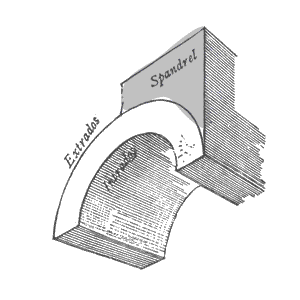
In evolutionary biology, a spandrel [span-druhl] is a a characteristic that did not originate by the direct action of natural selection, that was later co-opted for a current use. The term was coined by the Harvard paleontologist Stephen Jay Gould and population geneticist Richard Lewontin in their influential paper ‘The Spandrels of San Marco and the Panglossian Paradigm: A Critique of the Adaptationist Program’ (1979).
In their paper Gould and Lewontin employed the analogy of spandrels in Renaissance architecture: curved areas of masonry between arches supporting a dome that arise as a consequence of decisions about the shape of the arches and the base of the dome, rather than being designed for the artistic purposes for which they were often employed. The authors singled out properties like the necessary number of four and their specific three-dimensional shape.
read more »
Posted in Language, Science |
1 Comment »
February 11, 2013
Tall poppy syndrome (TPS) is a pejorative term primarily used in the UK, Canada, New Zealand, and other Anglosphere nations to describe a social phenomenon in which people of genuine merit are resented, attacked, cut down, or criticized because their talents or achievements elevate them above or distinguish them from their peers.
Australia’s usage of the term has evolved and is not uniformly negative. In Australia, a long history of ‘underdog’ culture and profound respect for humility in contrast to that of Australia’s English feudal heritage results in a different understanding of the concept.
read more »
Posted in Language, War, World |
Leave a Comment »
February 10, 2013

Naked Lunch is the 1991 film adaptation written and directed by David Cronenberg, of William S. Burroughs’ novel of the same name. Rather than attempting a straight adaptation, Cronenberg took a few elements from the book and combined them with elements of Burroughs’ life, creating a hybrid film about the writing of the book rather than the book itself. Peter Weller starred as William Lee, the pseudonym Burroughs used when he wrote ‘Junkie.’
Lee is an exterminator who finds that his wife Joan is stealing his insecticide (pyrethrum) to use as a drug. When Lee is arrested by the police, he begins hallucinating because of ‘bug powder’ exposure. He believes he is a secret agent whose controller (a giant bug) assigns him the mission of killing Joan, who is an agent of an organization called Interzone Incorporated. Lee dismisses the bug and its instructions and kills it. He returns home to find Joan sleeping with Hank, one of his writer friends. Shortly afterwards, he accidentally kills her while attempting to shoot a drinking glass off her head in imitation of William Tell.
read more »
Posted in Art, Drugs, Language |
Leave a Comment »



