November 5, 2012

The phrase ‘naturalistic fallacy‘ refers to the claim that what is natural is inherently good or right, and that what is unnatural is bad or wrong (‘appeal to nature’). It is the converse of the ‘moralistic fallacy,’ the notion that what is good or right is natural and inherent. The naturalistic fallacy is related to (and even confused with) Hume’s ‘is–ought problem,’ which examines the difference between descriptive statements (about what is) and prescriptive or normative statements (about what ought to be).
Another usage of ‘naturalistic fallacy’ was described by British philosopher G. E. Moore in his 1903 book ‘Principia Ethica.’ Moore stated that a naturalistic fallacy is committed whenever a philosopher attempts to prove a claim about ethics by appealing to a definition of the term ‘good’ in terms of one or more natural properties (such as ‘pleasant,’ ‘more evolved,’ ‘desired,’ etc.).
read more »
Posted in Language, Philosophy, Science |
Leave a Comment »
November 4, 2012
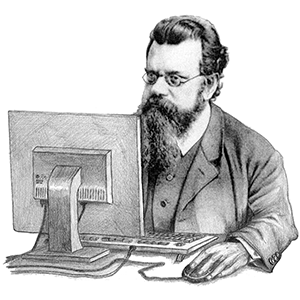
Night Thoughts of a Classical Physicist is a 1918 novel by historian of science Russell McCormmach, which explores the world of physics in the early 20th century—including the advent of modern physics and the role of physicists in World War I—through the recollections of the fictional Viktor Jakob.
Jakob is an old German physicist who spent most of his career during the period of classical physics, a paradigm being confronted by the rapid and radical developments of relativistic physics of Albert Einstein in 1900s and 1910s. This conflict allows for extensive examination of the various tensions placed on Jakob by the academic environment, the German academic system and the changing academic culture of the early 20th century.
read more »
Posted in Language, Science |
Leave a Comment »
November 3, 2012


A paradigm [par-uh-dahym] shift (or revolutionary science) is, according to American physicist Thomas Kuhn, in his influential book ‘The Structure of Scientific Revolutions’ (1962), a change in the basic assumptions, or paradigms, within the ruling theory of science.
It is in contrast to his idea of ‘normal science’ (everyday problem solving within an existing paradigm). According to Kuhn, ‘A paradigm is what members of a scientific community, and they alone, share.’ Unlike a normal scientist, Kuhn held, ‘a student in the humanities has constantly before him a number of competing and incommensurable solutions to these problems, solutions that he must ultimately examine for himself.’
read more »
Posted in Language, Science |
Leave a Comment »
November 2, 2012

The Structure of Scientific Revolutions by Thomas S. Kuhn, is an analysis of the history of science, published in 1962. Its publication was a landmark event in the history, philosophy, and sociology of scientific knowledge and it triggered an ongoing worldwide assessment and reaction in—and beyond—those scholarly communities. In this work, Kuhn challenged the then prevailing view of progress in ‘normal science’ (the routine work of scientists experimenting within a paradigm).
Scientific progress had been seen primarily as ‘development-by-accumulation’ of accepted facts and theories. Kuhn argued for an episodic model in which periods of such conceptual continuity in normal science were interrupted by periods of revolutionary science. During revolutions in science the discovery of anomalies leads to a whole new paradigm that changes the rules of the game and the ‘map’ directing new research, asks new questions of old data, and moves beyond the puzzle-solving of normal science.
read more »
Posted in Language, Philosophy, Science |
1 Comment »
November 1, 2012
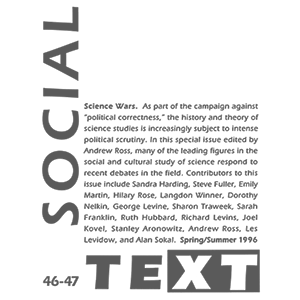
The science wars were a series of intellectual exchanges, between scientific realists and postmodernist critics, about the nature of scientific theory which took place principally in the United States in the 1990s. The postmodernists questioned scientific objectivity, and critiqued the scientific method and scientific knowledge in cultural studies, cultural anthropology, feminist studies, comparative literature, media studies, and science and technology studies. The scientific realists countered that objective scientific knowledge is real, and accused postmodernist critics of having little understanding of the science they were criticizing.
Until the mid-20th century, the philosophy of science had concentrated on the viability of scientific method and knowledge, proposing justifications for the truth of scientific theories and observations and attempting to discover on a philosophical level why science worked. Already Karl Popper had begun to attack this view. Popper denied outright that justification existed for such concepts as truth, probability or even belief in scientific theories, thereby laying fertile foundations for the growth of postmodernist attitudes.
read more »
Posted in Education, Language, Science |
Leave a Comment »
November 1, 2012
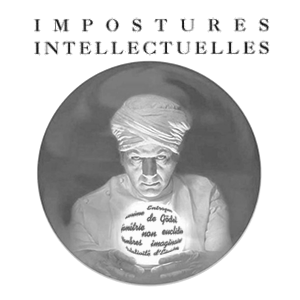
‘Fashionable Nonsense: Postmodern Intellectuals’ Abuse of Science’ (French: ‘Impostures Intellectuelles’) is a 1997 book by NYU physics professor Alan Sokal and Belgian theoretical physicist Jean Bricmont. Sokal is best known for the Sokal Affair, in which he submitted a deliberately absurd article to ‘Social Text,’ a critical theory journal, and was able to get it published. The English editions were revised for greater relevance to debates in the English-speaking world.
As part of the so-called ‘science wars’ (a series of intellectual exchanges, between scientific realists and postmodernist critics), the book criticizes postmodernism in academia for what it claims are misuses of scientific and mathematical concepts in postmodern writing. According to some reports, the response within the humanities was ‘polarized.’ Critics of Sokal and Bricmont charge that they lack understanding of the writing they were criticizing. Responses from the scientific community were more supportive.
read more »
Posted in Language, Philosophy, Science |
Leave a Comment »
October 28, 2012

‘Understanding Media: The Extensions of Man’ is a 1964 book by Marshall McLuhan. A pioneering study in media theory, it proposes that media themselves, not the content they carry, should be the focus of study. McLuhan suggests that a medium affects the society in which it plays a role not by the content delivered through it, but by the characteristics of the medium itself.
McLuhan pointed to the light bulb as an example. A light bulb does not have content in the way that a newspaper has articles or a television has programs, yet it is a medium that has a social effect; that is, a light bulb enables people to create spaces during nighttime that would otherwise be enveloped by darkness. He describes the light bulb as a medium without any content. McLuhan states that ‘a light bulb creates an environment by its mere presence.’
read more »
Posted in Education, Language, Technology |
Leave a Comment »
October 28, 2012

Global Village is a term closely associated with Marshall McLuhan, popularized in his books ‘The Gutenberg Galaxy: The Making of Typographic Man’ (1962) and ‘Understanding Media’ (1964). McLuhan described how the globe has been contracted into a village by electric technology and the instantaneous movement of information from every quarter to every point at the same time. In bringing all social and political functions together in a sudden implosion, electric speed heightened human awareness of responsibility to an intense degree.
The Hindu concept of Vasudhaiva Kutumbakam (the whole world is one single family) is a similar thought, according to which: ‘Only small men discriminate saying: One is a relative; the other is a stranger. For those who live magnanimously the entire world constitutes but a family.’ The same concept is to be found in an ancient Tamil poem as, ‘every country is my own and all the people are my kinsmen.’
read more »
Posted in Language, Technology, World |
Leave a Comment »
October 28, 2012

‘The Gutenberg Galaxy: The Making of Typographic Man’ is a book by Marshall McLuhan, in which he analyzes the effects of mass media, especially the printing press, on European culture and human consciousness.
It popularized the term ‘global village,’ which refers to the idea that mass communication allows a village-like mindset to apply to the entire world; and ‘Gutenberg Galaxy,’ which we may regard today to refer to the accumulated body of recorded works of human art and knowledge, especially books. McLuhan studies the emergence of what he calls ‘Gutenberg Man,’ the subject produced by the change of consciousness wrought by the advent of the printed book.
read more »
Posted in Language, Technology, World |
Leave a Comment »
October 28, 2012

Alt porn tends to involve members of such subcultures as goths, punks, or ravers and is often produced by small and independent websites or filmmakers. It often features models with body modifications such as tattoos, piercings, or scarifications, or temporary modifications such as dyed hair.
The term indie porn is also sometimes used, though this term is more generally used as a synonym for independent pornography, regardless of affinity with any kind of alternative subculture. While pornography specifically oriented toward alternative culture did not arise until the 1990s, the work of Gregory Dark, David Aaron Clark, Michael Ninn, and Stephen Sayadian are seen by some as predecessors of alt porn. ‘The Cinema of Transgression’ of Richard Kern and Nick Zedd (as well as Kern’s later photographic work) can also be viewed as early examples of alt porn.
read more »
Posted in Language, Sex |
2 Comments »
October 28, 2012


Psychedelia [sahy-ki-deel-yuh] is a name given to the subculture of people who use psychedelic drugs, and a style of psychedelic artwork and psychedelic music derived from the experience of altered consciousness that uses highly distorted and surreal visuals, sound effects and reverberation, and bright colors and full spectrums and animation (including cartoons) to evoke and convey to a viewer or listener the artist’s experience while using such drugs.
A psychedelic experience is characterized by the striking perception of aspects of one’s mind previously unknown, or by the creative exuberance of the mind liberated from its ostensibly ordinary fetters.
read more »
Posted in Art, Drugs, Language |
Leave a Comment »
October 25, 2012
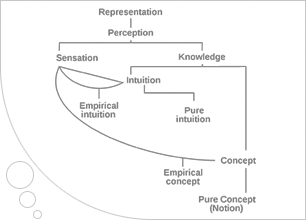

The noumenon [noo-muh-non] is a posited object or event that is known (if at all) without the use of the senses. The term is generally used in contrast with, or in relation to ‘phenomenon,’ which refers to anything that appears to, or is an object of, the senses. In Ancient philosophy, the noumenal realm was equated with the world of ideas known to the philosophical mind, in contrast to the phenomenal realm, which was equated with the world of sensory reality, known to the uneducated mind.
Modern philosophy has generally denied the possibility of knowledge independent of the senses, and Immanuel Kant gave this point of view its classical version, saying that the noumenal world may exist, but it is completely unknowable to humans. In Kantian philosophy the unknowable noumenon is often linked to the unknowable ‘thing per se’ (‘Ding an sich’), although how to characterize the nature of the relationship is a question yet open to some controversy.
read more »
Posted in Language, Philosophy |
Leave a Comment »


 The Daily Omnivore