October 28, 2012
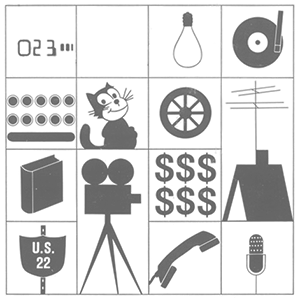
‘Understanding Media: The Extensions of Man’ is a 1964 book by Marshall McLuhan. A pioneering study in media theory, it proposes that media themselves, not the content they carry, should be the focus of study. McLuhan suggests that a medium affects the society in which it plays a role not by the content delivered through it, but by the characteristics of the medium itself.
McLuhan pointed to the light bulb as an example. A light bulb does not have content in the way that a newspaper has articles or a television has programs, yet it is a medium that has a social effect; that is, a light bulb enables people to create spaces during nighttime that would otherwise be enveloped by darkness. He describes the light bulb as a medium without any content. McLuhan states that ‘a light bulb creates an environment by its mere presence.’
read more »
Posted in Education, Language, Technology |
Leave a Comment »
October 28, 2012

Global Village is a term closely associated with Marshall McLuhan, popularized in his books ‘The Gutenberg Galaxy: The Making of Typographic Man’ (1962) and ‘Understanding Media’ (1964). McLuhan described how the globe has been contracted into a village by electric technology and the instantaneous movement of information from every quarter to every point at the same time. In bringing all social and political functions together in a sudden implosion, electric speed heightened human awareness of responsibility to an intense degree.
The Hindu concept of Vasudhaiva Kutumbakam (the whole world is one single family) is a similar thought, according to which: ‘Only small men discriminate saying: One is a relative; the other is a stranger. For those who live magnanimously the entire world constitutes but a family.’ The same concept is to be found in an ancient Tamil poem as, ‘every country is my own and all the people are my kinsmen.’
read more »
Posted in Language, Technology, World |
Leave a Comment »
October 28, 2012

‘The Gutenberg Galaxy: The Making of Typographic Man’ is a book by Marshall McLuhan, in which he analyzes the effects of mass media, especially the printing press, on European culture and human consciousness.
It popularized the term ‘global village,’ which refers to the idea that mass communication allows a village-like mindset to apply to the entire world; and ‘Gutenberg Galaxy,’ which we may regard today to refer to the accumulated body of recorded works of human art and knowledge, especially books. McLuhan studies the emergence of what he calls ‘Gutenberg Man,’ the subject produced by the change of consciousness wrought by the advent of the printed book.
read more »
Posted in Language, Technology, World |
Leave a Comment »
October 28, 2012

Alt porn tends to involve members of such subcultures as goths, punks, or ravers and is often produced by small and independent websites or filmmakers. It often features models with body modifications such as tattoos, piercings, or scarifications, or temporary modifications such as dyed hair.
The term indie porn is also sometimes used, though this term is more generally used as a synonym for independent pornography, regardless of affinity with any kind of alternative subculture. While pornography specifically oriented toward alternative culture did not arise until the 1990s, the work of Gregory Dark, David Aaron Clark, Michael Ninn, and Stephen Sayadian are seen by some as predecessors of alt porn. ‘The Cinema of Transgression’ of Richard Kern and Nick Zedd (as well as Kern’s later photographic work) can also be viewed as early examples of alt porn.
read more »
Posted in Language, Sex |
2 Comments »
October 28, 2012
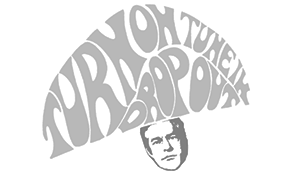

Psychedelia [sahy-ki-deel-yuh] is a name given to the subculture of people who use psychedelic drugs, and a style of psychedelic artwork and psychedelic music derived from the experience of altered consciousness that uses highly distorted and surreal visuals, sound effects and reverberation, and bright colors and full spectrums and animation (including cartoons) to evoke and convey to a viewer or listener the artist’s experience while using such drugs.
A psychedelic experience is characterized by the striking perception of aspects of one’s mind previously unknown, or by the creative exuberance of the mind liberated from its ostensibly ordinary fetters.
read more »
Posted in Art, Drugs, Language |
Leave a Comment »
October 25, 2012
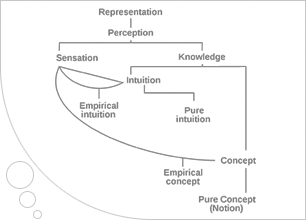

The noumenon [noo-muh-non] is a posited object or event that is known (if at all) without the use of the senses. The term is generally used in contrast with, or in relation to ‘phenomenon,’ which refers to anything that appears to, or is an object of, the senses. In Ancient philosophy, the noumenal realm was equated with the world of ideas known to the philosophical mind, in contrast to the phenomenal realm, which was equated with the world of sensory reality, known to the uneducated mind.
Modern philosophy has generally denied the possibility of knowledge independent of the senses, and Immanuel Kant gave this point of view its classical version, saying that the noumenal world may exist, but it is completely unknowable to humans. In Kantian philosophy the unknowable noumenon is often linked to the unknowable ‘thing per se’ (‘Ding an sich’), although how to characterize the nature of the relationship is a question yet open to some controversy.
read more »
Posted in Language, Philosophy |
Leave a Comment »
October 22, 2012
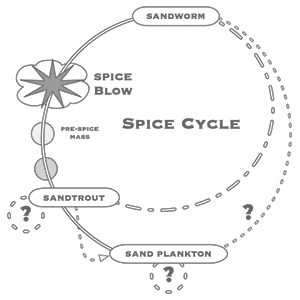
Melange [mey-lahnj] from French ‘mélange’ (‘set of diverse elements’) – also called the ‘spice’ – is the name of the fictional drug central to the ‘Dune’ series of science fiction novels by Frank Herbert, and derivative works.
In the series, the most essential and valuable commodity in the universe is melange, a geriatric drug that gives the user a longer life span, greater vitality, and heightened awareness; it can also unlock prescience (foreknowledge of events) in some humans, depending upon the dosage and the consumer’s physiology. This prescience-enhancing property makes safe and accurate interstellar travel possible. Melange comes with a steep price, however: it is addictive, and withdrawal is fatal.
read more »
Posted in Drugs, Food, Language |
Leave a Comment »
October 21, 2012

‘Cognitive Surplus: Creativity and Generosity in a Connected Age’ is a 2010 non-fiction book by Clay Shirky. The book is an indirect sequel to Shirky’s ‘Here Comes Everybody,’ which covered the impact of social media. The book’s central theme is that people are now learning how to use more constructively the free time afforded to them since the 1940s for creative acts rather than consumptive ones, particularly with the advent of online tools that allow new forms of collaboration.
It goes on to catalog the means and motives behind these new forms of cultural production, as well as key examples. While Shirky acknowledges that the activities that we use our cognitive surplus for may be frivolous (such as creating ‘LOLcats’), the trend as a whole is leading to valuable and influential new forms of human expression. He also asserts that even the most inane forms of creation and sharing are preferable to the hundreds of billions of hours spent consuming television.
read more »
Posted in Language, Money, Technology |
Leave a Comment »
October 21, 2012

‘Here Comes Everybody: The Power of Organizing Without Organizations’ is a 2008 book by Clay Shirky, which evaluates the effect of the Internet on modern group dynamics. The author considers examples such as ‘Wikipedia’ and ‘MySpace’ in his analysis, and says his book is about ‘what happens when people are given the tools to do things together, without needing traditional organizational structure.’
The title of the work alludes to ‘HCE,’ a recurring and central figure in James Joyce’s ‘Finnegans Wake.’ In the book, Shirky recounts how social tools such as blogging software like WordPress and Twitter, file sharing platforms like Flickr, and online collaboration platforms like Wikipedia support group conversation and group action in a way that previously could only be achieved through institutions.
read more »
Posted in Language, Technology |
Leave a Comment »
October 10, 2012
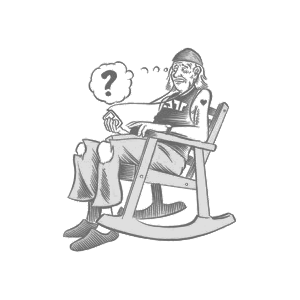
Rockism is a term referring to perceived biases in popular music criticism, coined by UK singer songwriter Pete Wylie in the early 1980s. The fundamental tenet of rockism is that some forms of popular music, and some musical artists, are more authentic than others. While there are many vague interpretations of it, rockism is essentially believed to treat rock music as normative.
From a rockist view, rock is the standard state of popular music. Interestingly, it is not entirely rockist to love rock, or to write about it. One may also care about R&B or norteño or bubblegum pop, but discuss them in a rockist way. The idea is built into the way people talk informally about what kinds of popular music interest them. Rockism is often suspicious of the use of computer-based production systems.
read more »
Posted in Art, Language, Money |
1 Comment »
October 10, 2012
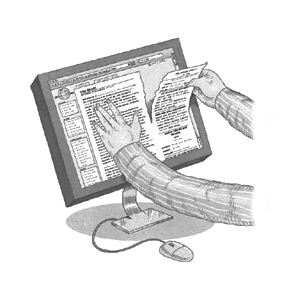
Assemblage [uh-sem-blij] refers to a text ‘built primarily and explicitly from existing texts in order to solve a writing or communication problem in a new context.’ The concept was first proposed by Johndan Johnson-Eilola (author of ‘Datacloud’) and Stuart Selber in the journal, ‘Computers & Composition,’ in 2007. The notion of assemblages builds on remix practices, which blur distinctions between invented and borrowed work.
Johnson-Eilola and Selber discuss the intertextual nature of writing, and they assert that participation in existing discourse necessarily means that composition cannot occur separate from that discourse. They state that ‘productive participation involves appropriation and re-appropriation of the familiar’ in a manner that conforms to existing discourse and audience expectations.
read more »
Posted in Art, Education, Language |
Leave a Comment »
October 10, 2012
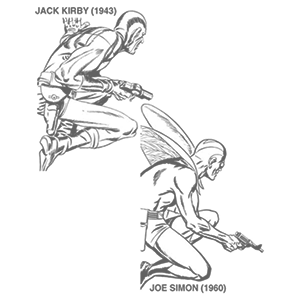
Swipe is a comics term that refers to the intentional copying of a cover, panel, or page from an earlier comic book or graphic novel without crediting the original artist.
Artists Jack Kirby, Neal Adams, Hergé, and Jim Lee are common targets of swipes (though even ‘The King’ is not above reproach: Kirby was known to have swiped from Hal Foster early in his career, as were many Golden Age artists — many of whom kept ‘swipe files’ of material to be copied as needed).
read more »
Posted in Art, Language, Money |
Leave a Comment »



