September 27, 2012

High context culture and the contrasting ‘low context culture’ are terms presented by the anthropologist Edward T. Hall in his 1976 book ‘Beyond Culture.’ It refers to a culture’s tendency to use high context messages over low context messages in routine communication. This choice of communication styles translates into a culture that will cater to in-groups, an in-group being a group that has similar experiences and expectations, from which inferences are drawn.
In a high context culture, many things are left unsaid, letting the culture explain. Words and word choice become very important in higher context communication, since a few words can communicate a complex message very effectively to an in-group (but less effectively outside that group), while in a lower context culture, the communicator needs to be much more explicit and the value of a single word is less important.
read more »
Posted in Language, World |
Leave a Comment »
September 27, 2012

Henny Penny, also known as ‘Chicken Licken’ or ‘Chicken Little,’ is a folk tale with a moral in the form of a cumulative tale about a chicken who believes the world is coming to an end. The phrase ‘The sky is falling!’ features prominently in the story, and has passed into the English language as a common idiom indicating a hysterical or mistaken belief that disaster is imminent.
The story is listed in the Aarne–Thompson tale type index (a listing designed to help folklorists identify recurring plot patterns in the narrative structures of traditional folktales) as type 20C, which includes international examples of folktales that make light of paranoia and mass hysteria.
read more »
Posted in Art, Language, Philosophy |
Leave a Comment »
September 26, 2012
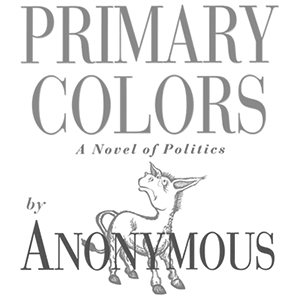
Roman à clef [raw-mah na kle] (French for ‘novel with a key’) is a phrase used to describe a novel about real life, overlaid with a facade of fiction. The fictitious names in the novel represent real people, and the ‘key’ is the relationship between the nonfiction and the fiction. This ‘key’ may be produced separately by the author, or implied through the use of epigraphs (a phrase, quotation, or poem that is set at the beginning of a document) or other literary devices.
Created by French writer Madeleine de Scudery in the 17th century to provide a forum for her thinly veiled fiction featuring political and public figures, roman à clef has since been used by writers as diverse as Victor Hugo, Phillip K. Dick, and Bret Easton Ellis.
read more »
Posted in Art, Language |
Leave a Comment »
September 25, 2012


Deaf culture describes the communities that are affected by deafness and which use sign languages as the main means of communication. When used as a cultural label, the word deaf is often written with a capital ‘D,’ and referred to as ‘big D Deaf’ in speech and sign. When used as a label for the audiological condition, it is written with a lower case ‘d.’ Members of the Deaf community tend to view deafness as a difference in human experience rather than a disability, preferring to be called ‘Deaf’ or ‘Hard of Hearing’ than ‘Hearing Impaired,’ which most people think is the most acceptable term today.
The community may include family members of deaf people and sign-language interpreters who identify with Deaf culture and does not automatically include all people who are hard of hearing. According to sign-language interpreter Anna Mindess, ‘it is not the extent of hearing loss that defines a member of the Deaf community but the individual’s own sense of identity and resultant actions.’ As with all social groups that a person chooses to belong to, a person is a member of the Deaf community if he or she ‘identifies him/herself as a member of the Deaf community, and other members accept that person as a part of the community.’
read more »
Posted in Health, Language, Politics |
Leave a Comment »
September 25, 2012


Profanity in science fiction (SF) shares all of the issues of profanity in fiction in general, but has several unique aspects of its own, including the use of alien profanities (such as the alien expletive ‘shazbot!’ from ‘Mork & Mindy,’ a word that briefly enjoyed popular usage outside of that television show).
In his advice to other SF writers, Orson Scott Card states that there are no hard-and-fast rules for the use of profanity in SF stories, despite what may have been expected of writers in the past. The onus is squarely on the writer to determine how much profanity to use, to enquire as to each magazine publisher’s individual limits, and to think about the effect that the use of profanity will have on the reader, both in terms of how the reader will perceive the characters and in terms of how the reader will be offended by the story as a whole.
read more »
Posted in Art, Humor, Language |
Leave a Comment »
September 24, 2012

Profanity is language that is strongly impolite or offensive in many situations. It can show a desecration or debasement of someone or something, or show strong or intense emotion. Profanity can take the form of words, expressions, gestures (such as flipping the middle finger), or other social behaviors that are construed or interpreted as insulting, rude, vulgar, obscene, obnoxious, foul, desecrating, or other forms. The original meaning of the adjective ‘profane’ referred to items not belonging to the church, e.g., ‘The fort is the oldest profane building in the town, but the local monastery is older, and is the oldest building.’
The meaning has changed over time. Analyses of recorded conversations reveal that roughly 80–90 spoken words each day – 0.5% to 0.7% of all words – are swear words, with usage varying from between 0% to 3.4%. The term ‘profane’ originates from classical Latin ‘profanus,’ literally ‘before (outside) the temple.’ It carried the meaning of either ‘desecrating what is holy’ or ‘with a secular purpose’ as early as the 1450s. Profanity represented secular indifference to religion or religious figures, while blasphemy was a more offensive attack on religion and religious figures, considered sinful, and a direct violation of The Ten Commandments.
read more »
Posted in Language, Philosophy, World |
Leave a Comment »
September 24, 2012
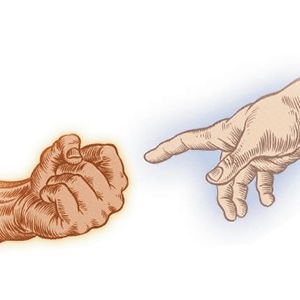
Misotheism [miss-oh-thee-iz-uhm] is the ‘hatred of God(s).’ In some varieties of polytheism, it was considered possible to inflict punishment on gods by ceasing to worship them. Thus, Hrafnkell, protagonist of the eponymous Icelandic saga set in the 10th century, as his temple to Freyr is burnt and he is enslaved states that ‘I think it is folly to have faith in gods,’ never performing another sacrifice.
German mythologist Jacob Grimm in his ‘Teutonic Mythology’ observes that: ‘It is remarkable that Old Norse legend occasionally mentions certain men who, turning away in utter disgust and doubt from the heathen faith, placed their reliance on their own strength and virtue.’ ‘…in themselves they trusted.” In monotheism, the sentiment arises in the context of ‘theodicy’ (the problem of evil, the Euthyphro dilemma). A famous literary expression of misotheistic sentiment is Goethe’s ‘Prometheus,’ composed in the 1770s.
read more »
Posted in Language, Philosophy, World |
Leave a Comment »
September 24, 2012

New Atheism is the name given to the ideas promoted by a collection of 21st-century atheist writers who have advocated the view that ‘religion should not simply be tolerated but should be countered, criticized, and exposed by rational argument wherever its influence arises.’
The term is commonly associated with individuals such as Richard Dawkins, Daniel Dennett, Sam Harris, and Christopher Hitchens (together called ‘the Four Horsemen of New Atheism’ in a 2007 debate they held on their criticisms of religion, a name that has stuck) and Victor J. Stenger. Several best-selling books by these authors, published between 2004 and 2007, form the basis for much of the discussion of New Atheism.
read more »
Posted in Language, Philosophy, Science |
Leave a Comment »
September 18, 2012

Eudaimonia [yew-day-mo-nee-uh] is a Greek word commonly translated as ‘happiness’ or ‘welfare’; however, ‘human flourishing’ has been proposed as a more accurate translation. It is a central concept in Aristotelian ethics and political philosophy, along with the terms ‘aretē’ (‘virtue’ or ‘excellence’) and ‘phronesis’ (‘practical or ethical wisdom’).
In Aristotle’s works, eudaimonia was (based on older Greek tradition) used as the term for the highest human good, and so it is the aim of practical philosophy, including ethics and political philosophy, to consider (and also experience) what it really is, and how it can be achieved.
read more »
Posted in Health, Language, Philosophy |
Leave a Comment »
September 18, 2012

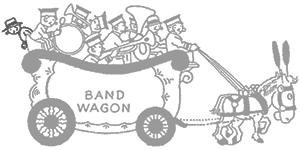
Basking in reflected glory (BIRGing) is a self-serving cognition whereby an individual associates themself with successful others such that another’s success becomes their own. What is interesting about BIRGing is that the simple affiliation of another’s success is enough to stimulate self glory. The person engaging in BIRGing does not even need to have been personally involved in the successful action with which they are affiliating themselves.
Examples of BIRGing include anything from sharing a home state with a past or present famous person, to religious affiliations, to sports teams. For example, a parent with a bumper sticker reading ‘My child is an honor student’ is basking in the reflected glory of their child. Within social psychology, BIRGing is thought to enhance self-esteem and to be a component of self-management.
read more »
Posted in Health, Language, Money |
Leave a Comment »
September 18, 2012
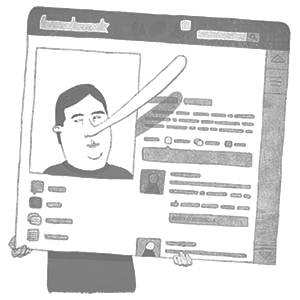
Pseudologia fantastica, mythomania, or pathological lying are three of several terms applied by psychiatrists to the behavior of habitual or compulsive lying. It was first described in the medical literature in 1891 by Anton Delbrueck. Although it is a controversial topic, pathological lying has been defined as ‘falsification entirely disproportionate to any discernible end in view, may be extensive and very complicated, and may manifest over a period of years or even a lifetime.’
A defining characteristic of pseudologia fantastica is that the stories told are not entirely improbable and often have some element of truth. They are not a manifestation of delusion or some broader type of psychosis: upon confrontation, the teller can admit them to be untrue, even if unwillingly.
read more »
Posted in Health, Language |
Leave a Comment »
September 17, 2012

A self-defeating prophecy is the complementary opposite of a self-fulfilling prophecy: a prediction that prevents what it predicts from happening. This is also known as the ‘prophet’s dilemma.’ A self-defeating prophecy can be the result of rebellion to the prediction.
If the audience of a prediction has an interest in seeing it falsified, and its fulfillment depends on their actions or inaction, their actions upon hearing it will make the prediction less plausible. If a prediction is made with this outcome specifically in mind, it is commonly referred to as reverse psychology. Also, when working to make a premonition come true, one can inadvertently change the circumstances so much that the prophecy cannot come true.
read more »
Posted in Language, Philosophy, Science |
Leave a Comment »


 The Daily Omnivore