July 3, 2012

‘Invisible Republic: Bob Dylan’s Basement Tapes’ is a 1997 book by music critic Greil Marcus about the creation and cultural importance of ‘The Basement Tapes,’ a series of recordings made by Bob Dylan in 1967 in collaboration with The Hawks, who would subsequently become known as The Band.
When subsequently published in paperback, the book was re-titled ‘The Old, Weird America,’ a term coined by Marcus to describe the often eerie country, blues, and folk music featured on the ‘Anthology of American Folk Music.’ The term has been revived via the musical genre called New Weird America (a subgenre of psychedelic and indie music).
read more »
Posted in Art, Language |
Leave a Comment »
June 29, 2012
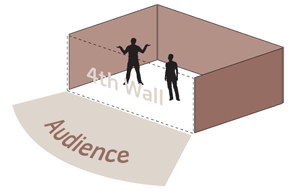
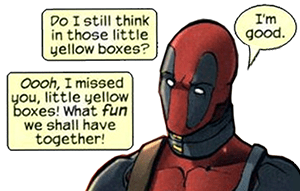
Metareference is a situation in a work of fiction whereby characters display an awareness that they are in such a work. Sometimes it may even just be a form of editing or film-making technique that comments on the show/film/book itself. It is also sometimes known as ‘Breaking the Fourth Wall,’ in reference to the theatrical tradition of playing as if there were no audience, as if a wall existed between them and the actors.
Metareference in fiction is jarring to the reader, but can be comical, as in Jasper Fforde’s novel ‘Lost in a Good Book.’ The character Thursday Next remarks to her husband that she feels uncomfortable having sex in front of so many people, when he is confused because they are alone in their bedroom, she explains, ‘all the people reading us.’ In Fforde’s ‘The Fourth Bear’ two characters lament over a bad joke made by the author, saying, ‘I can’t believe he gets away with that.’ Some novels with first person narration contain instances of metareference when the narrator addresses the reader directly (e.g. Charlotte Brontë’s ‘Jane Eyre’).
read more »
Posted in Art, Language |
Leave a Comment »
June 29, 2012

Mise [meez] en [awn] abyme [ah-beem] is a term originally from the French and means ‘placed into abyss.’ The commonplace usage of this phrase is describing the visual experience of standing between two mirrors, seeing an infinite reproduction of one’s image, but it has several other meanings in the realm of the creative arts and literary theory. In Western art history, ‘mise en abyme’ is a formal technique in which an image contains a smaller copy of itself, the sequence appearing to recur infinitely.
In the terminology of heraldry, the ‘abyme’ is the center of a coat of arms. The term ‘mise en abyme’ then meant literally ‘put in the center.’ It described a coat of arms that appears as a smaller shield in the center of a larger one (the Droste effect). For example, the two-headed eagle on modern coat of arms of Russia has a scepter with coat of arms of Russia on top of it, with the same scepter.
read more »
Posted in Art, Language, Philosophy |
Leave a Comment »
June 28, 2012

A sixteen-segment display, sometimes called a ‘Union Jack’ display (because it resembles the British Flag), is a type of display based on 16 segments. It is an extension of the more common seven-segment display, adding four diagonal and two vertical segments and splitting the three horizontal segments in half (A fourteen-segment display splits only the middle horizontal segment). A sixteen-segment display can have 65,536 different states; they were were originally designed to display alphanumeric characters (Latin letters and Arabic digits).
Later they were used to display Thai numerals and Persian characters. Before the advent of inexpensive dot-matrix displays, sixteen and fourteen-segment displays were some of the few options available for producing alphanumeric characters on calculators and other embedded systems. However, they are still sometimes used on VCRs, car stereos, microwave ovens, telephone Caller ID displays, and slot machine readouts.
Posted in Language, Technology, World |
Leave a Comment »
June 26, 2012

The Kama Sutra is an ancient Hindu text widely considered to be the standard work on human sexual behavior in Sanskrit. A portion of the work consists of practical advice on sexual intercourse.
‘Kāma’ which is one of the three goals of Hindu life, means sensual or sexual pleasure, and ‘sūtra’ literally means a thread or line that holds things together, and more metaphorically refers to an aphorism (or line, rule, formula), or a collection of such aphorisms in the form of a manual. Contrary to popular perception, especially in the western world, Kama sutra is not just an exclusive sex manual; it presents itself as a guide to a virtuous and gracious living that discusses the nature of love, family life and other aspects pertaining to pleasure oriented faculties of human life.
read more »
Posted in Language, Philosophy, Sex |
Leave a Comment »
June 21, 2012

‘Simulacra and Simulation‘ [sim-yuh-ley-kruh / sim-yuh-ley-shuhn] is a philosophical treatise by French sociologist Jean Baudrillard seeking to interrogate the relationship among reality, symbols, and society. A simulacrum (singular form of simulacra) in an imperfect simulation (a recreation of something). Baudrillard claims that our current society has replaced all reality and meaning with symbols and signs, and that human experience is of a simulation of reality.
Moreover, these simulacra are not merely mediations of reality, nor even deceptive mediations of reality; they are not based in a reality nor do they hide a reality, they simply hide that anything like reality is irrelevant to our current understanding of our lives. The simulacra that Baudrillard refers to are the significations and symbolism of culture and media that construct perceived reality, the acquired understanding by which our lives and shared existence is and are rendered legible; Baudrillard believed that society has become so saturated with these simulacra and our lives so saturated with the constructs of society that all meaning was being rendered meaningless by being infinitely mutable. Baudrillard called this phenomenon the ‘precession of simulacra.’
read more »
Posted in Language, Philosophy, Science |
Leave a Comment »
June 21, 2012
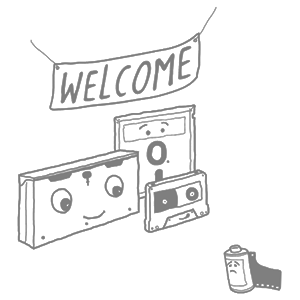
The digital dark age is a possible future situation where it will be difficult or impossible to read historical digital documents and multimedia, because they have been stored in an obsolete and obscure digital format.
The name derives from the term ‘Dark Ages’ in the sense that there would be a relative lack of written record. An early mention of the term was at a conference of the International Federation of Library Associations and Institutions (IFLA) in 1997. The term was also mentioned in 1998 at the ‘Time and Bits’ conference, which was co-sponsored by the Long Now Foundation and the Getty Conservation Institute.
read more »
Posted in Language, Technology |
Leave a Comment »
June 14, 2012
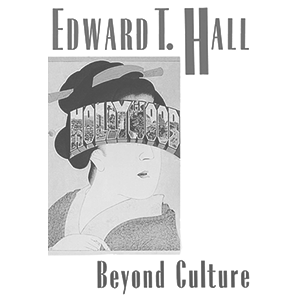
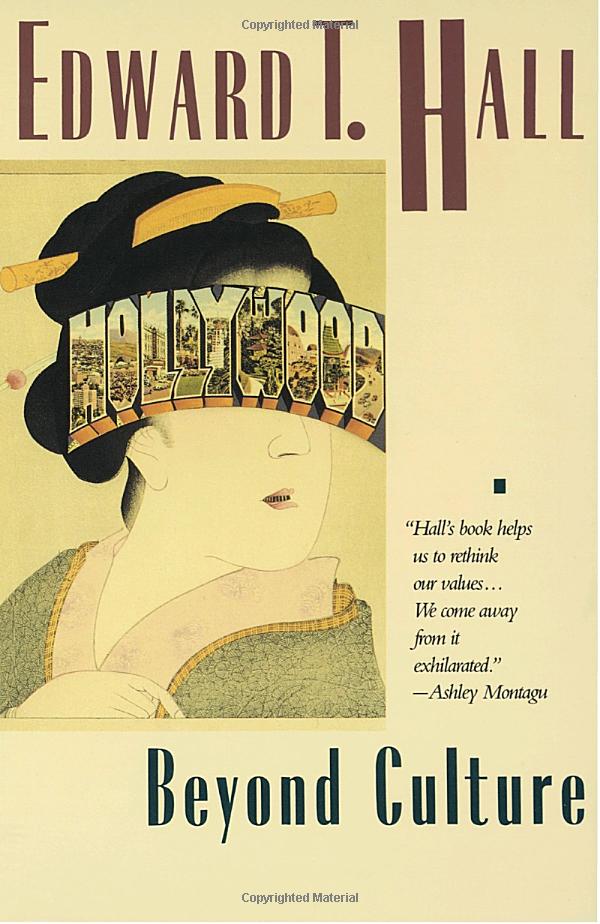
Beyond Culture is a 1976 book by American anthropologist Edward T. Hall where he describes a dichotomy between ‘high context cultures’ (focused upon in-groups) and ‘low context cultures’ (focused upon individuals). Low context cultures like the US don’t cater to ‘in-groups’ (a discrete group having similar experiences and expectations, from which, in turn, inferences are drawn), and there is less use of similar experiences and expectations to communicate. Much more is explained through words, instead of the context.
Conversely, high context cultures prefer high context messages over low context messages in routine communication. This choice of communication styles translates into a culture that will cater to in-groups. In a high context culture, many things are left unsaid, letting the culture explain. Words and word choice become very important in higher context communication, since a few words can communicate a complex message very effectively to an in-group (but less effectively outside that group), while in a lower context culture, the communicator needs to be much more explicit and the value of a single word is less important.
read more »
Posted in Language, Politics, World |
Leave a Comment »
June 14, 2012
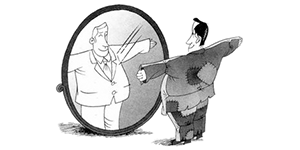

Face, idiomatically meaning dignity/prestige, is a fundamental concept in sociology, psychology, and political science. Chinese author and translator Lin Yutang (1895-1976) claimed ‘Face cannot be translated or defined.’ However, some definitions have been attempted: ‘The term face may be defined as the positive social value a person effectively claims for himself by the line others assume he has taken during a particular contact. Face is an image of self delineated in terms of approved social attributes.’
”Face is the respectability and/or deference which a person can claim for himself from others, by virtue of the relative position he occupies in his social network and the degree to which he is judged to have functioned adequately in that position as well as acceptably in his general conduct.’
read more »
Posted in Language, Politics, World |
1 Comment »
June 10, 2012
A Fire Upon the Deep is a 1992 science fiction novel by Vernor Vinge. It is a space opera involving superhuman intelligences, aliens, faster-than-light warfare, love, betrayal, genocide, and a galactic Usenet (an early Internet discussion system).
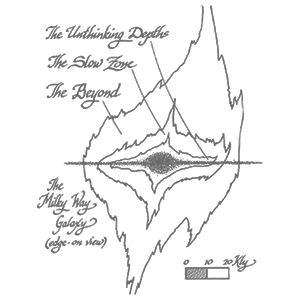
The story is set in Vinge’s ‘Zones of Thought’ in which the results of technological singularities (the achievement of greater-than-human intelligence) are spread out in a predicable pattern: In the ‘Unthinking Depths’ near the core of the galaxy, no intelligence is possible; in the ‘Slow Zone,’ where Earth is, general relativity applies (i.e. faster-than-light travel is impossible); the ‘Beyond’ allows faster-than-light travel and antigravity, and in the ‘Transcend,’ mysterious god-like entities roam the cosmos. Thus, as you head out of the Milky Way, you see the same progression of advancing technologies in other galaxies.
read more »
Posted in Art, Language, Technology |
Leave a Comment »
June 7, 2012

A cultural universal is an element, pattern, trait, or institution that is common to all human cultures worldwide. Taken together, the whole body of cultural universals is known as the human condition. Evolutionary psychologists hold that behaviors or traits that occur universally in all cultures are good candidates for evolutionary adaptations. Some anthropological and sociological theorists that take a cultural relativist perspective may deny the existence of cultural universals: the extent to which these universals are ‘cultural’ in the narrow sense, or in fact biologically inherited behavior is an issue of ‘nature versus nurture.’
Anthropological universals include: Language and Cognition (e.g. language employed to manipulate others, language employed to misinform or mislead, binary cognitive distinctions, color terms for black and white, figurative speech and metaphors, taboo utterances, and units of time); Society (e.g. personal names, families, laws, moral sentiments, promises, prestige inequalities, statuses and roles, leaders, property, gender roles, male dominated public/political realm, males more aggressive and more prone to violence and theft, marriage, incest avoidance, rape prohibitions, etiquette, inheritance rules, gift giving, redress of wrongs, sexual jealousy, shame, territoriality, visiting, and trade); Myth and Ritual (e.g. magical thinking, dream interpretation, proverbs, poetry, medicine, rites of passage, music, dance, play, toys, mourning, feasting, body adornment, and hairstyles); and Technology (e.g. shelter, control of fire, tools, weapons, containers, cooking, levers, tying and weaving).
Posted in Language, Science, World |
Leave a Comment »
June 6, 2012
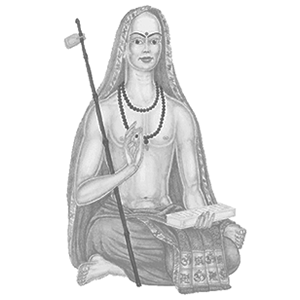
Vedanta [veh-dahn-ta] was originally used a synonym for the part of the Vedas (Hindu scripture) known as the Upanishads (the appendix to the Vedic hymns, which are passed down orally). ‘Vedanta’ is the end of the Vedas both literally and metaphorically: it bookends the Veda, but is also in some ways ‘the purpose or goal [end] of the Vedas.’ By the 8th century CE, the word also came to be used to describe a group of philosophical traditions concerned with the self-realization by which one understands the ultimate nature of reality (Brahman, the godhead, the divine source of being, through which all emanates).
Vedanta can also be used as a noun to describe one who has mastered all four of the original Vedas. The Vedanta is also called Uttara Mimamsa, or the ‘latter enquiry’ or ‘higher enquiry,’ and is often paired with Purva Mimamsa, the ‘former enquiry’ (usually simply called Mimamsa), which deals with explanations of the fire-sacrifices of the Vedic mantras and the Brahmanas (expositions of the Vedas).
read more »
Posted in Language, Philosophy, World |
Leave a Comment »


 The Daily Omnivore