June 21, 2012
The digital dark age is a possible future situation where it will be difficult or impossible to read historical digital documents and multimedia, because they have been stored in an obsolete and obscure digital format.
The name derives from the term ‘Dark Ages’ in the sense that there would be a relative lack of written record. An early mention of the term was at a conference of the International Federation of Library Associations and Institutions (IFLA) in 1997. The term was also mentioned in 1998 at the ‘Time and Bits’ conference, which was co-sponsored by the Long Now Foundation and the Getty Conservation Institute.
read more »
Posted in Language, Technology |
Leave a Comment »
June 14, 2012
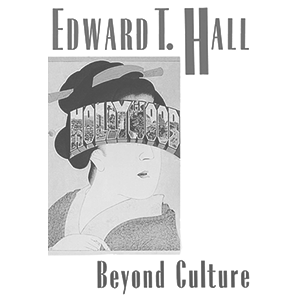
Beyond Culture is a 1976 book by American anthropologist Edward T. Hall where he describes a dichotomy between ‘high context cultures’ (focused upon in-groups) and ‘low context cultures’ (focused upon individuals). Low context cultures like the US don’t cater to ‘in-groups’ (a discrete group having similar experiences and expectations, from which, in turn, inferences are drawn), and there is less use of similar experiences and expectations to communicate. Much more is explained through words, instead of the context.
Conversely, high context cultures prefer high context messages over low context messages in routine communication. This choice of communication styles translates into a culture that will cater to in-groups. In a high context culture, many things are left unsaid, letting the culture explain. Words and word choice become very important in higher context communication, since a few words can communicate a complex message very effectively to an in-group (but less effectively outside that group), while in a lower context culture, the communicator needs to be much more explicit and the value of a single word is less important.
read more »
Posted in Language, Politics, World |
Leave a Comment »
June 14, 2012
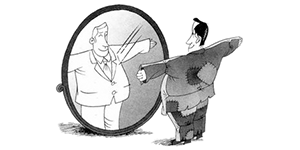
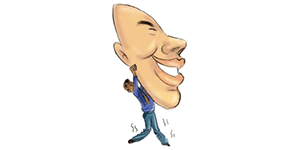
Face, idiomatically meaning dignity/prestige, is a fundamental concept in sociology, psychology, and political science. Chinese author and translator Lin Yutang (1895-1976) claimed ‘Face cannot be translated or defined.’ However, some definitions have been attempted: ‘The term face may be defined as the positive social value a person effectively claims for himself by the line others assume he has taken during a particular contact. Face is an image of self delineated in terms of approved social attributes.’
”Face is the respectability and/or deference which a person can claim for himself from others, by virtue of the relative position he occupies in his social network and the degree to which he is judged to have functioned adequately in that position as well as acceptably in his general conduct.’
read more »
Posted in Language, Politics, World |
1 Comment »
June 10, 2012
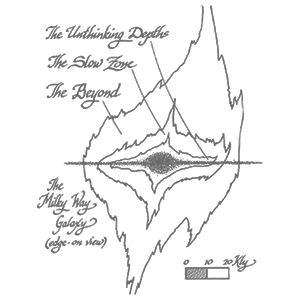
A Fire Upon the Deep is a 1992 science fiction novel by Vernor Vinge. It is a space opera involving superhuman intelligences, aliens, faster-than-light warfare, love, betrayal, genocide, and a galactic Usenet (an early Internet discussion system).
The story is set in Vinge’s ‘Zones of Thought’ in which the results of technological singularities (the achievement of greater-than-human intelligence) are spread out in a predicable pattern: In the ‘Unthinking Depths’ near the core of the galaxy, no intelligence is possible; in the ‘Slow Zone,’ where Earth is, general relativity applies (i.e. faster-than-light travel is impossible); the ‘Beyond’ allows faster-than-light travel and antigravity, and in the ‘Transcend,’ mysterious god-like entities roam the cosmos. Thus, as you head out of the Milky Way, you see the same progression of advancing technologies in other galaxies.
read more »
Posted in Art, Language, Technology |
Leave a Comment »
June 7, 2012

A cultural universal is an element, pattern, trait, or institution that is common to all human cultures worldwide. Taken together, the whole body of cultural universals is known as the human condition. Evolutionary psychologists hold that behaviors or traits that occur universally in all cultures are good candidates for evolutionary adaptations. Some anthropological and sociological theorists that take a cultural relativist perspective may deny the existence of cultural universals: the extent to which these universals are ‘cultural’ in the narrow sense, or in fact biologically inherited behavior is an issue of ‘nature versus nurture.’
Anthropological universals include: Language and Cognition (e.g. language employed to manipulate others, language employed to misinform or mislead, binary cognitive distinctions, color terms for black and white, figurative speech and metaphors, taboo utterances, and units of time); Society (e.g. personal names, families, laws, moral sentiments, promises, prestige inequalities, statuses and roles, leaders, property, gender roles, male dominated public/political realm, males more aggressive and more prone to violence and theft, marriage, incest avoidance, rape prohibitions, etiquette, inheritance rules, gift giving, redress of wrongs, sexual jealousy, shame, territoriality, visiting, and trade); Myth and Ritual (e.g. magical thinking, dream interpretation, proverbs, poetry, medicine, rites of passage, music, dance, play, toys, mourning, feasting, body adornment, and hairstyles); and Technology (e.g. shelter, control of fire, tools, weapons, containers, cooking, levers, tying and weaving).
Posted in Language, Science, World |
Leave a Comment »
June 6, 2012
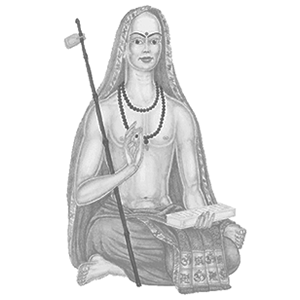
Vedanta [veh-dahn-ta] was originally used a synonym for the part of the Vedas (Hindu scripture) known as the Upanishads (the appendix to the Vedic hymns, which are passed down orally). ‘Vedanta’ is the end of the Vedas both literally and metaphorically: it bookends the Veda, but is also in some ways ‘the purpose or goal [end] of the Vedas.’ By the 8th century CE, the word also came to be used to describe a group of philosophical traditions concerned with the self-realization by which one understands the ultimate nature of reality (Brahman, the godhead, the divine source of being, through which all emanates).
Vedanta can also be used as a noun to describe one who has mastered all four of the original Vedas. The Vedanta is also called Uttara Mimamsa, or the ‘latter enquiry’ or ‘higher enquiry,’ and is often paired with Purva Mimamsa, the ‘former enquiry’ (usually simply called Mimamsa), which deals with explanations of the fire-sacrifices of the Vedic mantras and the Brahmanas (expositions of the Vedas).
read more »
Posted in Language, Philosophy, World |
Leave a Comment »
June 4, 2012

Retro-futurism is a trend in the creative arts showing the influence of depictions of the future produced prior to about 1960. Characterized by a blend of old-fashioned ‘retro’ styles with futuristic technology, retro-futurism explores the themes of tension between past and future, and between the alienating and empowering effects of technology.
Primarily reflected in artistic creations and modified technologies that realize the imagined artifacts of its parallel reality, retro-futurism has also manifested in the worlds of fashion, architecture, literature and film.
read more »
Posted in Art, Language, Technology |
2 Comments »
June 4, 2012
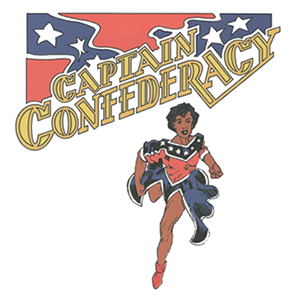
Alternate history is a genre of fiction consisting of stories that are set in worlds in which history has diverged from the actual history of the world. It can be variously seen as a sub-genre of literary fiction, science fiction, and historical fiction.
Since the 1950s, this type of fiction has to a large extent merged with science fictional tropes involving cross-time travel between alternate histories or psychic awareness of the existence of ‘our’ universe by the people in another; or ordinary voyaging uptime (into the past) or downtime (into the future) that results in history splitting into two or more time-lines. Cross-time, time-splitting, and alternate history themes have become so closely interwoven that it is impossible to discuss them fully apart from one another.
read more »
Posted in Art, Language, War |
Leave a Comment »
June 4, 2012

The Family Trade is the first book of a British writer of science fiction and fantasy writer Charles Stross’ alternate history series ‘The Merchant Princes.’
The first novel introduces us to journalist Miriam Beckstein, who finds herself in a parallel world in which her extended family holds power.
read more »
Posted in Language, Money, Technology |
Leave a Comment »
May 31, 2012
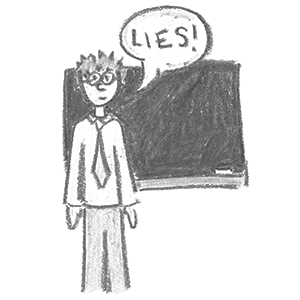
‘Lies My Teacher Told Me: Everything Your American History Textbook Got Wrong’ is a 1995 book by sociologist James Loewen. It critically examines twelve American history textbooks and concludes that textbook authors propagate factually false, Eurocentric, and mythologized views of history. In addition to critiquing the dominant historical themes presented in textbooks, Loewen presents a number of his own historical themes that he says are ignored by traditional history textbooks. A revised and updated edition was released in 2008.
Loewen criticizes modern American history textbooks for containing inaccurate depictions of historical figures such as Christopher Columbus. He further criticizes the texts for a tendency to avoid controversy and for their ‘bland’ and simplistic style. He proposes that when American history textbooks elevate American historical figures to the status of heroes, they unintentionally give students the impression that these figures are part of an unattainable past. In other words, the history-as-myth method teaches students that America’s greatest days have already passed. Loewen asserts that the muting of past clashes and tragedies makes history boring to students, especially groups excluded from the positive histories.
Posted in Education, Language, Politics |
Leave a Comment »
May 30, 2012

Bill, the Galactic Hero is a satirical science fiction novel by Harry Harrison, first published in 1965. Harrison reports having been approached by a Vietnam veteran who described Bill as ‘the only book that’s true about the military.’ Harrison introduced a new euphemism, ‘bowb,’ in the series to cover the vulgarity necessary to render military life accurately. It is used extensively in Bill, the Galactic Hero.
Bill is a farmboy on a small backward agricultural planet who is drugged, hypnotized, then shanghaied into the Space Troopers and sent to recruit training under a fanged instructor named Deathwish Drang. After surviving boot camp, he is transferred to active duty as a fuse tender on the flagship of the space fleet in battle with the Chingers, a small reptillian race. Injured and with the fleet almost destroyed, he fires off a shot witnessed by the admiralty and is proclaimed a hero.
Posted in Humor, Language, War |
Leave a Comment »
May 30, 2012

James Bolivar DiGriz, alias ‘Slippery Jim’ and ‘The Stainless Steel Rat,’ is the fictional hero of a series of humorous science fiction novels written by Harry Harrison. He is a futuristic con man, thief and all-round rascal. He is charming and quick-witted, a master of disguise and martial arts, an accomplished bank robber, an expert on breaking and entering, and (perhaps most usefully) a skilled liar. A master of self-rationalization, the Rat frequently justifies his crimes by arguing that he is providing society with entertainment; and besides which, he only steals from institutions which have insurance coverage. He displays a strong morality, albeit in a much more restricted sense than is traditional. (For example, he will happily steal, but deplores killing.)
The character was introduced in Harrison’s short story, ‘The Stainless Steel Rat,’ which was first published in 1957 in ‘Astounding’ magazine. Like other characters created by Harrison, the Rat is a speaker of Esperanto and advocates atheism. From the original publisher’s blurb: ‘…We must be as stealthy as rats in the wainscoting of their society. It was easier in the old days, of course, and society had more rats when the rules were looser, just as old wooden buildings have more rats than concrete buildings. But there are rats in the building now as well. Now that society is all ferrocrete and stainless steel there are fewer gaps in the joints. It takes a very smart rat indeed to find these openings. Only a stainless steel rat can be at home in this environment…’
Posted in Art, Humor, Language |
Leave a Comment »