June 4, 2012

Retro-futurism is a trend in the creative arts showing the influence of depictions of the future produced prior to about 1960. Characterized by a blend of old-fashioned ‘retro’ styles with futuristic technology, retro-futurism explores the themes of tension between past and future, and between the alienating and empowering effects of technology.
Primarily reflected in artistic creations and modified technologies that realize the imagined artifacts of its parallel reality, retro-futurism has also manifested in the worlds of fashion, architecture, literature and film.
read more »
Posted in Art, Language, Technology |
2 Comments »
June 4, 2012
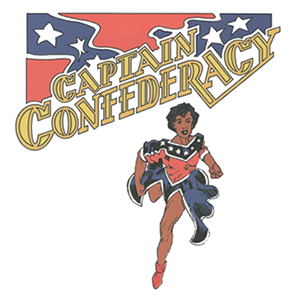
Alternate history is a genre of fiction consisting of stories that are set in worlds in which history has diverged from the actual history of the world. It can be variously seen as a sub-genre of literary fiction, science fiction, and historical fiction.
Since the 1950s, this type of fiction has to a large extent merged with science fictional tropes involving cross-time travel between alternate histories or psychic awareness of the existence of ‘our’ universe by the people in another; or ordinary voyaging uptime (into the past) or downtime (into the future) that results in history splitting into two or more time-lines. Cross-time, time-splitting, and alternate history themes have become so closely interwoven that it is impossible to discuss them fully apart from one another.
read more »
Posted in Art, Language, War |
Leave a Comment »
June 4, 2012

The Family Trade is the first book of a British writer of science fiction and fantasy writer Charles Stross’ alternate history series ‘The Merchant Princes.’
The first novel introduces us to journalist Miriam Beckstein, who finds herself in a parallel world in which her extended family holds power.
read more »
Posted in Language, Money, Technology |
Leave a Comment »
May 31, 2012
‘Lies My Teacher Told Me: Everything Your American History Textbook Got Wrong’ is a 1995 book by sociologist James Loewen. It critically examines twelve American history textbooks and concludes that textbook authors propagate factually false, Eurocentric, and mythologized views of history. In addition to critiquing the dominant historical themes presented in textbooks, Loewen presents a number of his own historical themes that he says are ignored by traditional history textbooks. A revised and updated edition was released in 2008.
Loewen criticizes modern American history textbooks for containing inaccurate depictions of historical figures such as Christopher Columbus. He further criticizes the texts for a tendency to avoid controversy and for their ‘bland’ and simplistic style. He proposes that when American history textbooks elevate American historical figures to the status of heroes, they unintentionally give students the impression that these figures are part of an unattainable past. In other words, the history-as-myth method teaches students that America’s greatest days have already passed. Loewen asserts that the muting of past clashes and tragedies makes history boring to students, especially groups excluded from the positive histories.
Posted in Education, Language, Politics |
Leave a Comment »
May 30, 2012

Bill, the Galactic Hero is a satirical science fiction novel by Harry Harrison, first published in 1965. Harrison reports having been approached by a Vietnam veteran who described Bill as ‘the only book that’s true about the military.’ Harrison introduced a new euphemism, ‘bowb,’ in the series to cover the vulgarity necessary to render military life accurately. It is used extensively in Bill, the Galactic Hero.
Bill is a farmboy on a small backward agricultural planet who is drugged, hypnotized, then shanghaied into the Space Troopers and sent to recruit training under a fanged instructor named Deathwish Drang. After surviving boot camp, he is transferred to active duty as a fuse tender on the flagship of the space fleet in battle with the Chingers, a small reptillian race. Injured and with the fleet almost destroyed, he fires off a shot witnessed by the admiralty and is proclaimed a hero.
Posted in Humor, Language, War |
Leave a Comment »
May 30, 2012

James Bolivar DiGriz, alias ‘Slippery Jim’ and ‘The Stainless Steel Rat,’ is the fictional hero of a series of humorous science fiction novels written by Harry Harrison. He is a futuristic con man, thief and all-round rascal. He is charming and quick-witted, a master of disguise and martial arts, an accomplished bank robber, an expert on breaking and entering, and (perhaps most usefully) a skilled liar. A master of self-rationalization, the Rat frequently justifies his crimes by arguing that he is providing society with entertainment; and besides which, he only steals from institutions which have insurance coverage. He displays a strong morality, albeit in a much more restricted sense than is traditional. (For example, he will happily steal, but deplores killing.)
The character was introduced in Harrison’s short story, ‘The Stainless Steel Rat,’ which was first published in 1957 in ‘Astounding’ magazine. Like other characters created by Harrison, the Rat is a speaker of Esperanto and advocates atheism. From the original publisher’s blurb: ‘…We must be as stealthy as rats in the wainscoting of their society. It was easier in the old days, of course, and society had more rats when the rules were looser, just as old wooden buildings have more rats than concrete buildings. But there are rats in the building now as well. Now that society is all ferrocrete and stainless steel there are fewer gaps in the joints. It takes a very smart rat indeed to find these openings. Only a stainless steel rat can be at home in this environment…’
Posted in Art, Humor, Language |
Leave a Comment »
May 30, 2012

Big Dave is an infamous character created and written by Grant Morrison and Mark Millar, with artwork by Steve Parkhouse, for ‘2000 AD,’ a British science fiction comic. The character was created for ‘The Summer Offensive,’ an experiment in which the magazine was handed over to Millar, Morrison, and John Smith for eight weeks. Big Dave first appeared in prog (issue) 842 in his first story which featured Saddam Hussein trying to take over the world and turn everyone into ‘poofs’ with the aid of some scary aliens. Big Dave, ‘the hardest man in Manchester,’ manages to stop Saddam’s plan with the help of Terry Waite, English humanitarian. This story proved controversial, but the next story surpassed it.
It featured the British Royal Family as robots plus The Princess of Wales and The Duchess of York as a pair of horny drunks. The story ends with Dave in bed with both royals. A third had Dave leading a minibus full of disabled children to the football world cup final where they defeat a German team managed by Adolf Hitler. Both Morrison and Millar appeared happy with such controversy but the character did split ‘2000 AD’ fans’ opinion down the middle, with some praising it as the best series the comic had ever run, while others thought it was nothing more than puerile rubbish.
Posted in Humor, Language, World |
Leave a Comment »
May 30, 2012
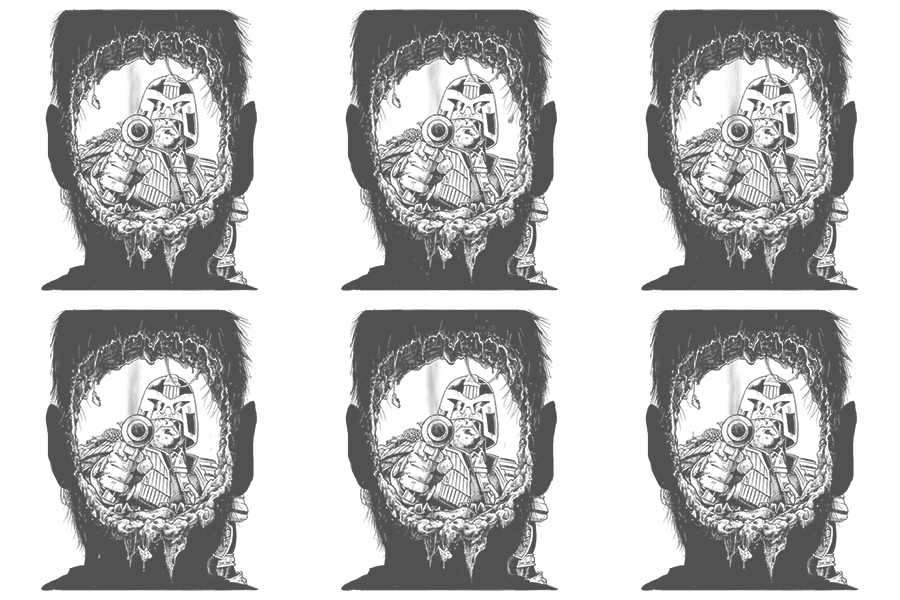
2000 AD is a weekly British science fiction-oriented comic. As a comics anthology it serializes a number of separate stories each issue (known as ‘progs’) and was first published by IPC Magazines in 1977. It has changed hands a number of times over the years; in 2000 it was bought by Rebellion Developments.
It is most noted for its Judge Dredd stories, and has been contributed to by a number of artists and writers who became renowned in the field internationally, such as Alan Moore, Neil Gaiman, Grant Morrison, Bryan Talbot, Brian Bolland, and Mike McMahon. ‘2000 AD’ has been successful launchpad for UK talent into the larger American comics market, and has also been the source of a number of film licences. Unlike earlier weekly titles, ‘2000 AD’ was based on a 6 page strip format. This gave the writers greater opportunity to develop character and meant that the artists had greater scope in designing the layout.
read more »
Posted in Art, Humor, Language |
1 Comment »
May 26, 2012

Glitch is a term used to describe a style of electronic music that emerged in the mid to late 1990s that adheres to an ‘aesthetic of failure,’ where the deliberate use of glitch based audio media, and other sonic artifacts, is a central concern.
Sources of glitch sound material are usually malfunctioning or abused audio recording devices or digital technology, such as CD skipping, electric hum, digital or analog distortion, bit rate reduction, hardware noise, computer bugs, crashes, vinyl record hiss or scratches, and system errors. In a ‘Computer Music Journal’ article published in 2000, composer and writer Kim Cascone classifies glitch as a sub-genre of electronica, and used the term ‘post-digital’ to describe the glitch aesthetic.
read more »
Posted in Art, Language, Technology |
Leave a Comment »
May 26, 2012
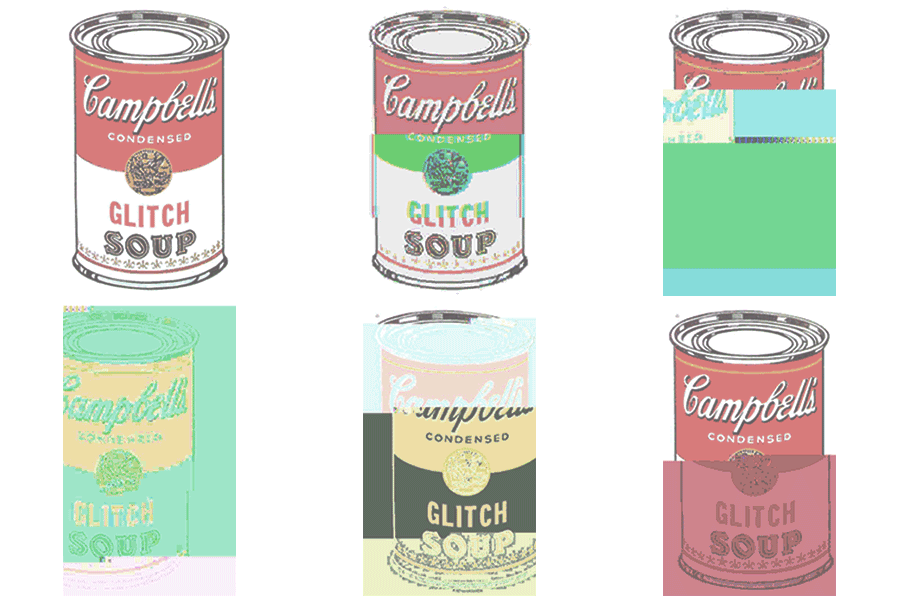
Glitch art is the aestheticization of digital or analog errors, such as artifacts and other ‘bugs,’ by either corrupting digital code/data or by physically manipulating electronic devices, for example by circuit bending (the intentional short-circuiting of low power electronic devices to create new musical devices). In a technical sense a glitch is the unexpected result of a malfunction. The term is thought to derive from the German ‘glitschig,’ meaning ‘slippery.’ It was first recorded in English in 1962 during the American space program by John Glenn when describing problems they were having, Glenn explained, ‘Literally, a glitch is a spike or change in voltage in an electrical current.’
Glitch is used to describe these kinds of bugs as they occur in software, video games, images, videos, audio, and other forms of data. The term glitch came to be associated with music in the mid 90s to describe a genre of experimental/noise/electronica (see glitch music). Shortly after, as VJs and other visual artist like Tony (Ant) Scott began to embrace the glitch as an aesthetic of the digital age, glitch art came to refer to a whole assembly of visual arts.
Posted in Art, Language, Technology |
3 Comments »
May 25, 2012
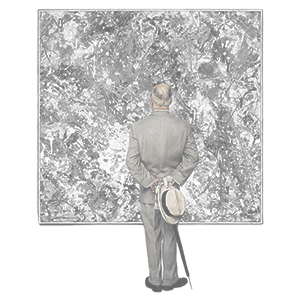
A connoisseur [kon-uh-sur] (meaning ‘to be acquainted with’ or ‘to know somebody/something’) is a person who has a great deal of knowledge about the arts and is an expert judge in matters of taste.
Internationally, the term is also used in gastronomy (in connection with fine food, beer, wine, tea, and many other products whose consumption can be pleasing to the senses). The ability to tell almost instinctively who painted a picture is defined as connoisseurship. Modern connoisseurship must be seen in context with museums, art galleries, and ‘the cult of originality.’
read more »
Posted in Art, Language |
Leave a Comment »
May 23, 2012

A retronym [re-truh-nim] is a type of neologism that provides a new name for something to differentiate the original version from a more recent one. The original name is most often augmented with an adjective (rather than being completely displaced) to account for later developments of the object or concept itself. Much retronymy is driven by advances in technology.
Examples of retronyms are ‘acoustic guitar’ (coined when electric guitars appeared), and ‘analog watch’ to distinguish from a digital watch. In the entertainment industry, this can manifest itself as calling a movie ‘Part 1’ once sequels are released or by slightly altering the title (e.g. ‘Star Wars: A New Hope’ or ‘Indiana Jones and the Raiders of the Lost Ark’) to emphasize its connection with the sequel(s), or by referring to a television series as ‘the original,’ as in ‘Star Trek: The Original Series.’
read more »
Posted in Language, Money, Technology |
Leave a Comment »


 The Daily Omnivore