May 30, 2012

Big Dave is an infamous character created and written by Grant Morrison and Mark Millar, with artwork by Steve Parkhouse, for ‘2000 AD,’ a British science fiction comic. The character was created for ‘The Summer Offensive,’ an experiment in which the magazine was handed over to Millar, Morrison, and John Smith for eight weeks. Big Dave first appeared in prog (issue) 842 in his first story which featured Saddam Hussein trying to take over the world and turn everyone into ‘poofs’ with the aid of some scary aliens. Big Dave, ‘the hardest man in Manchester,’ manages to stop Saddam’s plan with the help of Terry Waite, English humanitarian. This story proved controversial, but the next story surpassed it.
It featured the British Royal Family as robots plus The Princess of Wales and The Duchess of York as a pair of horny drunks. The story ends with Dave in bed with both royals. A third had Dave leading a minibus full of disabled children to the football world cup final where they defeat a German team managed by Adolf Hitler. Both Morrison and Millar appeared happy with such controversy but the character did split ‘2000 AD’ fans’ opinion down the middle, with some praising it as the best series the comic had ever run, while others thought it was nothing more than puerile rubbish.
Posted in Humor, Language, World |
Leave a Comment »
May 30, 2012
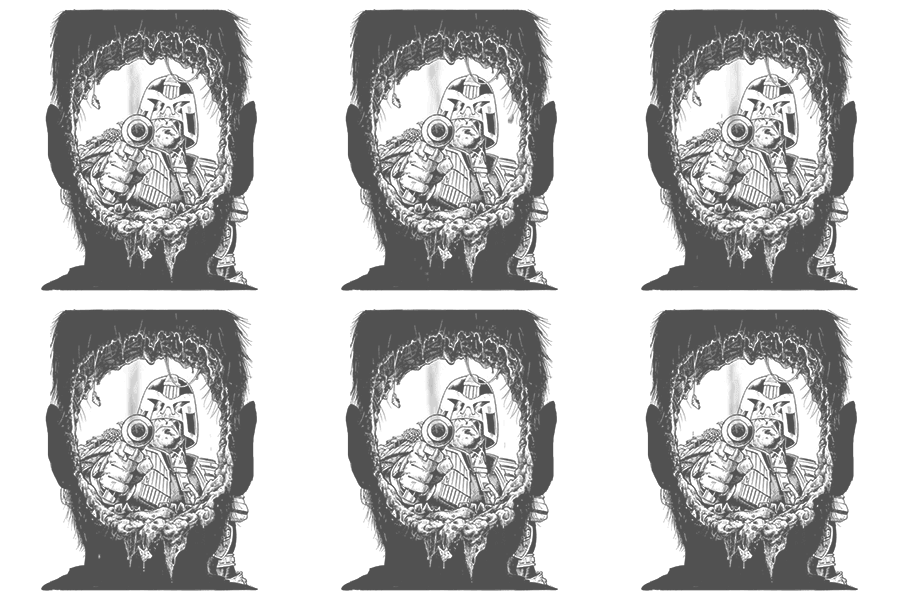
2000 AD is a weekly British science fiction-oriented comic. As a comics anthology it serializes a number of separate stories each issue (known as ‘progs’) and was first published by IPC Magazines in 1977. It has changed hands a number of times over the years; in 2000 it was bought by Rebellion Developments.
It is most noted for its Judge Dredd stories, and has been contributed to by a number of artists and writers who became renowned in the field internationally, such as Alan Moore, Neil Gaiman, Grant Morrison, Bryan Talbot, Brian Bolland, and Mike McMahon. ‘2000 AD’ has been successful launchpad for UK talent into the larger American comics market, and has also been the source of a number of film licences. Unlike earlier weekly titles, ‘2000 AD’ was based on a 6 page strip format. This gave the writers greater opportunity to develop character and meant that the artists had greater scope in designing the layout.
read more »
Posted in Art, Humor, Language |
1 Comment »
May 26, 2012
Glitch is a term used to describe a style of electronic music that emerged in the mid to late 1990s that adheres to an ‘aesthetic of failure,’ where the deliberate use of glitch based audio media, and other sonic artifacts, is a central concern.
Sources of glitch sound material are usually malfunctioning or abused audio recording devices or digital technology, such as CD skipping, electric hum, digital or analog distortion, bit rate reduction, hardware noise, computer bugs, crashes, vinyl record hiss or scratches, and system errors. In a ‘Computer Music Journal’ article published in 2000, composer and writer Kim Cascone classifies glitch as a sub-genre of electronica, and used the term ‘post-digital’ to describe the glitch aesthetic.
read more »
Posted in Art, Language, Technology |
Leave a Comment »
May 26, 2012
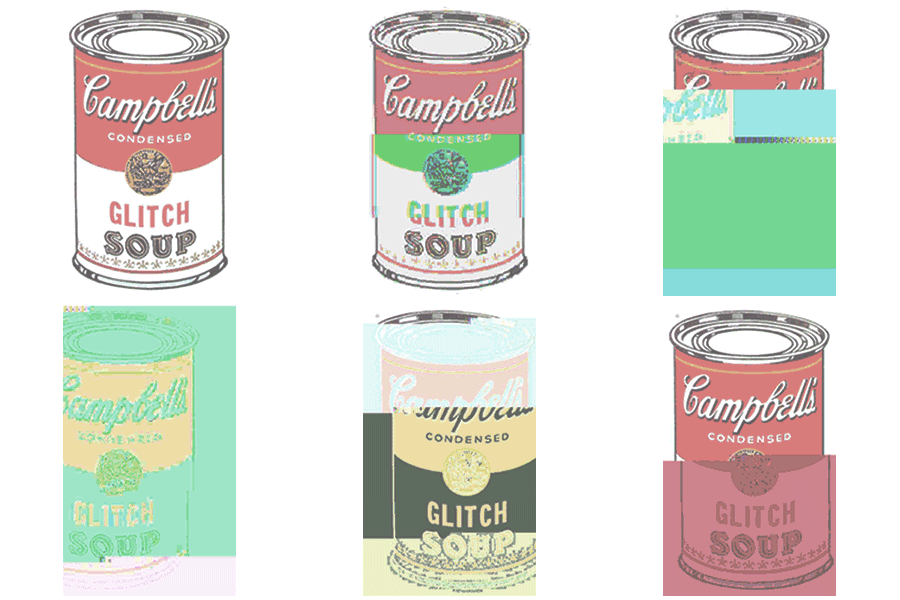
Glitch art is the aestheticization of digital or analog errors, such as artifacts and other ‘bugs,’ by either corrupting digital code/data or by physically manipulating electronic devices, for example by circuit bending (the intentional short-circuiting of low power electronic devices to create new musical devices). In a technical sense a glitch is the unexpected result of a malfunction. The term is thought to derive from the German ‘glitschig,’ meaning ‘slippery.’ It was first recorded in English in 1962 during the American space program by John Glenn when describing problems they were having, Glenn explained, ‘Literally, a glitch is a spike or change in voltage in an electrical current.’
Glitch is used to describe these kinds of bugs as they occur in software, video games, images, videos, audio, and other forms of data. The term glitch came to be associated with music in the mid 90s to describe a genre of experimental/noise/electronica (see glitch music). Shortly after, as VJs and other visual artist like Tony (Ant) Scott began to embrace the glitch as an aesthetic of the digital age, glitch art came to refer to a whole assembly of visual arts.
Posted in Art, Language, Technology |
3 Comments »
May 25, 2012
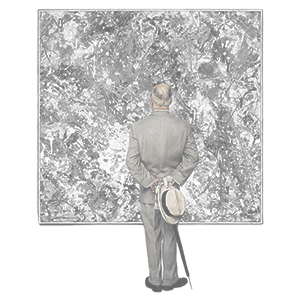
A connoisseur [kon-uh-sur] (meaning ‘to be acquainted with’ or ‘to know somebody/something’) is a person who has a great deal of knowledge about the arts and is an expert judge in matters of taste.
Internationally, the term is also used in gastronomy (in connection with fine food, beer, wine, tea, and many other products whose consumption can be pleasing to the senses). The ability to tell almost instinctively who painted a picture is defined as connoisseurship. Modern connoisseurship must be seen in context with museums, art galleries, and ‘the cult of originality.’
read more »
Posted in Art, Language |
Leave a Comment »
May 23, 2012

A retronym [re-truh-nim] is a type of neologism that provides a new name for something to differentiate the original version from a more recent one. The original name is most often augmented with an adjective (rather than being completely displaced) to account for later developments of the object or concept itself. Much retronymy is driven by advances in technology.
Examples of retronyms are ‘acoustic guitar’ (coined when electric guitars appeared), and ‘analog watch’ to distinguish from a digital watch. In the entertainment industry, this can manifest itself as calling a movie ‘Part 1’ once sequels are released or by slightly altering the title (e.g. ‘Star Wars: A New Hope’ or ‘Indiana Jones and the Raiders of the Lost Ark’) to emphasize its connection with the sequel(s), or by referring to a television series as ‘the original,’ as in ‘Star Trek: The Original Series.’
read more »
Posted in Language, Money, Technology |
Leave a Comment »
May 22, 2012
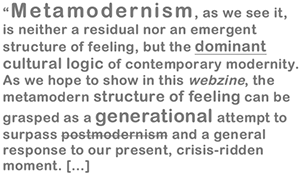
Metamodernism is a term employed to situate and explain recent developments across current affairs, critical theory, philosophy, architecture, art, cinema, music and literature which are emerging from and reacting to postmodernism.
The term metamodernism was introduced as an intervention in the post-postmodernism debate by the cultural theorists Timotheus Vermeulen and Robin van den Akker in 2010. In their article ‘Notes on metamodernism’ they assert that the 2000s are characterized by the return of typically modern positions without altogether forfeiting the postmodern mindsets of the 1990s and 1980s.
read more »
Posted in Art, Language, Philosophy |
Leave a Comment »
May 22, 2012

Post-Postmodernism is a general term used to describe new developments emerging from Postmodernism. It is a positive idea that faith, sincerity, and trust can be better for society than Postmodern irony.
The term ‘Post-Postmodernism’ was initially coined by seminal cultural theorist Alice Sanders in her magnum opus ‘The Shadow of the Rainbow.’
read more »
Posted in Language, Philosophy, Politics |
1 Comment »
May 22, 2012

Postmodernism is an era and a broad movement that developed in the mid to late 20th century that rejects the idea of objective truth and universal social progress. Starting with the 18th century Enlightenment, and for more than a century there was widespread belief that science and knowledge would improve the world; social progress would be inevitable. Modernism in particular held these beliefs. Postmodernism challenges that notion.
Although the term was first used around 1870, its modern appearance was to express criticism of modern architecture in 1949, leading to the postmodern architecture movement (a return to surface ornament, historical reference in decorative forms, and less boxy shapes). Postmodernism is not a method, but rather a way of approaching traditional ideas and practices in non-traditional ways that deviate from pre-established modes. Postmodernism gained significant popularity in the 1950s and dominated literature and art by the 1960s.
read more »
Posted in Art, Language, Philosophy |
Leave a Comment »
May 21, 2012
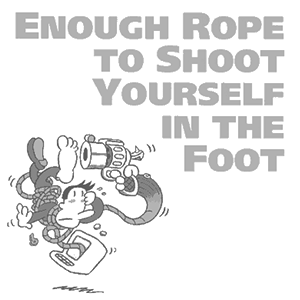
Akrasia [uh-kray-juh] (ancient Greek: ‘lacking command [over oneself]’) is the state of acting against one’s better judgement. The adjective form is ‘akratic.’ The problem goes back at least as far as Plato. Socrates asks precisely how this is possible—if one judges action A to be the best course of action, why would one do anything other than A? In the dialogue ‘Protagoras,’ Socrates attests that akrasia is an illogical moral concept, claiming ‘No one goes willingly toward the bad.’
If a person examines a situation and decides to act in the way he determines to be best, he will actively pursue this action, as the best course is also the good course, i.e. man’s natural goal. An all-things-considered assessment of the situation will bring full knowledge of a decision’s outcome and worth linked to well-developed principles of the good. A person, according to Socrates, never chooses to act poorly or against his better judgment; actions that go against what is best are only a product of being ignorant of facts or knowledge of what is best or good.
read more »
Posted in Language, Philosophy |
2 Comments »
May 21, 2012

The drop is the point in a track where a switch of rhythm or bass line occurs and usually follows a recognizable build section and break. In Hip-Hop and electronic music, the reintroduction of the full bass line and drums is known as the drop. In Dubstep, the drop involves a full bass line and commonly a ‘wobble’ bass or ‘vowel’ bass accompanied by a strong shuffling beat.
In Metalcore sub-genres, bass drops are often utilized under the first chord of a breakdown, to emphasize the breakdown and give it a pronounced presence. In drum and bass, DJs sometimes perform what is called the ‘double drop’: beat matching two tracks in a way that the drop, and hence the respective climaxes, occur at the same time.
Posted in Art, Language |
1 Comment »
May 21, 2012

Magic realism is an aesthetic style or genre of fiction in which magical elements blend with the real world. The story explains these magical elements as real occurrences, presented in a straightforward manner that places the ‘real’ and the ‘fantastic’ in the same stream of thought. One example, is when a character in the story continues to be alive beyond the normal length of life and this is subtly depicted by the character being present throughout many generations.
On the surface the story has no clear magical attributes and everything is conveyed in a real setting, but such a character breaks the rules of our real world. The author may give precise details of the real world such as the date of birth of a reference character and the army recruitment age, but such facts help to define an age for the fantastic character of the story that would turn out to be an abnormal occurrence like someone living for two hundred years.
read more »
Posted in Art, Language, World |
Leave a Comment »



