May 21, 2012
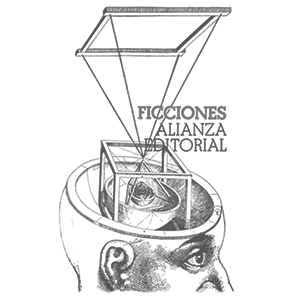
Jorge Luis Borges [bawr-hes] (1899 – 1986) was an Argentine writer whose work embraces the ‘character of unreality in all literature’; his most famous books, ‘Ficciones’ (1944) and ‘The Aleph’ (1949), are compilations of short stories interconnected by common themes such as dreams, labyrinths, libraries, mirrors, animals, fictional writers, religion, and God.
His works have contributed to the genre of science fiction and magic realism (a reaction against the realism/naturalism of the nineteenth century). In fact, critic Angel Flores, the first to use the term, set the beginning of this movement with Borges’s ‘Historia universal de la infamia’ (‘A Universal History of Infamy’) (1935). Scholars have also suggested that Borges’s progressive blindness helped him to create innovative literary symbols through imagination. His late poems dialogue with such cultural figures as Spinoza, Camões, and Virgil.
read more »
Posted in Art, Language, Politics |
Leave a Comment »
May 17, 2012

The silent majority is an unspecified large majority of people in a country or group who do not express their opinions publicly. The term was popularized (though not first used) by U.S. President Richard Nixon in a 1969, speech in which he said, ‘And so tonight—to you, the great silent majority of my fellow Americans—I ask for your support.’
In this usage it referred to those Americans who did not join in the large demonstrations against the Vietnam War at the time, who did not join in the counterculture, and who did not participate in public discourse. Nixon along with many others saw this group of Middle Americans as being overshadowed in the media by the more vocal minority. The phrase was used in the 19th century as a euphemism referring to all the people who have died, and others have used it before and after Nixon to refer to groups of voters in various nations of the world.
read more »
Posted in Language, Politics, World |
Leave a Comment »
May 17, 2012
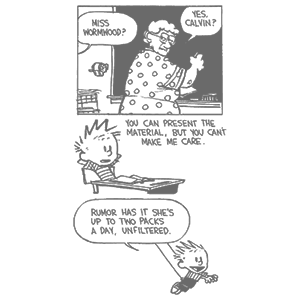
L’enfant terrible [ahn-fahn te-ree-bluh] (‘terrible child’) is a French term for a child who is terrifyingly candid by saying embarrassing things to adults, especially parents.
The OED describes it as, ‘a child who embarrasses his elders by untimely remarks; transf. a person who compromises his associates or his party by unorthodox or ill-considered speech or behavior; loosely, one who acts unconventionally.’ Webster’s defines an enfant terrible as an unusual person who is strikingly unorthodox, innovative, and/or avant-garde.
Posted in Humor, Language |
1 Comment »
May 16, 2012

Martin Sharp (b. 1942) is an Australian artist, underground cartoonist, songwriter and film-maker. His famous psychedelic posters of Bob Dylan, Donovan, and others, rank as classics of the genre, alongside the work of Rick Griffin, Hapshash and the Coloured Coat, and Milton Glaser.
His covers, cartoons and illustrations were a central feature of ‘Oz’ magazine, both in Australia and in London. Martin co-wrote one of Cream’s most famous songs, ‘Tales of Brave Ulysses,’ created the cover art for Cream’s ‘Disraeli Gears’ and ‘Wheels of Fire’ albums, and in the 1970s, he became a champion of singer Tiny Tim, and of Sydney’s embattled Luna Park.
read more »
Posted in Art, Language |
Leave a Comment »
May 11, 2012
Infornography is a portmanteau of ‘information’ and ‘pornography’ used to define an addiction to or an obsession with acquiring, manipulating, and sharing information. People ‘suffering’ from infornography enjoy receiving, sending, exchanging, and digitizing information.
The definition (without explicitly using the term itself) is also greatly applied in many cyberpunk settings, where information can almost be considered a currency of its own, in a sense facilitating the development of an alternate world for ‘escapism.’ Megacorps, hackers, and other kinds of people use information to thrive; they can subtly be called infornographers.’
read more »
Posted in Language, Technology, World |
Leave a Comment »
May 11, 2012
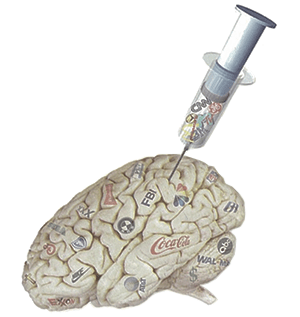
Memetics [meh-met-iks] is a controversial theory of mental content (e.g. thoughts, concepts, memories, emotions, percepts, intentions) based on an analogy with Darwinian evolution, originating from the popularization of Richard Dawkins’ 1976 book ‘The Selfish Gene.’ It purports to be an approach to evolutionary models of cultural information transfer. The meme, analogous to a gene, was conceived as a ‘unit of culture’ (an idea, belief, pattern of behavior, etc.) which is ‘hosted’ in one or more individual minds, and which can reproduce itself, thereby jumping from mind to mind.
Thus what would otherwise be regarded as one individual influencing another to adopt a belief is seen—when adopting the intentional stance—as an idea-replicator reproducing itself in a new host. As with genetics, particularly under a Dawkinsian interpretation, a meme’s success may be due to its contribution to the effectiveness of its host. Memetics is also notable for sidestepping the traditional concern with the truth of ideas and beliefs. Instead, it is interested in their success. The Usenet newsgroup alt.memetics was started in 1993.
read more »
Posted in Language, Philosophy, Science |
Leave a Comment »
May 11, 2012
Jennifer Government is a 2003 novel written by Max Barry, set in a dystopian alternate reality in which most nations (now controlled by the United States) are dominated by for-profit corporate entities while the government’s political power is extremely limited. Some readers consider it similar in satiric intent to Orwell’s ‘1984,’ but of a world with too little political power as opposed to too much.
Consequently, some readers see the novel as a criticism of libertarianism. Many readers also see it as a criticism of globalization, although Barry claims he is not an anti-globalizationist.
read more »
Posted in Language, Money, Politics |
Leave a Comment »
May 10, 2012

Jumping the shark is an idiom created by American radio personality Jon Hein to describe the moment in the evolution of a television show when it begins a decline in quality that is beyond recovery. The phrase is also used to refer to a particular scene, episode or aspect of a show in which the writers use some type of ‘gimmick’ in a desperate attempt to keep viewers’ interest.
The phrase refers to a scene in the fifth season premiere of ‘Happy Days in 1977: the gang visits Los Angeles, where a waterskiing Fonzie, wearing swim trunks and his trademark leather jacket, jumps over a confined shark, in response to a challenge. For a show that in its early seasons depicted universally relatable experiences against a backdrop of 1950s nostalgia, this marked an audacious, cartoonish turn towards attention-seeking gimmickry and continued the faddish lionization of an increasingly superhuman Fonzie.
Posted in Humor, Language |
Leave a Comment »
May 9, 2012
American Gods is a 2001 novel by Neil Gaiman. The novel is a blend of Americana, fantasy, and various strands of ancient and modern mythology, all centering on a mysterious and taciturn protagonist, Shadow. Several of the themes touched upon in the book were previously glimpsed in Gaiman’s ‘The Sandman’ graphic novels. The central premise of the novel is that gods and mythological creatures exist because people believe in them. Immigrants to the United States brought with them dwarves, elves, leprechauns, and other spirits and gods.
However, the power of these mythological beings has diminished as people’s beliefs wane. New gods have arisen, reflecting America’s obsessions with media, celebrity, technology, and drugs, among others. In addition to the numerous figures from real-world myths, a few characters from ‘The Sandman’ and its spinoffs make brief cameos in the book. Other mythological characters featured in the novel are not divine, but are legendary or folk heroes, such as Johnny Appleseed. Shadow himself is implied to be Baldr (the Norse god of sun and light, son of Odin)
read more »
Posted in Art, Language, Philosophy |
1 Comment »
May 8, 2012
The Khan Academy is a non-profit educational organization, created in 2006 by American educator Salman Khan (who has three degrees from MIT (a BS in mathematics, a BS in electrical engineering and computer science, and an MS in electrical engineering and computer science), and an MBA from Harvard Business School.
With the stated mission of ‘providing a high quality education to anyone, anywhere,’ the website supplies a free online collection of more than 3,100 micro lectures via video tutorials stored on YouTube teaching mathematics, history, healthcare and medicine, finance, physics, chemistry, biology, astronomy, economics, cosmology, organic chemistry, American civics, art history, microeconomics, and computer science.
read more »
Posted in Education, Language, Money, Technology |
1 Comment »
May 7, 2012

The Atrocity Exhibition is an experimental collection of ‘condensed novels’ by British writer J. G. Ballard. The book was originally published in the UK in 1970 by Jonathan Cape.
After a 1970 edition by Doubleday & Company had already been printed, Nelson Doubleday, Jr. personally cancelled the publication and had the copies destroyed, fearing legal action from some of the celebrities depicted in the book. Thus, the first U.S. edition was published in 1972 by Grove Press under the title ‘Love and Napalm: Export U.S.A.’
read more »
Posted in Language, Politics, Sex |
1 Comment »
May 5, 2012


A non-apology apology is a statement in the form of an apology but that is not in fact an apology at all. It is common in both politics and public relations. It most commonly entails the speaker saying that he or she is sorry not for a behavior, statement or misdeed, but rather is sorry only because a person who has been aggrieved is requesting the apology, expressing a grievance, or is threatening some form of retribution or retaliation.
An example of a non-apology apology would be saying ‘I’m sorry that you felt insulted’ to someone who has been offended by a statement. This apology does not admit that there was anything wrong with the remarks made, and additionally, it may be taken as insinuating that the person taking offense was excessively thin-skinned or irrational in taking offense at the remarks in the first place.
read more »
Posted in Language, Money, Politics |
Leave a Comment »



