April 13, 2012
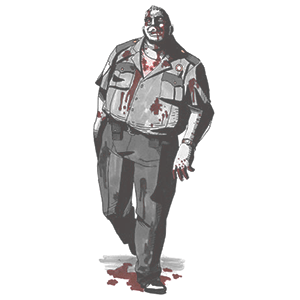
HWDP [ha-voo-de-pe] is a frequently used acronym of a Polish vulgar phrase ‘chuj w dupę policji,’ meaning literally ‘a dick up the police’s ass.’ It can be best compared to the English-language phrase ACAB (‘All Cops Are Bastards’), known in western English-language countries, painted on walls by aggressive football fans already in the 1960s. It is also commonly used as a tattoo among some of the Latino prisoners in the United States of America, who claim it stands for ‘Always Carry A Bible,’ when asked about it by the authorities. Another English counterpart of this Polish vulgar phrase is FTP, an acronym of the phrase ‘fuck the police.’
This vulgar slogan, often written on walls, is used by a part of the youth as a form of provocation against the police, but also one of its ‘trademarks.’ Writing of the HWDP characters, visible from far, is a de facto form of aggressive vandalism, which reasonably lowers the value of the flats near the marked objects. The habit of using the HWDP slogan is particularly popular amongst aggressive football fans, called pseudokibice, of the beginning of the 21st century. It is a specific expression of protest against the authorities and the entire surrounding system, although it isn’t an ideological rebellion, but instead, a characteristic sign of the additude to the surrounding reality.
Posted in Language, Politics, World |
Leave a Comment »
April 13, 2012
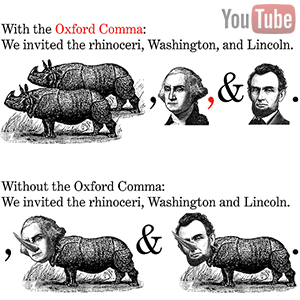
The serial comma (also known as the Oxford comma or Harvard comma) is the comma used immediately before a coordinating conjunction (usually ‘and’ or ‘or’) preceding the final item in a list of three or more items.
For example, a list of three countries can be punctuated as either ‘Portugal, Spain, and France’ (with the serial comma) or as ‘Portugal, Spain and France’ (without the serial comma).
read more »
Posted in Education, Language, World |
1 Comment »
April 12, 2012


A calligram [kal-uh-gram] is a poem, phrase, or word in which the typeface, calligraphy, or handwriting is arranged in a way that creates a visual image. The image created by the words expresses visually what the word, or words, say. In a poem, it manifests visually the theme presented by the text of the poem.
Guillaume Apollinaire was a famous calligram writer and author of a book of poems called ‘Calligrammes.’ His poem written in the form of the Eiffel Tower is an example of a calligram.
Posted in Art, Language |
Leave a Comment »
April 12, 2012

Eye music (often referred to in English by its exact German translation ‘Augenmusik’) describes graphical features of scores that when performed are unnoticeable by the listener. A clear definition of eye music is elusive, for the border between eye music, word painting, and representations of melody and form depends on the relationships of composer, performer, and listener. Word painting (also known as tone painting or text painting) is writing music that reflects the literal meaning of a song (r.g. ascending scales would accompany lyrics about going up; slow, dark music would accompany lyrics about death).
To a person well-versed in the style of Baroque music, word painting is, as intended, noticed. But someone unused to Baroque musical style may not appreciate that musical effect – to them they are merely notes and lyrics. In this case, word painting is no longer the issue. For them, the ‘leaps’ of written notes are unhearable, but are visible only to the composer or performer: a definition of eye music.
read more »
Posted in Art, Language |
Leave a Comment »
April 12, 2012
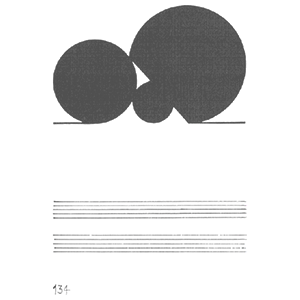
Graphic notation is the representation of music through the use of visual symbols outside the realm of traditional music notation. Graphic notation evolved in the 1950s, and it is often used in combination with traditional music notation. Composers often rely on graphic notation in experimental music, where standard musical notation can be ineffective. A common aspect of graphic notation is the use of symbols to convey information to the performer about the way the piece is to be performed. These symbols first began to appear in the works of avant-garde composers such as Morton Feldman, Karlheinz Stockhausen, and Krzysztof Penderecki, as well as the works of experimental composers such as John Cage and Earle Brown during the 1950s and 60s. In the late 1970s, the Brazilian composer Emanuel Dimas de Melo Pimenta started producing graphic notation in four dimensions, inside virtual reality.
After working as Stockhausen’s assistant, Cornelius Cardew began work on a massive graphic score, which he titled ‘Treatise.’ The piece consists of 193 pages of highly abstract scores. The score itself is almost its own separate work of art. In 2008, Theresa Sauer edited a compendium featuring graphic scores by composers from over fifty countries, demonstrating how widespread the practice has become. Notable graphic scores(in which the music is represented using symbols and illustrations) include: Hans-Christoph Steiner’s score for ‘Solitude,’ created using the Pure Data programming language. Altered Notation can be seen in George Crumb’s work, where he uses traditional notation but presents the music on the page in a graphic or nontraditional manner such as spirals or circles.
Posted in Art, Language |
Leave a Comment »
April 12, 2012
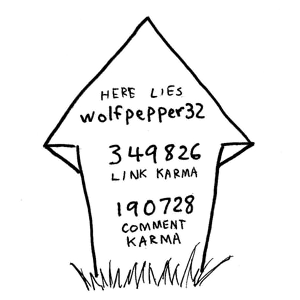
Egoboo is a colloquial expression for the pleasure received from public recognition of voluntary work. The term was in use in science fiction fandom no later than 1947, when it was used (spelled ‘ego boo’) in a letter from Rick Sneary published in the letter column of ‘Thrilling Wonder Stories.’
It was originally simply used to describe the ‘ego boost’ someone feels on seeing their name in print. As a reliable way for someone to get their name in print was to do something worth mentioning, it became caught up with the idea of voluntary community participation. As a result of this, in later years, the term grew to mean something akin to an ephemeral currency, e.g., ‘ got a lot of egoboo for editing that newsletter.’
read more »
Posted in Language, Money |
Leave a Comment »
April 10, 2012


The Groundlings are an improvisational comedy troupe based in Los Angeles formed by Gary Austin in 1974. It uses an improv format influenced by Viola Spolin to produce sketches and improvised scenes. Its name is taken from ‘Hamlet’: ‘…to split the ears of the groundlings, who for the most part are capable of nothing but inexplicable dumbshows and noise.’ The Groundlings School holds new sessions every six weeks with over 300 students per session, with over 2,000 students per year going through the program. The competitive program consists of 4 levels (Basic, Intermediate, Writing Lab and Advanced).
Participants must be successfully advanced from each level by the instructor. After completing the Advanced level, one may be voted into the Sunday Company, which performs every Sunday at 7:30pm. Members of the Main Company are selected from members of the Sunday Company. The Main Company (now capped at no more than 30 members at any time) collectively acts as the organization’s artistic director, democratically making business and creative decisions as a group. Notable alumni include: Adam Carolla, Abby Elliott, Jimmy Fallon, Will Ferrell, Will Forte, Ana Gasteyer, Kathy Griffin, Rachael Harris, Phil Hartman, Cheryl Hines, Chris Kattan, Lisa Kudrow, Jon Lovitz, Pat Morita, Conan O’Brien, Cheri Oteri, Paul Reubens, Maya Rudolph, Dax Shepard, and Kristen Wiig.
Posted in Art, Humor, Language |
Leave a Comment »
April 10, 2012

Q is a fictional character in the James Bond novels and films. Q (standing for Quartermaster), like M, is a job title rather than a name. He is the head of Q Branch (or later Q Division), the fictional research and development division of the British Secret Service.
The character actually appears only fleetingly in Ian Fleming’s novels, but comes into his own in the successful Bond film series; he is also mentioned in the continuation novels of John Gardner and Raymond Benson. Q has appeared in 20 of 23 Eon Bond films; all except ‘Live and Let Die,’ ‘Casino Royale,’ and ‘Quantum of Solace.’ The character was also featured in the non-official Bond films ‘Casino Royale’ (1967) and ‘Never Say Never Again.’
read more »
Posted in Language, Technology, War |
Leave a Comment »
April 9, 2012
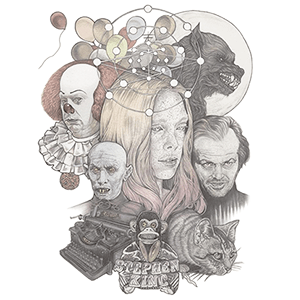
‘On Writing: A Memoir of the Craft’ by Stephen King, published in 2000, is a memoir of the prolific author’s experiences as a writer, and also serves as a guide book for those who choose to enter the craft. The first section of the book is an Autobiography mainly about King’s early exposure to writing, and his childhood attempts at writing. King talks about his early attempts to get published, and his first novel ‘Carrie.’ He also talks about his fame as a writer, and what it took to get there. This includes his relationship with his wife, the death of his mother and his history of drug and alcohol abuse.
The second section is practical advice on writing, including tips on grammar and ideas about developing plot and character. King himself describes it as a guide for how ‘a competent writer can become a good one.’ This includes his beliefs that a writer should edit out unnecessary details and avoid the use of unnecessary adverbs. He also uses quotes from other books and authors to illustrate his points. The third section is also autobiographical, in which he discusses the 1999 automobile accident in which he was struck by a vehicle while walking down an isolated country road. He describes serious injuries, his painful recovery and his struggle to start writing again.
Posted in Art, Language, Money |
1 Comment »
April 6, 2012

Clinamen [klyn-ah-mun] is the Latin name Roman philosopher Lucretius gave to the unpredictable swerve of atoms, in order to defend the atomistic doctrine of ancient Greek philosopher Epicurus. According to Lucretius, the unpredictable swerve occurs ‘at no fixed place or time’:
‘When atoms move straight down through the void by their own weight, they deflect a bit in space at a quite uncertain time and in uncertain places, just enough that you could say that their motion has changed. But if they were not in the habit of swerving, they would all fall straight down through the depths of the void, like drops of rain, and no collision would occur, nor would any blow be produced among the atoms. In that case, nature would never have produced anything.’
read more »
Posted in Language, Philosophy |
Leave a Comment »
April 4, 2012
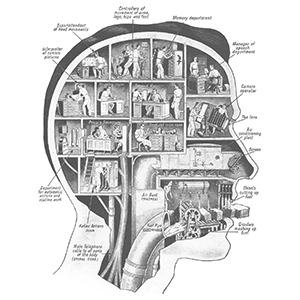
The ‘ghost in the machine‘ is British philosopher Gilbert Ryle’s description of René Descartes’ mind-body dualism. The phrase was introduced in Ryle’s book ‘The Concept of Mind’ (1949) to highlight the perceived absurdity of dualist systems like Descartes’ where mental activity carries on in parallel to physical action, but where their means of interaction are unknown or, at best, speculative.
Arthur Koestler’s wrote ‘The Ghost in the Machine,’ in 1967, focusing on mankind’s movement towards self-destruction, particularly in the nuclear arms arena. The book is particularly critical of B. F. Skinner’s behaviorist theory. One of Koestler’s central concepts is that as the human brain has grown, it has built upon earlier, more primitive brain structures, and that this is the ‘ghost in the machine’ of the title. Koestler’s theory is that at times these structures can overpower higher logical functions, and are responsible for hate, anger and other such destructive impulses.
read more »
Posted in Language, Philosophy, Science |
1 Comment »
April 4, 2012
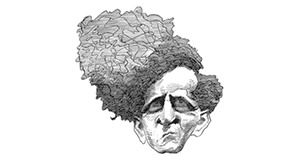
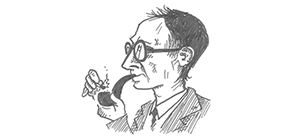
Ordinary language philosophy came out of followers of the later work of Ludwig Wittgenstein at the University of Oxford, and was most popular between 1930 and 1970. It is a philosophical school that approaches traditional philosophical problems as rooted in misunderstandings philosophers develop by distorting or forgetting what words actually mean in everyday use.
This approach typically involves eschewing philosophical ‘theories’ in favor of close attention to the details of the use of everyday, ‘ordinary’ language. Sometimes called ‘Oxford philosophy,’ it is generally associated with the work of a number of mid-century Oxford professors: mainly J.L. Austin, but also Gilbert Ryle, H.L.A. Hart, and Peter Strawson. The later Ludwig Wittgenstein is ordinary language philosophy’s most celebrated proponent outside the Oxford circle. Second generation figures include Stanley Cavell and John Searle.
read more »
Posted in Language, Philosophy |
3 Comments »



