March 24, 2012
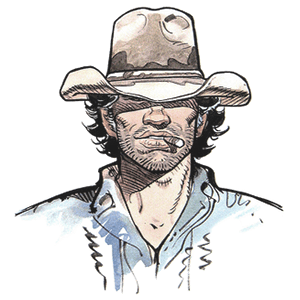
Blueberry is a Franco-Belgian comics western series created by the Belgian scriptwriter Jean-Michel Charlier and French comics artist Jean Moebius’ Giraud. It chronicles the adventures of Mike ‘Blueberry’ Donovan on his travels through the American Old West. Blueberry is an atypical western hero; he is not a wandering lawman who brings evil-doers to justice, nor a handsome cowboy who ‘rides into town, saves the ranch, becomes the new sheriff and marries the schoolmarm.’
He is accompanied in many tales by his hard-drinking deputy, Jimmy McClure, and later also by Red Woolley, a rugged pioneer. Donovan is the son of a rich Southern farmer and started as a dedicated racist. He was framed for a murder he did not commit, had to flee and was saved by an African-American. He became an enemy of discrimination of all kinds, fought against the Confederates (although he was a Southerner himself), and tried to protect the rights of Native Americans.
read more »
Posted in Art, Language, World |
Leave a Comment »
March 24, 2012
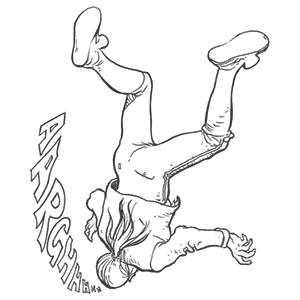
The Incal is a set of science fiction comic book series written in French by Alejandro Jodorowsky and illustrated by Moebius and others. ‘The Incal’ takes place in, and introduced Jodorowsky’s ‘Jodoverse,’ a fictional universe in which his science fiction comics take place. The story begins in the dystopian capital city of an insignificant planet in a human-dominated galactic empire. The series stars John DiFool, anoccasional bodyguard. DiFool has no interest in being a hero, has mood swings and suffers from self-doubt and temper tantrums in which he threatens to walk away and assume a comfortable lifeh. He has a fondness for cigars, ‘ouisky’ and ‘homeosluts’ (gynoid prostitutes).
The series mixes space opera, metaphysics, and satire; a counterpoint to the grandiosity of the events is always Difool’s base, even cowardly nature. Every major character in The Incal is based upon Tarot cards – for example, John Difool is based upon The Fool with his name being a pun upon ‘John, the Fool.’ Moebius and Jodorowsky sued Luc Besson, director of ‘The Fifth Element,’ claiming that the film borrowed graphic and story elements from ‘The Incal,’ but they lost their case. In a 2002 interview with Danish comic book magazine ‘Strip!,’ Jodorowsky actually claimed that he considered it an honor that somebody stole his ideas, saying he believes that authors do not create the stories they tell as much as they make personal interpretations of mythemes shared by the collective unconscious.
Posted in Art, Humor, Language |
Leave a Comment »
March 24, 2012
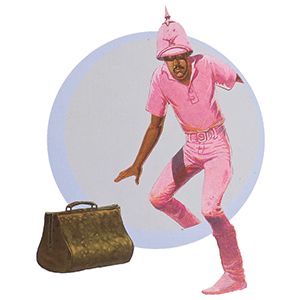
‘The Airtight Garage of Jerry Cornelius’ (‘Le Garage Hermétique de Jerry Cornelius’) is a lengthy comic strip work by the artist and writer Moebius (real name Jean Giraud). It first appeared in discrete two-to-four page episodes, in the French magazine ‘Metal Hurlant’ between 1976 and 1980, and later in the American version of the same magazine, ‘Heavy Metal,’ starting in 1977.
‘The Airtight Garage’ was followed by ‘L’Homme du Ciguri’ (‘The Man from the Ciguri’) in 1995. Some of the characters from these stories also show up in the 1974 comic ‘Le Bandard Fou’ (‘The Horny Goof’), which can be considered a prequel. The story is at times confusing, as Moebius was making it up as he went along. The ‘garage’ itself is actually an asteroid in the constellation Leo which houses a pocket universe. Major Grubert orbits the asteroid in his spaceship Ciguri, from which he oversees the development of the worlds contained within. Several entities, including Jerry Cornelius, seek to invade the garage.
Posted in Art, Language, World |
Leave a Comment »
March 24, 2012
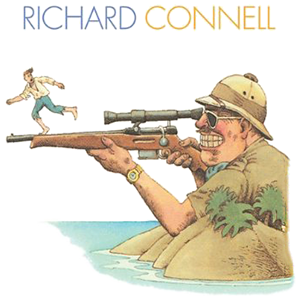
‘The Most Dangerous Game,’ also published as “The Hounds of Zaroff”, is a short story by Richard Connell. It was published in ‘Collier’s Weekly’ in 1924. Widely anthologized, and the author’s best-known work, it features as its main character a big-game hunter from New York, who falls off a yacht and swims to an isolated island in the Caribbean, where he is hunted by a Cossack aristocrat. The story is an inversion of the big-game hunting safaris in Africa and South America that were fashionable among wealthy Americans in the 1920s.
The story has been adapted for film numerous times. The most significant of these adaptations (and the only one to use the original characters) was RKO’s ‘The Most Dangerous Game,’ released in 1932, having been shot (mostly at night) on sets used during the day for the ‘Skull Island’ sequences of ‘King Kong.’ The film added two other principal characters: brother and sister pair Eve Trowbridge (Fay Wray) and Martin Trowbridge (Robert Armstrong). (Wray and Armstrong were also filming King Kong on the same sets during the day.)
read more »
Posted in Death, Games, Language |
Leave a Comment »
March 24, 2012
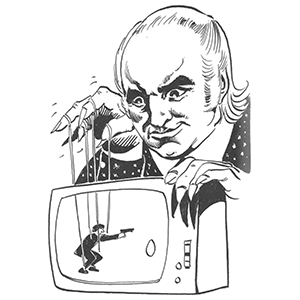
The Prize of Peril is a science fiction short-story by Robert Sheckley, written in 1958 and first published in the collection ‘Store of Infinity’ in 1960 by Bantam Books. The short story is noted for its plot’s anticipation of Reality television shows such as Survivor and Fear Factor by several decades. The screenplay for the fake German reality show ‘Das Millionenspiel’ (‘The Million Game’) was based on the story, as was the French film version of ‘Das Millionenspiel,’ ‘Le prix du danger.’ The protagonist of the story is Jim Raeder, a man only notable due to his normality, who has been a participant in many reality television-shows (given the name ‘thrill shows’) and thus become a celebrity.
In all the shows the risk of dying has been a part of the concept; he has fought a real bull in Spain, he has driven a Formula 1-car, and fought with other divers while trying to escape sharks and other sea monsters. In the story he partakes in the greatest of all reality shows; he is to be hunted by professional gangland murderers. As he is hunted, his journey is shown all over the US on TV and he receives help from the viewers; the so called Good Samaritans and the commentator, Mike Terry, makes a point of this during the show: ‘All of America is ready to help Jim!,’ but Raeder soon finds out that things are not what he expected them to be and that maybe his survival is not the main priority among the public. The story ends with Raeder winning The Prize of Peril, but being dragged away after presumably having a mental breakdown, not being ‘himself’ at the moment according to Terry.
Posted in Art, Games, Language |
Leave a Comment »
March 24, 2012

The Running Man is a science fiction novel by Stephen King, first published under the pseudonym Richard Bachman in 1982 as a paperback original. It was collected in 1985 in the hardcover omnibus ‘The Bachman Books.’ The novel is set in a dystopian United States during the year 2025, in which the nation’s economy is in ruins and world violence is rising.
The story follows protagonist Ben Richards as he participates in the game show ‘The Running Man’ in which contestants, allowed to go anywhere in the world, are chased by ‘Hunters,’ employed to kill them. ‘The Running Man’ was loosely adapted into a film with the same name, which was released five years after the book in 1987. The film starred Arnold Schwarzenegger as Richards.
read more »
Posted in Art, Death, Language |
Leave a Comment »
March 24, 2012
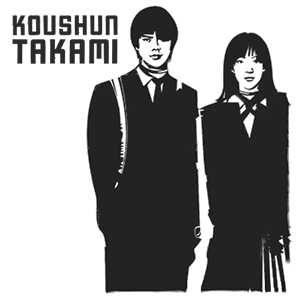
Battle Royale is a 1999 Japanese novel written by Koushun Takami about schoolchildren who are forced to fight each other to the death. The novel has been adapted into a 2000 film and a manga series. The story takes place in an alternate timeline—Japan is a member region of a totalitarian state known as the Republic of Greater East Asia. Under the guise of a ‘study trip,’ a group of students are gassed on a bus. They awaken in the Okishima Island School on an isolated, evacuated island (modeled after the island of Ogijima). They learn that they have been placed in an event called the Program.
Officially a military research project, it is a means of terrorizing the population, of creating such paranoia as to make organized insurgency impossible. The Program began in 1947. According to the rules fifty third-year high school classes are selected (prior to 1950, forty-seven classes were selected) annually to participate in the Program for research purposes. The students from a single class are isolated and are required to fight the other members from their class to the death. The Program ends when only one student remains, with that student being declared the winner.
Posted in Art, Death, Language |
Leave a Comment »
March 23, 2012
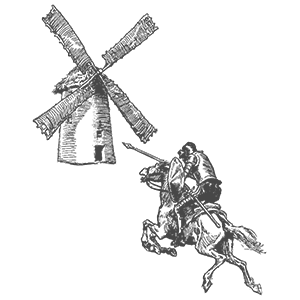
Tilting at windmills is an English idiom which means attacking imaginary enemies. The word ’tilt,’ in this context, comes from jousting. The phrase is sometimes used to describe confrontations where adversaries are incorrectly perceived, or courses of action that are based on misinterpreted or misapplied heroic, romantic, or idealistic justifications.
The phrase derives from an episode in the novel ‘Don Quixote’ by Miguel de Cervantes. In the novel, Don Quixote fights windmills that he imagines to be giants. Quixote sees the windmill blades as the giant’s arms, for instance.
read more »
Posted in Humor, Language, Politics |
Leave a Comment »
March 23, 2012


Tilt is a poker term for a state of mental or emotional confusion or frustration in which a player adopts a less than optimal strategy, usually resulting in the player becoming over-aggressive. This term is closely associated with ‘steam’ and some consider the terms equivalent, but ‘steam’ typically indicates more anger and intensity. Placing an opponent on tilt or dealing with being on tilt oneself is an important aspect of poker. It is a relatively frequent occurrence due to frustration, animosity against other players, or simply bad luck. Experienced players recommend learning to recognize that one is experiencing tilt and avoid allowing it to influence one’s play.
The most likely origin of the word ’tilt’ is as a reference to tilting a pinball machine. The frustration from seeing the ball follow a path towards the gap between the flippers can lead to the player physically tilting the machine (in an attempt to guide the ball towards the flippers). However, in doing so, some games will flash the word ‘TILT’ and freeze the flippers, causing the ball to be lost. The metaphor here being over-aggression due to frustration leads to severely detrimental gameplay.
read more »
Posted in Games, Language, Money |
Leave a Comment »
March 23, 2012

The hostile media effect refers to the finding that people with strong biases toward an issue (partisans) perceive media coverage as biased against their opinions, regardless of the reality.
Proponents of the hostile media effect argue that this finding cannot be attributed to the presence of bias in the news reports, since partisans from opposing sides of an issue rate the same coverage as biased against their side and biased in favor of the opposing side. The phenomenon was first proposed and studied experimentally by Robert Vallone, Lee Ross and Mark Lepper.
read more »
Posted in Language, Money, Politics |
Leave a Comment »
March 22, 2012

Giant Robot is a bi-monthly magazine of Asian and Asian American popular culture founded in 1994. It covers history, art, music, film, books, toys, technology, food and skateboarding. The publication grew from its original format—a small, photocopied zine, folded and stapled by hand—to its current full-color format. ‘Giant Robot’ was one of the earliest American publications to feature prominent Asian film stars such as Chow Yun-fat and Jet Li, as well as Asian musicians from indie and punk rock bands. Today, the coverage has expanded into art, design, Asian American issues, travel, and more.
In the late 1990s, Giant Robot expanded their endeavor to an online retail store selling artist goods, designer vinyl dolls, mini-figures, plush dolls, stationeries, art, t-shirts, and many creative goods. The success of the commercial website enabled the establishment of a brick-and-mortar retail store in 2001; first in Los Angeles and later in San Francisco. A third store, called GR2, was opened in Los Angeles, and features work by young contemporary artists. Giant Robot further expanded to a fourth store in New York City, and a fifth in Silverlake, as well as a restaurant called gr/eats, also in Los Angeles. The GR2, San Francisco, and New York locations feature monthly art exhibitions from up and coming and established artists.
Posted in Art, Language, World |
Leave a Comment »
March 19, 2012
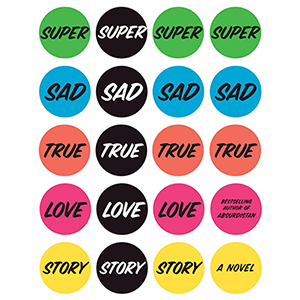
Gary Shteyngart (b. 1972) is an American writer born in Leningrad, USSR. Much of his work is satirical and relies on the invention of elaborately fictitious yet somehow familiar places and times. Shteyngart spent the first seven years of his childhood living in a square dominated by a huge statue of Vladimir Lenin in what is now St. Petersburg, Russia; (he alternately calls it ‘St. Leningrad’ or ‘St. Leninsburg’). He comes from a Jewish family and describes his family as typically Soviet. His father worked as an engineer in a LOMO camera factory; his mother was a pianist. Shteyngart emigrated to the United States in 1979 and was brought up with no television in the apartment in which he lived, where English was not the household language. He did not shed his thick Russian accent until the age of 14.
Shteyngart took a trip to Prague, and this experience helped spawn his first novel, set in the fictitious European city of Prava. He is a graduate of Stuyvesant High School in New York City, Oberlin College in Ohio, where he earned a degree in politics, and Hunter College of the City University of New York, where he earned an MFA in Creative Writing. Shteyngart now lives in the Lower East Side of Manhattan. He has taught writing at Hunter College, and currently teaches writing at Columbia University and Princeton University. Shteyngart’s novels include ‘The Russian Debutante’s Handbook’ (2002), ‘Absurdistan’ (2006), and ‘Super Sad True Love Story’ (2010).
Posted in Art, Humor, Language |
Leave a Comment »



