February 28, 2012
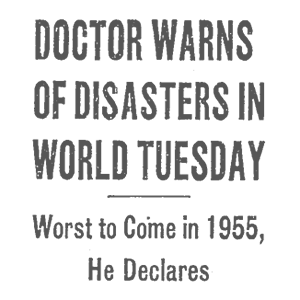
When Prophecy Fails is a 1956 classic book in social psychology by Leon Festinger, Henry Riecken, and Stanley Schachter about a UFO religion that believes the end of the world is at hand. Festinger’s theory of cognitive dissonance (holding conflicting thoughts or feelings at the same time causes distress) can account for the psychological consequences of disconfirmed expectations.
Festinger and his associates read an interesting item in their local newspaper headlined ‘Prophecy from planet Clarion call to city: flee that flood.’ A housewife given the name ‘Marian Keech’ (real name Dorothy Martin, later known as Sister Thedra), had mysteriously been given messages in her house in the form of ‘automatic writing’ from alien beings. These messages revealed that the world would end in a great flood before dawn on December 21, 1954.
read more »
Posted in Health, Language, Philosophy |
1 Comment »
February 28, 2012
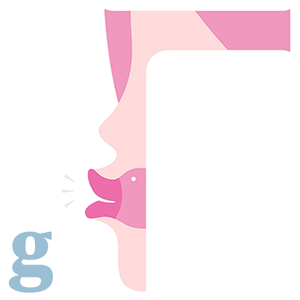
Vocal fry (creak, glottal scrape, or strohbass), is the lowest vocal register, voice is next, then falsetto, and finally whistle is the highest vocal register. It is produced through a loose glottal closure which will permit air to bubble through slowly with a popping or rattling sound of a very low frequency. Some authorities consider the use of vocal fry in speech a dysphonia, while others consider it so only if it is used excessively. However, the register is more widely used in singing than might at first seem apparent.
Within the bass part of gospel quartet singing the practice is quite common. The croaking sound produced by male singers at the start of phrases in American country music are produced by moving from this mode to the normal voice. Additionally some Russian Anthems contain bass lines within the vocal-fry register. Within choral music, when true basses are not available, choirs often rely on singers who can ‘fry’ the low bass notes. Vocal fry is also used in metal music, usually in combination with air from the diaphragm, in order to create a ‘growl’ or ‘scream’ which sounds aggressive and harsh.
Posted in Art, Health, Language |
1 Comment »
February 27, 2012

The generational gap is a term popularized in Western countries during the 1960s referring to differences between people of a younger generation and their elders, especially between children and parents. Although some generational differences have existed throughout history, modern generational gaps have often been attributed to rapid cultural change in the postmodern period, particularly with respect to such matters as musical tastes, fashion, culture and politics.
These changes are assumed to have been magnified by the unprecedented size of the young generation during the 1960s, which gave it the power and inclination to rebel against societal norms, as reflected in songs such as the 1965 hit ‘My Generation’ by The Who and ‘The Times They Are a-Changin” by Bob Dylan.
read more »
Posted in Language |
Leave a Comment »
February 26, 2012
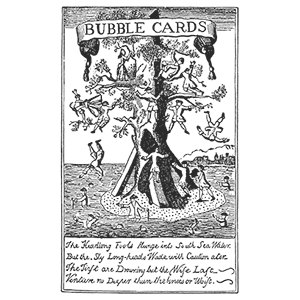
Extraordinary Popular Delusions and the Madness of Crowds is a history of popular folly by Scottish journalist Charles Mackay, first published in 1841. The book chronicles its subjects in three parts: National Delusions, Peculiar Follies, and Philosophical Delusions.
Despite its journalistic and rather sensational style, the book has gathered a body of academic support as a work of considerable importance in the history of social psychology and psychopathology. The subjects of Mackay’s debunking include economic bubbles, alchemy, crusades, witch-hunts, prophecies, fortune-telling, haunted houses, popular follies of great cities, and popular admiration of great thieves.
read more »
Posted in Language, Money, Philosophy |
Leave a Comment »
February 25, 2012
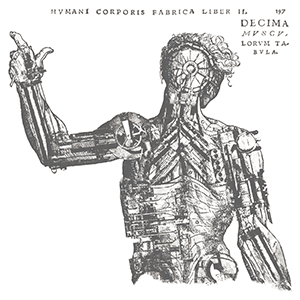
‘One-Dimensional Man: Studies in the Ideology of Advanced Industrial Society’ is a 1964 book by philosopher Herbert Marcuse. The work offers a wide-ranging critique of both contemporary capitalism and the society in the Soviet Union, documenting the parallel rise of new forms of social repression in both these societies, as well as the decline of revolutionary potential in the West.
Marcuse argues that ‘advanced industrial society’ created false needs, which integrated individuals into the existing system of production and consumption via mass media, advertising, industrial management, and contemporary modes of thought.
read more »
Posted in Language, Money, Politics |
Leave a Comment »
February 25, 2012

Flash fiction is a style of fictional literature or fiction of extreme brevity.
There is no widely accepted definition of the length of the category. Some self-described markets for flash fiction impose caps as low as three hundred words, while others consider stories as long as a thousand words to be flash fiction. In one particular format, established by Steve Moss, Editor of the New Times, the requirement is 55 words; no more and no fewer. Another, unspecified but frequently held, requirement is that the title may be no more than seven words.
read more »
Posted in Art, Language |
Leave a Comment »
February 24, 2012
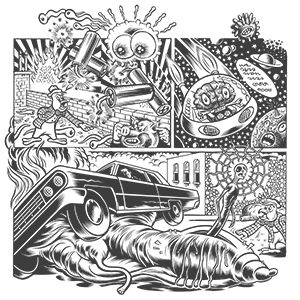
In visual art, ‘horror vacui‘ [vak-yew-ee] (Latin: ‘fear of empty space,’ which might be represented by white spots; cenophobia in Greek, is the filling of the entire surface of an artwork with detail. The term is associated with the Italian critic and scholar Mario Praz, who used it to describe the suffocating atmosphere and clutter of interior design in the Victorian age. Older, and more artistically successful examples can be seen in illuminated manuscripts such as the ‘Book of Kells.’ Moving east, this feeling of meticulously filling empty spaces permeates Arabesque Islamic art from ancient times to the present. Another example comes from ancient Greece during the Geometric Age (1100 – 900 BCE), when horror vacui was considered a stylistic element of all art. The mature work of the French Renaissance engraver Jean Duvet consistently exhibits horror vacui.
Some examples of horror vacui in art come from, or are influenced by, the mentally unstable and inmates of psychiatric hospitals, such as Richard Dadd in the 19th century, and many modern examples fall under the category of Outsider Art. Horror vacui may have also had an impact, consciously or unconsciously, on graphic design by artists like David Carson or Vaughan Oliver, and in the underground comix movement in the work of S. Clay Wilson, Robert Crumb, Robert Williams, and on later comic artists such as Mark Beyer. The paintings of Williams, Faris Badwan, Joe Coleman and Todd Schorr are further examples of horror vacui in the modern Lowbrow art movement. The entheogen-inspired visionary art of certain indigenous peoples, such as the Huichol yarn paintings and the ayahuasca-inspired art of Pablo Amaringo, often exhibits this style, as does the psychedelic art movement of the 1960s counterculture.
Posted in Art, Language |
Leave a Comment »
February 24, 2012
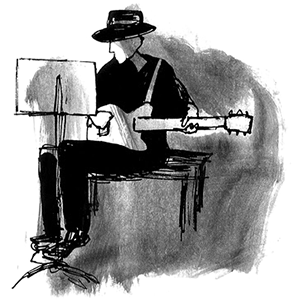
Outsider music, a term coined by music historian Irwin Chusid in the mid-1990s, are songs and compositions by musicians who are not part of the commercial music industry who write songs that ignore standard musical or lyrical conventions, either because they have no formal training or because they disagree with formal rules. This type of music, which often lacks typical structure and is emotionally stark, has few outlets; performers or recordings are often promoted by word of mouth or through fan chat sites, usually among communities of music collectors and music connoisseurs.
Outsider musicians usually have much ‘greater individual control over the final creative’ product either because of a low budget or because of their ‘inability or unwillingness to cooperate’ with modifications by a record label or producer. While a small number of outsider musicians became notable, such as Florence Foster Jenkins, an American soprano, the majority of outsider artists do not attain mainstream popularity.
read more »
Posted in Art, Language, Money |
1 Comment »
February 23, 2012

Free speech zones (also known as ‘First Amendment Zones’) are areas set aside in public places for political activists to exercise their right of free speech in the US. The First Amendment states that ‘Congress shall make no law… abridging… the right of the people peaceably to assemble, and to petition the Government for a redress of grievances.’ The existence of free speech zones is based on court decisions stipulating that the government may regulate the time, place, and manner—but not content—of expression.
The stated purpose is to protect the safety of those attending the political gathering, or for the safety of the protesters themselves. Critics, however, suggest that such zones are ‘Orwellian,’ and that authorities use them in a heavy-handed manner to censor protesters by putting them literally out of sight of the mass media, hence the public, as well as visiting dignitaries. Civil libertarians claim that such areas are used as a form of censorship and public relations management to conceal the existence of popular opposition from the mass public and elected officials.
Posted in Language, Politics, World |
Leave a Comment »
February 23, 2012

Poseur is a pejorative term which describes a person who copies the dress, speech, and mannerisms of a subculture without understanding the values or philosophy of the group they are mimicking. A poseur habitually pretends to be something they are not (an insincere person), or tries to impress others by behaving in an affected way (a pretentious person).
While the term is most associated with the 1970s- and 1980s-era punk and hardcore subculture, English use originates in the late 19th century. The English term is a loanword from French, where it refers to people who ‘affect an attitude or pose.’ One could say ‘poseur’ is merely the English word ‘poser’ in French garb and thus could itself be considered an affectation.
read more »
Posted in Art, Language |
Leave a Comment »
February 23, 2012

Gravitropism [gra-vitre-pizm] is a turning or growth movement by a plant or fungus in response to gravity.
Charles Darwin was one of the first to scientifically document that roots show positive gravitropism and stems show negative gravitropism. That is, roots grow in the direction of gravitational pull (i.e., downward) and stems grow in the opposite direction (i.e., upwards).
Posted in Language, Science |
Leave a Comment »
February 22, 2012

Gallows humor is a type of humor that still manages to be funny in the face of, and in response to, a hopeless situation. It arises from stressful, traumatic, or life-threatening situations, often in circumstances such that death is perceived as impending and unavoidable. The genre developed in Central Europe, and then moved to the US as part of Jewish humor. Gallows humor is offered by the person affected by the dramatic situation, an aspect that is missing in the derivative called black comedy. It is rendered with the German expression ‘Galgenhumor,’ and is comparable to the French ‘rire jaune’ (‘sickly smile’), and the Belgian Dutch ‘groen lachen’ (‘laugh desperately’). Italian comedian Daniele Luttazzi discussed gallows humor focusing on the particular type of laughter that it arouses, and said that grotesque satire, as opposed to ironic satire, is the one that most often arouses this kind of laughter.
In the Weimar era Kabaretts, this genre was particularly common; Karl Valentin and Karl Kraus were the major masters of it. Sigmund Freud in his 1927 essay ‘Humour (Der Humor)’ puts forth the following theory of the gallows humor: ‘The ego refuses to be distressed by the provocations of reality, to let itself be compelled to suffer. It insists that it cannot be affected by the traumas of the external world; it shows, in fact, that such traumas are no more than occasions for it to gain pleasure.’ Gallows humor has the social effect of strengthening the morale of the oppressed and undermines the morale of the oppressors. ‘To be able to laugh at evil and error means we have surmounted them.’
Posted in Death, Humor, Language |
Leave a Comment »


 The Daily Omnivore