March 12, 2012
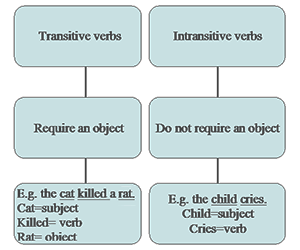

Transitivity [tran-si-tiv-i-tee] in grammar refers to whether a verb has an object or not.
An intransitive verb is an action that involves the object or person doing the action by itself: ‘The door opened.’ This contrasts with a transitive verb, where the action is done by someone or something else: ‘John opened the door.’
Posted in Language |
Leave a Comment »
March 11, 2012


Gotcha journalism is a term used to describe methods of interviewing which are designed to entrap interviewees into making statements which are damaging or discreditable to their cause, character, integrity, or reputation. The aim is to make film or sound recordings of the interview which can be selectively edited, compiled, and broadcast or published to show the subject in an unfavourable light.
Methods include misrepresenting the topic of the interview, then switching to an embarrassing subject, leading the interviewee to commit to a certain answer, and confronting them with prepared material designed to contradict or discredit that position, repeatedly baiting the interviewee to befuddle them and get their guard down to elicit an embarrassing response. Another technique is for the interviewer to remain silent after something the subject has said, which often leads the subject to say something to fill the silence. Gotcha journalism is often designed to keep the interviewee on the defensive by, for example, being required to explain some of their own statements taken out of context thus effectively preventing the interviewee from discussing their own agenda for the interview.
Posted in Language, Politics |
Leave a Comment »
March 9, 2012

Don’t Make Me Think is a book by Steve Krug about human-computer interaction and web usability. The book’s premise is that a good software program or web site should let users accomplish their intended tasks as easily and directly as possible. Krug points out that people are good at satisficing, or taking the first available solution to their problem, so design should take advantage of this.
He frequently cites Amazon.com as an example of a well-designed web site that manages to allow high-quality interaction, even though the site gets bigger and more complex every day. The book itself is intended to be an example of concision (brevity) and well-focused writing. The goal, according to the book’s introduction, was to make a text that could be read by an executive on a two-hour flight of an airplane.
Posted in Language, Technology |
Leave a Comment »
March 9, 2012

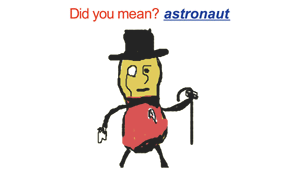
DWIM (‘Do What I Mean‘) computer systems attempt to anticipate what users intend to do, correcting trivial errors automatically rather than blindly executing users’ explicit but incorrect input. The term was coined by Lisp programmer Warren Teitelman in 1966. Teitelman’s DWIM package ‘correct[ed] errors automatically or with minor user intervention,’ similarly to a spell checker for natural language. Teitelman and his Xerox PARC colleague Larry Masinter later described this philosophy:
‘Although most users think of DWIM as a single identifiable package, it embodies a pervasive philosophy of user interface design: at the user interface level, system facilities should make reasonable interpretations when given unrecognized input. …the style of interface used throughout Interlisp allows the user to omit various parameters and have these default to reasonable values… DWIM is an embodiment of the idea that the user is interacting with an agent who attempts to interpret the user’s request from contextual information. Since we want the user to feel that he is conversing with the system, he should not be stopped and forced to correct himself or give additional information in situations where the correction or information is obvious.’
Posted in Language, Technology |
Leave a Comment »
March 8, 2012

The Intelligent Investor by Benjamin Graham, first published in 1949, is a widely acclaimed book on value investing, an investment approach Graham began teaching at Columbia Business School in 1928 and subsequently refined with David Dodd. Value investing generally refers to buying securities whose shares appear underpriced. Graham’s favorite allegory is that of Mr. Market, an obliging fellow who turns up every day at the shareholder’s door offering to buy or sell his shares at a different price. Often, the price quoted by Mr. Market seems plausible, but sometimes it is ridiculous.
The investor is free to either agree with his quoted price and trade with him, or ignore him completely. Mr. Market doesn’t mind this, and will be back the following day to quote another price. The point of this anecdote is that the investor should not regard the whims of Mr. Market as a determining factor in the value of the shares the investor owns. He should profit from market folly rather than participate in it. The investor is advised to concentrate on the real life performance of his companies and receiving dividends, rather than be too concerned with Mr. Market’s often irrational behavior.
Posted in Language, Money |
Leave a Comment »
March 8, 2012

Utne Reader [ut-nee] is an American bimonthly magazine, which collects and reprints articles on politics, culture, and the environment from generally alternative media sources, including journals, newsletters, weeklies, zines, music, and DVDs. In addition, the magazine’s writers and editors contribute books, film, and music reviews and original articles which tend to focus on emerging cultural trends. The magazine’s website produces ten blogs covering politics, environment, media, spirituality, science and technology, great writing, and the arts.
The magazine was founded in 1984 by Eric Utne and Nina Rothschild Utne. Utne Reader was part of the salon movement of the 1980s, devoted to debate on the issues of the day, and was an early source of coverage of the mythopoetic men’s movement when it surfaced in the early 1990s. Every year, the magazine gives out its Utne Independent Press Awards, which honor alternative and independent magazines from around the world. Past winners include the ‘Wilson Quarterly,’ ‘In These Times,’ ‘Virginia Quarterly Review,’ and ‘High Country News.’
Posted in Language, Politics |
Leave a Comment »
March 6, 2012

‘Amor fati‘ is a Latin phrase loosely translating to ‘love of fate.’ It is used to describe an attitude in which one sees everything that happens in one’s life, including suffering and loss, as good. Moreover, it is characterized by an acceptance of the events or situations that occur in one’s life. The phrase has been linked to the writings of Marcus Aurelius, who did not himself use the words (he wrote in Greek, not Latin), but was popularized in Friedrich Nietzsche’s writings and is representative of the general outlook on life he articulates:
‘I want to learn more and more to see as beautiful what is necessary in things; then I shall be one of those who make things beautiful. Amor fati: let that be my love henceforth! I do not want to wage war against what is ugly. I do not want to accuse; I do not even want to accuse those who accuse. Looking away shall be my only negation. And all in all and on the whole: some day I wish to be only a Yes-sayer.’ ‘My formula for greatness in a human being is amor fati: that one wants nothing to be different, not forward, not backward, not in all eternity. Not merely bear what is necessary, still less conceal it—all idealism is mendaciousness in the face of what is necessary—but love it.’
Posted in Language, Philosophy |
1 Comment »
March 6, 2012
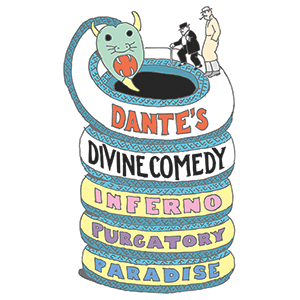
Poetic justice is a literary device in which virtue is ultimately rewarded or vice punished, often in modern literature by an ironic twist of fate intimately related to the character’s own conduct. English drama critic Thomas Rymer coined the phrase in ‘The Tragedies of the Last Age Considere’d’ (1678) to describe how a work should inspire proper moral behavior in its audience by illustrating the triumph of good over evil.
The demand for poetic justice is consistent in Classical authorities and shows up in Horace, Plutarch, and Quintillian, so Rymer’s phrasing is a reflection of a commonplace. Philip Sidney, in ‘Defense of Poetry,’ argued that poetic justice was, in fact, the reason that fiction should be allowed in a civilized nation.
read more »
Posted in Art, Language, Politics |
Leave a Comment »
March 6, 2012

‘Asshole: How I Got Rich and Happy by Not Giving a Shit About You’ is a 2008 spoof self-help book and memoir by American author Martin Kihn. The first line of the book, is ‘I was the nicest guy in the world and it was killing me.’ Kihn, who worked for a marketing company, was told by his boss that unless he started ‘playing hardball,’ they were going to demote him and upgrade a colleague Kihn calls ‘The Nemesis’ to a window office. So to save his career, Kihn decided to turn himself into an asshole, and in telling his story, he describes exactly how the reader can can follow his lead.
To become an asshole, Kihn builds a team, consisting of an acting coach, life coach and both personal and dog trainer – to help ‘master the art of assholism.’ Kihn then creates a ten-step “assholism’ program which involves ‘ignoring other peoples’ feelings, never saying sorry, dressing in black silk and only eating red meat.’ Other tasks saw Kihn signing up to the National Rifle Association, learning kickboxing, screaming at colleagues and eating garlic bagels on public transport. Additionally, Kihn takes inspiration from famous figures whom he considers ‘assholes’ such as: Donald Trump, Rudy Giuliani, Martha Stewart, David Letterman, Nicole Kidman, Machiavelli, Scarface and Paris Hilton. He also takes inspiration from Ayn Rand’s ‘The Fountainhead’ and ‘The Virtue of Selfishness.’
Posted in Humor, Language, Money |
1 Comment »
March 6, 2012

Creative consultant is a credit that has been given to screenwriters who have ‘doctored’ a movie screenplay. It is often given by producers in lieu of official credit. Those given this credit in the television field work closely with an Executive Producer, Head Writer/showrunner, and Casting Director. They are involved in the writing process (proposing and editing story outlines/scripts), casting roles, and hiring/firing writers, producers, directors, and other crew members.
Sometimes they are given the credit of Executive Consultant. A Story Consultant is strictly involved in the writing process, and has no influence in the hiring and firing of writers or other crew members. A Script Consultant is only involved in the proposal and execution of a script. The Writers Guild of America disapproves of the credit.
Posted in Art, Language, Money |
Leave a Comment »
March 6, 2012

A buzzword (also fashion word and vogue word) is a term of art, salesmanship, politics, or technical jargon that is used in the media and wider society outside of its originally narrow technical context. Buzzwords differ from jargon in that jargon is esoteric but precisely defined terminology used for ease of communication between specialists in a given field, whereas a buzzword (which often develops from the appropriation of technical jargon) is often used in a more general way. Buzzwords are used as a form of thought-control via intentional vagueness.
In management, by stating organization goals with opaque words of unclear meaning; their positive connotations prevent questioning of intent, especially when many buzzwords are used. they also are used to inflate the trivial to something of importance and stature, to impress a judge or an examiner by seeming to know a topic, by name-dropping it, or to camouflage chit-chat while saying nothing. Examples include: ‘Going forward,’ ‘Leverage,’ ‘Long tail,’ ‘Next generation,’ ‘Paradigm,’ and ‘Incentivize.’
Posted in Language, Money, Politics |
1 Comment »
March 6, 2012

Martin Kihn (b. 1950) is an American writer and digital marketer. Martin Kihn was born in Zambia, where his parents met while working in a hospital. His South African-born father is a doctor, and his Scottish mother, a former actress, is now a drama teacher. He grew up in Michigan. He has earned a BA in Theater Studies from Yale, and in the late 1990s was Head Writer for the popular television program ‘Pop-Up Video’ on MTV Networks and was nominated for an Emmy for Writing. He lost to ‘Win Ben Stein’s Money,’ decided to quit writing and got into business school. He received an MBA from Columbia Business School.
Kihn’s first book was an expose of the consulting agencies called ‘House of Lies: How Management Consultants Steal Your Watch and Then Tell You the Time’ (2005), based on the three years he spent working for a large consultancy, Booz Allen. It was adapted by Showtime as a series with Don Cheadle playing Marty Kaan, an ‘outside the box’ management consultant, loosely based on Marty Kihn himself. Kihn reemerged a few years later with a satirical memoir called ‘Asshole: How I Got Rich and Happy by Not Giving a Shit About You’ (2008).
Posted in Art, Language, Money |
Leave a Comment »



