September 23, 2019

A punchline concludes a joke; it is intended to make people laugh. It is the third and final part of the typical joke structure: set-up, premise, punch line. In a broader sense, ‘punchline’ can also refer to the unexpected and funny conclusion of any performance, situation or story.
The exact origin of the term is unknown, though the classic three-part joke format was well-established in Vaudeville by the beginning of the 20th century. Merriam-Webster dictionary pegs the first use in 1921. It has also been argued that the term’s origin is related to the British weekly magazine ‘Punch.’
read more »
Posted in Art, Language |
Leave a Comment »
September 6, 2019

Joie de vivre (‘joy of living’) is a French phrase often used in English to express a cheerful enjoyment of life; an exultation of spirit.
It ‘can be a joy of conversation, joy of eating, joy of anything one might do… And joie de vivre may be seen as a joy of everything, a comprehensive joy, a philosophy of life, a Weltanschauung [worldview]. Robert’s Dictionnaire says ‘joie’ is ‘sentiment exaltant ressenti par toute la conscience,’ that is, involves one’s whole being.’
read more »
Posted in Language, Philosophy, World |
Leave a Comment »
August 1, 2019
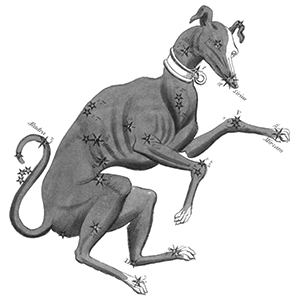
The dog days or dog days of summer are the hot, sultry days of summer. They were historically the period following the heliacal rising of the star system Sirius, which Greek and Roman astrology connected with heat, drought, sudden thunderstorms, lethargy, fever, mad dogs, and bad luck. They are now taken to be the hottest, most uncomfortable part of summer in the Northern Hemisphere.
In addition to following Orion into the night sky, the Dog Star Sirius can be easily located in the heavens by following the line created by the prominent asterism (a popularly-known group of stars) Orion’s Belt.
read more »
Posted in Language, Philosophy |
Leave a Comment »
July 11, 2019

The Scunthorpe problem is the unintentional blocking of websites, e-mails, forum posts, or search results by a spam filter or search engine because their text contains a string of letters that appear to have an obscene or otherwise unacceptable meaning. Names, abbreviations, and technical terms are most often cited as being affected by the issue.
The problem arises since computers can easily identify strings of text within a document, but interpreting words of this kind requires considerable ability to interpret a wide range of contexts, possibly across many cultures, which is an extremely difficult task. As a result, broad blocking rules may result in false positives affecting innocent phrases.
read more »
Posted in Humor, Language, Technology |
Leave a Comment »
May 14, 2019

Stand on Zanzibar [zan-zuh-bahr] is a dystopian New Wave science fiction novel written by John Brunner and first published in 1968. The book won a Hugo Award for Best Novel in 1969.
The story is set in 2010, mostly in the United States. A number of plots and many vignettes are played out in this future world, based on Brunner’s extrapolation of social, economic, and technological trends, such as an enormous population and its impact: social stresses, eugenic legislation, widening social divisions, future shock and extremism.
read more »
Posted in Art, Language, World |
Leave a Comment »
April 27, 2019

Jeremiah ‘Terminator’ LeRoy is a literary persona created in the 1990s by American writer Laura Albert. JT was presented as the author of three books of fiction, which were purportedly semi-autobiographical accounts by a teenage boy of his experiences of poverty, drug use, and emotional and sexual abuse in his childhood and adolescence from rural West Virginia to California.
Albert wrote these works, and communicated with people in the persona of JT via phone and e-mail. Following the release of the first novel ‘Sarah,’ Albert’s sister-in-law Savannah Knoop began to make public appearances as the supposed writer. The works attracted considerable literary and celebrity attention, and the authenticity of LeRoy has been a subject of debate, even as details of the creation came to light in the 2000s.
read more »
Posted in Art, Language |
Leave a Comment »
February 13, 2019
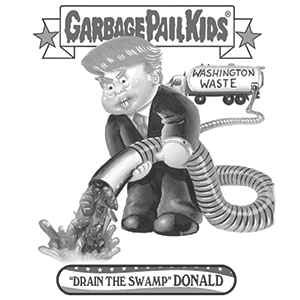
A kakistocracy [kak-uh-stok-ruh-see] is a system of government which is run by the worst, least qualified, or most unscrupulous citizens. The word is derived from two Greek words, ‘kakistos’ (‘worst’) and ‘kratos’ (‘rule’).
The word was coined as early as the seventeenth century. It also was used by English author Thomas Love Peacock in 1829, but gained significant use in the first decades of the twenty-first century to criticize populist governments emerging in different democracies around the world.
read more »
Posted in Language, Politics |
Leave a Comment »
January 5, 2019
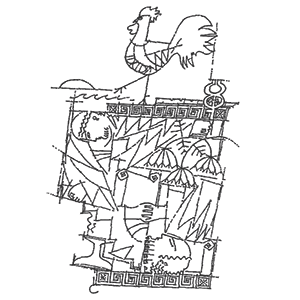
A gadfly is a person who interferes with the status quo of a society or community by posing novel, potently upsetting questions, usually directed at authorities. The term is originally associated with the ancient Greek philosopher Socrates, in his defense when on trial for his life.
The term ‘gadfly’ was used by Plato in the ‘Apology’ to describe Socrates’s relationship of uncomfortable goad to the Athenian political scene, which he compared to a slow and dimwitted horse. The word may be uttered in a pejorative sense or be accepted as a description of honorable work or civic duty.
read more »
Posted in Language, Philosophy, Politics |
Leave a Comment »
December 30, 2018

The Negro Motorist Green Book was an annual guidebook for African-American roadtrippers. It was originated and published by New York City mailman Victor Hugo Green from 1936 to 1966, during the era of Jim Crow laws, when open and often legally prescribed discrimination against non-whites was widespread.
Although pervasive racial discrimination and poverty limited black car ownership, the emerging African-American middle class bought automobiles as soon as they could, but faced a variety of dangers and inconveniences along the road, from refusal of food and lodging to arbitrary arrest. In response, Green wrote his guide to services and places relatively friendly to African-Americans, eventually expanding its coverage from the New York area to much of North America, as well as founding a travel agency.
read more »
Posted in Language, Money, Politics |
Leave a Comment »
August 1, 2018
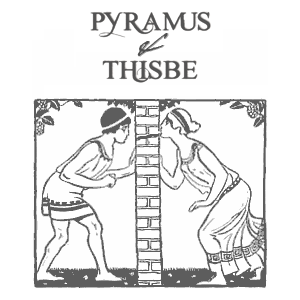
‘Star-crossed‘ or ‘star-crossed lovers’ is a phrase describing a pair of lovers whose relationship is often thwarted by outside forces. The term encompasses other meanings, but originally means the pairing is being ‘thwarted by a malign star’ or that the stars are working against the relationship. Astrological in origin, the phrase stems from the belief that the positions of the stars ruled over people’s fates, and is best known from the play ‘Romeo and Juliet’ by Shakespeare. Such pairings are often said to be doomed from the start.
It also refers to destiny and the inevitability of the two characters’ paths crossing. It usually but not always refers to unlucky outcomes, since Romeo and Juliet’s affair ended tragically. Further, it connotes that the lovers entered into their union without sufficient forethought or preparation; that the lovers may not have had adequate knowledge of each other or that they were not thinking rationally.
read more »
Posted in Art, Language, Love |
Leave a Comment »
July 30, 2018

Lügenpresse (lit: ‘lying press’) is a pejorative political term used largely by German political movements for the printed press and the mass media at large, when it is believed not to have the quest for truth at the heart of its coverage.
The Nazis adopted the term for their propaganda against the Jewish, communist, and later the foreign press.
read more »
Posted in Language, Politics, World |
1 Comment »
July 6, 2018
A slippery slope argument (SSA), in logic, critical thinking, political rhetoric, and caselaw, is a consequentialist logical device in which a party asserts that a relatively small first step leads to a chain of related events culminating in some significant (usually negative) outcome.
The core of the slippery slope argument is that a specific decision under debate is likely to result in unintended consequences. The strength of such an argument depends on the warrant, i.e. whether or not one can demonstrate a process that leads to the significant effect. This type of argument is sometimes used as a form of fear mongering, in which the probable consequences of a given action are exaggerated in an attempt to scare the audience.
read more »
Posted in Language, Philosophy, Politics |
Leave a Comment »


 The Daily Omnivore