February 10, 2021

Jack Mormon is a slang term originating in nineteenth-century America originally used to describe a person who was not a baptized member of the Church of Jesus Christ of Latter Day Saints but who was friendly to church members and Mormonism, sympathized with them, and/or took an active interest in their belief system.
Sometime in the early- to mid-twentieth century, however, the term began to refer to an individual deemed by adherents of The Church of Jesus Christ of Latter-day Saints (LDS Church) to be an inactive or lapsed member of the LDS Church who, despite his personal religious viewpoint, maintained good relations with and positive feelings toward the church.
read more »
Posted in Drugs, Language, Philosophy |
Leave a Comment »
November 12, 2020
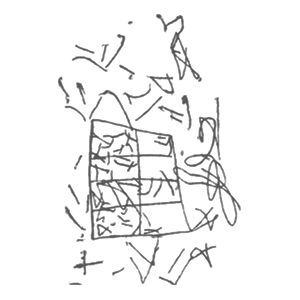
Speaking in tongues, also known as glossolalia, is a practice in which people utter words or speech-like sounds that some believe to be languages unknown to the speaker.
One definition used by linguists is the fluid vocalizing of speech-like syllables that lack any readily comprehended meaning, in some cases as part of religious practice in which some believe it to be a divine language unknown to the speaker. Glossolalia is practiced in Pentecostal and charismatic Christianity as well as in other religions.
read more »
Posted in Language, Philosophy |
1 Comment »
October 16, 2020
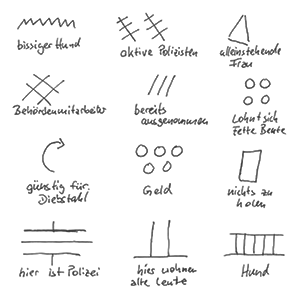
Rotwelsch [rut-velsh] (German: ‘beggar’s foreign language’) or Gaunersprache (German: ‘crook’s language’) is a secret language, a cant or thieves’ argot, spoken by groups (primarily marginalized groups) in southern Germany and Switzerland. The language is based primarily on German.
Rotwelsch was formerly common among travelling craftspeople and vagrants. The language is built on a strong substratum of German, but contains numerous words from other languages, notably from various German dialects, including Yiddish, as well as from Romany languages, notably Sintitikes. There are also significant influences from Judeo-Latin, the ancient Jewish language spoken in the Roman Empire.
read more »
Posted in Language, Politics, World |
Leave a Comment »
October 14, 2020

A fool’s errand is a type of practical joke or prank where a newcomer to a group, typically in a professional context, is given an impossible or nonsensical task by older or more experienced members of the group.
Many such errands require the victim to travel some distance and request an impossible object by name; the prank will be widely known within the peer group as an in-joke, and the person they ask for the object will play along, often by sending the victim on to make the same request elsewhere. The errand is an example of a hazing ritual, through which a newcomer gains acceptance into a group.
read more »
Posted in Humor, Language |
1 Comment »
October 4, 2020

Jeitinho [jay-cheen-yo] (Portuguese: ‘little way’) is finding a way to accomplish something by circumventing or bending the rules or social conventions. Most times it is harmless, made for basic ordinary opportunistic advantages, as gatecrashing a party just to get free food and beverage.
But sometimes it is used for questionable, serious violations, where an individual can use emotional resources, blackmail, family ties, promises, rewards or money to obtain (sometimes illegal) favors or to get advantage. Some claim it is a typically Brazilian method of social navigation that may derive from a general lack of resources and help. Most Brazilians have to be creative and invent new simpler ways to do things.
read more »
Posted in Language, Money, World |
Leave a Comment »
August 20, 2020

‘Zen and the Art of Motorcycle Maintenance: An Inquiry into Values’ (ZAMM) is a book by Robert M. Pirsig first published in 1974. It is a work of fictionalized autobiography, and is the first of Pirsig’s texts in which he explores his “Metaphysics of Quality”.
The title is an apparent play on the title of the 1948 book Zen in the Art of Archery by Eugen Herrigel. In its introduction, Pirsig explains that, despite its title, “it should in no way be associated with that great body of factual information relating to orthodox Zen Buddhist practice. It’s not very factual on motorcycles, either.”
read more »
Posted in Language, Philosophy |
Leave a Comment »
August 15, 2020
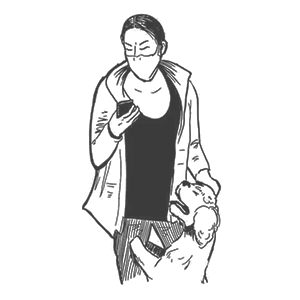
Karen is a pejorative term used in the United States and other English-speaking countries for a person perceived as entitled or demanding beyond the scope of what is appropriate or necessary. A common stereotype is that of a white woman who uses her privilege to demand her own way at the expense of others.
Depictions also include demanding to ‘speak to the manager,’ anti-vaccination beliefs, being racist, or sporting a particular bob cut hairstyle. As of 2020, the term was increasingly being used as a general-purpose term of disapproval for middle-aged white women.
read more »
Posted in Language, Politics |
1 Comment »
August 13, 2020

Robert Beck, born Robert Lee Maupin, (1918 – 1992), better known as Iceberg Slim, was an American pimp who subsequently became an influential author among a primarily African-American readership.
Scottish author Irvine Welsh said ‘Iceberg Slim did for the pimp what Jean Genet did for the homosexual and thief and William Burroughs did for the junkie: he articulated the thoughts and feelings of someone who had been there. The big difference is that they were white.’
read more »
Posted in Language, Money, Sex |
Leave a Comment »
July 7, 2020
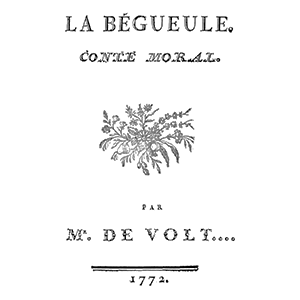
Perfect is the enemy of good is an aphorism which is commonly attributed to French philosopher Voltaire, who quoted a similar Italian proverb in his ‘Dictionnaire philosophique’ in 1770. It subsequently appeared in his moral poem ‘La Bégueule.’ Aristotle, Confucius, and other classical philosophers propounded the principle of the ‘golden mean,’ which counsels against extremism in general.
The ‘Pareto principle,’ or 80–20 rule, explains this numerically. For example, it commonly takes 20% of the full time to complete 80% of a task, while to complete the last 20% of a task takes 80% of the effort. Achieving absolute perfection may be impossible and so, as increasing effort results in diminishing returns. Robert Watson-Watt, who developed Britain’s first radar detectors, propounded a ‘cult of the imperfect,’ which he stated as ‘Give them the third best to go on with; the second best comes too late, the best never comes.’
Posted in Language, Philosophy |
Leave a Comment »
April 9, 2020
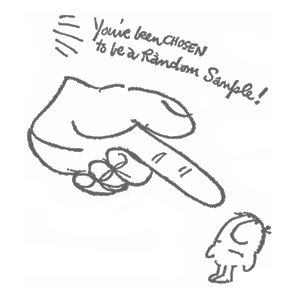
‘Lies, damned lies, and statistics‘ is a phrase describing the persuasive power of numbers, particularly the use of statistics to bolster weak arguments. It is also used colloquially to doubt statistics cited to prove an opponent’s point.
The phrase derives from the full sentence, ‘There are three kinds of lies: lies, damned lies, and statistics.’ It was popularized by Mark Twain and others, who mistakenly attributed it to the British prime minister Benjamin Disraeli. The true originator is uncertain, but it has, at times, been attributed to an anonymous writer in mid-1891 and later that year to English politician Sir Charles Dilke.
read more »
Posted in Humor, Language, Politics |
Leave a Comment »
March 22, 2020

Umarell is a term in Bologna for men of retirement age who pass the time watching construction sites, especially roadworks – stereotypically with hands clasped behind their back and offering unwanted advice.
It’s literal meaning is ‘little man’ and it is often pluralized in spelling by adding a final s (out of English influence). The wife of an umarell is called a ‘zdaura.’
read more »
Posted in Language, Politics, World |
Leave a Comment »
March 19, 2020

Creative nonfiction (also known as verfabula) is a genre of writing that uses literary styles and techniques to create factually accurate narratives. Creative nonfiction contrasts with other nonfiction, such as academic or technical writing or journalism, which is also rooted in accurate fact but is not written to entertain based on prose style.
For a text to be considered creative nonfiction, it must be factually accurate, and written with attention to literary style and technique. ‘Ultimately, the primary goal of the creative nonfiction writer is to communicate information, just like a reporter, but to shape it in a way that reads like fiction.’ Forms within this genre include biography, autobiography, memoir, diary, travel writing, food writing, literary journalism, chronicle, personal essays, and other hybridized essays.
read more »
Posted in Art, Language |
1 Comment »



