February 15, 2020
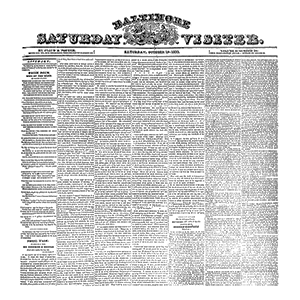
A message in a bottle is a form of communication in which a message is sealed in a container (typically a bottle) and released into a conveyance medium (typically a body of water).
Messages in bottles have been used to send distress messages, in crowdsourced scientific studies of ocean currents, as memorial tributes, to send deceased loved ones’ ashes on a final journey, to convey expedition reports, and to carry letters or reports from those believing themselves to be doomed. Invitations to prospective pen pals and letters to actual or imagined love interests have also been sent as messages in bottles.
read more »
Posted in Language, Science, World |
Leave a Comment »
December 1, 2019

Mansplaining is a pejorative term meaning ‘(of a man) to comment on or explain something to a woman in a condescending, overconfident, and often inaccurate or oversimplified manner.’ Lily Rothman, of ‘The Atlantic,’ defines it as “‘explaining without regard to the fact that the explainee knows more than the explainer, often done by a man to a woman.’
In its original use, mansplaining differed from other forms of condescension in that it is rooted in the assumption that a man is likely to be more knowledgeable than a woman. However, it has come to be used more broadly, often applied when a man takes a condescending tone in an explanation to anyone, regardless of the age or gender of the intended recipients: a ‘man ‘splaining’ can be delivered to any audience.
read more »
Posted in Language, Politics |
Leave a Comment »
November 17, 2019

Bromide [broh-mahyd] in literary usage means a phrase, cliché, or platitude that is trite or unoriginal. It can be intended to soothe or placate; it can suggest insincerity or a lack of originality in the speaker. It can also refer to a commonplace or tiresome person, a bore.
A now outdated usage of ‘bromide’ is a photographic print, stemming from the use of silver bromide in photographic films, emulsions and papers. Its original usage was as a chemical term, referring to bromine salts.
read more »
Posted in Health, Language, Science |
Leave a Comment »
October 16, 2019
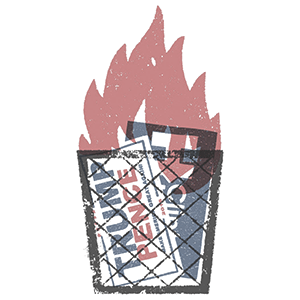
False equivalence is a logical fallacy in which two completely opposing arguments appear to be logically equivalent when in fact they are not. This fallacy is categorized as a fallacy of inconsistency.
False equivalence is a common result when an anecdotal similarity is pointed out as equal, but the claim of equivalence doesn’t bear because the similarity is based on oversimplification or ignorance of additional factors. False equivalence arguments are often used in journalism and in politics, where the minor flaws of one candidate may be compared to major flaws of another.
read more »
Posted in Language, Philosophy, Politics |
Leave a Comment »
October 8, 2019
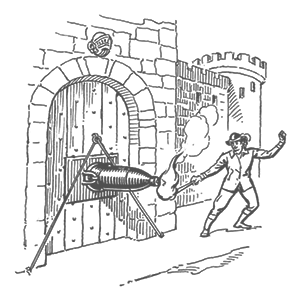
‘Hoist with his own petard’ is a phrase from a speech in William Shakespeare’s play ‘Hamlet’ that has become proverbial.
The phrase’s meaning is literally that the bomb-maker (a “petard” is a small explosive device) is blown up (‘hoisted’ off the ground) by his own bomb, and indicates an ironic reversal, or poetic justice.
read more »
Posted in Art, Language, War |
Leave a Comment »
September 24, 2019

The firehose of falsehood is a propaganda technique in which a large number of messages are broadcast rapidly, repetitively, and continuously over multiple channels (such as news and social media) without regard for truth or consistency.
Since 2014, when it was successfully used by Russia during its annexation of Crimea, this model has been adopted by other governments and political movements around the world.
read more »
Posted in Language, Politics, War |
Leave a Comment »
September 23, 2019

A punchline concludes a joke; it is intended to make people laugh. It is the third and final part of the typical joke structure: set-up, premise, punch line. In a broader sense, ‘punchline’ can also refer to the unexpected and funny conclusion of any performance, situation or story.
The exact origin of the term is unknown, though the classic three-part joke format was well-established in Vaudeville by the beginning of the 20th century. Merriam-Webster dictionary pegs the first use in 1921. It has also been argued that the term’s origin is related to the British weekly magazine ‘Punch.’
read more »
Posted in Art, Language |
Leave a Comment »
September 6, 2019

Joie de vivre (‘joy of living’) is a French phrase often used in English to express a cheerful enjoyment of life; an exultation of spirit.
It ‘can be a joy of conversation, joy of eating, joy of anything one might do… And joie de vivre may be seen as a joy of everything, a comprehensive joy, a philosophy of life, a Weltanschauung [worldview]. Robert’s Dictionnaire says ‘joie’ is ‘sentiment exaltant ressenti par toute la conscience,’ that is, involves one’s whole being.’
read more »
Posted in Language, Philosophy, World |
Leave a Comment »
August 1, 2019

The dog days or dog days of summer are the hot, sultry days of summer. They were historically the period following the heliacal rising of the star system Sirius, which Greek and Roman astrology connected with heat, drought, sudden thunderstorms, lethargy, fever, mad dogs, and bad luck. They are now taken to be the hottest, most uncomfortable part of summer in the Northern Hemisphere.
In addition to following Orion into the night sky, the Dog Star Sirius can be easily located in the heavens by following the line created by the prominent asterism (a popularly-known group of stars) Orion’s Belt.
read more »
Posted in Language, Philosophy |
Leave a Comment »
July 11, 2019

The Scunthorpe problem is the unintentional blocking of websites, e-mails, forum posts, or search results by a spam filter or search engine because their text contains a string of letters that appear to have an obscene or otherwise unacceptable meaning. Names, abbreviations, and technical terms are most often cited as being affected by the issue.
The problem arises since computers can easily identify strings of text within a document, but interpreting words of this kind requires considerable ability to interpret a wide range of contexts, possibly across many cultures, which is an extremely difficult task. As a result, broad blocking rules may result in false positives affecting innocent phrases.
read more »
Posted in Humor, Language, Technology |
Leave a Comment »
May 14, 2019
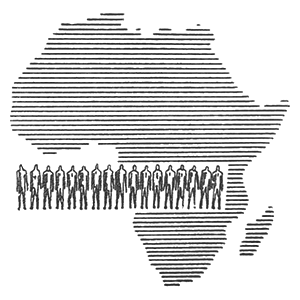
Stand on Zanzibar [zan-zuh-bahr] is a dystopian New Wave science fiction novel written by John Brunner and first published in 1968. The book won a Hugo Award for Best Novel in 1969.
The story is set in 2010, mostly in the United States. A number of plots and many vignettes are played out in this future world, based on Brunner’s extrapolation of social, economic, and technological trends, such as an enormous population and its impact: social stresses, eugenic legislation, widening social divisions, future shock and extremism.
read more »
Posted in Art, Language, World |
Leave a Comment »
April 27, 2019

Jeremiah ‘Terminator’ LeRoy is a literary persona created in the 1990s by American writer Laura Albert. JT was presented as the author of three books of fiction, which were purportedly semi-autobiographical accounts by a teenage boy of his experiences of poverty, drug use, and emotional and sexual abuse in his childhood and adolescence from rural West Virginia to California.
Albert wrote these works, and communicated with people in the persona of JT via phone and e-mail. Following the release of the first novel ‘Sarah,’ Albert’s sister-in-law Savannah Knoop began to make public appearances as the supposed writer. The works attracted considerable literary and celebrity attention, and the authenticity of LeRoy has been a subject of debate, even as details of the creation came to light in the 2000s.
read more »
Posted in Art, Language |
Leave a Comment »



