December 20, 2011
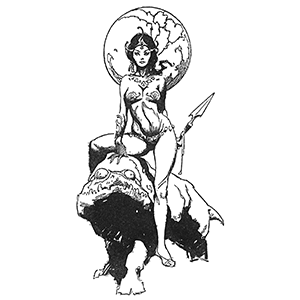
Sword and Planet is a subgenre of science fantasy that features rousing adventure stories set on other planets, and usually featuring Earthmen as protagonists. The name derives from the heroes of the genre engaging their adversaries in hand to hand combat primarily with simple melee weapons such as swords, even in a setting that often has advanced technology.
Though there are works that herald the genre such as Percy Greg’s ‘Across The Zodiac’ (1880) and Edwin Lester Arnold’s ‘Lieutenant Gullivar Jones: His Vacation’ (1905; published in the US in 1964 as ‘Gulliver of Mars’), the prototype for the genre is ‘A Princess of Mars’ by Edgar Rice Burroughs originally serialized by ‘All-Story’ in 1912.
read more »
Posted in Art, Language |
Leave a Comment »
December 19, 2011

Barsoom is a fictional representation of the planet Mars created by American pulp fiction author Edgar Rice Burroughs, who wrote close to 100 action adventure stories in various genres in the first half of the 20th century, and is now best known as the creator of the character Tarzan. The first Barsoom tale was serialized as ‘Under the Moons of Mars’ in 1912, and published as a novel as ‘A Princess of Mars’ in 1917. Ten sequels followed over the next three decades, further extending his vision of Barsoom and adding other characters.
The world of Barsoom is a romantic vision of a dying Mars, based on now-outdated scientific ideas made popular by Astronomer Percival Lowell in the early 20th century. While depicting many outlandish inventions, and advanced technology, it is a savage world, of honor, noble sacrifice and constant struggle, where martial prowess is paramount, and where many races fight over dwindling resources. It is filled with lost cities, heroic adventures and forgotten ancient secrets.
read more »
Posted in Art, Language |
Leave a Comment »
December 19, 2011
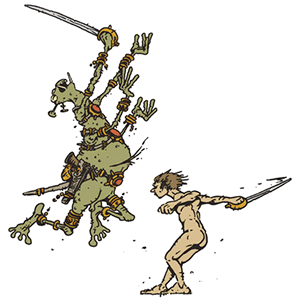
John Carter is a fictional character, created by Edgar Rice Burroughs, who appears in the ‘Barsoom’ novels. Although he is actually a Virginian from Earth and only a visitor to Mars, he is sometimes known as ‘John Carter of Mars,’ in reference to the setting in which his major deeds are recorded, in the tradition of other real-world heroes such as Lawrence of Arabia and Scipio Africanus. His character is enduring, having appeared in various media since his 1912 debut in a magazine serial.
John Carter first appeared in ‘A Princess of Mars,’ the first Burroughs novel set on a fictionalized version of Mars known as ‘Barsoom.’ His character and courtesy exemplify the ideals of the antebellum South. A Virginian, he served as a captain in the American Civil War on the side of the Confederacy. While hiding from Apaches in a cave, he appears to die; leaving his inanimate body behind, he is mysteriously transported by a form of astral projection to the planet Mars, where he finds himself re-embodied in a form identical to his earthly one. Accustomed to the greater gravity of Earth, he is much stronger and more agile than the natives of Mars due to its gravity.
Posted in Art, Language |
3 Comments »
December 17, 2011

Psychotronic is a film genre made up of horror films, spaghetti westerns, low-budget independent features, exploitation films that was coined by author Michael J. Weldon. The genre takes its name from the movie ‘The Psychotronic Man.’
After seeing this movie, Weldon created an extensive list of reviews of obscure quirky films that he felt were underappreciated by the mainstream and then marketed it as the ‘Psychotronic Encyclopedia,’ which has become known as a reference work for film buffs. The book prompted the creation of the Psychotronic Film Society.
Posted in Art, Language |
Leave a Comment »
December 15, 2011
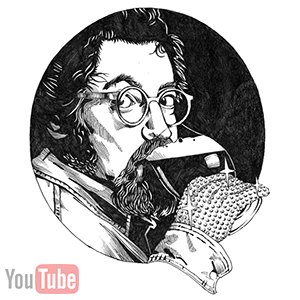
Michael Jackson (1942 – 2007) was an English writer and journalist. He was the author of several influential books about beer and whiskey. He became famous in beer circles in 1977 when his book ‘The World Guide To Beer’ was published; it is still considered to be one of the most fundamental books on the subject.
The modern theory of beer style is largely based the book, in which Jackson categorized a variety of beers from around the world in local style groups suggested by local customs and names. His work had a special influence on the popularization of the brewing culture in North America, and he would later host a popular show entitled ‘The Beer Hunter,’ which was shown on Channel 4 and the Discovery Channel. During his 30 year career as a critic, he wrote columns for a large number of newspapers and magazines. Jackson considered beer as a component of culture and described beers in their cultural context. Although he traveled around the world and discovered different beer cultures, he was especially fond of the Belgian beers.
Posted in Art, Food, Language |
1 Comment »
December 14, 2011

Spy vs. Spy is a black and white comic strip that debuted in ‘Mad Magazine’ #60, in 1961, and was originally published by EC Comics. The strip always features two spies, who are completely identical save for the fact that one is dressed in white and the other black.
The pair are constantly warring with each other, using a variety of booby-traps to inflict harm on the other. The spies usually alternate between victory and defeat with each new strip. They were created by Antonio Prohías, a prolific cartoonist in Cuba known for political satire.
read more »
Posted in Art, Humor, Language |
Leave a Comment »
December 13, 2011

In ethnolinguistics, an endonym [en-doe-nim] or autonym is a local name for a geographical feature, and an exonym [ex-o-nim] or xenonym is a foreign language name for it. Exonyms and endonyms can be names of places (toponym), ethnic groups (ethnonym), languages (glossonym), or individuals (personal name).
For example, China, India, Germany, Greece, Japan, and Korea are the English exonyms corresponding to the endonyms Zhongguo, Bharat, Deutschland, Hellas, Nippon, and Goryeo, respectively.
read more »
Posted in Language, Politics, World |
Leave a Comment »
December 13, 2011

The Fools Guild is a Los Angeles organization themed around the medieval and renaissance idea of the Court jester. It’s central activity is producing three annual parties on Halloween, New Year’s Eve, and April Fool’s Day.
The Guild was born in 1979 at the Renaissance Pleasure Faire of Southern California, where the original improvisational team met while performing as jesters, jugglers, pass-the-hat-acts, and mimes. In 1982 they moved to West Hollywood, renting a house with a giant main room and very high ceilings, where the Fools began to host parties, workshops and other performance-centered events. Very quickly a social club of comedic performers evolved and the house became known as the Guild Hall.
read more »
Posted in Humor, Language |
Leave a Comment »
December 11, 2011
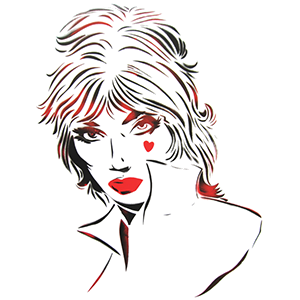
Modesty Blaise is a British comic strip featuring a fictional character of the same name, created by Peter O’Donnell (writer) and Jim Holdaway (art) in 1963.
The strip follows the adventures of Modesty Blaise, an exceptional young woman with many talents and a criminal past, and her trusty sidekick Willie Garvin. It was adapted into films made in 1966, 1982, and 2003 and a series of 13 novels and short story collections, beginning in 1965.
read more »
Posted in Art, Language |
Leave a Comment »
December 11, 2011
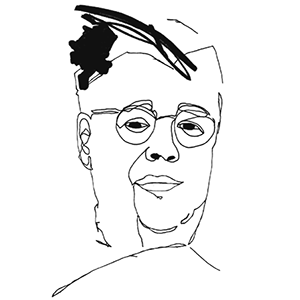
Stieg Larsson (1954 – 2004) was a Swedish journalist and writer, best known for his ‘Millennium series’ of crime novels, which were published posthumously.
Larsson lived and worked much of his life in Stockholm, in the field of journalism and as an independent researcher of right-wing extremism.
read more »
Posted in Art, Language, Politics |
Leave a Comment »
December 11, 2011

The Millennium series (1954 – 2004) is a series of bestselling novels originally written in Swedish by the late Stieg Larsson. The primary characters in the series are Lisbeth Salander, an intelligent, eccentric woman in her twenties with a photographic memory and poor social skills, and Mikael Blomkvist, an investigative journalist and editor of a magazine called ‘Millennium.’ Blomkvist, the character, has a history similar to Larsson, the author.
There are three books in the series: ‘The Girl with the Dragon Tattoo,’ ‘The Girl Who Played with Fire,’ and ‘The Girl Who Kicked the Hornets’ Nest.’ When he died suddenly of a heart attack in 2004, Larsson left behind manuscripts of the completed but unpublished novels written as a series. He had written them for his own pleasure after returning home from his job in the evening, and had made no attempt to get them published until shortly before his death.
read more »
Posted in Art, Language |
Leave a Comment »
December 8, 2011


A cowlick [kou-lik] is a section of hair that stands straight up or lies at an angle at odds with the style in which the rest of an individual’s hair is worn. They appear when the growth direction of the hair forms a spiral pattern. The term originates from the domestic bovine’s habit of licking its young, which results in a swirling pattern in the hair.
The most common site of a human cowlick is in the crown, but they can show up anywhere. They also sometimes appear in the front and back of the head.
read more »
Posted in Health, Language |
1 Comment »



