December 21, 2011

A digital native is a person who was born during or after the general introduction of digital technology, and through interacting with digital technology from an early age, has a greater understanding of its concepts.
Alternatively, this term can describe people born in the latter 1960s or later, as the Digital Age began at that time; but in most cases the term focuses on people who grew up with the technology that became prevalent in the latter part of the 20th century, and continues to evolve today.
read more »
Posted in Language, Technology |
2 Comments »
December 20, 2011

Nettime is an internet mailing list that was founded in 1995 during the second meeting of the Medien Zentral Kommittee at the Venice Biennale. Founded by Geert Lovink and Pit Schultz, the list was meant to provide a space for a new form of critical discourse on and with the nets. Since 1995, Nettime has been recognized for building up the discourse of Netzkritik or Net Critique, providing a backdrop and context for the emergence of net.art and influencing critical net culture in general.
Often understood as a European ‘online salon,’ Nettime was initially a pre-publishing platform for international critical thinkers. Originally a mainly English language mailing list, other lists have been created for other languages. While the subscribers have changed over time, the list and lists have had the regular participation of such notable figures as: American poet John Perry Barlow, political writer Hakim Bey, art professor Ricardo Dominquez, Russian artist Alexei Shulgin, and DJ Spooky, among others. The lists has around 3500 subscribers.
Posted in Language, Politics, Technology |
Leave a Comment »
December 20, 2011
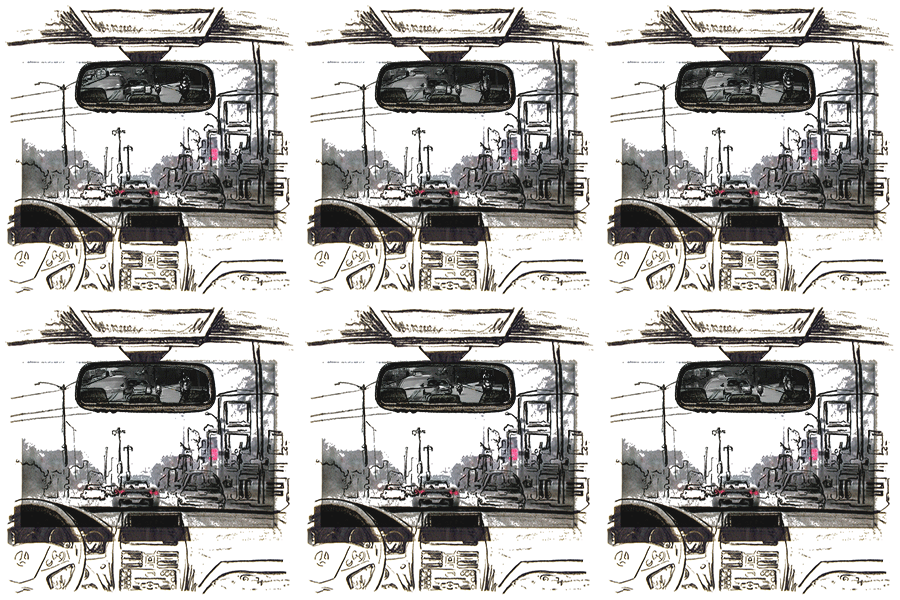
Tradigital art most commonly refers to art (including animation) that combines both traditional and computer-based techniques to implicate an image.
Artist and teacher Judith Moncrieff first coined the term in the early 1990s, while an instructor at the Pacific Northwest College of Art. The school held a competition of Moncrieff’s students, who used the medium to electronically combine everything from photographs of costumes to stills from videotapes of performing dancers.
read more »
Posted in Art, Language, Technology |
Leave a Comment »
December 20, 2011
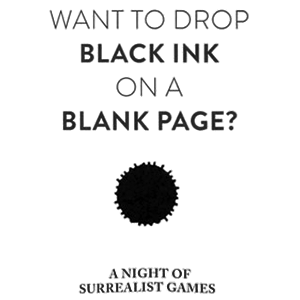
Bulletism is an artistic process that involves shooting ink at a blank piece of paper. The result is a type of ink blot. The artist can then develop images based on what is seen.
Salvador Dalí claimed to have invented this technique. Leonardo da Vinci, however, suggested that ‘just as one can hear any desired syllable in the sound of a bell, so one can see any desired figure in the shape formed by throwing a sponge with ink against the wall.’
Posted in Art, Language |
1 Comment »
December 20, 2011
Ram Dass (b. 1931) is an American contemporary spiritual teacher, originally named Richard Alpert, and the author of the seminal 1971 book ‘Be Here Now.’
He is known for his personal and professional associations with Timothy Leary at Harvard University in the early 1960s, for his travels to India and his relationship with the Hindu guru Neem Karoli Baba, and for founding the charitable organizations Seva Foundation and Hanuman Foundation.
read more »
Posted in Drugs, Language, Philosophy |
Leave a Comment »
December 20, 2011
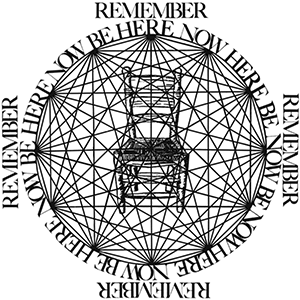
Be Here Now is a seminal 1971 book on spirituality, yoga and meditation by the Western born yogi and spiritual teacher Ram Dass. The title comes from a statement his guide, Bhagavan Das, made during Ram Dass’s journeys in India. The cover features a Mandala incorporating the title, a chair, radial lines, and the word ‘remember.’
It is one of the first guides, for those not born as Hindus, to becoming a yogi, by a person himself not born a Hindu. For its influence on the Hippie movement and subsequent spiritual movements, it has been described as a ‘countercultural bible.’ In addition to introducing its title phrase into common use, the book has influenced numerous other writers and yoga practitioners, including Wayne Dyer and Michael Crichton.
read more »
Posted in Language, Philosophy |
1 Comment »
December 20, 2011

Space opera is a subgenre of science fiction that emphasizes romantic, often melodramatic adventure, set mainly or entirely in outer space, generally involving conflict between opponents possessing advanced technologies and abilities. The term has no relation to music and it is analogous to ‘soap opera.’ Perhaps the most significant trait of space opera is that settings, characters, battles, powers, and themes tend to be very large-scale.
Sometimes the term is used pejoratively to denote bad quality science fiction, but its meaning can differ, often describing a particular science fiction genre without any value judgement. The genre’s varying definitions were affected by literary politics, ‘what used to be science fantasy is now space opera, and what used to be space opera is entirely forgotten.’
read more »
Posted in Art, Language, Technology |
Leave a Comment »
December 20, 2011
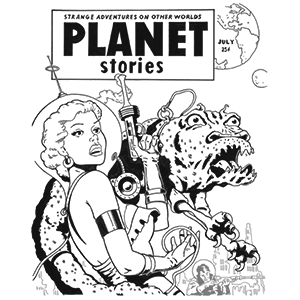
Planetary romance is a type of science fiction or science fantasy story in which the bulk of the action consists of adventures on one or more exotic alien planets, characterized by distinctive physical and cultural backgrounds. Some planetary romances take place against the background of a future culture where travel between worlds by spaceship is commonplace; others, particularly the earliest examples of the genre, do not, and invoke flying carpets, astral projection, or other methods of getting between planets. In either case, it is the planetside adventures which are the focus of the story, not the mode of travel.
As the name of the genre suggests, the planetary romance is an extension of late 19th and early 20th century adventure novels and pulp romances to a planetary setting. The pulp romance (of writers like H. Rider Haggard and Talbot Mundy) featured bold characters in exotic settings and ‘lost worlds’ such as South America, Africa, the Middle or Far East; a variant type took place in real or fictional countries of ancient and medieval times, and eventually contributed to the modern fantasy genre.
read more »
Posted in Art, Language, Love |
Leave a Comment »
December 20, 2011
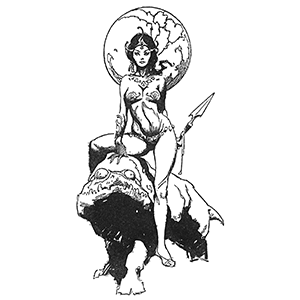
Sword and Planet is a subgenre of science fantasy that features rousing adventure stories set on other planets, and usually featuring Earthmen as protagonists. The name derives from the heroes of the genre engaging their adversaries in hand to hand combat primarily with simple melee weapons such as swords, even in a setting that often has advanced technology.
Though there are works that herald the genre such as Percy Greg’s ‘Across The Zodiac’ (1880) and Edwin Lester Arnold’s ‘Lieutenant Gullivar Jones: His Vacation’ (1905; published in the US in 1964 as ‘Gulliver of Mars’), the prototype for the genre is ‘A Princess of Mars’ by Edgar Rice Burroughs originally serialized by ‘All-Story’ in 1912.
read more »
Posted in Art, Language |
Leave a Comment »
December 19, 2011

Barsoom is a fictional representation of the planet Mars created by American pulp fiction author Edgar Rice Burroughs, who wrote close to 100 action adventure stories in various genres in the first half of the 20th century, and is now best known as the creator of the character Tarzan. The first Barsoom tale was serialized as ‘Under the Moons of Mars’ in 1912, and published as a novel as ‘A Princess of Mars’ in 1917. Ten sequels followed over the next three decades, further extending his vision of Barsoom and adding other characters.
The world of Barsoom is a romantic vision of a dying Mars, based on now-outdated scientific ideas made popular by Astronomer Percival Lowell in the early 20th century. While depicting many outlandish inventions, and advanced technology, it is a savage world, of honor, noble sacrifice and constant struggle, where martial prowess is paramount, and where many races fight over dwindling resources. It is filled with lost cities, heroic adventures and forgotten ancient secrets.
read more »
Posted in Art, Language |
Leave a Comment »
December 19, 2011
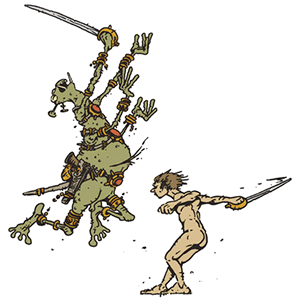
John Carter is a fictional character, created by Edgar Rice Burroughs, who appears in the ‘Barsoom’ novels. Although he is actually a Virginian from Earth and only a visitor to Mars, he is sometimes known as ‘John Carter of Mars,’ in reference to the setting in which his major deeds are recorded, in the tradition of other real-world heroes such as Lawrence of Arabia and Scipio Africanus. His character is enduring, having appeared in various media since his 1912 debut in a magazine serial.
John Carter first appeared in ‘A Princess of Mars,’ the first Burroughs novel set on a fictionalized version of Mars known as ‘Barsoom.’ His character and courtesy exemplify the ideals of the antebellum South. A Virginian, he served as a captain in the American Civil War on the side of the Confederacy. While hiding from Apaches in a cave, he appears to die; leaving his inanimate body behind, he is mysteriously transported by a form of astral projection to the planet Mars, where he finds himself re-embodied in a form identical to his earthly one. Accustomed to the greater gravity of Earth, he is much stronger and more agile than the natives of Mars due to its gravity.
Posted in Art, Language |
3 Comments »
December 17, 2011
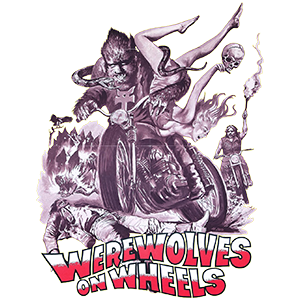
Psychotronic is a film genre made up of horror films, spaghetti westerns, low-budget independent features, exploitation films that was coined by author Michael J. Weldon. The genre takes its name from the movie ‘The Psychotronic Man.’
After seeing this movie, Weldon created an extensive list of reviews of obscure quirky films that he felt were underappreciated by the mainstream and then marketed it as the ‘Psychotronic Encyclopedia,’ which has become known as a reference work for film buffs. The book prompted the creation of the Psychotronic Film Society.
Posted in Art, Language |
Leave a Comment »


 The Daily Omnivore