November 1, 2011


The Fifth Beatle is an informal title that various commentators in the press and entertainment industry have applied to persons who were at one point a member of The Beatles, or who had a strong association with the ‘Fab Four.’ The ‘Fifth Beatle’ claims started appearing in the press immediately upon the band’s sensational rise to global fame in 1963 as the most famous quartet in pop culture. At The Beatles’ 1988 induction into the Rock and Roll Hall of Fame, George Harrison at one point stated that there were only two ‘fifth Beatles’: Derek Taylor and Neil Aspinall (the Beatles’ public relations manager and road manager-turned-business-executive, respectively). In a 1997 BBC interview, Paul McCartney stated: ‘If anyone was the fifth Beatle, it was [Beatles’ manager] Brian Epstein.’
The term is not used to indicate the chronology of band members joining the group. Pete Best joined Lennon, McCartney, Stuart Sutcliffe and Harrison on the eve of their Hamburg sojourn, the five using the monikers, ‘The Silver Beetles’ and ‘The Silver Beatles’ (they would experiment with ‘The Beat Brothers’ and ultimately ‘The Beatles’ while in Hamburg with Best).
read more »
Posted in Art, Language |
Leave a Comment »
October 31, 2011


A loophole is an ambiguity or inadequacy in a system, such as a law or security, which can be used to circumvent or otherwise avoid the intent, implied or explicitly stated, of the system. Loopholes are searched for and used strategically in a variety of circumstances, including taxes, elections, politics, the criminal justice system, or in breaches of security, or a response to one’s civil liberties.
Loopholes are distinct from ‘lacunae’ (situations where no law exists to address a particular issue), although the two terms are often used interchangeably. In a loophole, the law exists, but can be legally circumvented due to a technical defect.
read more »
Posted in Language, Politics, War |
1 Comment »
October 31, 2011

Straight edge is a subculture of hardcore punk whose adherents refrain from using alcohol, tobacco, and other recreational drugs. It was a direct reaction to the sexual revolution, hedonism, and excess associated with punk rock. For some, this extends to not engaging in promiscuous sex, following a vegetarian or vegan diet, and not using caffeine or prescription drugs.
The term was coined by the 1980s hardcore punk band Minor Threat in their song ‘Straight Edge.’ Since then, a wide variety of beliefs and ideas have been incorporated into straight edge including vegetarianism, animal rights, communism, and Hare Krishna beliefs. In many parts of the United States, straight edge is treated as a gang by law enforcement officials.
read more »
Posted in Drugs, Language, Sex |
Leave a Comment »
October 31, 2011

Fag hag is a gay slang phrase referring to a woman who either associates mostly or exclusively with gay and bisexual men, or has gay and bisexual men as close friends. The phrase originated in gay male culture in the United States and was historically an insult.
Some women who associate with gay men object to being called fag hags, while others embrace the term. The male counterpart, for men who have similar interpersonal relationships with gay and bisexual men is fag stag, part of hag-ism, the identification of a person with a group—usually united in terms of sexuality, gender identity, or shared sex—of which he or she is not officially a member.
read more »
Posted in Language, Sex |
1 Comment »
October 31, 2011
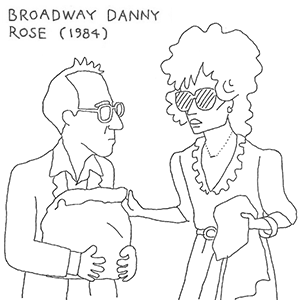
Beard is a slang term describing a person who is used, knowingly or unknowingly, as a date, romantic partner (Boyfriend or Girlfriend), or spouse either to conceal infidelity or to conceal one’s sexual orientation.
The term can be used in heterosexual and homosexual contexts, but with increasing acceptance of gay culture, references to beards are seen in mainstream television and movies as well as other entertainment.
read more »
Posted in Art, Language, Sex |
Leave a Comment »
October 31, 2011
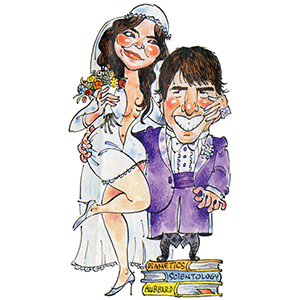
Lavender marriage is a type of male-female marriage of convenience in which the couple are not both heterosexual and conceal the homosexual or bisexual orientation of one or both spouses. In gay slang, the heterosexual spouse in a lavender marriage is referred to as a ‘beard’ for a wife.
Although there have been a number of prominent lavender marriages in history, the phrase itself came into colloquial use during the 1920s, when the imposition of morality clauses into the contracts of Hollywood actors caused some closeted stars to enter into marriages of convenience to protect their public reputations and preserve their careers.
read more »
Posted in Language, Sex |
Leave a Comment »
October 31, 2011
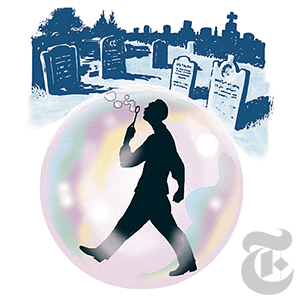
Stumbling on Happiness is a 2006 non-fiction book by Daniel Gilbert, the central thesis of which is that, through perception and cognitive biases, people imagine the future poorly, in particular what will make them happy. He argues that imagination fails in three ways: Imagination tends to add and remove details, but people do not realize that key details may be fabricated or missing from the imagined scenario. Imagined futures (and pasts) are more like the present than they actually will be (or were). And imagination fails to realize that things will feel differently once they actually happen — most notably, the psychological immune system will make bad things feel not so bad as they are imagined to feel.
The advice Gilbert offers is to use other people’s experiences to predict the future, instead of imagining it. It is surprising how similar people are in much of their experiences, he says. He does not expect too many people to heed this advice, as our culture, accompanied by various thinking tendencies, is against this method of decision making. Also, Gilbert covers the topic of ‘filling in’or the frequent use of patterns, by the mind, to connect events which we do actually recall with other events we expect or anticipate fit into the expected experience. This ‘filling in’ is also used by our eyes and optic nerves to remove our blind spot or scotoma, and instead substitute what our mind expects to be present in the blind spot.
Posted in Health, Language |
Leave a Comment »
October 31, 2011
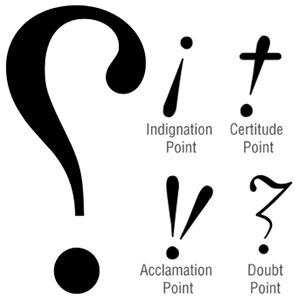
Although in the written English language there is no standard way to denote irony or sarcasm, several forms of punctuation have been proposed. Among the oldest and frequently attested are the ‘percontation point’ invented by English printer Henry Denham in the 1580s, and the irony mark, furthered by French poet Alcanter de Brahm in the 19th century. Both of these marks were represented visually by a backwards question mark.
These punctuation marks are primarily used to indicate that a sentence should be understood at a second level. A bracketed exclamation point and/or question mark are also sometimes used to express irony or sarcasm. Scare quotes are quotation marks placed around a word or phrase to indicate that it does not signify its literal or conventional meaning.
read more »
Posted in Humor, Language |
2 Comments »
October 31, 2011

The interrobang [in-ter-uh-bang], ‽ (often represented by ?! or !?), is a nonstandard punctuation mark used in various written languages and intended to combine the functions of the question mark (also called the ‘interrogative point’) and the exclamation mark or exclamation point (known in printers’ jargon as the ‘bang’). The glyph is a superimposition of these two marks. A sentence ending with an interrobang asks a question in an excited manner, expresses excitement or disbelief in the form of a question, or asks a rhetorical question.
Many writers, especially in informal writing, have used multiple punctuation marks to end a sentence expressing surprise and question. Like multiple exclamation marks and multiple question marks, such strings are poor style in formal writing. Writers had combined question marks and exclamation marks (along with using multiple punctuation marks) for decades before the ‘invention’ of the interrobang. They were prevalent in informal media such as print advertisements and comic books.
read more »
Posted in Language |
Leave a Comment »
October 28, 2011
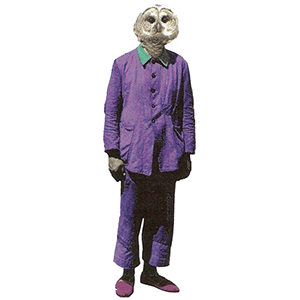
The Obscene Bird of Night (El obsceno pájaro de la noche, 1970) is the most acclaimed novel by the Chilean writer José Donoso (1924-1996). Donoso was a member of the Latin American literary boom and the literary movement known as magical realism. The novel explores the cyclical nature of life and death, in that our fears and fantasies of childhood resurface in adulthood and old age. It is about the deconstruction of self – to the extreme of trying ‘to live’ in non-existence.
The Imbunche myth is a major theme in the novel. According to legend, the Imbunche was a male child kidnapped by, or sold by his parents to a sorcerer who turns the child into a monster to guard his lair. It symbolizes the process of implosion of the physical and/or intellectual self, turning the living being into a thing or object incapable of interacting with the outside world, and depriving it of its individuality and even of its name. This can either be self-inflicted or forced upon by others.
read more »
Posted in Death, Language, Philosophy |
Leave a Comment »
October 28, 2011

Comprachicos is a compound Spanish neologism meaning ‘child-buyers,’ which was coined by Victor Hugo in his novel ‘The Man Who Laughs’ (1869). It refers to various groups in folklore who were said to change the physical appearance of human beings by manipulating growing children, in a similar way to the horticultural method of bonsai – that is, deliberate mutilation.
The most common methods said to be used in this practice included stunting children’s growth by physical restraint, muzzling their faces to deform them, slitting their eyes, dislocating their joints, and malforming their bones. The resulting human monsters made their living as mountebanks (con artists and hustlers) or were sold to lords and ladies to be used as pages or court jester.
read more »
Posted in Art, Language |
Leave a Comment »
October 26, 2011

Ubik [ew-bik] is a 1969 science fiction novel by Philip K. Dick. It has been described as ‘a deeply unsettling existential horror story, a nightmare you’ll never be sure you’ve woken up from.’ The novel takes place in the ‘North American Confederation’ of 1992, wherein technology has advanced to the extent of permitting civilians to reach the Moon and psi phenomena are common. The protagonist is Joe Chip, a debt-ridden technician for Glen Runciter’s ‘prudence organization,’ which employs people with the ability to block certain psychic powers (as in the case of an anti-telepath, who can prevent a telepath from reading a client’s mind) to enforce privacy by request. Runciter runs the company with the assistance of his deceased wife Ella, who is kept in a state of ‘half-life,’ a form of cryonic suspension that gives the deceased person limited consciousness and communication ability. In the novel Ubiq, a product whose name is derived from the word ‘ubiquity,’ has the property of preserving people who are in half-life.
Dick’s former wife Tessa remarked that ‘Ubik is a metaphor for God. Ubik is all-powerful and all-knowing, and Ubik is everywhere. The spray can is only a form that Ubik takes to make it easy for people to understand it and use it. It is not the substance inside the can that helps them, but rather their faith in the promise that it will help them.’ She also interpreted the ending by writing, ‘Many readers have puzzled over the ending of Ubik, when Glen Runciter finds a Joe Chip coin in his pocket. [It] is meant to tell you that we can’t be sure of anything in the world that we call ‘reality.’ It is possible that they are all dead and in cold pac or that the half-life world can affect the full-life world. It is also possible that they are all alive and dreaming.’
Posted in Art, Language, Technology |
Leave a Comment »


 The Daily Omnivore