November 17, 2011

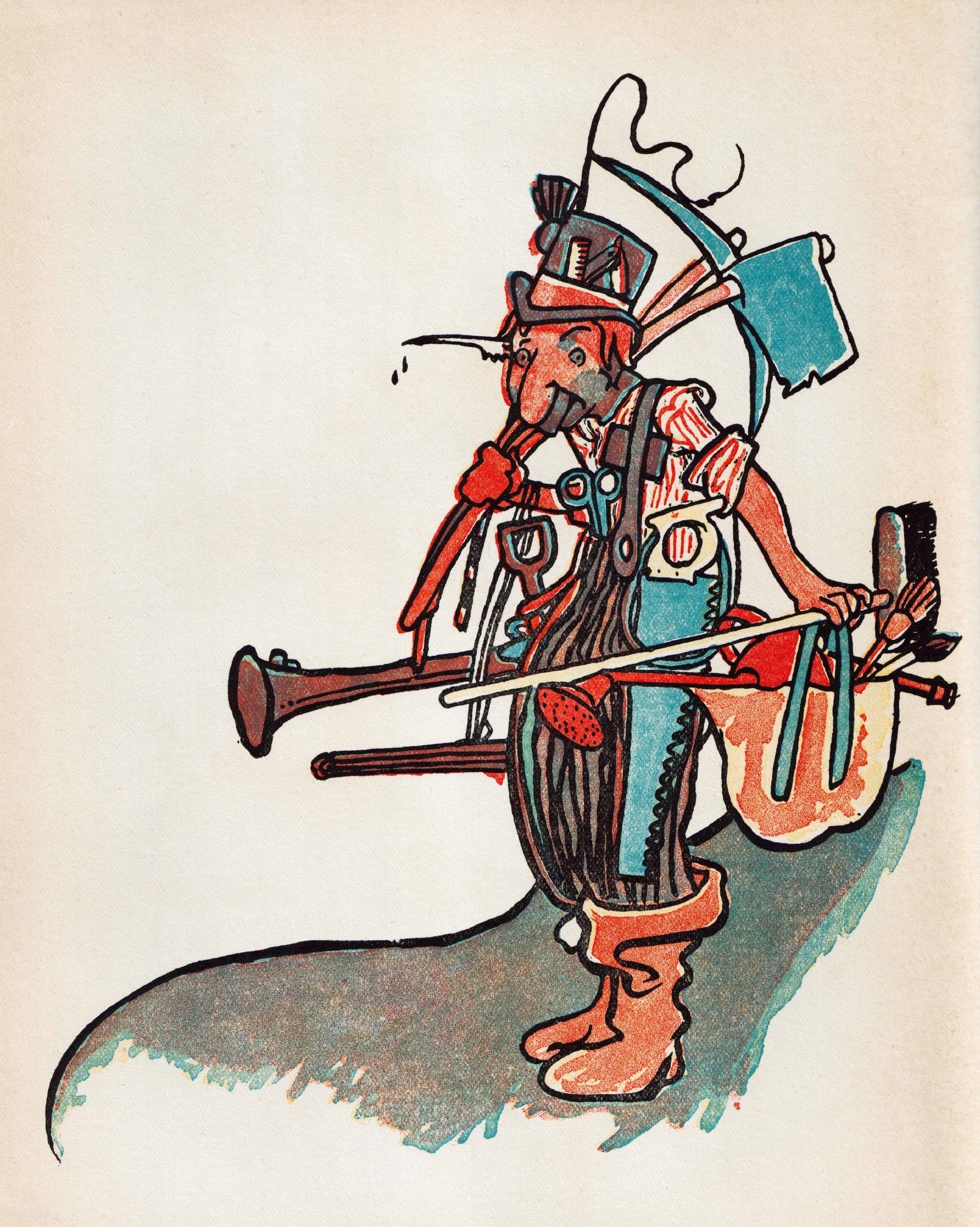
A euphemism is the substitution of an uncontroversial phrase for a more frank expression that might offend or otherwise suggest something unpleasant to the audience. Euphemisms often evolve over time into taboo words, through a process described by American philosopher W.V.O. Quine, and more recently dubbed the ‘euphemism treadmill‘ by cognitive scientist Steven Pinker, and discussed in his books ‘The Blank Slate’ (2003) and ‘The Stuff of Thought’ (2007).
This is the well-known linguistic process known as ‘pejoration’ or ‘semantic change.’ Words originally intended as euphemisms may lose their euphemistic value, acquiring the negative connotations of their referents. In some cases, they may be used mockingly and become the opposite of euphemisms, ‘dysphemisms.’ Euphemisms related to disabilities have been prone to this. In his remarks on the ever-changing London slang, made in ‘Down and Out’ in Paris and London, George Orwell mentioned both the euphemism treadmill and the dysphemism treadmill. He did not use these now-established terms, but observed and commented on the respective processes as early as in 1933.
Posted in Humor, Language, Politics |
Leave a Comment »
November 17, 2011
Reappropriation [ree-uh-proh-pree-eyt] is the cultural process by which a group reclaims terms or artifacts that were previously used in a way disparaging of that group. For example, since the early 1970s, much terminology referring to homosexuality—such as gay, queer, and (to a lesser extent) faggot—has been reappropriated. Another example of reappropriation would be an African American collecting lawn jockeys or other artifacts of darky iconography. The term reappropriation can also extend to counter-hegemonic re-purposing, such as citizens with no formal authority seizing unused public or private land for community use.
The term reappropriation is an extension of the term appropriation or cultural appropriation used in anthropology, sociology and cultural studies to describe the hegemonic action of reabsorbing subcultural styles and forms, or those from other cultures, into mass culture through a process of commodification: the mass-marketing of alternate lifestyles, practices, and artifacts.
read more »
Posted in Language, Politics, Sex |
Leave a Comment »
November 16, 2011
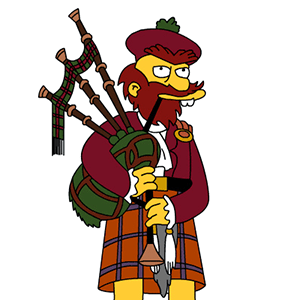
No true Scotsman is an informal logical fallacy, an ad hoc attempt to retain an unreasoned assertion. When faced with a counterexample to a universal claim, rather than denying the counterexample or rejecting the original universal claim, this fallacy modifies the subject of the assertion to exclude the specific case or others like it by rhetoric, without reference to any specific objective rule. The term was advanced by philosopher Antony Flew in his 1975 book ‘Thinking About Thinking: Do I sincerely want to be right?’ Imagine Hamish McDonald, a Scotsman, sitting down with his ‘Glasgow Morning Herald’ and seeing an article about how the ‘Brighton Sex Maniac Strikes Again.’ Hamish is shocked and declares that ‘No Scotsman would do such a thing.’ The next day he sits down to read his paper again and this time finds an article about an Aberdeen man whose brutal actions make the Brighton sex maniac seem almost gentlemanly. This fact shows that Hamish was wrong in his opinion but is he going to admit this? Not likely. This time he says, ‘No true Scotsman would do such a thing.’
An example of a political application of the fallacy could be in asserting that ‘no democracy starts a war,’ then distinguishing between mature or ‘true’ democracies, which never start wars, and ’emerging democracies,’ which may start them. At issue is whether or not something labeled as an ’emerging democracy’ is actually a democracy or something in a different conceptual category.
Posted in Language, Philosophy, World |
1 Comment »
November 16, 2011
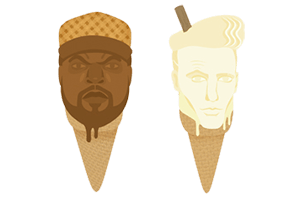

Wigger [wig-er] is a pejorative slang term for a white person who emulates mannerisms, language, and fashions associated with African-American culture, particularly hip hop in the United States or the Grime/Garage scene in Britain. The term is a portmanteau of either wannabe or white and n****r. The term is considered derogatory, reflecting stereotypes of African-American or Black British culture, and can be used pejoratively, because of its connotations of cultural appropriation. It is also often used in a racist manner, not only belittling the person perceived as acting black, but also demeaning black people and culture by proxy. Some, however, use the term neutrally, or as a light joke, without any racism intended.
The phenomenon of white people adopting stereotypical black mannerisms, speech, and apparel – which in the general case is called allophilia – has appeared in several generations since slavery was abolished in the western world. The concept has been documented in the United States, Canada, United Kingdom, Australia and other white-majority countries. An early form of this was the ‘white negro’ in the jazz and swing music scenes of the 1920s and 1930s; as examined in the 1957 Norman Mailer essay, ‘The White Negro.’ It was later seen in the Zoot suiter of the 1930s and 1940s; the hipster of the 1940s; and the beatnik and rock and roller of the 1950s.
Posted in Language, Politics, World |
1 Comment »
November 16, 2011

Plastic Paddy is a slang term used to describe some members of the Irish diaspora, or those with no ancestral connection to Ireland, who appropriate (often stereotypical) Irish customs and identity. A Plastic Paddy may know little of actual Irish culture, but nevertheless assert an Irish identity. The term is pejoratively used to refer to people on the basis of their perceived lack of authenticity as Irish.
People who were not born in Ireland, and who did not grow up in Ireland, but nonetheless possess Irish citizenship and an Irish passport are often labelled as Plastic Paddies. The term came into common use in the 1980s when it was frequently employed as a term of abuse by recently-arrived middle class Irish migrants to London. It ‘became a means of distancing themselves from established Irish communities.’ And the use was a part of the process by which the second-generation Irish are positioned as inauthentic within the two identities, of Englishness and Irishness.
read more »
Posted in Language, Politics, World |
Leave a Comment »
November 16, 2011
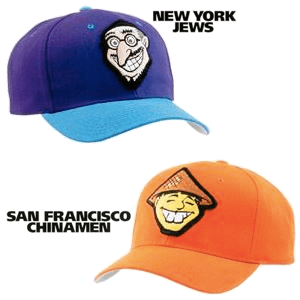
Cultural appropriation is the adoption of some specific elements of one culture by a different cultural group. It describes acculturation, the exchange of cultural features that results when different cultures come into continuous first hand contact; or assimilation, the process of integration where members of an ethno-cultural group, typically immigrants, or other minority groups, are ‘absorbed’ into an established, generally larger community.
It can include the introduction of forms of dress or personal adornment, music and art, religion, language, or social behavior. These elements, once removed from their indigenous cultural contexts, can take on meanings that are significantly divergent from, or merely less nuanced than, those they originally held.
read more »
Posted in Language, Politics, World |
Leave a Comment »
November 10, 2011
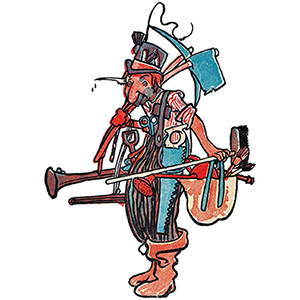
‘Jack of all trades, master of none’ refers to a person that is competent in many skills but not outstanding in any particular one. The earliest recorded versions of the phrase do not contain the second part (indeed they are broadly positive in tone).
A Jack of all trades may be a master of integration, as such an individual knows enough from many learned trades and skills to be able to bring their disciplines together in a practical manner. This person is a generalist rather than a specialist. A person who is exceptional in many disciplines is known as a polymath or a ‘Renaissance man’; a typical example is Leonardo da Vinci. The phrase became increasingly cynical in connotation during the 20th century.
read more »
Posted in Language, Money |
1 Comment »
November 10, 2011

Short messages on services such as Twitter or identi.ca may be tagged by including one or more hashtags: words or phrases prefixed with the symbol ‘#,’ with multiple words concatenated, such as those in: ‘#Wikipedia is my favorite kind of #encyclopedia.’ Then, a person can search for the string ‘#Wikipedia’ and this tagged word will appear in the search engine results. These hashtags also show up in a number of trending topics websites, including Twitter’s own front page. Such tags are case-insensitive. Hashtags were invented on Twitter by Chris Messina. One phenomenon specific to the Twitter ecosystem are micro-memes, which are emergent topics for which a hashtag is created, used widely for a few days, then disappears. Other sites, such as Hashable, have adopted the hashtag to use for other reasons.
The feature has been added to other, non-short-message-oriented services, such as the user comment systems on YouTube and Gawker Media; in the case of the latter, hashtags for blog comments and directly-submitted comments are used to maintain a more constant rate of user activity even when paid employees are not logged into the website. Real-time search aggregators such as Google Real-Time Search also support hashtags in syndicated posts, meaning that hashtags inserted into Twitter posts can be hyperlinked to incoming posts falling under that same hashtag; this has further enabled a view of the ‘river’ of Twitter posts which can result from search terms or hashtags.
Posted in Language, Technology |
Leave a Comment »
November 10, 2011

In popular usage, eccentricity [ek-suhn-tris-i-tee] (also called quirkiness or kookiness) refers to unusual or odd behavior on the part of an individual. This behavior would typically be perceived as unusual or unnecessary, without being demonstrably maladaptive. Eccentricity is contrasted with ‘normal’ behavior, the nearly universal means by which individuals in society solve given problems and pursue certain priorities in everyday life. People who consistently display benignly eccentric behavior are labeled as ‘eccentrics.’
Derived from Greek ekkentros, ‘out of the center,’ the word ‘eccentric’ first appeared in English in 1551 as an astronomical term meaning ‘a circle in which the earth, sun, etc. deviates from its center.’ Five years later, in 1556, an adjective form of the word was added. 129 years later, in 1685, the definition evolved from the literal to the figurative, and eccentric began being used to describe unconventional or odd behavior. A noun form of the word – a person who possesses and exhibits these unconventional or odd qualities/behaviors – didn’t appear until 1832.
read more »
Posted in Health, Language, Money |
1 Comment »
November 9, 2011
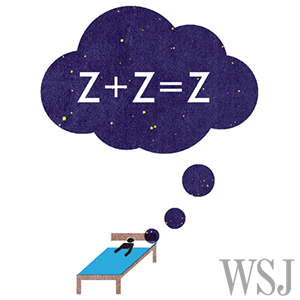
Sleep-learning (also known as hypnopædia [hip-noh-pee-dee-uh]) attempts to convey information to a sleeping person, typically by playing a sound recording to them while they sleep. This now-discredited technique was supposed to be moderately effective at making people remember direct passages or facts, word for word. Since the electroencephalography studies by Charles W. Simon and William H. Emmons in 1956, learning by sleep has not been taken seriously. The researchers concluded that learning during sleep was ‘impractical and probably impossible.’ They reported that stimulus material presented during sleep was not recalled later when the subject awoke unless alpha wave activity occurred at the same time the stimulus material was given. Since alpha activity during sleep indicates the subject is about to awake, the researchers felt that any learning occurred in a waking state.
In Aldous Huxley’s 1932 novel ‘Brave New World,’ hypnopaedia is used for the conditioning of children by future culture. In the novel, sleep-learning was discovered by accident when a Polish boy named Reuben Rabinovitch was able to recite an entire radio broadcast in English after a radio receiver was left on in his sleep. The boy was unable to comprehend what he had heard via hypnopædia, but it was soon realized that it could be used to effectively make suggestions about morality.
Posted in Education, Humor, Language |
1 Comment »
November 9, 2011

‘Maus: A Survivor’s Tale,’ by Art Spiegelman, is a biography of the author’s father, Vladek Spiegelman, a Polish Jew and Holocaust survivor. It alternates between descriptions of Vladek’s life in Poland before and during the Second World War and Vladek’s later life in the Rego Park neighborhood of New York City.
The work is a graphic narrative in which Jews are depicted as mice, while Germans are depicted as cats. It is the only comic book ever to have won a Pulitzer Prize.
read more »
Posted in Art, Language, War |
Leave a Comment »
November 9, 2011

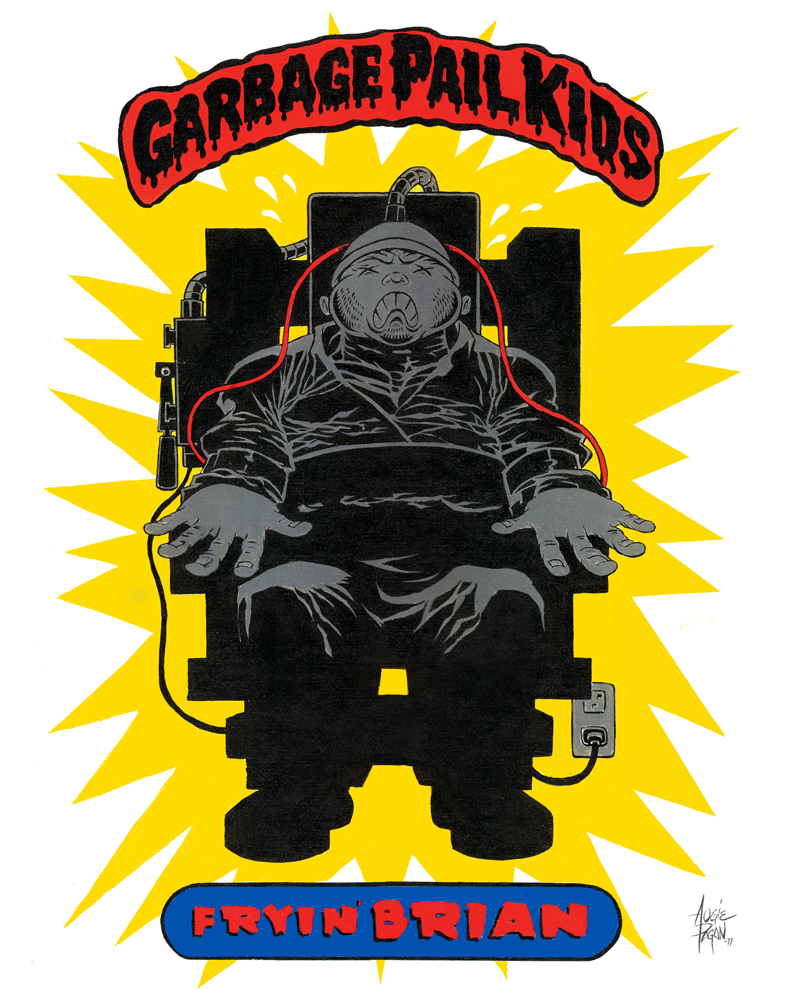
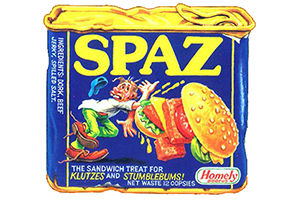
Garbage Pail Kids (also known as ‘Basuritas’ in Latin America, ‘Gang do Lixo’ in Brazil, ‘Sgorbions’ in Italy, ‘Les Crados’ in France and ‘Die total kaputten Kids’ in Germany) is a series of trading cards produced by the Topps Company, originally released in 1985 and designed to parody the Cabbage Patch Kids dolls, which were immensely popular at the time.
Each sticker card features a character with a comical abnormality and/or suffering some terrible fate, and punning name, such as ‘Glandular Angela’ or ‘Half-Nelson.’ Fifteen series of regular trading cards were released in the United States, with various sets released in other countries.
read more »
Posted in Art, Humor, Language |
Leave a Comment »