October 15, 2011

Somniloquy [som-nil-o-kwee] or sleep-talking is a parasomnia (sleep disorder) that refers to talking aloud in one’s sleep. It can be quite loud, ranging from simple sounds to long speeches, and can occur many times during sleep. Listeners may or may not be able to understand what the person is saying. Sleep-talking usually occurs during transitory arousals from NREM sleep, which is when the body does not move smoothly from one stage in NREM sleep to another, and they become partially aroused from sleep. Further it can also occur during REM sleep at which time it represents a motor breakthrough (see sleep paralysis) of dream speech, words spoken in a dream are spoken out loud.
Sleep-talking is very common and is reported in 50% of young children, with most of them outgrowing it by puberty, although it may persist into adulthood (about 4% of adults are reported to talk in their sleep). It appears to run in families. Sleep-talking can be associated with fever. Sleep-talking by itself is harmless; however, it can wake up others and cause them consternation—especially when misinterpreted as conscious speech by an observer. If the sleep-talking is dramatic, emotional, or profane it may be a sign of another sleep disorder. Sleep-talking can be monitored by a partner or by using an audio recording device; devices which remain idle until detecting a sound wave are ideal for this purpose. Polysomnography (sleep recording) shows episodes of sleep talking that can occur in any stage of sleep.
Posted in Health, Language |
Leave a Comment »
October 14, 2011

Future Shock is a book written by the futurist Alvin Toffler in 1970. In the book, Toffler defines the term ‘future shock’ as a certain psychological state of individuals and entire societies. His shortest definition for the term is a personal perception of ‘too much change in too short a period of time.’ The book, which became an international bestseller, grew out of an article ‘The Future as a Way of Life’ in ‘Horizon’ magazine in 1965.
Toffler argues that society is undergoing an enormous structural change, a revolution from an industrial society to a ‘super-industrial society.’ This change will overwhelm people, the accelerated rate of technological and social change leaving them disconnected and suffering from ‘shattering stress and disorientation’ – future shocked. Toffler stated that the majority of social problems were symptoms of the future shock. In his discussion of the components of such shock, he also popularized the term ‘information overload.’
Posted in Language, Politics, Technology |
1 Comment »
October 13, 2011

Hypnagogia [hip-nuh-gah-jee-uh] is a term coined by French physician Alfred Maury in the 19th century for the transitional state between wakefulness and sleep (i.e. the onset of sleep). It is characterized by dreamlike auditory, visual, or tactile sensations.
Sometimes the word hypnagogia is used in a restricted sense to refer to the onset of sleep, and contrasted with hypnopompia, Frederic Myers’s term for waking up. The hypnagogic state can provide insight into a problem, the best known example being August Kekulé’s realization that the structure of benzene was a closed ring after dozing in front of a fire and seeing atoms forming into snakes, one of who grabbed its tail in its mouth.
read more »
Posted in Health, Language, Science |
1 Comment »
October 13, 2011

A power nap is a short sleep which terminates before the occurrence of deep sleep or slow-wave sleep (SWS), intended to quickly revitalize the subject. The expression was coined by Cornell University social psychologist James Maas. The power nap is thought to maximize the benefits of sleep versus time. It is used to supplement normal sleep, especially when a sleeper has accumulated a sleep deficit. Scientific experiments and anecdotal evidence suggest that an average power nap duration of around 15–30 minutes is most effective. Any more time, and the body enters into its usual sleep cycle.
Various durations are recommended for power naps, which are very short compared to regular sleep. The short duration of a power nap is designed to prevent nappers from sleeping so long that they enter a normal sleep cycle without being able to complete it. Entering a normal sleep cycle, but failing to complete it, can result in a phenomenon known as sleep inertia, where one feels groggy, disoriented, and even more sleepy than before beginning the nap. In order to attain maximum post-nap performance, it is critical that a power nap be limited to the beginning of a sleep cycle, specifically sleep stages I and II.
read more »
Posted in Health, Language, Science |
Leave a Comment »
October 13, 2011
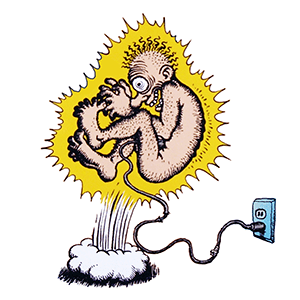
Symptoms described as ‘brain zaps,’ ‘brain shocks,’ ‘brain shivers,’ or ‘cranial zings’ are a withdrawal symptom experienced during discontinuation (or reduction of dose) of antidepressant drugs. The symptoms are widely variable in description and of unknown etiology; common descriptions include dizziness, electric shock-like sensations, sweating, nausea, insomnia, tremor, confusion, nightmares, and vertigo.
The ‘preferred term’ for coding these types of symptoms in adverse drug reaction reports is ‘paraesthesia’ (more generally known as the feeling of ‘pins and needles’).
Posted in Drugs, Health, Language |
Leave a Comment »
October 11, 2011

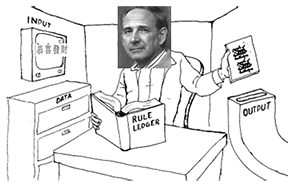
Strong AI is artificial intelligence that matches or exceeds human intelligence — the intelligence of a machine that can successfully perform any intellectual task that a human being can. It is a primary goal of artificial intelligence research and an important topic for science fiction writers and futurists.
Strong AI is also referred to as ‘artificial general intelligence’ or as the ability to perform ‘general intelligent action.’ Science fiction associates strong AI with such human traits as consciousness (subjective experience and thought), sentience (subjective feelings and emotion), sapience (wisdom) and self-awareness (identification of oneself as a separate individual, especially to be aware of one’s own thoughts). Some references emphasize a distinction between strong AI and ‘applied AI’ (also called ‘narrow AI’ or ‘weak AI’): the use of software to study or accomplish specific problem solving or reasoning tasks that do not encompass (or in some cases are completely outside of) the full range of human cognitive abilities.
read more »
Posted in Language, Philosophy, Technology |
1 Comment »
October 10, 2011

A beer koozie [koe-zie] is a fabric or foam device that is designed to insulate a beverage can or bottle. It began as a marketing tool. The primary use of a beer koozie is to keep one’s hand warm while keeping the beer cold.
A secondary use of a beer koozie is to easily identify one’s beverage from another. Many different companies have used the koozie as a promotional giveaway because it is not only inexpensive to manufacture, but its frequent use is more likely to bring the company’s name to a household presence. Originally this logo or image was screen-printed on a round foam cylinder with a foam base (generally a hole is provided in the base to alleviate creation of a vacuum). A koozie can be made from many materials like neoprene, polyester or open cell foam.
Posted in Food, Language, Money |
1 Comment »
October 10, 2011

The Scorpion and the Frog is a fable about a scorpion asking a frog to carry him across a river. The frog is afraid of being stung during the trip, but the scorpion argues that if it stung the frog, the frog would sink and the scorpion would drown. The frog agrees and begins carrying the scorpion, but midway across the river the scorpion does indeed sting the frog, dooming them both. When asked why, the scorpion points out that this is its nature. The fable is used to illustrate the position that the behaviour of some creatures is irrepressible, no matter how they are treated and no matter what the consequences.
Variations commonly include a farmer, youth, turtle, or fox in place of the frog, and a snake in place of the scorpion. The Farmer and the Viper is a specific variant that can be attributed to Aesop. There is also a variation in which the final words of the scorpion are ‘It is better we should both perish than that my enemy should live.’ The origin and author are unknown. Variations of the fable appear in West African and European folktales. A study published in a German journal in 2011 points out a connection between the genesis of the fable and the tradition of the Panchatantra, a collection of animal fables dating back to India in the 3rd century BCE.
Posted in Death, Language, Philosophy |
Leave a Comment »
October 9, 2011


In the late 1960s, the term supergroup was coined to describe ‘a rock music group whose performers are already famous from having performed individually or in other groups.’ In some cases, an act will later be referred to as a supergroup when multiple members from said group end up securing individual fame later on.
Supergroups are often short-lived, lasting only for an album or two, although this is not always the case. They are sometimes formed as side projects that are not intended to be permanent, while other times can become the primary project of the band members’ careers.
read more »
Posted in Art, Language |
Leave a Comment »
October 9, 2011


‘Gangsta Lean‘ is an urban slang phrase denoting a style of automobile driving in which the driver sits slung low and tilted toward the passenger seat. The phrase first appeared in popular music in William De Vaughn’s 1972 song ‘Be Thankful for What You Got’:
‘Though you may not drive a great big Cadillac / Gangsta whitewalls, TV antennas in the back / You may not have a car at all / But remember brothers and sisters / You can still stand tall / Just be thankful for what you got / Diamond in the back, sunroof top / Diggin’ the scene with a gangsta lean.’
Posted in Language |
Leave a Comment »
October 7, 2011

Name-dropping is the practice of mentioning important people or institutions within a conversation, story, song, online identity, or other communication. The term often connotes an attempt to impress others; it is usually regarded negatively, and under certain circumstances may constitute a breach of professional ethics. When used as part of a logical argument it can be an example of the false authority fallacy. A shout-out is a type of name-dropping where a list of names is spoken out expressly to direct attention at these groups or individuals, often as a means of expressing kudos or making a referral.
Name-dropping is used to position oneself within a social hierarchy. It is often used to create a sense of superiority by raising one’s status. By implying (or directly asserting) a connection to people of high status, the name-dropper hopes to raise his or her own social status to a level closer to that of those whose names he or she has dropped, and thus elevate himself or herself above, or into, present company. Name-dropping can also be used to identify people with a common bond. By indicating the names of people one knows, one makes known his or her social circle, providing an opportunity for others with similar connections to relate. As a form of appeal to authority, name-dropping can be an important form of informal argumentation, as long as the name being dropped is of someone expert on the subject of the argument and that person’s views are accurately represented.
Posted in Language |
Leave a Comment »
October 7, 2011

Hysterical strength describes displays of extreme strength by humans, beyond what is believed to be normal. It is a speculative term that is not recognized in medical academia; the concept has only a small body of anecdotal evidence to support it.
The most common anecdotal examples are of mothers lifting automobiles to rescue their children, and when people are in life and death situations. Hysterical strength can result in torn muscles and damaged joints. This is why, in addition to high lactic acid production, the body limits the number of muscle fibers the human body uses.
Posted in Health, Language |
Leave a Comment »



 The Daily Omnivore