October 10, 2011

A beer koozie [koe-zie] is a fabric or foam device that is designed to insulate a beverage can or bottle. It began as a marketing tool. The primary use of a beer koozie is to keep one’s hand warm while keeping the beer cold.
A secondary use of a beer koozie is to easily identify one’s beverage from another. Many different companies have used the koozie as a promotional giveaway because it is not only inexpensive to manufacture, but its frequent use is more likely to bring the company’s name to a household presence. Originally this logo or image was screen-printed on a round foam cylinder with a foam base (generally a hole is provided in the base to alleviate creation of a vacuum). A koozie can be made from many materials like neoprene, polyester or open cell foam.
Posted in Food, Language, Money |
1 Comment »
October 10, 2011
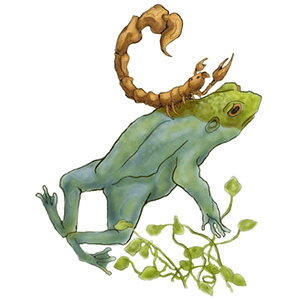
The Scorpion and the Frog is a fable about a scorpion asking a frog to carry him across a river. The frog is afraid of being stung during the trip, but the scorpion argues that if it stung the frog, the frog would sink and the scorpion would drown. The frog agrees and begins carrying the scorpion, but midway across the river the scorpion does indeed sting the frog, dooming them both. When asked why, the scorpion points out that this is its nature. The fable is used to illustrate the position that the behaviour of some creatures is irrepressible, no matter how they are treated and no matter what the consequences.
Variations commonly include a farmer, youth, turtle, or fox in place of the frog, and a snake in place of the scorpion. The Farmer and the Viper is a specific variant that can be attributed to Aesop. There is also a variation in which the final words of the scorpion are ‘It is better we should both perish than that my enemy should live.’ The origin and author are unknown. Variations of the fable appear in West African and European folktales. A study published in a German journal in 2011 points out a connection between the genesis of the fable and the tradition of the Panchatantra, a collection of animal fables dating back to India in the 3rd century BCE.
Posted in Death, Language, Philosophy |
Leave a Comment »
October 9, 2011
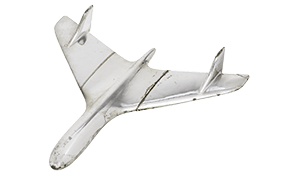

In the late 1960s, the term supergroup was coined to describe ‘a rock music group whose performers are already famous from having performed individually or in other groups.’ In some cases, an act will later be referred to as a supergroup when multiple members from said group end up securing individual fame later on.
Supergroups are often short-lived, lasting only for an album or two, although this is not always the case. They are sometimes formed as side projects that are not intended to be permanent, while other times can become the primary project of the band members’ careers.
read more »
Posted in Art, Language |
Leave a Comment »
October 9, 2011


‘Gangsta Lean‘ is an urban slang phrase denoting a style of automobile driving in which the driver sits slung low and tilted toward the passenger seat. The phrase first appeared in popular music in William De Vaughn’s 1972 song ‘Be Thankful for What You Got’:
‘Though you may not drive a great big Cadillac / Gangsta whitewalls, TV antennas in the back / You may not have a car at all / But remember brothers and sisters / You can still stand tall / Just be thankful for what you got / Diamond in the back, sunroof top / Diggin’ the scene with a gangsta lean.’
Posted in Language |
Leave a Comment »
October 7, 2011

Name-dropping is the practice of mentioning important people or institutions within a conversation, story, song, online identity, or other communication. The term often connotes an attempt to impress others; it is usually regarded negatively, and under certain circumstances may constitute a breach of professional ethics. When used as part of a logical argument it can be an example of the false authority fallacy. A shout-out is a type of name-dropping where a list of names is spoken out expressly to direct attention at these groups or individuals, often as a means of expressing kudos or making a referral.
Name-dropping is used to position oneself within a social hierarchy. It is often used to create a sense of superiority by raising one’s status. By implying (or directly asserting) a connection to people of high status, the name-dropper hopes to raise his or her own social status to a level closer to that of those whose names he or she has dropped, and thus elevate himself or herself above, or into, present company. Name-dropping can also be used to identify people with a common bond. By indicating the names of people one knows, one makes known his or her social circle, providing an opportunity for others with similar connections to relate. As a form of appeal to authority, name-dropping can be an important form of informal argumentation, as long as the name being dropped is of someone expert on the subject of the argument and that person’s views are accurately represented.
Posted in Language |
Leave a Comment »
October 7, 2011

Hysterical strength describes displays of extreme strength by humans, beyond what is believed to be normal. It is a speculative term that is not recognized in medical academia; the concept has only a small body of anecdotal evidence to support it.
The most common anecdotal examples are of mothers lifting automobiles to rescue their children, and when people are in life and death situations. Hysterical strength can result in torn muscles and damaged joints. This is why, in addition to high lactic acid production, the body limits the number of muscle fibers the human body uses.
Posted in Health, Language |
Leave a Comment »
October 7, 2011
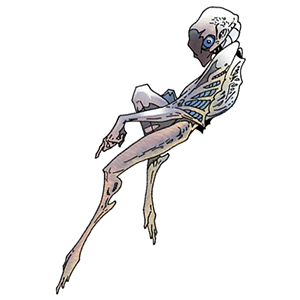
The Spacing Guild is an organization in Frank Herbert’s science fiction ‘Dune’ universe. With its monopoly on interstellar travel and banking, the Guild is a balance of power against the Padishah Emperor and the assembled noble Houses of the Landsraad. Mutated Guild Navigators use the spice drug melange to successfully navigate ‘folded space’ and safely guide enormous heighliner starships from planet to planet instantaneously. Essentially apolitical, the Guild is primarily concerned with the flow of commerce and preservation of the economy that supports them; though their ability to dictate the terms of and fees for all transport gives them influence in the political arena, they do not pursue political goals beyond their economic ones.
It is noted in ‘Dune’ (1965) that Houses of the Imperium may contract with the Guild to be removed ‘to a place of safety outside the System;’ in the past some Houses in danger of ruin or defeat have ‘become renegade Houses, taking family atomics and shields and fleeing beyond the Imperium.’ The Guild controls a ‘sanctuary planet’ (or planets) known as Tupile intended for such ‘defeated Houses of the Imperium … Location(s) known only to the Guild and maintained inviolate under the Guild Peace.’
read more »
Posted in Art, Language |
1 Comment »
October 7, 2011

A Mentat is a profession or discipline in Frank Herbert’s fictional ‘Dune’ universe. Mentats are humans trained to mimic computers: human minds developed to staggering heights of cognitive and analytical ability. In Herbert’s fiction, following the defeat of the thinking machines by humanity in the Butlerian Jihad, it is forbidden to create sentient machines. The Mentat discipline is developed as a replacement for computerized calculation, just as the Bene Gesserit and the Spacing Guild take on functions previously performed by thinking machines. For thousands of years, society considers Mentats the embodiment of logic and reason.
Unlike computers, however, Mentats are not simply calculators. Instead, the exceptional cognitive abilities of memory and perception are the foundations for supra-logical hypothesizing. Mentats are able to sift large volumes of data and devise concise analyses in a process that goes far beyond logical deduction: Mentats cultivate ‘the naïve mind,’ the mind without preconception or prejudice, so as to extract essential patterns or logic from data and deliver useful conclusions with varying degrees of certainty. They are not limited to formulating syllogisms; they are the supreme counselors of the Dune universe, filling roles as menial as archivist and clerk, or as grand as advisor to the Emperor.
read more »
Posted in Art, Language |
2 Comments »
October 7, 2011
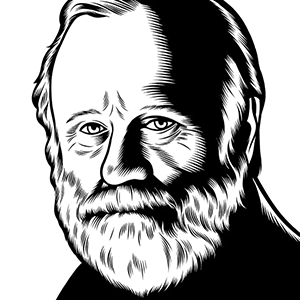
The political, scientific, and social fictional setting of Frank Herbert’s novels and derivative works is known as the Dune universe, or Duniverse. Set tens of thousands of years in the future, the saga chronicles a civilization which has banned computers but has also developed advanced technology and mental and physical abilities. Vital to this empire is the harsh desert planet Arrakis, only known source of the spice melange, the most valuable substance in the universe.
Creative works set in the Dune universe can be said to fall into five general time periods: The Butlerian Jihad; The Corrino-led Imperium; The ascension of the Atreides; The reign and fall of the God Emperor; and The return from the Scattering.
read more »
Posted in Art, Language |
1 Comment »
October 7, 2011

‘Dune‘ is a science fiction novel written by Frank Herbert, published in 1965. It won the Hugo Award in 1966, and the inaugural Nebula Award for Best Novel, the highest honors bestowed in science fiction and fantasy writing.
‘Dune’ is frequently cited as the world’s best-selling science fiction novel. Set in the far future amidst a sprawling feudal interstellar empire where planetary fiefdoms are controlled by noble houses that owe an allegiance to the Imperial House Corrino, Dune tells the story of young Paul Atreides (heir of House Atreides) as he and his family accept control of the desert planet Arrakis, the only source of the ‘spice’ melange, the most important and valuable substance in the universe. The story explores the complex and multi-layered interactions of politics, religion, ecology, technology, and human emotion, as the forces of the Empire confront each other for control of Arrakis and its ‘spice.’
read more »
Posted in Art, Language |
1 Comment »
October 7, 2011

In Internet culture, a lurker is a person who reads discussions on a message board, newsgroup, chatroom, file sharing or other interactive system, but rarely or never participates actively.
Research indicates that lurkers make up over 90% of online groups. Lack of trust represents one of the reasons explaining lurking behavior.
read more »
Posted in Language, Technology |
Leave a Comment »
September 30, 2011
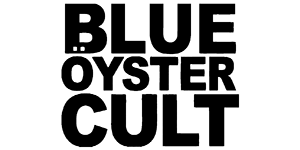

A metal umlaut [oom-lout] (also known as röck döts) is a trema (in Germanic languages called Umlaut) that is sometimes used gratuitously or decoratively over letters in the names of hard rock or heavy metal bands—for example those of Mötley Crüe and Motörhead. Amongst English speakers, the use of umlaut marks and other diacritics with a blackletter style typeface is a form of foreign branding intended to give a band’s logo a Teutonic quality—denoting stereotypes of boldness and strength commonly attributed to ancient northern European peoples, such as the Vikings and Goths. Its use has been attributed to a desire for a ‘Gothic horror’ feel. The metal umlaut is not generally intended to affect the pronunciation of the band’s name.
These decorative umlauts have been parodied in film and fiction; in the mockumentary film ‘This Is Spinal Tap’ (spelled with an umlaut mark over the n and a dotless i), fictional rocker David St. Hubbins (Michael McKean) says, ‘It’s like a pair of eyes. You’re looking at the umlaut, and it’s looking at you.’
read more »
Posted in Art, Humor, Language |
1 Comment »



