September 20, 2011

Bless you, or God bless you, is a common English expression addressed to a person after they sneeze. In non-English-speaking cultures, words referencing good health or a long life are often used instead of ‘bless you,’ though some also use references to God. English speakers also respond to sneezing with the German word Gesundheit, which means ‘health.’
The origin of the custom and its original purpose is unknown. Several possible origins are commonly given. The practice of blessing someone who sneezes, dating as far back as at least 77 CE, however, is far older than most specific explanations can account for.
read more »
Posted in Health, Language, Philosophy |
1 Comment »
September 20, 2011

Superstition is a belief in a non-physical (i.e. supernatural) causality: that one event causes another without any physical process linking the two events. The word is often used pejoratively to refer to practices (e.g. Voodoo) other than the one prevailing in a given society (e.g. Christianity in western culture), although the prevailing religion may contain just as many supernatural beliefs.
It is also commonly applied to beliefs and practices surrounding luck, prophecy and spiritual beings, particularly the belief that future events can be foretold by specific unrelated prior events.
read more »
Posted in Language, Philosophy, Science |
Leave a Comment »
September 19, 2011

Trichomes [trik-ohm] (from the Greek word ‘trikhoma’ meaning ‘growth of hair’) are structures on plants that look like hairs. Glandular trichomes have chemicals in them. They break when the plant is touched. For example, trichomes on poison ivy leaves have a chemical that causes a rash. Cannabis trichomes produce a psychoactive resin. It is likely that in many cases, plant hairs interfere with the feeding of herbivores. Hairs on plants growing in areas subject to frost keep the frost away from the living surface cells. In windy locations, hairs break-up the flow of air across the plant surface, reducing evaporation. Dense coatings of hairs reflect solar radiation, protecting the more delicate tissues underneath in hot, dry, open habitats. And in locations where much of the available moisture comes from cloud drip, hairs appear to enhance this process.
They occur only on plants and certain protists (a type of single-celled organism). Certain algae, have their terminal cell shaped into an elongate ‘hair-like’ structure called a trichome. The same term is applied to such structures in some cyanobacteria (bacterium which rely on photosynthesis). Trichomes on plants are epidermal outgrowths of various kinds. The terms ’emergences,’ ‘thorns,’ ‘spines,’ and ‘prickles’ refer to outgrowths that involve more than the epidermis (the outermost layer of the plant). See for example, the ‘wait-a-minute tree,’ which has numerous hooked thorns with the shape and size of a cat’s claw, that tend to hook onto passers-by; the hooked person must stop (‘wait a minute’) to remove the thorns carefully to avoid injury.
Posted in Drugs, Language, Science |
Leave a Comment »
September 16, 2011

In photography, bokeh [boh-kay] is the blur, or the aesthetic quality of the blur, in out-of-focus areas of an image, or ‘the way the lens renders out-of-focus points of light.’ Differences in lens aberrations and aperture shape cause some lens designs to blur the image in a way that is pleasing to the eye, while others produce blurring that is unpleasant or distracting—’good’ and ‘bad’ bokeh, respectively. Bokeh occurs for parts of the scene that lie outside the depth of field. Photographers sometimes deliberately use a shallow focus technique to create images with prominent out-of-focus regions.
Bokeh is often most visible around small background highlights, such as specular reflections and light sources, which is why it is often associated with such areas. However, bokeh is not limited to highlights; blur occurs in all out-of-focus regions of the image.
read more »
Posted in Art, Language, Technology |
2 Comments »
September 11, 2011

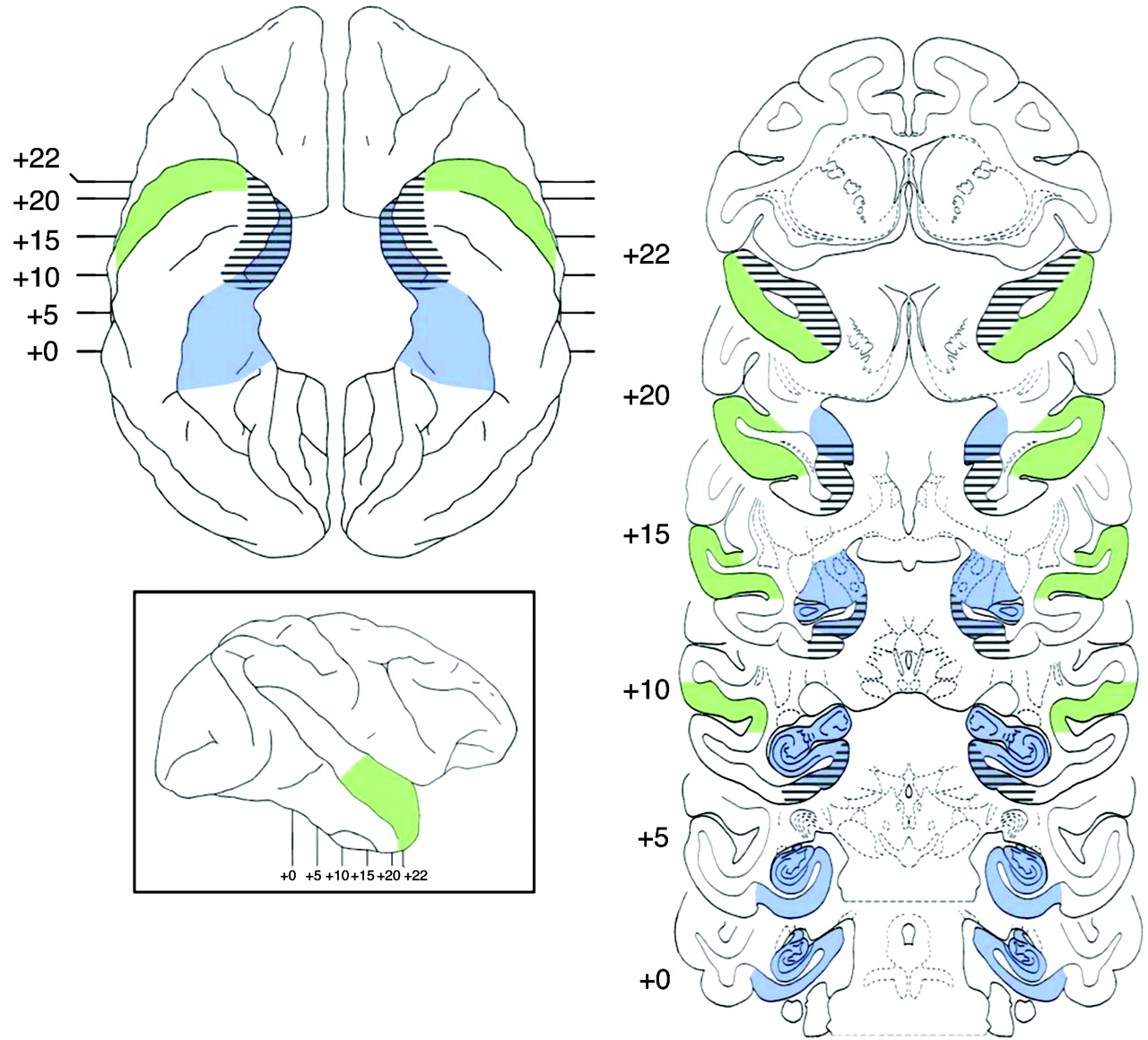
Engrams [en-gram] are a hypothetical means by which memory traces are stored as biophysical or biochemical changes in the brain (and other neural tissue) in response to external stimuli. They are also sometimes thought of as a neural network or fragment of memory, sometimes using a hologram analogy to describe its action in light of results showing that memory appears not to be localized in the brain. The existence of engrams is posited by some scientific theories to explain the persistence of memory and how memories are stored in the brain. The existence of neurologically defined engrams is not significantly disputed, though their exact mechanism and location has been a focus of persistent research for many decades.
The term was coined by the little-known but influential German evolutionary biologist Richard Semon. Overall, the mechanisms of memory are poorly understood. Such brain parts as the cerebellum, striatum, cerebral cortex, hippocampus, and amygdala are thought to play an important role in memory. For example, the hippocampus is believed to be involved in spatial and declarative learning, as well as consolidating short-term into long-term memory.
read more »
Posted in Health, Language, Science |
Leave a Comment »
September 9, 2011

Experiential avoidance (EA) has been broadly defined as attempts to avoid thoughts, feelings, memories, physical sensations, and other internal experiences—even when doing so creates harm in the long-run. The process of EA is thought to be maintained through negative reinforcement—that is, short-term relief of discomfort is achieved through avoidance, thereby increasing the likelihood that the behavior will persist.
Importantly, the current conceptualization of EA suggests that it is not negative thoughts, emotions, and sensations that are problematic, but how one responds to them that can cause difficulties. In particular, a habitual and persistent unwillingness to experience uncomfortable thoughts and feelings (and the associated avoidance and inhibition of these experiences) is thought to be linked to a wide range of problems.
read more »
Posted in Health, Language, Science |
Leave a Comment »
September 9, 2011


Freeter is a Japanese expression for people between the ages of 15 and 34 who lack full time employment or are unemployed, excluding housewives and students. The term originally included young people who deliberately chose not to become salary-men, even though jobs were available at the time. Freeters may also be described as underemployed or freelance workers.
These people do not start a career after high school or university, but instead earn money from low skilled and low paid jobs. The low income makes it difficult for freeters to start a family, and the lack of qualifications makes it difficult to start a career at a later point in life. Freeters have sometimes been glamorized as people pursuing their dreams and trying to live life to the fullest.
read more »
Posted in Language, Money, World |
1 Comment »
September 9, 2011
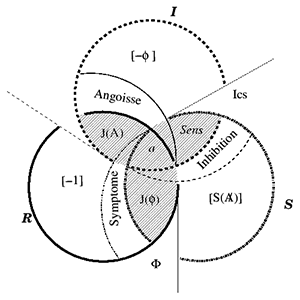
In Freudian psychology, the pleasure principle is the psychoanalytic concept describing people seeking pleasure and avoiding suffering (pain) in order to satisfy their biological and psychological needs. Furthermore, the counterpart concept, the ‘reality principle,’ describes people choosing to defer gratification of a desire when circumstantial reality disallows its immediate gratification. In infancy and early childhood, the Id (one of the three components of Freud’s model of the psyche) rules behavior by obeying only the pleasure principle. Maturity is learning to endure the pain of deferred gratification, when reality requires it; thus, the psychoanalitic Sigmund Freud proposes that ‘an ego thus educated has become ‘reasonable’; it no longer lets itself be governed by the pleasure principle, but obeys the reality principle, which also, at bottom, seeks to obtain pleasure, but pleasure which is assured through taking account of reality, even though it is pleasure postponed and diminished.’
Sigmund Freud discusses this idea, pleasure principle, and its limits in more details in his book, ‘Beyond the Pleasure Principle,’ published in 1921. In his discussion of the opposition between Eros, the life instinct, and the Thanatos, the death instinct, he examines the role of the repetition compulsion caused by the pleasure principle and of the sexual instincts.
Posted in Health, Language, Science |
Leave a Comment »
September 9, 2011

Laziness (also called indolence) is a disinclination to activity or exertion despite having the ability to do so. It is often used as a pejorative; related terms for a person seen to be lazy include couch potato, slacker, and in Australian slang, bludger.
Despite Sigmund Freud’s discussion of the pleasure principle, American psychologist Leonard Carmichael notes that ‘laziness is not a word that appears in the table of contents of most technical books on psychology… It is a guilty secret of modern psychology that more is understood about the motivation of thirsty rats and hungry pecking pigeons as they press levers or hit targets than is known about the way in which poets make themselves write poems or scientists force themselves into the laboratory when the good golfing days of spring arrive.’
read more »
Posted in Health, Language, Money |
Leave a Comment »
September 9, 2011
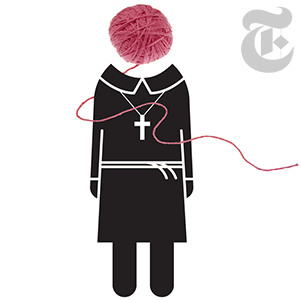
Acedia [uh-see-dee-uh] (Greek: ‘negligence’) describes a state of listlessness or torpor, of not caring or not being concerned with one’s position or condition in the world. It can lead to a state of being unable to perform one’s duties in life. Its spiritual overtones make it related to but distinct from depression. Acedia was originally noted as a problem among monks and other ascetics who maintained a solitary life. In the medieval Latin tradition of the seven deadly sins, acedia has generally been folded into the sin of sloth.
Moral theologians, intellectual historians and cultural critics have variously construed acedia as the ancient depiction of a variety of psychological states, behaviors or existential conditions: primarily laziness, ennui or boredom. The demon of acedia manifests itself in a range of psychological and somatic symptoms that is far broader and more complex than the familiar tradition in the West.
read more »
Posted in Health, Language, Philosophy |
Leave a Comment »
September 8, 2011
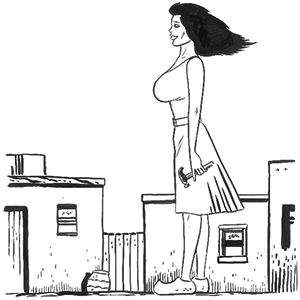
Luba is a comic book character created by Los Bros Hernandez, featured mainly in the ‘Love and Rockets’ series by these authors. She first appeared in ‘BEM,’ found in the ‘Love and Rockets’ collection ‘Music for Mechanics.’ Created by Gilbert Hernandez, Luba was the protagonist for his main contribution to Hernandez Brothers groundbreaking indie comic ‘Love and Rockets.’ Based largely in a small Central American village named Palomar, the Luba stories follow the progress of Luba and her ever increasing family through the years. Gilbert developed a rich cast of residents, who over the years developed an intricate series of relations with each other.
From the outset Luba is portrayed as a beautiful, fiery-tempered woman with enormous breasts and an eye for younger men, often depicted in random panels inexplicably carrying a hammer. This, in conjunction with Jaime Hernandez’ ‘Maggie and Hopey’ tales, differentiated ‘Love And Rockets’ from other comics in that the principal characters were all strong women who, whilst being independent, were also fallible. Through some twenty odd years Gilbert has taken the character of Luba through her infancy as the illegitimate child of a woman married into organized crime, through to life as a middle-aged migrant to America. The bulk of the tales dealt with what happened after Luba and her family moved from Palomar to California to escape the mafia and be near her half sisters Fritz and Petra. These stories comprise the books that make up the Luba Trilogy: ‘Luba in America,’ ‘The Book Of Ofelia’ and ‘The Three Daughters.’
Posted in Art, Language |
1 Comment »
September 8, 2011

Love and Rockets (often abbreviated L&R) is a black and white comic book series by Gilbert Hernandez and Jaime Hernandez, sometimes cited jointly as Los Bros Hernandez. Their brother Mario Hernandez is an occasional contributor. It was one of the first comics in the alternative comics revolution of the 1980s.
The Hernandez brothers self-published the first issue of ‘Love and Rockets’ in 1981, but since 1982 it has been published by Fantagraphics Books. The magazine temporarily ceased publication in 1996 after the release of issue #50, while Gilbert and Jaime went on to do separate series involving many of the same characters. However, in 2001 Los Bros revived the series as ‘Love and Rockets Volume 2’.
read more »
Posted in Art, Humor, Language |
Leave a Comment »





 The Daily Omnivore