September 29, 2011


Technophobia is the fear or dislike of advanced technology or complex devices, especially computers. The term is generally used in the sense of an irrational fear, but others contend fears are justified. It is the opposite of technophilia. First receiving widespread notice during the Industrial Revolution, technophobia has been observed to affect various societies and communities throughout the world. This has caused some groups to take stances against some modern technological developments in order to preserve their ideologies. In some of these cases, the new technologies conflict with established beliefs, such as the personal values of simplicity and modest lifestyles.
A number of examples of technophobic ideas can be found in multiple forms of art, ranging from literary works such as ‘Frankenstein’ to films like ‘Metropolis.’ Many of these works portray the darker side of technology as seen by the technophobic. As technologies become increasingly complex and difficult to understand, people are more likely to harbor anxieties relating to their use of modern technologies.
read more »
Posted in Health, Language, Technology |
Leave a Comment »
September 27, 2011

Stigler’s law of eponymy [uh-pon-uh-mee] is a process proposed by University of Chicago statistics professor Stephen Stigler in his 1980 publication of the same name. In its simplest and strongest form it says: ‘No scientific discovery is named after its original discoverer.’ Stigler named the sociologist Robert K. Merton as the discoverer of ‘Stigler’s law,’ consciously making ‘Stigler’s law’ exemplify Stigler’s law.
For example: Alzheimer’s disease, though named after Alois Alzheimer, had been previously described by at least half a dozen others before Alzheimer’s 1906 report which is often (wrongly) regarded as the first description of the disorder. Historical acclaim for discoveries is often allotted to persons of notoriety who bring attention to an idea that is not yet widely known, whether or not that person was its original inventor – theories may be named long after their discovery.
read more »
Posted in Humor, Language, Science |
1 Comment »
September 27, 2011

An eponym [ep-uh-nim] is a word, usually a person’s name, that is used to name something else. One who is referred to as eponymous is someone who gives his or her name to something, e.g., John Schnatter, the eponymous owner of Papa John’s Pizza. A common nonstandard usage is that something eponymous is named after a particular person, e.g., Julian’s eponymous restaurant. In contemporary English, the term self-titled is often used to mean eponymous in the case of a work with the same name as the person or persons who created it (e.g., the song ‘Black Sabbath,’ from the album ‘Black Sabbath,’ by the band Black Sabbath).
In intellectual property law an eponym can refer to a genericized trademark or brand name, a form of metonymy (a figure of speech used in which a thing or concept is not called by its own name, but by the name of something intimately associated with that thing or concept — e.g. ‘Kleenex’ for all tissues).
read more »
Posted in Language, Money, Politics |
Leave a Comment »
September 25, 2011
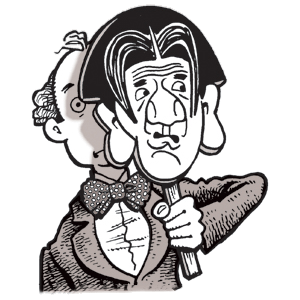
Fake Shemp is the term for someone who appears in a film under heavy make-up, filmed from the back, or perhaps only showing an arm or a foot.
In 1955, Shemp Howard of the ‘Three Stooges’ died suddenly of a heart attack. At the time, the Stooges still had four shorts left to deliver, according to the terms of their annual contract with Columbia Pictures.
read more »
Posted in Art, Language, Money |
1 Comment »
September 25, 2011

The Voyager Golden Records are phonograph records which were included aboard both Voyager spacecraft, which were launched in 1977. They contain sounds and images selected to portray the diversity of life and culture on Earth, and are intended for any intelligent extraterrestrial life form, or for future humans, who may find them. As the probes are extremely small compared to the vastness of interstellar space, the probability of a space faring civilization encountering them is very small, especially since the probes will eventually stop emitting any kind of electromagnetic radiation. If they are ever found by an alien species, it will most likely be far in the future as the nearest star on Voyager 1’s trajectory will only be reached in 40,000 years. Voyager 1 passed the orbit of Pluto in 1990, and left the solar system in 2004. In 2009, it was over 16.5 billion km from the Sun and traveling at a speed of 38,000 mph.
As Carl Sagan noted, ‘The spacecraft will be encountered and the record played only if there are advanced space-faring civilizations in interstellar space. But the launching of this ‘bottle’ into the cosmic ‘ocean’ says something very hopeful about life on this planet.’ Thus the record is best seen as a time capsule or a symbolic statement rather than a serious attempt to communicate with extraterrestrial life. The inscription, by President Jimmy Carter, reads: ‘This is a present from a small, distant world, a token of our sounds, our science, our images, our music, our thoughts and our feelings. We are attempting to survive our time so we may live into yours.’
read more »
Posted in Art, Language, Technology |
Leave a Comment »
September 24, 2011

Expletive infixation is a process by which an expletive or profanity is inserted into a word, usually for intensification. It is similar to tmesis, a word or phrase separated into two parts, e.g. ‘turn it off.’ The most commonly inserted English expletives are adjectival: either participles (fucking, mother-fucking, freaking, blooming, bleeding, damned) or adjectives (bloody). Although most speakers are not exposed to these formations until after childhood, they can form new examples readily once introduced to the process, and their judgments of which formations are acceptable are remarkably consistent. This suggests that the rules for the placement of the expletive are not arbitrary, but instead derive from fundamental aspects of English phonology.
A simple rule is that the insertion occurs at a syllable boundary, usually just before the primary stressed syllable. Thus, one hears abso-fuckin’-lutely rather than *ab-fuckin’-solutely. This rule is insufficient to describe examples such as un-fuckin’-believable, however, so modifications to this rule are proposed such as morpheme boundaries taking precedence over stress. Counterexamples to this exception do exist: unbe-fuckin’-lievable. A more fundamental theory due to John McCarthy is based on prosody, the rhythm, stress, and intonation of speech.
Posted in Humor, Language |
1 Comment »
September 20, 2011

Bless you, or God bless you, is a common English expression addressed to a person after they sneeze. In non-English-speaking cultures, words referencing good health or a long life are often used instead of ‘bless you,’ though some also use references to God. English speakers also respond to sneezing with the German word Gesundheit, which means ‘health.’
The origin of the custom and its original purpose is unknown. Several possible origins are commonly given. The practice of blessing someone who sneezes, dating as far back as at least 77 CE, however, is far older than most specific explanations can account for.
read more »
Posted in Health, Language, Philosophy |
1 Comment »
September 20, 2011

Superstition is a belief in a non-physical (i.e. supernatural) causality: that one event causes another without any physical process linking the two events. The word is often used pejoratively to refer to practices (e.g. Voodoo) other than the one prevailing in a given society (e.g. Christianity in western culture), although the prevailing religion may contain just as many supernatural beliefs.
It is also commonly applied to beliefs and practices surrounding luck, prophecy and spiritual beings, particularly the belief that future events can be foretold by specific unrelated prior events.
read more »
Posted in Language, Philosophy, Science |
Leave a Comment »
September 19, 2011

Trichomes [trik-ohm] (from the Greek word ‘trikhoma’ meaning ‘growth of hair’) are structures on plants that look like hairs. Glandular trichomes have chemicals in them. They break when the plant is touched. For example, trichomes on poison ivy leaves have a chemical that causes a rash. Cannabis trichomes produce a psychoactive resin. It is likely that in many cases, plant hairs interfere with the feeding of herbivores. Hairs on plants growing in areas subject to frost keep the frost away from the living surface cells. In windy locations, hairs break-up the flow of air across the plant surface, reducing evaporation. Dense coatings of hairs reflect solar radiation, protecting the more delicate tissues underneath in hot, dry, open habitats. And in locations where much of the available moisture comes from cloud drip, hairs appear to enhance this process.
They occur only on plants and certain protists (a type of single-celled organism). Certain algae, have their terminal cell shaped into an elongate ‘hair-like’ structure called a trichome. The same term is applied to such structures in some cyanobacteria (bacterium which rely on photosynthesis). Trichomes on plants are epidermal outgrowths of various kinds. The terms ’emergences,’ ‘thorns,’ ‘spines,’ and ‘prickles’ refer to outgrowths that involve more than the epidermis (the outermost layer of the plant). See for example, the ‘wait-a-minute tree,’ which has numerous hooked thorns with the shape and size of a cat’s claw, that tend to hook onto passers-by; the hooked person must stop (‘wait a minute’) to remove the thorns carefully to avoid injury.
Posted in Drugs, Language, Science |
Leave a Comment »
September 16, 2011

In photography, bokeh [boh-kay] is the blur, or the aesthetic quality of the blur, in out-of-focus areas of an image, or ‘the way the lens renders out-of-focus points of light.’ Differences in lens aberrations and aperture shape cause some lens designs to blur the image in a way that is pleasing to the eye, while others produce blurring that is unpleasant or distracting—’good’ and ‘bad’ bokeh, respectively. Bokeh occurs for parts of the scene that lie outside the depth of field. Photographers sometimes deliberately use a shallow focus technique to create images with prominent out-of-focus regions.
Bokeh is often most visible around small background highlights, such as specular reflections and light sources, which is why it is often associated with such areas. However, bokeh is not limited to highlights; blur occurs in all out-of-focus regions of the image.
read more »
Posted in Art, Language, Technology |
2 Comments »
September 11, 2011

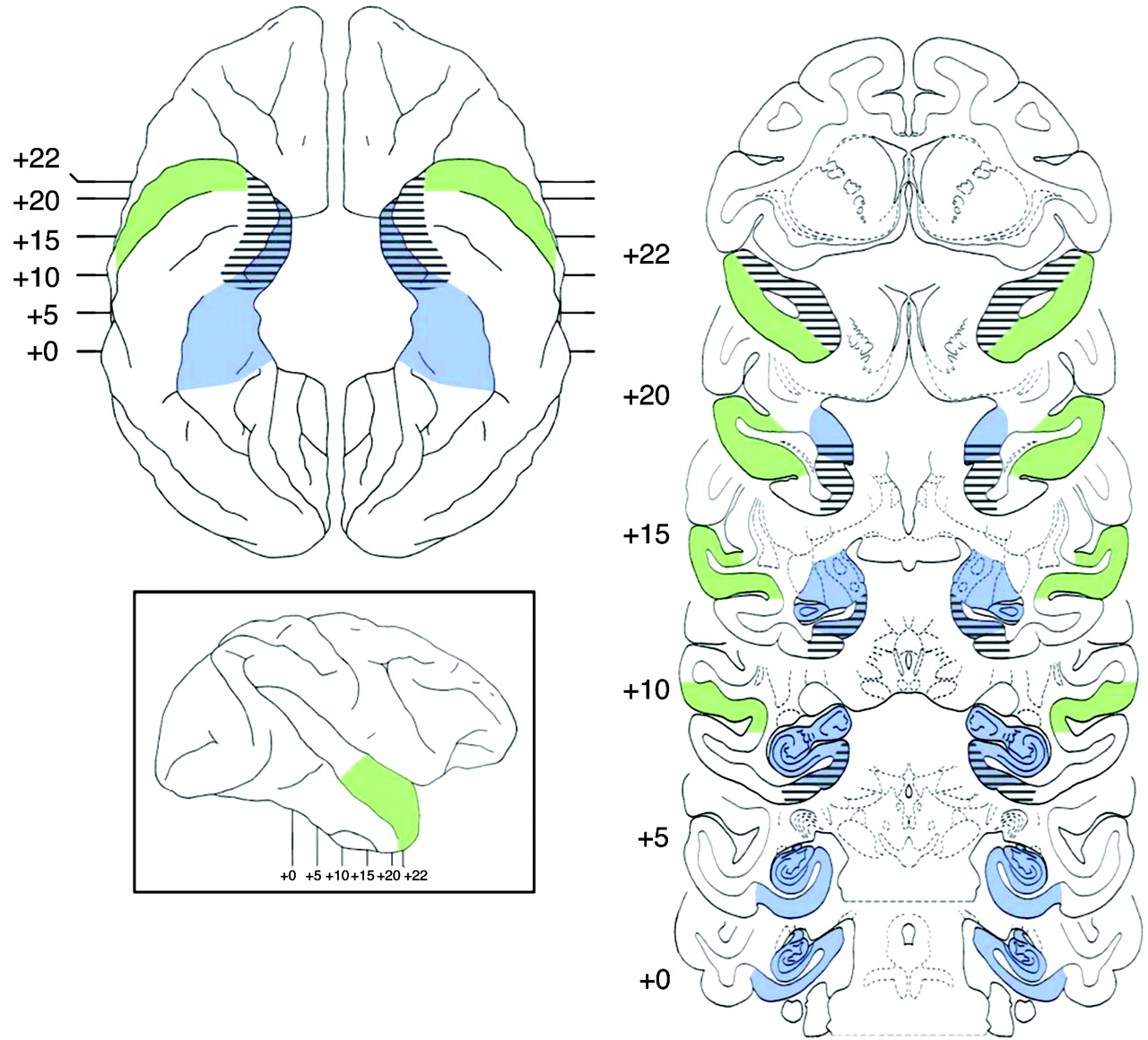
Engrams [en-gram] are a hypothetical means by which memory traces are stored as biophysical or biochemical changes in the brain (and other neural tissue) in response to external stimuli. They are also sometimes thought of as a neural network or fragment of memory, sometimes using a hologram analogy to describe its action in light of results showing that memory appears not to be localized in the brain. The existence of engrams is posited by some scientific theories to explain the persistence of memory and how memories are stored in the brain. The existence of neurologically defined engrams is not significantly disputed, though their exact mechanism and location has been a focus of persistent research for many decades.
The term was coined by the little-known but influential German evolutionary biologist Richard Semon. Overall, the mechanisms of memory are poorly understood. Such brain parts as the cerebellum, striatum, cerebral cortex, hippocampus, and amygdala are thought to play an important role in memory. For example, the hippocampus is believed to be involved in spatial and declarative learning, as well as consolidating short-term into long-term memory.
read more »
Posted in Health, Language, Science |
Leave a Comment »
September 9, 2011

Experiential avoidance (EA) has been broadly defined as attempts to avoid thoughts, feelings, memories, physical sensations, and other internal experiences—even when doing so creates harm in the long-run. The process of EA is thought to be maintained through negative reinforcement—that is, short-term relief of discomfort is achieved through avoidance, thereby increasing the likelihood that the behavior will persist.
Importantly, the current conceptualization of EA suggests that it is not negative thoughts, emotions, and sensations that are problematic, but how one responds to them that can cause difficulties. In particular, a habitual and persistent unwillingness to experience uncomfortable thoughts and feelings (and the associated avoidance and inhibition of these experiences) is thought to be linked to a wide range of problems.
read more »
Posted in Health, Language, Science |
Leave a Comment »