August 17, 2011
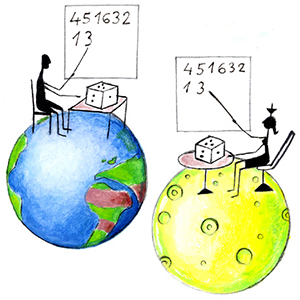
An ansible [an-si-bull] is a hypothetical machine capable of instantaneous or superluminal (faster-than-light) communication. They are used as science fiction plot devices and in thought experiments of theoretical physics. The word was coined by American author Ursula K. Le Guin in her 1966 novel, ‘Rocannon’s World.’
She derived the name from ‘answerable,’ as the device would allow its users to receive answers to their messages in a reasonable amount of time, even over interstellar distances. The name of the device has since been borrowed by authors such as Orson Scott Card and Vernor Vinge; similar devices are present in the works of numerous others, such as Frank Herbert. One ansible-like device which predates Le Guin’s is the ‘Dirac communicator’ in James Blish’s 1954 short story ‘Beep.’ The device received the sum of all transmitted messages in universal space-time, in a single pulse, so that demultiplexing yielded information about the past, present, and future.
read more »
Posted in Language, Science, Technology |
Leave a Comment »
August 16, 2011

Toasting, chatting, or deejaying is the act of talking or chanting, usually in a monotone melody, over a rhythm or beat by a deejay. The lyrics can be either improvised or pre-written. Toasting has been used in various African traditions, such as griots (storytellers) chanting over a drum beat, as well as in Jamaican music forms, such as dancehall, reggae, ska, dub, and lovers rock. The combination of singing and toasting is known as singjaying.
In the late 1950s deejay toasting was developed by Count Machuki. He conceived the idea from listening to disc jockeys on American radio stations. He would do American jive over the music while selecting and playing R&B music. Deejays like Count Machuki working for producers would play the latest hits on traveling sound systems at parties and add their toasts or vocals to the music. These toasts consisted of comedy, boastful commentaries, chants, half-sung rhymes, rhythmic chants, squeals, screams, and rhymed storytelling.
read more »
Posted in Art, Language, World |
1 Comment »
August 16, 2011
Riddim is the Jamaican Patois pronunciation of the English word ‘rhythm,’ but in dancehall/reggae parlance it refers to the instrumental accompaniment to a song. Thus, a dancehall song consists of the riddim plus the ‘voicing’ (vocal part) sung by the deejay (not to be confused with disc jockeys who select and play music, and are called selectors in Jamaica). The resulting song structure may be taken for granted by dancehall fans, but is in many ways unique. A given riddim, if popular, may be used in dozens—or even hundreds—of songs, not only in recordings, but also in live performances. Some ‘classic’ riddims, such as ‘Nanny Goat’ and ‘Real Rock’ are essentially the accompaniment tracks to the original 1960s reggae songs with those names.
Since the 1980s, however, riddims started to be originally composed by producers/beatmakers, who give the riddims original names and, typically, contract artists to ‘voice’ over them. Thus, for example, ‘Diwali’ is the name not of a song, but of a riddim created by Lenky Marsden, subsequently used as the basis for several songs, such as Sean Paul’s ‘Get Busy’ and Bounty Killer’s ‘Sufferer.’ Riddims are the primary musical building blocks of Jamaican popular songs. At any given time, ten to fifteen riddims are widely used in dancehall recordings, but only two or three of these are the now ‘ting’ (the latest riddims that everyone must record over if they want to get them played in the dance or on radio). In dancehall performing, those whose timing is right on top of the rhythm are said to be ‘ridding di riddim.’
read more »
Posted in Art, Language, World |
Leave a Comment »
August 16, 2011

In motorsports, homologation [huh-mol-uh-gey-shun] is the approval process a vehicle, race track or standardized part must go through to race in a given league or series. The regulations and rules that must be met are generally set by the series’ sanctioning body. The word is derived from the Greek homologeo—literally ‘same words’—for ‘agree.’ The names of the Ferrari 250 GTO, 288 GTO, Pontiac GTO, and Mitsubishi GTO, where ‘GTO’ stands for ‘Gran Turismo Omologato’ (‘Grand Touring, Homologated’), use the term explicitly.
In racing series that are ‘production-based’ (that is, the vehicles entered in the series are based on production vehicles for sale to the public), homologation requires not only compliance with a racing series’ technical guidelines (for example, engine displacement, chassis construction, suspension design and such) but it often includes minimum levels of sales to ensure that vehicles are not designed and produced solely for racing in that series. Since such vehicles are primarily intended for the race track, practical use on public roads is generally a secondary design consideration, so long as government regulations are met.
read more »
Posted in Games, Language, Money |
Leave a Comment »
August 15, 2011
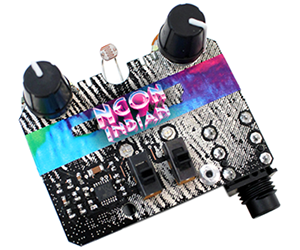

Chillwave, sometimes also referred to as Glo-Fi, is a genre of music where artists are often characterized by their heavy use of effects processing, synthesizers, looping, sampling, and heavily filtered vocals with simple melodic lines.
The genre combines the larger 2000s trends towards 80s retro music and (in indie music) use of ambient sound, with modern pop. The term is said to have been originated on the Hipster Runoff blog.
read more »
Posted in Art, Language, Technology |
Leave a Comment »
August 14, 2011

Sousveillance [soo-vay-lance] refers to the recording of an activity by a participant in the activity typically by way of small wearable or portable personal technologies. Sousveillance has also been described as ‘inverse surveillance’ because the term stems from the contrasting French words ‘sur,’ meaning ‘above,’ and ‘sous,’ meaning ‘below,’ i.e. ‘surveillance’ denotes the ‘eye-in-the-sky’ watching from above, whereas ‘sousveillance’ denotes bringing the camera or other means of observation down to human level, either physically (mounting cameras on people rather than on buildings), or hierarchically (ordinary people doing the watching, rather than higher authorities or architectures doing the watching).
While surveillance and sousveillance both generally refer to visual monitoring (i.e. ‘veiller’ being ‘to watch’), the terms also denote other forms of monitoring such as audio surveillance or sousveillance. In the audio sense (e.g. recording of phone conversations) sousveillance is referred to as ‘one party consent.’
read more »
Posted in Language, Politics, Technology |
Leave a Comment »
August 11, 2011

Pinko is a term for a person regarded as sympathetic to communism, though not necessarily a Communist Party member. The term has its origins in the notion that pink is a lighter shade of red, the color associated with communism. The word was coined by Time magazine in 1925 as a variant on the noun and adjective pink, which had been used along with ‘parlor pink’ since the beginning of the 20th century to refer to those of leftish sympathies, usually with an implication of ‘effeteness.’
In the 1920s, for example, a Wall Street Journal editorial described supporters of the progressive politician Robert La Follette as ‘visionaries, ne’er do wells, parlor pinks, reds, hyphenates [Americans with divided allegiance], soft handed agriculturalists and working men who have never seen a shovel.’
read more »
Posted in Language, Politics |
Leave a Comment »
August 8, 2011

Hipster is a slang term that first appeared in the 1940s, was revived in the 1990s, and continued to be used in the 2000s and 2010s, to describe young, recently settled urban middle class adults and older teenagers with musical interests mainly in indie rock. Other interests in media would include independent film, magazines such as Vice and Clash, and websites like Pitchfork Media. In some contexts, hipsters are also called scenesters.
‘Hipster’ has been used in sometimes contradictory ways, making it difficult to precisely define ‘hipster culture,’ which has been described as a ‘mutating, trans-Atlantic melting pot of styles, tastes and behavior.’ Hipsterism fetishizes the authentic elements of all of the ‘fringe movements of the postwar era—beat, hippie, punk, even grunge,’ and draws on the ‘cultural stores of every unmelted ethnicity,’ and ‘regurgitates it with a winking inauthenticity.’ Others, like Arsel and Thompson, argue that hipster signifies a cultural mythology, a crystallization of a mass-mediated stereotype generated to understand, categorize, and marketize indie consumer culture, rather than an objectified group of people.
read more »
Posted in Art, Language, Money |
Leave a Comment »
August 3, 2011

The Electric Kool-Aid Acid Test is a work of literary journalism by Tom Wolfe, published in 1968. Using techniques from the genre of hysterical realism and pioneering new journalism, the ‘nonfiction novel’ tells the story of Ken Kesey and his band of Merry Pranksters.
The book follows the Pranksters across the country driving in a psychedelic painted school bus dubbed ‘Furthur,’ reaching what they considered to be personal and collective revelations through the use of LSD and other psychedelic drugs. The book also describes the Acid Tests, early performances by The Grateful Dead, and Kesey’s exile to Mexico.
Posted in Art, Drugs, Language |
Leave a Comment »
July 29, 2011

New Wave is a subgenre of rock music that emerged in the mid to late 1970s alongside punk rock. The term at first generally was synonymous with punk rock before being considered a genre in its own right that incorporated aspects of electronic and experimental music, mod subculture, and disco, rock and 1960s pop music.
While it incorporated much of the original punk rock sound and ethos, such as an emphasis on short and punchy songs, it was characterized by greater complexity in both music and lyrics.
read more »
Posted in Art, Language, Money |
Leave a Comment »
July 26, 2011


Dub is a genre of music which grew out of 1960’s reggae. Music in this genre consists predominantly of instrumental remixes of existing recordings which have been manipulated and reshaped, usually by removing the vocals, and emphasizing the drum and bass elements (this stripped down track is sometimes referred to as a ‘riddim’). Other techniques include dynamically adding extensive echo, reverb, panoramic delay, and occasional dubbing of vocal or instrumental snippets from the original version or other works. Dub also sometimes features electronically generated sound effects, or the use of distinctive instruments such as the melodica by artists such as Augustus Pablo.
Dub was pioneered by Osbourne ‘King Tubby’ Ruddock, Lee ‘Scratch’ Perry, Errol Thompson and others in the late 1960s. Similar experiments with recordings at the mixing desk outside of the dancehall environment were also done by producers Clive Chin and Herman Chin Loy. These producers, especially Ruddock and Perry, looked upon the mixing desk as an instrument, manipulating tracks to come up with something new and different. Dub has influenced many genres of music, including punk, hip hop, disco, house, and trip hop, and has become a basis for jungle/drum’n’bass and dubstep music.
read more »
Posted in Art, Language, World |
Leave a Comment »
July 26, 2011

A dubplate is an acetate disc — usually 12, 10, or 7 inches in diameter — used in mastering studios for quality control and test recordings before proceeding with the final master, and subsequent pressing of the record to be mass-produced on vinyl. The ‘dub’ in dubplate is an allusion to the plate’s use in ‘dubbing’ or ‘doubling’ the original version of a track. In music, dubbing is copying of audio recordings from one medium to another.
The name dubplate also refers to an exclusive, ‘one-off’ disc recording pioneered by reggae sound systems but also used by drum and bass and other dance music artists, DJs and sound systems. These dubplates will often be unreleased recordings (which may or may not end up being made available to the general public). They are often used as a market research tool to assess the probable sales of a song once it’s released, as they are far cheaper to produce than a pressed vinyl record. However, because they have a limited life-span they can only be used about fifty times.
Posted in Art, Language, Technology |
Leave a Comment »


 The Daily Omnivore