July 24, 2011

Tickle torture is the use of tickling to abuse, dominate, humiliate or otherwise assault someone. The victim laughs even if he or she finds the experience unpleasant because the laughter is an innate reflex rather than social conditioning. The term is often used to describe the act of tickling when prolonged for a long period of time in a sensitive area of the body. The phrase is also sometimes used to describe mock ‘tickle torture,’ where the activity is consensual.
Chinese tickle torture is a term used in Western society to describe an ancient form of torture practiced by the Chinese, in particular the courts of the Han Dynasty. Chinese tickle torture was a punishment for nobility since it left no marks and a victim could recover relatively easily and quickly. Another example of tickle torture was used in ancient Rome, where a person’s feet were dipped in a salt solution, and a goat was brought in to lick the solution off. This type of tickle torture would only start as tickling, eventually becoming extremely painful.
read more »
Posted in Games, Language, War |
Leave a Comment »
July 24, 2011

Knismesis [niz-muh-sis] and gargalesis [gar-gal-uh-sis] are the scientific terms, coined in 1897 by psychologists G. Stanley Hall and Arthur Allin, used to describe the two types of tickling. Knismesis refers to light, feather-like type of tickling, which generally does not induce laughter and is often accompanied by an itching sensation. Knismesis can also be triggered by crawling insects or parasites, prompting scratching or rubbing at the ticklish spot, thereby removing the pest. It is possible that this function explains why knismesis produces a similar response in many different kinds of animals. In a notable example, it is possible to tickle the area just under the snout of a great white shark, putting it into a near-hypnotic trance.
Gargalesis refers to harder, laughter-inducing tickling, and involves the repeated application of high pressure to sensitive areas. This ‘heavy tickle’ is often associated with play and laughter. The gargalesis type of tickle works on humans and primates, and possibly on other species. Because the nerves involved in transmitting ‘light’ touch and itch differ from those nerves that transmit ‘heavy’ touch, pressure and vibration, it is possible that the difference in sensations produced by the two types of tickle are due to the relative proportion of itch sensation versus touch sensation. While it is possible to trigger a knismesis response in oneself, it is usually impossible to produce gargalesthesia, the gargalesis tickle response, in oneself.
Posted in Health, Language, Science |
Leave a Comment »
July 24, 2011

The Selfish Gene is a book on evolution by Richard Dawkins, published in 1976. It builds upon the principal theory of George C. Williams’s first book ‘Adaptation and Natural Selection.’ Dawkins coined the term ‘selfish gene’ as a way of expressing the gene-centred view of evolution as opposed to the views focused on the organism and the group. From the gene-centred view follows that the more two individuals are genetically related, the more sense (at the level of the genes) it makes for them to behave selflessly with each other. Therefore the concept is especially good at explaining many forms of altruism, regardless of a common misuse of the term along the lines of a selfishness gene.
An organism is expected to evolve to maximize its inclusive fitness — the number of copies of its genes passed on globally (rather than by a particular individual). As a result, populations will tend towards an evolutionarily stable strategy. The book also coins the term ‘meme’ for a unit of human cultural evolution analogous to the gene, suggesting that such ‘selfish’ replication may also model human culture, in a different sense. Memetics has become the subject of many studies since the publication of the book.
read more »
Posted in Language, Science, Sex |
Leave a Comment »
July 23, 2011
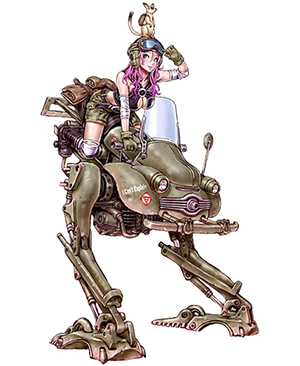
Dieselpunk is a sub-genre of the pop surrealist art movement, as well as a budding subculture, that combines the aesthetics of the interbellum period through the early 1950s with postmodern technology and sensibilities. First coined in 2001 as a marketing term by game designer Lewis Pollak to describe his role-playing game ‘Children of the Sun,’ dieselpunk has grown to describe a distinct style.
The name ‘dieselpunk’ is a derivative of the 1980s science fiction genre cyberpunk, and is used to represent the time period – or ‘era’- when diesel-based locomotion was the main technological focus of Western culture. The ‘-punk’ suffix attached to the name is representative of the counterculture nature of the genre with regards to its opposition of contemporary aesthetics. The term also refers to the tongue-in-cheek name given to a similar cyberpunk derivative, ‘steampunk,’ which focuses on science fiction set within the Victorian era.
read more »
Posted in Art, Language, Technology |
2 Comments »
July 22, 2011

Steampunk is a sub-genre of science fiction, alternate history, and speculative fiction that came into prominence during the 1980s and early 1990s. It involves a setting where steam power is still widely used—usually the Victorian era Britain—that incorporates elements of either science fiction or fantasy.
Works of steampunk often feature anachronistic technology or futuristic innovations as Victorians may have envisioned them; based on a Victorian perspective on fashion, culture, architectural style, art, etc. This technology may include such fictional machines as those found in the works of H. G. Wells and Jules Verne.
read more »
Posted in Art, Language, Technology |
Leave a Comment »
July 22, 2011

The ‘Demon-Haunted World: Science as a Candle in the Dark’ is a book by astrophysicist Carl Sagan, which was first published in 1995. The book is intended to explain the scientific method to laypeople, and to encourage people to learn critical or skeptical thinking. It explains methods to help distinguish between ideas that are considered valid science, and ideas that can be considered pseudoscience. Sagan states that when new ideas are offered for consideration, they should be tested by means of skeptical thinking, and should stand up to rigorous questioning.
In the book, Sagan states that if a new idea continues in existence after an examination of the propositions has revealed it to be false, it should then be acknowledged as a supposition. Skeptical thinking essentially is a means to construct, understand, reason, and recognize valid and invalid arguments. Wherever possible, there must be independent validation of the concepts whose truth should be proved. He states that reason and logic would succeed once the truth is known. Conclusions emerge from premises, and the acceptability of the premises should not be discounted or accepted because of bias.
Posted in Language, Philosophy, Science |
Leave a Comment »
July 22, 2011

Corpsing is a British theatrical slang term used to describe when an actor breaks character during a scene by laughing or by causing another cast member to laugh. The term originated when a living actor played a corpse on stage; there was sometimes a temptation to try to make that actor laugh. Corpsing is not a term exclusive to the theatre, but is also used to describe actions designed to cause hysteria in live television or radio.
The ‘Saturday Night Live’ sketches featuring ‘Debbie Downer’ (Rachel Dratch) are also notable for corpsing, as well as the famous ‘Stefon’ (Bill Hader), who only went on one occasion without corpsing throughout his entire five-year stint. Jimmy Fallon is also known for breaking character by laughing.
Posted in Art, Humor, Language |
1 Comment »
July 22, 2011

Shel Silverstein (1930 – 1999), was an American poet, musician, cartoonist, and author of children’s books. He styled himself as Uncle Shelby in his children’s books.
Silverstein grew up in Chicago: ‘When I was a kid—12 to 14, around there—I would much rather have been a good baseball player or a hit with the girls, but I couldn’t play ball. I couldn’t dance. Luckily, the girls didn’t want me. Not much I could do about that. So I started to draw and to write. I was also lucky that I didn’t have anybody to copy, be impressed by. I had developed my own style; I was creating before I knew there was a Thurber, a Benchley, a Price and a Steinberg. I never saw their work till I was around 30. By the time I got to where I was attracting girls, I was already into work, and it was more important to me. Not that I wouldn’t rather make love, but the work has become a habit.’
read more »
Posted in Art, Humor, Language |
Leave a Comment »
July 19, 2011

A Sound clash is a musical competition where crew members from opposing reggae sound systems pit their skills against each other. Sound clashes take place in a variety of venues, both indoors and outdoors. Primarily featuring reggae (or dancehall) music, the object is to beat or ‘kill’ their competitors. In the early days of sound clashes, in Jamaican dancehall culture, sound systems would bring their own sound equipment–heavy bass sounds (that can be heard miles away) are especially important. A strong selection of contemporary, popular dubs is necessary also; sometimes sound systems paid artists for the exclusive use of dubs. Usually the Sound systems in the sound clash will play for a set time, perhaps 30 minutes before switching. This time interval gets shorter and shorter, so when playing returns to one sound again, they may only play a shorter time. Near the end of the clash they go song on song or ‘Dub fi dub.’
In Jamaica, sound clashes with their ‘violently martial ethos’ date back at least to the 1950s, when sound systems like Tom the Great Sebastian and Duke Reid’s the Trojan clashed in the old Back-O-Wall neighborhood of Kingston (now Tivoli Gardens). Sometimes these clashes were violent, with one system destroying the other system’s equipment. Sound clashes are an integral part of black culture in London as portrayed in the cult movie Babylon, at the same time that real-life sound systems such as Jah Shaka and Ital Lion were competing for supremacy in Deptford which is in The London Borough of Lewisham a traditional West-Indian area of South London.
Posted in Art, Games, Language |
Leave a Comment »
July 19, 2011


A sound system is a group of DJs and engineers contributing and working together as one, playing and producing music. The sound system concept originated in the 1950s in Kingston, Jamaica. DJs would load up a truck with a generator, turntables, and speakers to set up street parties.
The sound system scene is generally regarded as an important part of Jamaican cultural history and as responsible for the rise of modern Jamaican musical styles such as ska, rocksteady, reggae, and dub.
read more »
Posted in Art, Language |
Leave a Comment »
July 18, 2011
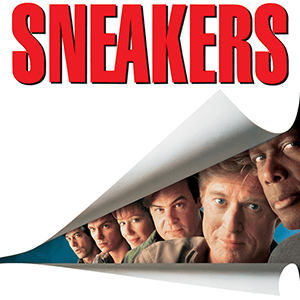
A tiger team is a group of experts assigned to investigate and/or solve technical or systemic problems. The term may have originated in aerospace design but is also used in other settings, including information technology and emergency management. It has been described as ‘a team of undomesticated and uninhibited technical specialists, selected for their experience, energy, and imagination, and assigned to track down relentlessly every possible source of failure in a spacecraft subsystem.’ In security work, a tiger team is a specialized group that tests an organization’s ability to protect its assets by attempting to circumvent, defeat, or otherwise thwart that organization’s internal and external security. The term originated within the military to describe a team whose purpose is to penetrate security of ‘friendly’ installations to test security measures. It now more generally refers to any team that attacks a problem aggressively.
Many tiger teams are informally constituted through managerial edicts. One of these was set up in NASA circa 1966 to solve the ‘Apollo Navigation Problem. Technology at the time was unable to navigate Apollo at the level of precision mandated by the mission planners. Tests using radio tracking data were revealing errors of 2000 meters instead of the 200 that the mission required to safely land Apollo when descending from its lunar orbit. Five tiger teams were set up to find and correct the problem, one at each NASA center, from CalTech JPL in the west to Goddard SFC in the east. The Russians via Luna 10 were also well aware of this problem. The JPL found a solution in 1968; the problem was caused by the unexpectedly large local gravity anomalies on the moon arising from large ringed maria, mountain ranges and craters on the moon. This also led to the construction of the first detailed gravimetric map of a body other than the earth and the discovery of the lunar mass concentrations.
Posted in Language, Politics, Technology |
Leave a Comment »
July 18, 2011
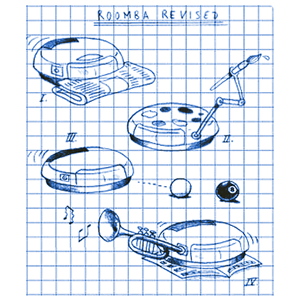
Hack value is the notion among hackers that something is worth doing or is interesting. This is something that hackers often feel intuitively about a problem or solution; the feeling approaches the spiritual for some. An aspect of hack value is performing feats for the sake of showing that they can be done, even if others think it is difficult. Using things in a unique way outside their intended purpose is often perceived as having hack value. Examples are using a matrix printer to produce musical notes, using a flatbed scanner to take ultra-high-resolution photographs or using an optical mouse as barcode reader.
A solution or feat implies hack value if it is done in a way that has finesse or ingenuity. So creativity is an important part of the meaning. For example, picking a difficult lock has hack value; smashing a lock does not. By way of another example, proving Fermat’s last theorem by linking together most of modern mathematics has hack value; solving the four color map problem by exhaustively trying all possibilities does not (both of these have now in fact been proven).
Posted in Language, Technology |
1 Comment »



 The Daily Omnivore