July 18, 2011

A kludge [klooj] is a workaround, a quick-and-dirty solution, a clumsy or inelegant, yet effective, solution to a problem, typically using parts that are cobbled together. The present word has alternate spellings (kludge and kluge) and pronunciations (rhyming with fudge and stooge respectively), and several proposed etymologies.
Kluge was common Navy slang in the WWII era for any piece of electronics that worked well on shore but consistently failed at sea. In aerospace design a kluge was a temporary design using separate commonly available components that were not flight worthy to proof the design.
read more »
Posted in Humor, Language, Technology |
Leave a Comment »
July 15, 2011

Grey goo is a hypothetical end-of-the-world scenario involving nanotechnology in which out-of-control self-replicating robots consume all matter on Earth while building more of themselves, a scenario known as ecophagy (‘eating the environment’).
Self-replicating machines of the macroscopic variety were originally described by mathematician John von Neumann, and are sometimes referred to as von Neumann machines.
read more »
Posted in Language, Technology |
Leave a Comment »
July 14, 2011

Cyberdelic refers to immersion in cyberspace as a psychedelic experience; the fusion of cyberculture and the psychedelic subculture; psychedelic art created by calculating fractal objects; and trance music parties. Timothy Leary, an advocate of psychedelic drug use who became a cult figure of the hippies in the 1960s, reemerged in the 1980s as a spokesperson of the cyberdelic counterculture, whose adherents called themselves ‘cyberpunks,’ and became one of the most philosophical promoters of personal computers, the Internet, and immersive virtual reality. Leary proclaimed that the ‘PC is the LSD of the 1990s’ and admonished bohemians to ‘turn on, boot up, jack in.’
In contrast to the hippies of the 60s who were decidedly antiscience and antitechnology, the cyberpunks of the 80s and 90s ecstatically embraced technology and the hacker ethic. They believed that high technology (and smart drugs) could help human beings overcome all limits, that it could liberate them from authority and even enable them to transcend space, time, and body. They often expressed their ethos and aesthetics through cyberart and reality hacking.
Posted in Drugs, Language, Technology |
1 Comment »
July 14, 2011

Ray Kurzweil (b. 1948) is an American author, inventor and futurist. He is involved in fields such as optical character recognition (OCR), text-to-speech synthesis, speech recognition technology, and electronic keyboard instruments. He is the author of several books on health, artificial intelligence (AI), transhumanism, the technological singularity, and futurism.
Ray Kurzweil grew up in Queens, NY. He was born to secular Jewish parents who had escaped Austria just before the onset of World War II, and he was exposed via Unitarian Universalism to a diversity of religious faiths during his upbringing. His father was a musician and composer and his mother was a visual artist. His uncle, an engineer at Bell Labs, taught young Ray the basics of computer science.
read more »
Posted in Language, Money, Technology |
1 Comment »
July 14, 2011

American author, inventor and futurist Raymond Kurzweil has become well known for predicting the future of artificial intelligence and the human race. His first book, ‘The Age of Intelligent Machines,’ published in 1990, put forth his theories on the results of the increasing use of technology and notably foresaw the explosive growth in the internet, among other predictions.
Later works, 1999’s ‘The Age of Spiritual Machines’ and 2005’s ‘The Singularity is Near’ outlined other theories including the rise of clouds of nano-robots (nanobots) called foglets and the development of Human Body 2.0 and 3.0, whereby nanotechnology is incorporated into many internal organs.
read more »
Posted in Language, Technology |
Leave a Comment »
July 14, 2011
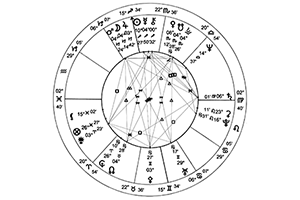

Pseudoscience refers to concepts that are presented as scientific, but which do not adhere to a valid scientific method, or cannot be reliably tested. Pseudoscience is often characterized by the use of vague, exaggerated or unprovable claims, an over-reliance on confirmation rather than rigorous attempts at refutation, a lack of openness to evaluation by other experts, and a general absence of systematic processes to rationally develop theories. So-called ‘Pop science’ blurs the divide between science and pseudoscience among the general public, and may also involve science fiction (it is disseminated to, and can also easily emanate from, persons not accountable to scientific methodology and expert peer review).
Pseudoscientific beliefs are widespread, even among public school science teachers and newspaper reporters. The demarcation problem between science and pseudoscience has ethical political implications (as well as philosophical and scientific). Differentiating science from pseudoscience has practical implications in the case of health care, expert testimony, environmental policies, and science education. Distinguishing scientific facts and theories from pseudoscientific beliefs such as those found in astrology, medical quackery, and occult beliefs combined with scientific concepts, is part of science education and scientific literacy.
read more »
Posted in Language, Science |
Leave a Comment »
July 14, 2011

MacGyver is an American action-adventure television series, where the titular character employs his resourcefulness and knowledge of chemistry, physics, technology, and survival skills to resolve what are often life-or-death crises. He creates inventions from simple items to solve these problems. These inventions became synonymous with the character and were called MacGyverisms by fans. MacGyver was unlike secret agents in other television series and films because, instead of relying on high-tech weapons and tools, he carried only a Swiss Army knife and duct tape but never a gun. A boyhood friend of his was accidentally killed by a revolver, and MacGyver has avoided them since.
The show’s writers based MacGyver’s inventions on items they found on location, concepts from scientific advisers John Koivula and Jim Green, and real events. The show also offered a monetary prize to people who sent good ideas for the show. A young fan suggested that MacGyver could patch up a vehicle’s radiator by cracking an egg into it, and the episode ‘Bushmaster’ was constructed around this trick.
Posted in Humor, Language, Technology |
Leave a Comment »
July 13, 2011


A form constant is one of several geometric patterns which are recurringly observed during hallucinations and altered states of consciousness. In 1926, psychologist Heinrich Klüver systematically studied the effects of mescaline on the subjective experiences of its users. In addition to producing hallucinations characterized by bright, ‘highly saturated’ colors and vivid imagery, Klüver noticed that mescaline produced recurring geometric patterns in different users. He called these patterns ‘form constants’ and categorized four types: lattices (including honeycombs, checkerboards, and triangles), cobwebs, tunnels, and spirals.
Klüver’s form constants have appeared in other drug-induced and naturally-occurring hallucinations, suggesting a similar physiological process underlying hallucinations with different triggers. Klüver’s form constants also appear in near-death experiences and sensory experiences of those with synesthesia. Other triggers include psychological stress, threshold consciousness(hypnagogia), insulin hypoglycemia, the delirium of fever, epilepsy, psychotic episodes, advanced syphilis, sensory deprivation, photostimulation, electrical stimulation, crystal gazing, migraine headaches, dizziness and a variety of drug-induced intoxications. These shapes may appear on their own or with eyes shut in the form of phosphenes, especially when exerting pressure against the closed eyelid.
Posted in Drugs, Health, Language |
Leave a Comment »
July 13, 2011

The Tetris effect occurs when people devote sufficient time and attention to an activity that it begins to overshadow their thoughts, mental images, and dreams. People who play the video game Tetris for a prolonged amount of time may then find themselves thinking about ways different shapes in the real world can fit together, such as the boxes on a supermarket shelf or the buildings on a street. In this sense, the Tetris effect is a form of habit. They might also dream about falling Tetris shapes when drifting off to sleep or see images of falling Tetris shapes at the edges of their visual fields or when they close their eyes. In this sense, the Tetris effect is a form of hallucination or hypnagogic imagery.
The Tetris effect can occur with other video games, with any prolonged visual task (such as classifying cells on microscope slides, weeding, picking or sorting fruit, flipping burgers, driving long distances, or playing board games such as chess or go), and in other sensory modalities. For example, there is the tendency for a catchy tune to play out unbidden in one’s mind (an earworm). In kinesthesis, a person newly on land after spending long periods at sea may move with an unbidden rocking motion, having become accustomed to the ship making such movements (known as sea legs or mal de debarquement). Computer programmers and developers sometimes have similar experiences, and report dreaming about code when they sleep at night.
read more »
Posted in Games, Language, Science |
1 Comment »
July 13, 2011

Earworm, a loan translation of the German ‘ohrwurm,’ is a portion of a song or other music that repeats compulsively within one’s mind, put colloquially as ‘music being stuck in one’s head.’ Use of the English translation was popularized by James Kellaris, a marketing researcher at the University of Cincinnati, and American cognitive psychologist Daniel Levitin. Kellaris’ studies demonstrated that different people have varying susceptibilities to earworms, but that almost everybody has been afflicted with one at some time or another. The psychoanalyst Theodor Reik used the term ‘haunting melody’ to describe the psychodynamic features of the phenomenon. The term Musical Imagery Repetition (MIR) was suggested by neuroscientist and pianist Sean Bennett in 2003 in a scientifically researched profile of the phenomenon. Another scientific term for the phenomenon, ‘involuntary musical imagery,’ or INMI, was suggested by the neurologist Oliver Sacks in 2007.
People with obsessive-compulsive disorder (OCD) are more likely to report being troubled by ear worms – in some cases, medications for OCD can minimize the effects. The best way to eliminate an unwanted earworm is to simply play a different song. Supposedly, some songs are better for this purpose than others, such as the theme song to ‘Gilligan’s Island’ or ‘The Lion Sleeps Tonight.’ Arthur C. Clarke’s 1956 short story ‘The Ultimate Melody’ offers up a science fictional explanation for the phenomenon. The story is about a scientist who develops the ultimate melody—one that so compels the brain that its listener becomes completely and forever enraptured by it. He succeeds, and is found in a catatonia from which he never awakens.
Posted in Art, Language, Science |
Leave a Comment »
July 13, 2011

A card sharp (or card shark) is a person who uses skill and deception to win at poker or other card games. The label is not always intended as pejorative, and is sometimes used to refer to practitioners of card tricks for entertainment purposes. The term has also taken on the meaning of ‘expert card gambler who takes advantage of less-skilled players,’ without implication of actual cheating at cards, in much the same way that ‘pool shark’ or ‘pool hustler’ can (especially when used by non-players) be intended to mean ‘skilled player’ rather than ‘swindler.’ A card sharp/shark may be a ’rounder’ who travels, seeking out high-stakes games in which to gamble.
Card sharps who cheat or perform tricks use methods to keep control of the order of the cards or sometimes to control one specific card. Most, if not all, of these methods employ sleight of hand. Essential skills are false shuffles and false cuts that appear to mix the deck but actually leave the cards in the same order. More advanced techniques include culling (manipulating desired cards to the top or bottom of the deck), and stacking (putting desired cards in position to be dealt). Dealing the cards can also be manipulated, by dealing either the bottom card from the deck or the second one from the top instead of the top card. These are called Bottom dealing and Second dealing, respectively. Dealing may also be done from the middle of the deck, known as the middle deal or center deal, but this is not as common.
Posted in Games, Humor, Language |
Leave a Comment »
July 13, 2011

Hustling is the deceptive act of disguising one’s skill in a sport or game with the intent of luring someone of lesser skill into gambling (or gambling for higher than current stakes) with the hustler, as a form of confidence trick. It is most commonly associated with pool, but also can be performed with regard to other sports and gambling activities. Hustlers may also engage in ‘sharking’ – distracting, disheartening, enraging or even threatening their opponents, to throw them off. Hustlers are thus often called ‘pool sharks.’
Professional and semi-pro hustlers sometimes work with a ‘stakehorse’ — a person who provides the money for the hustler to bet with (and who may assist in the hustling) — in exchange for a substantial portion of all winnings. Another form of hustling (often engaged in by the same hustlers who use the skill-disguising technique) is challenging ‘marks’ (swindle targets) to bet on trick shots that seem near-impossible but at which the hustler is exceptionally skilled.
read more »
Posted in Games, Language, Money |
Leave a Comment »



 The Daily Omnivore