June 23, 2011

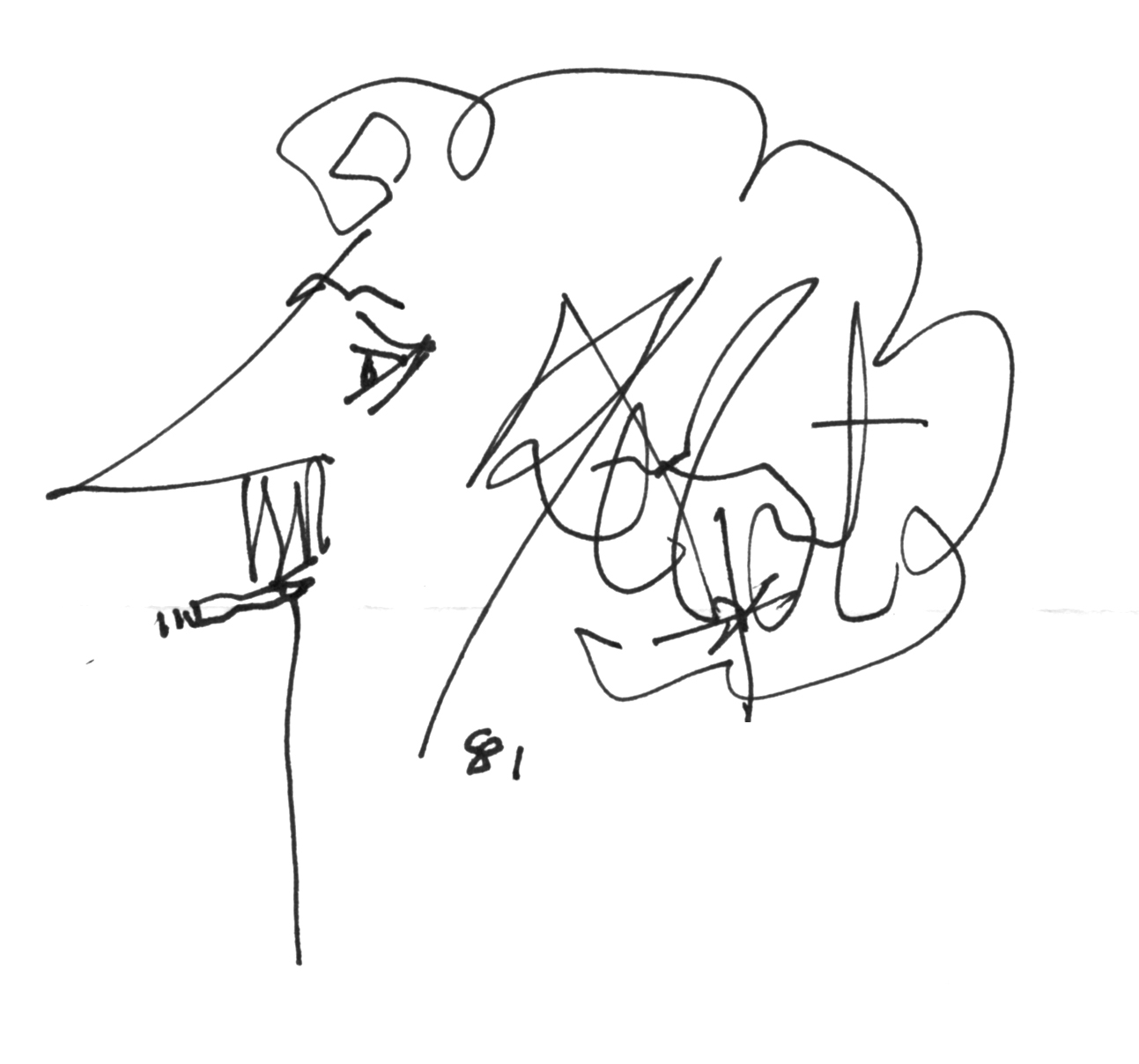
The dolly zoom effect is an unsettling in-camera special effect that appears to undermine normal visual perception in film. In its classic form, the camera is pulled away from a subject while the lens zooms in, or vice-versa.
Thus, during the zoom, there is a continuous perspective distortion, the most directly noticeable feature being that the background appears to change size relative to the subject.
read more »
Posted in Art, Language, Technology |
Leave a Comment »
June 21, 2011

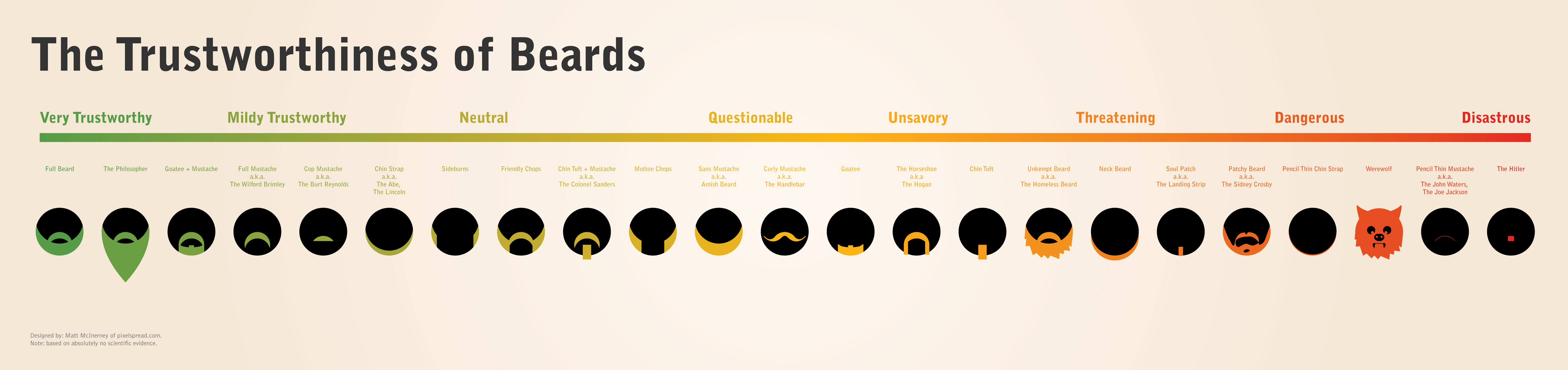
‘Barba non facit philosophum‘ is a Latin phrase meaning ‘A beard does not constitute a philosopher.’ According to the Latin author Aulus Gellius, who relates he was present at the episode, a man in a cloak, ‘with long hair and a beard that reached almost to his waist’ once came to the Athenian aristocrat, Herodes Atticus, who was renown for his ‘charm and his Grecian eloquence,’ and asked that money be given him for bread. When Herodes asked him who he was, the man, seemingly taking offense, replied that he was a philosopher, adding that he wondered why Herodes thought it necessary to ask what was obvious
‘I see,’ said Herodes, ‘a beard and a cloak; the philosopher I do not yet see.’ Some of Herodes’ companions informed him that the fellow was a actually a beggar ‘of worthless character,’ whose behavior was often abusive. Hearing which, Herodes said: ‘Let us give him some money, then, whatever his character may be, not because he is a man, but because we are men,’ and ordered that enough money be given to the man so that he could ‘buy bread for thirty days.’ The Athenian’s phrase, shortened to ‘A beard does not constitute a philosopher,’ has taken on a meaning similar to the proverb: ‘Clothes do not make the man,’ encountered in many cultures.
Posted in Humor, Language, Philosophy |
1 Comment »
June 21, 2011
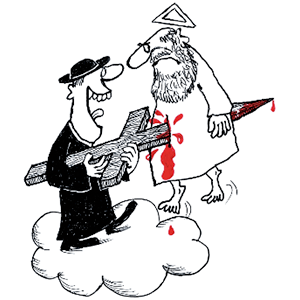
Jean Meslier (1664 – 1729) was a French Catholic priest who was discovered, upon his death, to have written a book-length philosophical essay promoting atheism. Described by the author as his ‘testament’ to his parishioners, the text denounces all religion.
He began learning Latin from a neighborhood priest in 1678 and eventually joined the seminary; he later claimed this was done to please his parents. At the end of his studies, he took Holy Orders and became priest in Champagne. One public disagreement with a local nobleman aside, Meslier was to all appearances generally unremarkable, and he performed his office without complaint or problem for 40 years. He lived like a pauper, and every penny left over was donated to the poor.
read more »
Posted in Language, Philosophy |
Leave a Comment »
June 21, 2011
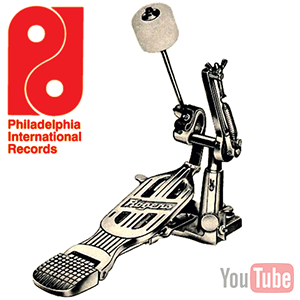
Four-on-the-floor is a rhythm pattern used in disco and electronic dance music. It is a steady, uniformly accented beat in 4/4 time in which the bass drum is hit on every beat (1, 2, 3, 4) in common time. This was popularized in the disco music of the 1970s and the term four-on-the-floor was widely used in that era: it originated with the pedal-operated drum-kit bass-drum.
Many styles of electronic dance music, particularly those that derived from house and techno, use this beat as an important part of the rhythmic structure. Sometimes the term is used to refer to a 4/4 uniform drumming pattern for any drum.
read more »
Posted in Art, Language |
Leave a Comment »
June 21, 2011

Lume is a short term for the luminous phosphorescent glowing solution applied on watch dials. There are some people who ‘relume’ watches, or replace faded lume. Formerly lume consisted mostly of radium; however, radium is radioactive and has been mostly replaced on new watches by less bright, but less toxic compounds.
Common pigments used in lume include the phosphorescent pigments zinc sulfide and strontium aluminate. Use of zinc sulfide for safety related products dates back to the 1930s. However, the development of strontium oxide aluminate, with a luminance approximately 10 times greater than zinc sulfide, has relegated most zinc sulfide based products to the novelty category. Strontium oxide aluminate based pigments are now used in exit signs, pathway marking, and other safety related signage.
Posted in Language, Technology |
Leave a Comment »
June 17, 2011
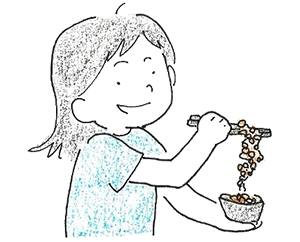
An acquired taste often refers to an appreciation for a food or beverage that is unlikely to be enjoyed by a person who has not had substantial exposure to it, usually because of some unfamiliar aspect of the food or beverage, including a strong or strange odor. For example: stinky tofu or cheese, durian fruit, kimchi, haggis, hákarl (fermented shark), sulfur infused black salt, asafoetida (a spice also called devil’s ding). Unfamiliar tastes (such as bitter teas or natto, fermented soybeans) and appearance can also be off-putting to many. Acquired taste may also refer to aesthetic tastes, such as taste in music or other forms of art.
Intentionally changing one’s preferences can be hard to accomplish. It usually requires a deliberate effort, such as acting as if one likes something in order to have the responses and feelings that will produce the desired taste. The risk in this acting is that it can lead to all sorts of excesses such as self-deception and pretentiousness. The challenge becomes one of distinguishing authentic or legitimate acquired tastes resulting from deeply considered preference changes from inauthentic ones motivated by, for example, status or conformity.
Posted in Art, Food, Language |
Leave a Comment »
June 17, 2011

Chuck Palahniuk [pall-uh-nik] (b. 1962) is an American transgressional fiction novelist, a genre of literature that focuses on characters who feel confined by the norms and expectations of society and who break free of those confines in unusual and/or illicit ways. Because they are rebelling against the basic norms of society, protagonists of transgressional fiction may seem mentally ill, anti-social, or nihilistic. The genre deals extensively with taboo subject matters such as drugs, sex, violence, incest, pedophilia, and crime.
He is best known for the award-winning novel ‘Fight Club,’ which was later made into a film directed by David Fincher.
read more »
Posted in Art, Language |
Leave a Comment »
June 17, 2011
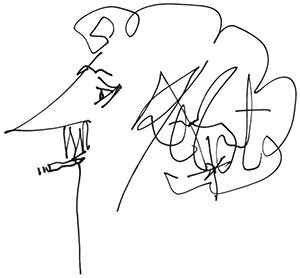
Kurt Vonnegut (1922 – 2007) was an American writer of the 20th century. He wrote such works as ‘Mother Night’ (1961), ‘Slaughterhouse-Five’ (1969), and ‘Breakfast of Champions’ (1973) blending satire, gallows humor, and science fiction. He was known for his humanist beliefs and was honorary president of the American Humanist Association. Vonnegut’s experience in WWII as a soldier and prisoner of war had a profound influence on his later work.
He was captured during the Battle of the Bulge. ‘The other American divisions on our flanks managed to pull out: We were obliged to stay and fight. Bayonets aren’t much good against tanks…’ Imprisoned in Dresden, Vonnegut was chosen as a leader of the POWs because he spoke some German. After telling the German guards ‘…just what I was going to do to them when the Russians came…’ he was beaten and had his position as leader taken away. While a prisoner, he witnessed the fire bombing of Dresden in February 1945 which destroyed most of the city.
read more »
Posted in Art, Humor, Language |
Leave a Comment »
June 15, 2011

Kief [keef] (from Arabic, meaning ‘well-being’ or ‘pleasure’) refers to the resin glands (or trichomes) of cannabis which may accumulate in containers or be sifted from loose dry cannabis buds with a mesh kiefing screen or sieve.
Kief contains a much higher concentration of desired psychoactive cannabinoids, such as THC, than other preparations of cannabis buds from which it is derived. Traditionally kief has been pressed and baked into cakes as hashish for convenience in storage and shipping, but can be vaporized or smoked in its powder form.
Posted in Drugs, Language |
Leave a Comment »
June 15, 2011

Aposiopesis [ap-uh-sahy-uh-pee-sis] (‘becoming silent’) is a rhetorical device wherein a sentence is deliberately broken off and left unfinished, the ending to be supplied by the imagination, giving an impression of unwillingness or inability to continue.
An example would be the threat ‘Get out, or else—!’ This device often portrays its users as overcome with passion (fear, anger, excitement) or modesty. To mark the occurrence of aposiopesis with punctuation an em dash or an ellipsis may be used.
Posted in Language |
1 Comment »
June 13, 2011
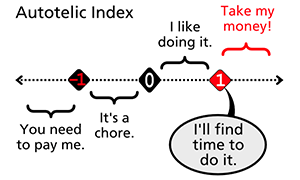

‘Art for art’s sake‘ is the usual English rendering of a French slogan, from the early 19th century, ‘l’art pour l’art,’ and expresses a philosophy that the intrinsic value of art, and the only ‘true’ art, is divorced from any didactic (educational), moral or utilitarian function.
Such works are sometimes described as ‘autotelic,’ from the Greek ‘autoteles,’ ‘complete in itself,’ a concept that has been expanded to embrace ‘inner-directed’ or ‘self-motivated’ human beings. A Latin version of this phrase, ‘Ars gratia artis,’ is used as a slogan by Metro-Goldwyn-Mayer and appears in its logo.
read more »
Posted in Art, Language, Philosophy |
1 Comment »
June 13, 2011

Didacticism [dahy-dak-tuh-siz-uhm] is an artistic philosophy that emphasizes instructional and informative qualities in literature and other types of art. The primary intention of didactic art is not to entertain, but to teach. Didactic plays, for instance, teach the audience through the use of a moral or a theme. An example of didactic writing is Alexander Pope’s ‘An Essay on Criticism’ (1711), which offers a range of advice about critics and criticism. An example of didactism in music is the chant ‘Ut queant laxis,’ which was used by Guido of Arezzo to teach solfege syllables.
The term ‘didactic’ is also used as a criticism for work that appears to be overly burdened with instructive, factual, or otherwise educational information, to the detriment of the enjoyment of the reader. Edgar Allan Poe called didacticism the worst of ‘heresies’ in his essay ‘The Poetic Principle.’
Posted in Art, Games, Language |
Leave a Comment »