May 25, 2011

The Shining is a 1977 horror novel by Stephen King. The title was inspired by the John Lennon song ‘Instant Karma!,’ which contained the line ‘We all shine on…’ It was King’s third published novel, and the success of the book firmly established him as a preeminent author in the horror genre. A film based upon the book, directed by Stanley Kubrick, was released in 1980.
After writing ‘Carrie’ and ‘Salem’s Lot,’ both of which are set in small towns in King’s home state of Maine, King was looking for a change of pace for the next book. He opened an atlas of the US on the kitchen table and randomly pointed to a location, which turned out to be Boulder, Colorado. So in early 1974, King and his wife, Tabitha, and their two children, Naomi and Joe, moved across the country to Colorado.
read more »
Posted in Art, Language |
Leave a Comment »
May 24, 2011

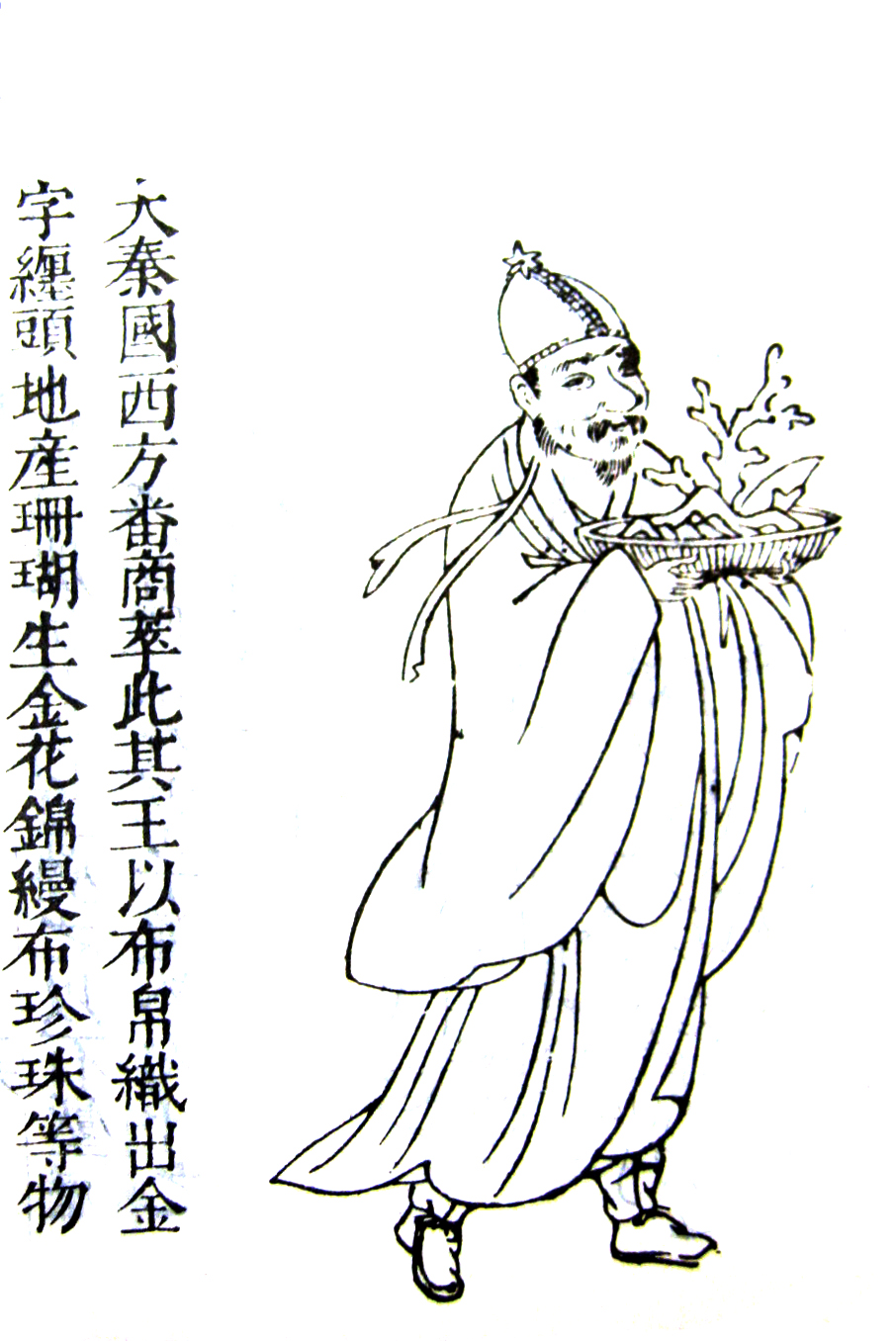
Daqin [da-chin] is the ancient Chinese name for the Roman Empire and, depending on context, the Near East, especially Syria. It literally means ‘Great Qin,’ Qin being the name of the founding dynasty of the Chinese Empire. Following the opening of the Silk Road in the 2nd century BCE, the Chinese thought of the Roman Empire as a civilized pendant to their own empire. The Romans occupied one extreme position on the trade route, with the Chinese located on the other. China never managed to reach the Roman Empire directly in antiquity, although general Ban Chao sent an envoy, Gan Ying, who left a detailed account of the Romans, but it is generally considered to have been based on second hand information:
‘Their kings are not permanent. They select and appoint the most worthy man. If there are unexpected calamities in the kingdom, such as frequent extraordinary winds or rains, he is unceremoniously rejected and replaced. The one who has been dismissed quietly accepts his demotion, and is not angry. The people of this country are all tall and honest. They resemble the people of the Middle Kingdom and that is why this kingdom is called Da Qin [literally, ‘Great China’]. This country produces plenty of gold [and] silver, [and of] rare and precious [things] they have luminous jade, ‘bright moon pearls,’ Haiji rhinoceroses, coral, yellow amber, opaque glass, whitish chalcedony, red cinnabar, green gemstones, gold-thread embroideries, woven gold-threaded net, delicate polychrome silks painted with gold, and asbestos cloth.’
Posted in Language, World |
Leave a Comment »
May 24, 2011

A sinecure [sahy-ni-kyoor] (Latin: sine ‘without,’ cura ‘care’) means an office that requires or involves little or no responsibility, labor, or active service. Sinecures have historically provided a potent tool for governments or monarchs to distribute patronage, while recipients are able to store up titles and easy salaries.
A sinecure is not necessarily a figurehead, which generally requires active participation in government, albeit with a lack of power. A sinecure, by contrast, has no real day-to-day responsibilities, but may have de jure power.
Posted in Language, Money, Politics |
Leave a Comment »
May 24, 2011

Tafoni (singular: tafone) are small cave-like features found in granular rock such as sandstone, with rounded entrances and smooth concave walls. They often occur in groups that can riddle a hillside, cliff, or other rock formation.
They also frequently occur in granitic rocks. Small versions of tafoni are sometimes called alveoli; like the former, they are hypothesized to be results of salt weathering.
Posted in Language, Science |
Leave a Comment »
May 24, 2011
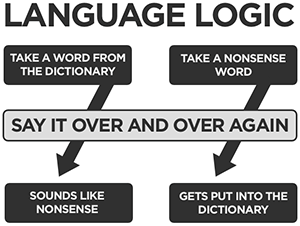

Semantic satiation is a cognitive neuroscience phenomenon in which repetition causes a word or phrase to temporarily lose meaning for the listener, who can only process the speech as repeated meaningless sounds. The explanation for the phenomenon was that verbal repetition repeatedly aroused a specific neural pattern in the cortex which corresponds to the meaning of the word. Rapid repetition causes both the peripheral sensorimotor activity and the central neural activation to fire repeatedly, which is known to cause reactive inhibition, hence a reduction in the intensity of the activity with each repetition.
Several activities demonstrate the operation of the semantic satiation effect in various cognitive tasks such as rating words and figures that are presented repeatedly in a short time, verbally repeating words then grouping them into concepts, adding numbers after repeating them out loud, and bilingual translations of words repeated in one of the two languages. In each case subjects would repeat a word or number for several seconds, then perform the cognitive task using that word. It was demonstrated that repeating a word prior to its use in a task made the task somewhat more difficult.
Posted in Language, Science |
1 Comment »
May 21, 2011


A doodle is an unfocused drawing made while a person’s attention is otherwise occupied. They are simple drawings that can have concrete representational meaning or may just be abstract shapes.
Doodling can aid a person’s memory by expending just enough energy to keep one from daydreaming, which demands a lot of the brain’s processing power, as well as from not paying attention. Thus, it acts as a mediator between the spectrum of thinking too much or thinking too little and helps focus on the current situation.
read more »
Posted in Art, Humor, Language |
Leave a Comment »
May 21, 2011

Amygdala [uh-mig-duh-luh] hijack is a term coined by psychologist Daniel Goleman in his 1996 book ‘Emotional Intelligence: Why It Can Matter More Than IQ.’ Goleman uses the term to describe emotional responses from people which are out of measure with the actual threat because it has triggered a much more significant emotional threat. The brain processes stimuli by having the thalamus direct sensory information to the neocortex (the ‘thinking brain’). The cortex then routes the signal to the amygdala (the ’emotional brain’) for the proper emotional reaction. The amygdala then triggers a flood of peptides and hormones to create emotion and action.
Perceived potential threats, however, can disrupt this smooth flow; the thalamus bypasses the cortex and routes the signal directly to the amygdala, which is the trigger point for the primitive fight-or-flight response; when the amygdala feels threatened, it can react irrationally and destructively. Goleman states that ‘Emotions make us pay attention right now – this is urgent – and give us an immediate action plan without having to think twice. The emotional component evolved very early: Do I eat it, or does it eat me?’ The emotional response ‘can take over the rest of the brain in a millisecond if threatened.’ An amygdala hijack exhibits three signs: strong emotional reaction, sudden onset, and post-episode realization that the reaction was inappropriate.
Posted in Health, Language, Science |
Leave a Comment »
May 21, 2011

The Dragons of Eden: Speculations on the Evolution of Human Intelligence is a Pulitzer Prize winning 1977 book by Carl Sagan. In it, he combines the fields of anthropology, evolutionary biology, psychology, and computer science to give a perspective of how human intelligence evolved.
The opening quote is by Greek philosopher Plotinus: ‘Mankind is poised midway between the Gods and the Beasts.’
read more »
Posted in Language, Science |
Leave a Comment »
May 20, 2011

Nectars are a type of non-carbonated soft drink made with fruit juice. In some countries, the beverage industry distinguishes nectars from drinks labeled as juice. In the United States and the United Kingdom, the term ‘fruit juice’ is restricted to beverages that are 100% pure juice.
Nectar is generally accepted in the U.S. and in international trade for a diluted juice to denote a beverage that contains fruit juice and fruit puree. A juice or nectar including concentrate must state that it does. A blend of fruit juice(s) with other ingredients, such as high-fructose corn syrup, is called a juice cocktail or juice drink.
Posted in Food, Language, World |
Leave a Comment »
May 20, 2011

Desiderata [dih-sid-uh-rey-tuh] (Latin: ‘desired things’) is a 1927 poem by American writer Max Ehrmann (1872-1945).
The text was largely unknown in the author’s lifetime and became widely known after its use in a devotional in 1959 by a church in Baltimore. When Adlai Stevenson died in 1965, a guest in his home found the Desiderata near his bedside and discovered that Stevenson had planned to use it in his Christmas cards.
read more »
Posted in Art, Language, Philosophy |
Leave a Comment »
May 19, 2011

Malicious compliance is the behavior of a person who intentionally inflicts harm by strictly following the orders of management or following legal compulsions, knowing that compliance with the orders will cause a loss of some form resulting in damage to the manager’s business or reputation, or a loss to an employee or subordinate. In effect, it is a form of sabotage used to harm leadership or used by leadership to harm subordinates.
Work-to-rule is the expression of malicious compliance as an industrial action, in which rules are deliberately followed to the letter in an attempt to reduce employee productivity.
Posted in Humor, Language, Money |
Leave a Comment »
May 18, 2011


In the context of a work of fiction, the term canon denotes the material accepted as ‘official,’ in a fictional universe’s fan base. It is often contrasted with, or used as the basis for, works of fan fiction, which are not considered canonical. It is used in two slightly different meanings: first, it refers to the overall set of storylines, premises, settings, and characters offered by the source media text. In this sense, canon is the original work from which the fan fiction author borrows. Secondly, it is used as a descriptor of specific incidents, relationships, or story arcs that take place within the overall canon; thus certain incidents or relationships may be described as being canon or not.
The use of the word ‘canon’ in reference to a set of texts derives from Biblical canon, the set of books regarded as scripture. The term was first used in the context of fiction to refer to the Sherlock Holmes stories and novels, written by Sir Arthur Conan Doyle, to distinguish those works from subsequent pastiches by other authors. It has subsequently been applied to many media franchises. Among these are science fiction franchises such as Star Trek, Star Wars, and Doctor Who, in which many stories have been told in different media, some of which contradict or appear to contradict each other.
Posted in Art, Language |
Leave a Comment »




 The Daily Omnivore