May 18, 2011


Tartan [tahr-tn] is a pattern consisting of criss-crossed horizontal and vertical bands in multiple colors that originated in Scotland. Scottish kilts almost always have tartan patterns. Tartan is also known as ‘plaid’ in North America, but in Scotland, a plaid is a tartan cloth slung over the shoulder, or a blanket. The Dress Act of 1746 attempted to bring the warrior clans under government control by banning the tartan and other aspects of Gaelic culture. When the law was repealed in 1782, it was no longer ordinary Highland dress, but was adopted instead as the symbolic national dress of Scotland. It is generally stated that the most popular tartans today are the Black Watch (also known as Old Campbell, Grant Hunting, Universal, Government) and Royal Stewart.
Tartan is made with alternating bands of colored (pre-dyed) threads woven as both warp and weft at right angles to each other. The weft is woven in a simple twill, two over – two under the warp, advancing one thread each pass. This forms visible diagonal lines where different colors cross, which give the appearance of new colors blended from the original ones. The resulting blocks of color repeat vertically and horizontally in a distinctive pattern of squares and lines known as a sett.
Posted in Art, Language, World |
Leave a Comment »
May 18, 2011

In weaving cloth, the warp is the set of lengthwise yarns that are held in tension on a frame or loom. The yarn that is inserted over-and-under the warp threads is called the weft, woof, or filler. Each individual warp thread in a fabric is called a warp end or end. Warp means ‘that which is thrown across in Old English.’ Because the warp is held under extreme tension during the entire process of weaving, warp yarn must be strong.
Traditional fibers for warping are wool, linen and silk. With the improvements in spinning technology during the Industrial Revolution, it became possible to make cotton yarn of sufficient strength to be used as the warp in mechanized weaving. Later, artificial or man-made fibers such as nylon or rayon were employed.
Posted in Language, Technology |
Leave a Comment »
May 17, 2011


Barbecue [bahr-bi-kyoo] (BBQ; ‘barbie’ in Australia and New Zealand; ‘braai’ in South Africa) is a special type of grill. It is also a way to prepare meat which is then cooked with that instrument. Barbecue cooking means to cook very slowly. It is not as hot or fast as standard grilling. Some meats must be cooked slowly to be tender, and easy to chew. Sometimes, meat may be slowly cooked for 8 to 24 hours in a barbecue. People in the United States barbecue chicken, beef and pork, depending on the part of the country.
Barbecuing is very popular in the Central and Southern U.S., especially in Texas with beef and Kansas City with pork. In the United States barbecued meat is usually covered in barbecue sauce, a type of thick, dark red sauce that often contains spices, tomatoes, and honey. Very often, American barbecue grills get heat from hickory wood. In California, it was common to barbecue beef in a hole in the ground rather than a grill. This is called a ‘pit barbecue.’
read more »
Posted in Food, Language, World |
Leave a Comment »
May 17, 2011
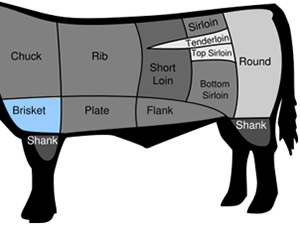

Brisket [bris-kit] is a cut of meat from the breast or lower chest of a cow. The beef brisket is one of the eight beef primal cuts. The brisket muscles include the superficial and deep pectorals. As cattle do not have collar bones, these muscles support about 60% of the body weight of standing/moving cattle. This requires a significant amount of connective tissue, so the resulting meat must be cooked thoroughly to tenderize the connective tissue.
The term derives from Old Norse ‘brjósk,’ meaning cartilage. The cut overlies the sternum, ribs and connecting costal cartilages. Popular brisket recipes in the Southern United States include rubbing with a spice rub or marinating the meat, then cooking slowly over indirect heat from charcoal or wood. This is a form of smoking the meat. Additional basting of the meat is often done during the cooking process.
read more »
Posted in Food, Language, World |
1 Comment »
May 17, 2011

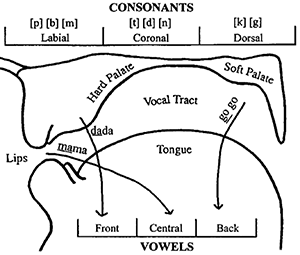
The International Phonetic Alphabet (IPA) is an alphabetic system of phonetic notation based primarily on the Latin alphabet. It was devised as a standardized representation of the sounds of all spoken languages. The IPA is designed to represent only those qualities of speech that are distinctive in spoken language: phonemes (‘a sound uttered,’ the smallest segmental unit of sound – e.g. the ‘k’ sound in ‘kite’), intonation (variation of pitch while speaking which is not used to distinguish words, unlike tone, which is), and the separation of words and syllables.
To represent additional qualities of speech such as tooth gnashing, lisping, and sounds made with a cleft palate, an extended set of symbols called the Extensions to the IPA may be used. The IPA currently contains 107 letters derived from thousands of languages.
Posted in Language, Science |
Leave a Comment »
May 16, 2011

Wheatpaste (also known as Marxist glue) is a liquid adhesive made from vegetable starch and water. It has been used since ancient times for various arts and crafts such as bookbinding and papier mache. It is also made for the purpose of adhering paper posters to walls and other surfaces (often in graffiti). Closely resembling wallpaper paste, it is often made by mixing roughly equal portions of flour and water and heating it until it thickens, or by smearing cooked rice into a paste.
The words paste, pasta, and pastry have a common heritage, deriving from the Late Latin pasta (dough or pastry cake), itself deriving from the ancient Greek pasta, meaning ‘barley porridge.’ In English, paste is used as would be ‘dough’ in the 12th century, or ‘glue’ in the 15th century.
read more »
Posted in Art, Language, Money |
Leave a Comment »
May 11, 2011
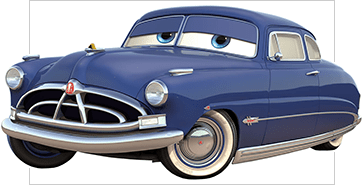

A sleeper (called a Q-car in the UK) is a car that has high performance and an unassuming exterior. Sleeper cars are termed such because their exterior looks little or no different from a standard or economy-class car. In some cases the car appears worse due to seeming neglect on the owner’s part, typically referred to as ‘all go and no show.’ While appearing to be a standard or neglected car, internally they are modified to perform at higher performance levels. The American nomenclature comes from the term sleeper agent, while the British term derives from the Q-ships used by the Royal Navy.
American actor Paul Newman famously drove a 1963 VW Beetle convertible with a 300-horsepower engine, racing suspension and five-speed gearbox. The back seats were removed to make room for the 351-cubic-inch Ford engine.
read more »
Posted in Games, Language, Technology |
Leave a Comment »
May 11, 2011


The Rosetta Project is a global collaboration of language specialists and native speakers working to develop a contemporary version of the historic Rosetta Stone to last from 2000 to 12,000 CE; it is run by the Long Now Foundation. Its goal is a meaningful survey and near permanent archive of 1,500 languages. Some of these languages have fewer than one thousand speakers left in the world. Others are considered to be dying out because government centralization and globalization are increasing the prevalence of English and other major languages. The intention is to create a unique platform for comparative linguistic research and education, as well as a functional linguistic tool that might help in the recovery or revitalisation of lost languages in the future.
The Project is creating this broad language archive through an open contribution, open review process similar to the strategy that created the original Oxford English Dictionary. The resulting archive will be publicly available in three different media: a micro-etched nickel alloy disc three inches (7.62 cm) across with 2,000 year life expectancy; a single volume monumental reference book; and a growing online archive.
Posted in Language, Technology |
Leave a Comment »
May 11, 2011

Stephen Hawking (b. 1942) is an English theoretical physicist and cosmologist, whose scientific books and public appearances have made him an academic celebrity. He is known for his contributions to the fields of cosmology and quantum gravity, especially in the context of black holes (he first predicted that black holes emit radiation, which is today known as Hawking radiation).
He has also achieved success with works of popular science in which he discusses his own theories and cosmology in general. Hawking has a motor neurone disease that is related to ALS (Lou Gehrig’s disease), a condition that has progressed over the years and has left him almost completely paralyzed.
read more »
Posted in Language, Science |
Leave a Comment »
May 10, 2011

‘A Briefer History of Time‘ is a popular-science book published in 2005 from the English physicist Stephen Hawking and the American physicist Leonard Mlodinow. It is an update and rewrite of Hawking’s 1988 ‘A Brief History of Time.’
In this book Hawking and Mlodinow present quantum mechanics, string theory, the big bang theory, and other topics in a more accessible fashion to the general public. The book is updated with newly discovered topics, and informs of recurring subjects throughout the book in greater detail.
Posted in Education, Language, Science |
Leave a Comment »
May 10, 2011
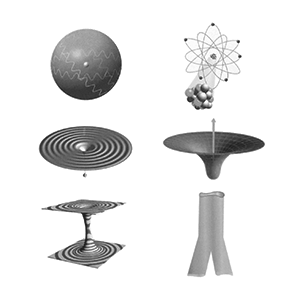
‘A Brief History of Time: From the Big Bang to Black Holes’ is a 1988 popular science book written by English theoretical physicist Stephen Hawking, which attempts to explain a range of subjects in cosmology (e.g. the Big Bang, black holes, and light cones) to the nonspecialist reader.
Its main goal is to give an overview of the subject but, unusual for a popular science book, it also attempts to explain some complex mathematics. The author notes that an editor warned him that for every equation in the book the readership would be halved, hence it includes only a single equation: E=mc2.
read more »
Posted in Education, Language, Science |
Leave a Comment »
May 9, 2011

The clustering illusion refers to the tendency to erroneously perceive small samples from random distributions as having significant ‘streaks’ or ‘clusters,’ caused by a human tendency to underpredict the amount of variability likely to appear in a small sample of random or semi-random data due to chance. Illusionary clusters were found in the locations of impact of V-1 flying bombs on London during World War II and as streaks in stock market price fluctuations over time.
The clustering illusion was central to a widely reported study by Gilovich, Robert Vallone and Amos Tversky. They found that the idea that basketball players shoot successfully in ‘streaks,’ sometimes called by sportcasters as having a ‘hot hand’ and widely believed by Gilovich et al.’s subjects, was false. In the data they collected, if anything the success of a previous throw very slightly predicted a subsequent miss rather than another success. Using this cognitive bias in causal reasoning may result in the Texas sharpshooter fallacy. It may also have a relationship with gambler’s fallacy. More general forms of erroneous pattern recognition are pareidolia and apophenia.
Posted in Games, Language, Science |
Leave a Comment »




 The Daily Omnivore