March 29, 2026
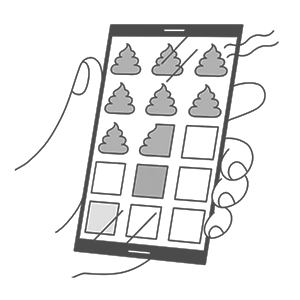
Enshittification, also known as platform decay, is a process in which two-sided online products and services decline in quality over time. Initially, vendors create high-quality offerings to attract users, then they degrade those offerings to better serve business customers, and finally degrade their services to both users and business customers to maximize short-term profits for shareholders.
Canadian writer Cory Doctorow coined the neologism enshittification in November 2022. The American Dialect Society selected it as its 2023 Word of the Year, with Australia’s Macquarie Dictionary following suit for 2024. Merriam-Webster and Dictionary.com also list enshittification as a word.
read more »
Posted in Money, Technology |
1 Comment »
March 15, 2026

A Disney adult is an adult who is an avid fan of the works of the Walt Disney Company. Disney adults are sometimes seen by others as embarrassing or naive for enjoying material ostensibly aimed at children, with sociologist Idil Galip saying that the financial and emotional investment in maintaining the commercialized hobby ‘almost signals a break from regular society or real life.’
Canadian scholar Henry Giroux argues that the escapism actively sought by these adults through consumption of media they know to be directly connected to the Walt Disney conglomerate is a product of the company’s intentional and careful design by commercializing any previous emotional attachments to its properties, which in turn leads to an infantilization of the audience’s self that reduces their sense of agency.
read more »
Posted in Money |
Leave a Comment »
March 1, 2026
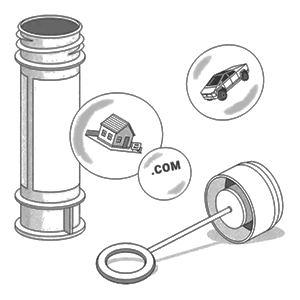
The everything bubble refers to the impact on the values of asset prices, including equities, real estate, bonds, many commodities, and cryptocurrencies, due to quantitative easing by the Federal Reserve, European Central Bank, and the Bank of Japan. The policy itself and the techniques of direct and indirect methods of quantitative easing used to execute it are sometimes referred to as the Central bank put. The term “everything bubble” first came in use during the chair of Janet Yellen, but it is most associated with the quantitative easing during the COVID-19 pandemic by Jerome Powell.
The everything bubble notably occurred despite the COVID-19 recession, the China–United States trade war, and political turmoil – leading to a realization that the bubble was a central bank creation, with concerns on the independence and integrity of market pricing, and on the Fed’s impact on wealth inequality.
read more »
Posted in Money |
1 Comment »
January 10, 2026

A pig-butchering scam is a type of online fraud where the victim is encouraged to make increasing financial contributions over a long period, usually in the form of cryptocurrency. The term compares the initial phase of gaining the victims’ trust to the fattening of pigs before slaughtering them. Such scams are commonplace on social media and dating apps, and often involve elements of catfishing (using false identities), investment fraud, and romance scams.
The scammer builds trust with the victim through online communication, subsequently persuading them to invest in a fraudulent cryptocurrency scheme. Perpetrators are typically victims of a fraud factory, where they are lured to travel internationally under false pretenses, trafficked to another location, and forced to commit the fraud by organised crime gangs.
read more »
Posted in Money, Politics |
Leave a Comment »
December 15, 2025

Phytomining [fahy-toh-mahy-ning] (sometimes called agromining) is a process of extracting heavy metals from the soil using plants. Unlike Phytoremediation, where extraction is used for cleaning up environmental pollutants, phytomining is for the purpose of gathering the metals for economic use.
Phytomining exploits the existence of hyperaccumulator plants which naturally have proteins or compounds that bind with certain metal ions. Once the hyperaccumulation happens, the final metal, or bio-ore, needs to be refined from the plant matter. Phytomining was first proposed in 1983 by Rufus Chaney, a USDA agronomist. The first commercial projects were funded in 2025.
Posted in Money, Science |
Leave a Comment »
December 1, 2025

Wolfgang Beltracchi [bel-trah-kee] (b. 1951) is a German former art forger and visual artist who has admitted to forging hundreds of paintings in an international art scam netting millions of euros. Beltracchi, together with his wife Helene, sold forgeries of alleged works by famous artists, including Max Ernst, Heinrich Campendonk, Fernand Léger, and Kees van Dongen. Though he was found guilty for forging 14 works of art that sold for a combined $45m (£28.6m), he claims to have faked ‘about 50’ artists. The total estimated profits Beltracchi made from his forgeries surpasses $100m.
In 2011, after a 40-day trial, Beltracchi was found guilty and sentenced to six years in a German prison. His wife, Helene, was given a four-year sentence, and both were ordered to pay millions in restitution. Beltracchi was freed in 2015, having served just over three years in prison. He is today a successful artist who sells his paintings and sculptures to international collectors without the protection of art makers and the international art market.
read more »
Posted in Art, Money |
1 Comment »
November 13, 2025

The Funk Brothers were a group of Detroit-based session musicians who performed the backing to most Motown recordings from 1959 until the company moved to Los Angeles in 1972.
Its members are considered among the most successful groups of studio musicians in music history. Among their hits are ‘My Girl,’ ‘I Heard It Through the Grapevine,’ ‘Baby Love,’ ‘ I Was Made to Love Her,’ ‘Papa Was a Rollin’ Stone,’ ‘The Tears of a Clown,’ ‘Ain’t No Mountain High Enough,’ and ‘Heat Wave’. Some combination of the members played on each of Motown’s 100-plus U.S. R&B number one singles and 50-plus U.S. Pop number ones released from 1961 to 1972.
read more »
Posted in Art, Money |
1 Comment »
October 21, 2025
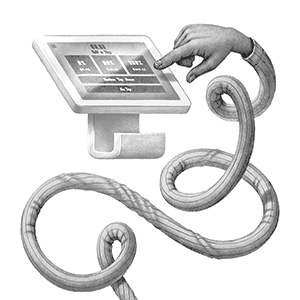
Tipflation and tip creep are terms to describe the United States’ recent widespread expansion of gratuity to more industries, as opposed to being traditionally only prevalent in full-service restaurants. Occupations which are now widely requesting gratuities include rideshare drivers, food delivery drivers, and baristas. Tipflation’s origins are likely the COVID-19 pandemic and the 2021–2023 inflation surge.
Touch-screen digital payment systems run by companies like Clover and Square include gratuity prompts that are often visible to nearby members of the public and the service worker. The social pressure created from such systems is often separately mentioned as guilt-tipping, and tipflation has also been seen as causing tipping fatigue, which is the resentment that American consumers generally feel from tipping culture.
read more »
Posted in Money |
1 Comment »
August 28, 2025


A data broker is an individual or company that specializes in collecting personal data (such as income, ethnicity, political beliefs, or geolocation data) or data about people, mostly from public records but sometimes sourced privately, and selling or licensing such information to third parties for a variety of uses.
Sources, usually Internet-based since the 1990s, may include census and electoral roll records, social networking sites, court reports and purchase histories. The information from data brokers may be used in background checks used by employers and housing.
read more »
Posted in Money, Politics, Technology |
Leave a Comment »
August 11, 2025
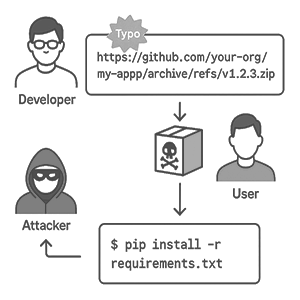
Slopsquatting is a type of cybersquatting. It is the practice of registering a non-existent software package name that a large language model (LLM) may hallucinate in its output, whereby someone unknowingly may copy-paste and install the software package without realizing it is fake. Attempting to install a non-existent package should result in an error, but some have exploited this for their gain in the form of typosquatting.
In 2023, security researcher Bar Lanyado noted that LLMs hallucinated a package named ‘huggingface-cli. While this name is identical to the command used for the command-line version of HuggingFace Hub, it is not the name of the package. The software is correctly installed with the code pip install -U ‘huggingface_hub[cli].’ Lanyado tested the potential for slopsquatting by uploading an empty package under this hallucinated name. In three months, it had received over 30,000 downloads. The hallucinated packaged name was also used in the README file of a repo for research conducted by Alibaba.
read more »
Posted in Money, Technology |
Leave a Comment »
June 11, 2025

You Will was an AT&T marketing campaign that launched in 1993, consisting of commercials directed by David Fincher. Each ad presented a futuristic scenario beginning with “Have you ever…” and ending with “…you will. And the company that will bring it to you: AT&T.” The ads were narrated by Tom Selleck. One of the first web banner ads ever sold was part of an AT&T campaign that ran on HotWired starting October 27, 1994, asking “Have you ever clicked your mouse right HERE? You Will.”
In 2016, technology writer Timothy B. Lee commented that ‘overall, the ads were remarkably accurate in predicting the cutting-edge technologies of the coming decades. But the ads were mostly wrong about one thing: the company that brought these technologies to the world was not AT&T. At least not on its own. AT&T does provide some of the infrastructure on which the world’s communications flow. But the gadgets and software that brought these futuristic capabilities to consumers were created by a new generation of Silicon Valley companies that mostly didn’t exist when these ads were made.’
read more »
Posted in Money, Technology |
Leave a Comment »
May 27, 2025

The Toyota War of 1987 was the last phase of the Chadian–Libyan War. It takes its name from the Toyota pickup trucks, primarily the Toyota Hilux and the Toyota Land Cruiser, used to provide mobility for the Chadian troops as they fought against the Libyans, and as technicals, non-standard tactical vehicles (NSTV) modified to carry heavy weapons for combat use.
The 1987 war resulted in a heavy defeat for Libya, which, according to American sources, lost one tenth of its army, with 7,500 men killed and US$1.5 billion worth of military equipment destroyed or captured. Chadian forces suffered 1,000 deaths.
read more »
Posted in Money, War, World |
Leave a Comment »


 The Daily Omnivore