April 20, 2011

A speakeasy, also called a blind pig or blind tiger, is an establishment that illegally sells alcoholic beverages. Such establishments came into prominence. The term ‘blind pig’ originated in the United States in the 19th century; it was applied to lower-class establishments that sold alcoholic beverages illegally. The operator of an establishment (such as a saloon or bar) would charge customers to see an attraction (such as an animal) and then serve a ‘complimentary’ alcoholic beverage, thus circumventing the law.
The difference between a speakeasy and a blind pig was that a speakeasy was usually a higher-class establishment that offered food and entertainment. In large cities, some speakeasies even required a coat and tie for men, and evening dress for women. But a blind pig was usually a low-class dive where only beer and liquor were offered. Blind pigs continue to exist in the United States. Some people sell alcoholic beverages for off-site consumption from their homes during hours when legal sellers are closed by law, and some people operate bars illegally.
Posted in Drugs, Money, Politics |
Leave a Comment »
April 20, 2011

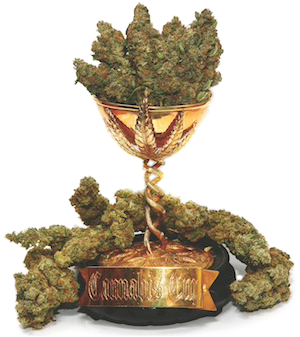
The High Times Cannabis Cup is the world’s preeminent Cannabis festival. Founded in 1987 by Steven Hager, the contest takes place each November in Amsterdam. The event allows judges from around the world to sample and vote for their favorite marijuana strains. These judges-at-large decide the Cannabis Cup (overall winner in the cannabis strain competition), best new product, best booth, best glass, best hash and best Nederhash (a slate-like hash variety). A team of VIP judges decide which seed company has grown the best marijuana.
Recently, High Times created the Medical Cannabis Cup – an event that celebrates the medical marijuana movement in America. The first High Times Medical Cannabis Cup took place in San Francisco in June of 2010. To be a judge one must pay an extra fee, which allows the attendee to vote upon the many different strains. The judge’s pass sells for $199 USD prior to June 1 after which the price increases to $250 USD. A judge’s pass costs 250 euros if purchased at the event. The highest recorded participation was in 2008 with 2,300 judges.
Posted in Drugs, Games, Money |
Leave a Comment »
April 20, 2011
High Times is a New York-based monthly magazine founded in 1974 by American journalist, Tom Forcade. The publication is devoted to, and advocates the legalization of, marijuana. It is the largest cannabis-related magazine in the world.
High Times has long been considered the publication of record for the counterculture. Past contributors include Charles Bukowski, William S. Burroughs, Truman Capote, Hunter S. Thompson and Andy Warhol.
read more »
Posted in Drugs, Money, Politics |
Leave a Comment »
April 19, 2011
Dubailand is an entertainment complex under development in the United Arab Emirates. When announced in 2003 it was one of the most ambitious leisure developments ever proposed anywhere in the world, but development has been severely impacted by global recession and Dubai’s financial crisis.
The park is divided into six zones: Attractions and Experience World, Sports and Outdoor World, Eco-Tourism World, Themed Leisure and Vacation World, Retail and Entertainment World, and Downtown. It will be twice the size of Walt Disney World Resort, and will be the largest collection of theme parks in the world; however, no theme park in Dubailand will surpass Disney’s Animal Kingdom as the world’s largest theme park.
Posted in Games, Money, World |
Leave a Comment »
April 18, 2011
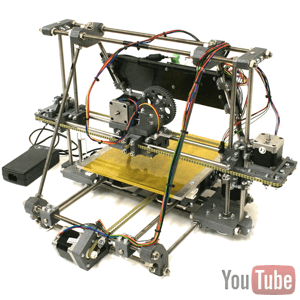
The RepRap project is an initiative to develop a 3D printer (RepRap, short for ‘replicating rapid prototyper’) that can print most of its own components. As an open design, all of the designs produced by the project are released under a free software license. The device uses a variant of fused deposition modeling, an additive manufacturing technique.
Due to the self-replicating ability of the machine, authors envision the possibility to cheaply distribute RepRap units to people and communities, enabling them to create (or download from the internet) complex products without the need for expensive industrial infrastructure.
Posted in Money, Technology |
1 Comment »
April 18, 2011

A 3D printer is a machine that prints solid copies of objects from computer drawings. Some use powder. Some use liquid plastic. They all make the object by building it up layer by layer in an additive process.
In some industries these printers are called rapid prototyping machines. Car makers use 3D printers to try out new shapes for things like door handles; designers use try new shapes for consumer electronics; artists create sculptures; and jewelry designers can try out new ideas and make molds for rings.
read more »
Posted in Art, Money, Technology |
Leave a Comment »
April 13, 2011


Designer toys are collectibles that are produced in limited editions (as few as 10 or as many as 2000 pieces) and created by artists and designers. Designer toys are made of variety of materials; ABS plastic and vinyl are most common, although wood, metal, and resin are occasionally used. The term also encompasses plush, cloth and latex dolls.
read more »
Posted in Art, Games, Money |
Leave a Comment »
April 13, 2011

Club 57 was a nightclub located at 57 St. Mark’s Place in the East Village, New York City during the late 1970s and early 1980s. It was a hangout and venue for performance- and visual-artists and musicians, including Keith Haring, Klaus Nomi, and to a lesser extent, Jean-Michel Basquiat.
read more »
Posted in Art, Games, Money |
Leave a Comment »
April 13, 2011

Leslie Conway ‘Lester’ Bangs (1948 – 1982) was an American music journalist and musician. He wrote for ‘Creem’ and ‘Rolling Stone’ magazines and has been called one of the ‘most influential’ voices in rock criticism. In 1969, Bangs began writing freelance after reading an ad in ‘Rolling Stone’ soliciting readers’ reviews.
His first piece was a negative review of the MC5 album ‘Kick Out The Jams,’ which he sent to ‘Rolling Stone’ with a note detailing that should the magazine decide not to publish the review, then they would have to contact Lester and tell him why. They published it.
read more »
Posted in Art, Humor, Money |
Leave a Comment »
April 13, 2011

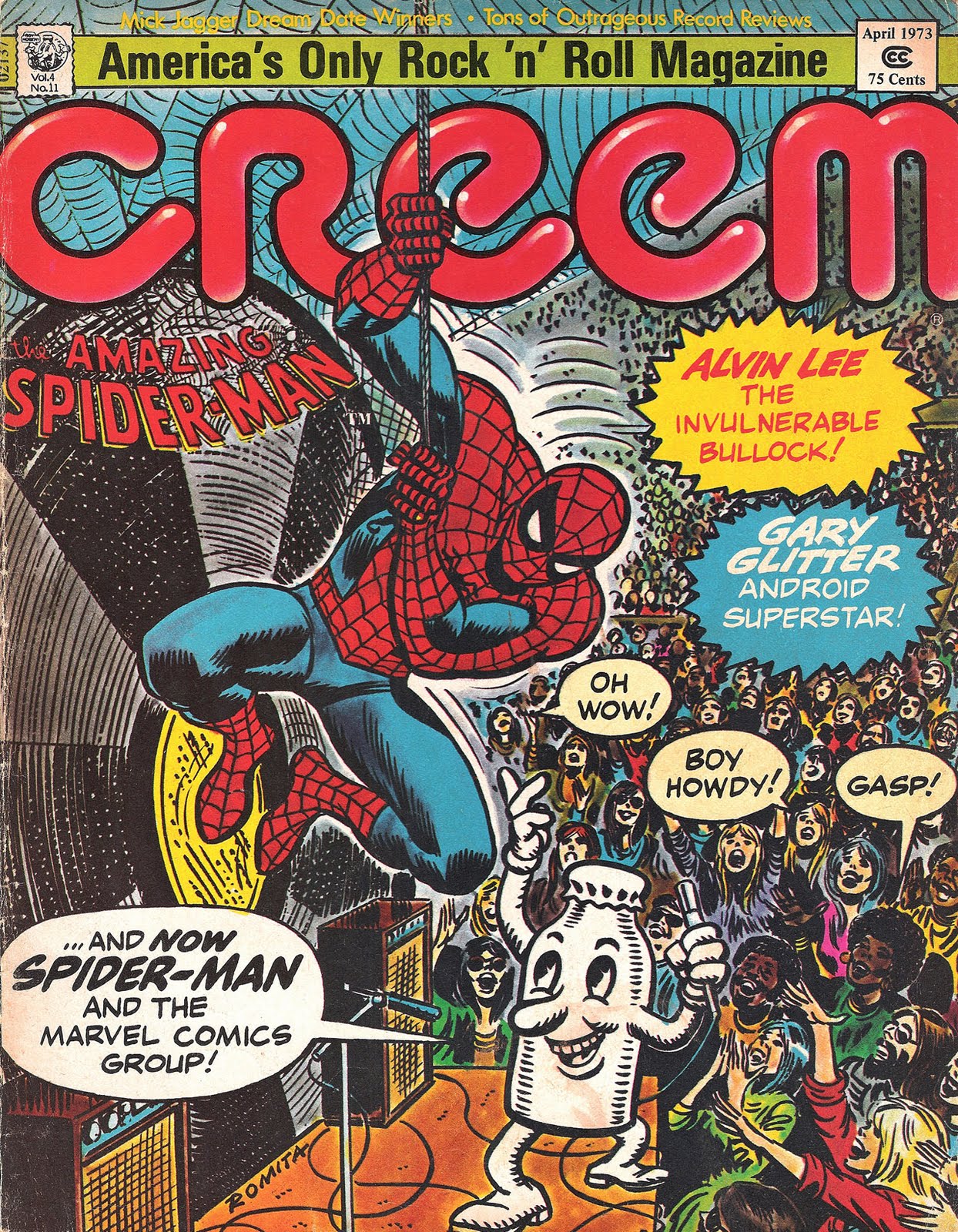
Creem was a monthly rock ‘n’ roll publication first published in March 1969 by Barry Kramer and founding editor Tony Reay. It suspended production in 1989 but received a short-lived renaissance in the early 1990s as a glossy tabloid.
Lester Bangs, often cited as ‘America’s Greatest Rock Critic,’ became editor in 1971. The term ‘punk rock’ was said to have been coined by the magazine in 1971, and the term ‘heavy metal’ was also first used in its pages.
read more »
Posted in Art, Humor, Money |
Leave a Comment »
April 12, 2011


A bottle wall is a wall made out of glass bottles and binding material. A building construction style which usually uses 1l glass bottles (although mason jars or 1/2l glass jugs may be used as well) as masonry units and binds them using adobe, sand, cement, stucco, clay, plaster, mortar or any other joint compound to result in an intriguing stained-glass like wall.
read more »
Posted in Art, Money, Technology |
Leave a Comment »
April 12, 2011

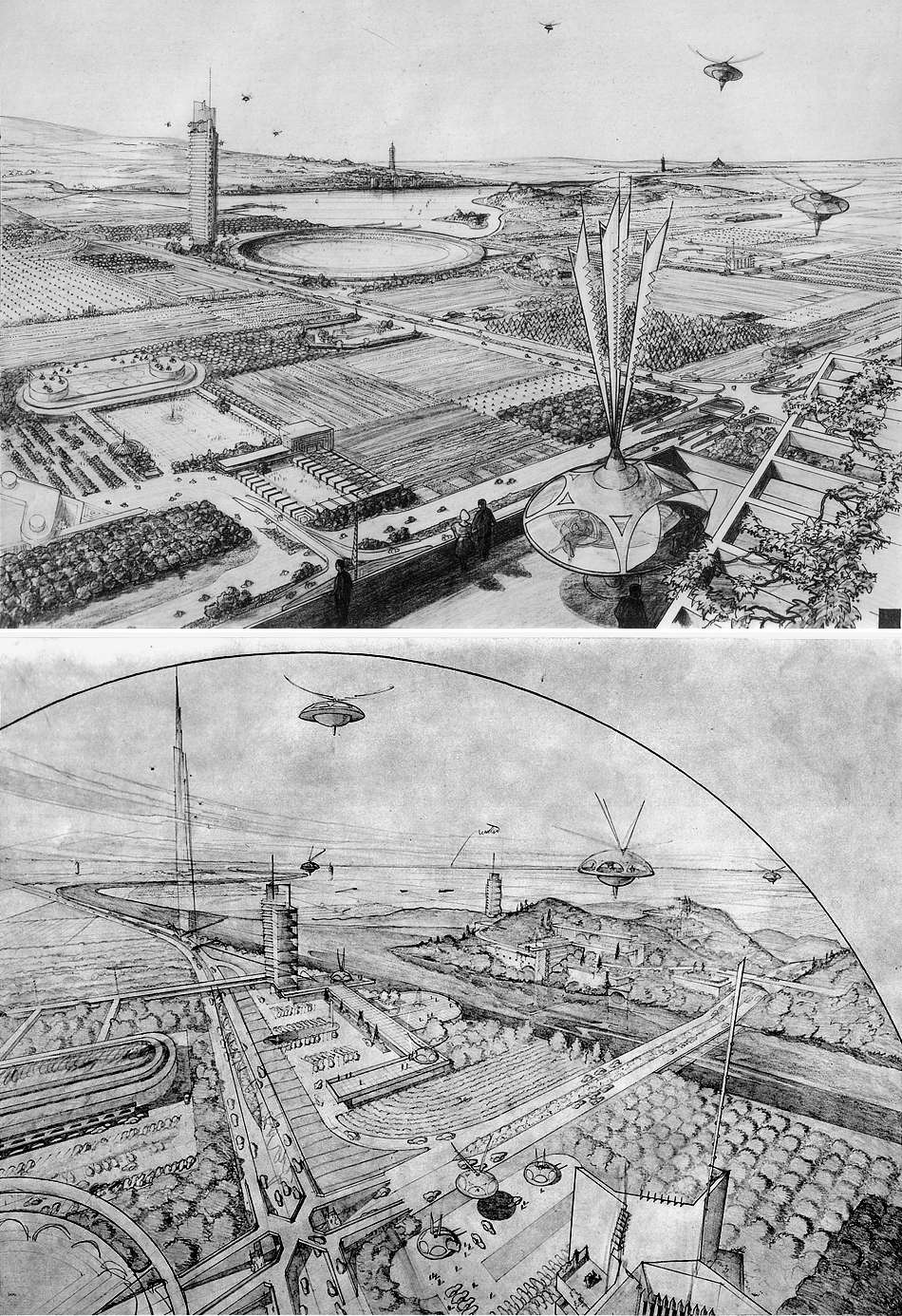
Broadacre City was an urban or suburban development concept proposed by Frank Lloyd Wright throughout most of his lifetime. He presented the idea in his book ‘The Disappearing City’ in 1932. A few years later he unveiled a very detailed twelve by twelve foot (3.7 by 3.7 m) scale model representing a hypothetical four square mile (10 km²) community. Wright would go on refining the concept in later books and in articles until his death in 1959.
Many of the building models in the concept were completely new designs by Wright, while others were refinements of old ones, some of which had been rarely seen. Broadacre City was the antithesis of a city and the apotheosis of the newly born suburbia, shaped through Wright’s particular vision. It was both a planning statement and a socio-political scheme by which each U.S. family would be given a one acre (4,000 m²) plot of land from the federal lands reserves, and a Wright-conceived community would be built anew from this. In a sense it was the exact opposite of transit-oriented development.
Posted in Money, Technology |
Leave a Comment »





 The Daily Omnivore