March 8, 2011


Chip Kidd (b. 1964) is an American author and graphic designer, known for his innovative book covers. He is currently associate art director at Knopf, an imprint of Random House. He first joined the Knopf design team in 1986, as a junior assistant. Kidd also supervises graphic novels at Pantheon.
His output includes cover concepts for books by Bret Easton Ellis, Haruki Murakami, Dean Koontz, Cormac McCarthy, Frank Miller, Alex Ross, David Sedaris, John Updike and others. His design for Michael Crichton’s Jurassic Park novel was carried over into marketing for the film adaptation. Oliver Sacks and other authors have contract clauses stating that Kidd design their books. Kidd is currently working with writer Lisa Birnbach on True Prep, a follow-up to her 1980 book The Official Preppy Handbook.
Posted in Art, Language, Money |
2 Comments »
March 7, 2011


Hapshash and the Coloured Coat is the name of an influential British graphic design and avant-garde musical partnership between Michael English and Nigel Waymouth, producing psychedelic posters and two albums of underground music. The silkscreen printed posters they created, advertising underground ‘happenings,’ clubs and concerts in London, became so popular at the time that they helped launch the commercial sale of posters as art, initially in fashionable stores such as the Indica Bookshop and Carnaby Street boutiques.
Their posters remain highly sought after: a poster advertising Jimi Hendrix’s 1967 concert at the Fillmore Auditorium in San Francisco, depicting the guitarist as a psychedelic Native American chief with a hunting bow in one hand and a peace pipe in the other, was valued in 2008 at $125,000. Their first album of psychedelic music, produced by a collective in early 1967 and including many famous names, is now seen as being influential on the early works of Amon Düül and other pioneers of German Krautrock, as well as inspiring sections of the Rolling Stones’ Their Satanic Majesties Request album.
Posted in Art, Drugs, Money |
Leave a Comment »
March 7, 2011

ZZ Top is an American rock band, sometimes referred to as ‘That Little Ol’ Band from Texas.’ Their style, which is rooted in the blues, has come to incorporate elements of arena, Southern, and boogie rock. The band is from Houston, Texas, formed in 1969. Musician Billy Gibbons and drummer Dan Mitchell, originally in a band called the ‘Moving Sidewalks,’ got together with bassist Lanier Greig, forming ZZ Top. In 1969, Greig and Mitchell were replaced by Dusty Hill and Frank Beard from the band ‘American Blues.’
They were signed to London Records in 1970 and released several albums. After years of touring, the band went on a two-year break in 1977, which resulted in Gibbons and Hill growing chest-length beards. The band’s name was rumored to have derived from Zig-Zag and TOP rolling papers. Gibbons, however it actually refers to an apartment Gibbons lived in, with a row of flyers on a wall, including Z. Z. Hill and B.B. King posters. Coming to the conclusion that B.B. King was on the ‘top,’ Gibbons settled with the name ‘ZZ Top.’
Posted in Art, Money |
Leave a Comment »
March 7, 2011
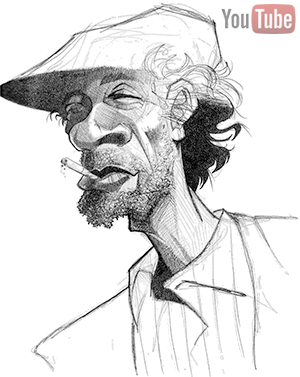
Gil Scott-Heron (b. 1949) is an American poet, musician, and author known primarily for his late 1970s and early 1980s work as a spoken word performer and his collaborative soul works with musician Brian Jackson, which featured a musical fusion of jazz, blues and soul music, as well as lyrical content concerning social and political issues of the time, delivered in both rapping and melismatic vocal styles by Scott-Heron.
The music of these albums, most notably ‘Pieces of a Man’ and ‘Winter in America’ in the early 1970s, influenced and helped engender later African-American music genres such as hip hop and neo soul. Scott-Heron’s recording work is often associated with black militant activism and has received much critical acclaim for one of his most well-known compositions ‘The Revolution Will Not Be Televised.’
Posted in Art, Money, Politics |
Leave a Comment »
March 7, 2011

Root beer is a carbonated, sweetened beverage, originally made using the root of a sassafras plant (or the bark of a sassafras tree) as the primary flavor. Root beer, popularized in North America, comes in two forms: alcoholic and soft drink. The historical root beer provided a drink with a very low alcohol content, like a small or ‘near beer’. Although roots are used as the source of many soft drinks in many countries throughout the world (and even alcoholic beverages/beers), the name root beer is rarely used outside North America, Britain, Ireland and the Philippines. Most other countries have their own indigenous versions of root-based beverages and small beers but with different names.
There are hundreds of root beer brands in the United States, and there is no standardized recipe. The primary ingredient, artificial sassafras flavoring, is complemented with other flavors, common ones being vanilla, wintergreen, cherry tree bark, licorice root, sarsaparilla root, nutmeg, acacia, anise, molasses, cinnamon, clove and honey. Homemade root beer is usually made from concentrate, though it can also be made from actual herbs and roots. Both alcoholic and non-alcoholic root beers have a thick and foamy head when poured, often enhanced by the addition of yucca extract.
Posted in Drugs, Food, Money |
Leave a Comment »
March 6, 2011

Louis’ Lunch in New Haven, Connecticut, advertises itself as the first restaurant to serve hamburgers and as being the oldest hamburger restaurant still operating. Opened as a small lunch wagon in 1895, it was also one of the first places in the US to serve steak sandwiches. Louis Lassen, a butter dealer, operated a lunch wagon where he served steak and ground steak hamburger sandwiches, made from scrap trimmings, to local factory workers. According to family legend, one day in 1900 a local businessman dashed into the small New Haven lunch wagon and pleaded for a lunch to go. Lassen hurriedly sandwiched a broiled hamburger between two slices of bread and sent the customer on his way, so the story goes, with America’s first hamburger being served.
The fourth generation of Lassens own and operate Louis’ Lunch today. The restaurant flame broils the hamburgers, the original way, in antique 1898 vertical cast iron gas stove with hinged steel wire gridirons to hold the hamburgers in place while they cook simultaneously on both sides. The patties are hand formed from ground steak made from a secret blend of five different cuts of beef. The hamburgers are prepared with cheese, tomato or onion as the only condiments or garnish; never any mustard, ketchup or mayonnaise on two square pieces of toasted white bread.
Posted in Food, Money |
1 Comment »
March 6, 2011

Bette Nesmith (1924 – 1980) was an American typist, the inventor of Liquid Paper, and mother of musician and producer Michael Nesmith of The Monkees.
It was very difficult to erase mistakes made by early electric typewriters, which caused problems for her. She put tempera water-based paint in a bottle to correct her mistakes, and secretly used her white correction paint for five years, making some improvements with help from her son’s high school chemistry teacher. Some superiors admonished her against using it, but coworkers frequently sought her ‘paint out.’ She eventually began marketing her typewriter correction fluid as ‘Mistake Out’ in 1956, and later as ‘Liquid Paper.’
Posted in Money, Technology |
Leave a Comment »
March 6, 2011

The Snurfer was the first marketed snowboard. It uses a noboard type of snowboard binding alternative. It was created in 1965 by Sherman Poppen in Muskegon, Michigan.
Poppen was outside his house one day sledding with his daughters, when his 11 year old was going down the hill, standing on her old sled. Poppen then ran inside his shop and bound two skis together. Poppen used a string and tied it to the nose of the board so the rider could have control of the board. Poppen’s wife called it the Snurfer. He licensed the concept to Brunswick Corporation to manufacture the Snurfer. Brunswick sold about a million Snurfers for $10 to $30.
Posted in Games, Money, Technology |
Leave a Comment »
March 6, 2011
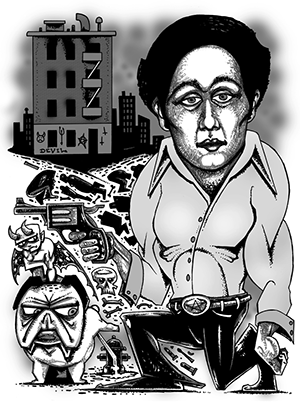
A Son of Sam Law is a law designed to keep criminals from profiting from their crimes, such as by selling their stories to publishers. These laws authorize the state to seize money earned from such a deal and use it to compensate the criminal’s victims. In certain cases a Son of Sam law can be extended beyond the criminals themselves to include friends, neighbors, and family members of the lawbreaker who seek to profit by telling publishers and filmmakers of their relation to the criminal. In other cases, a person may be barred from financially benefiting from the sale of a story or any other mementos pertaining to the crime—if the criminal was convicted after the date lawmakers passed the law in the states where the crime was committed.
The first such law was created in New York after the Son of Sam murders committed by serial killer David Berkowitz. It was enacted after rampant speculation about publishers offering large amounts of money for Berkowitz’s story. The law was invoked in New York 11 times between 1977 and 1990, including once against Mark David Chapman, murderer of musician John Lennon. Critics disputed the law on First Amendment grounds. It was argued that “Son of Sam” laws take away the financial incentive for many criminals to tell their stories, some of which (such as the Watergate scandal) were of vital interest to the general public.
Posted in Art, Money, Politics |
Leave a Comment »
March 6, 2011

Murderabilia is a term identifying collectibles related to murders, murderers, or other violent crimes. ‘Serial killer art’ is defined as artwork created by serial killers while in prison. Often, this process is used as a therapy device, or for further understanding a particularly disturbed psyche. The artists usually vary dramatically in skill and themes covered. John Wayne Gacy, Richard Ramirez, and Henry Lee Lucas are a few of the better known American serial killer artists. Perry Smith, the mass murderer known from Truman Capote’s famous nonfiction work ‘In Cold Blood,’ was also a prolific artist.
Collectors typically must have direct contact to obtain and authenticate this art. The actual pieces can sell for large sums of money depending on the individual artist, and their notoriety through serial killing. Murderabilia is a controversial area of the collecting world, as evidenced by the public backlash to the idea of selling or profiting from violent crimes. In 2005, a serial killer’s artwork was sold online in Massachusetts. State lawmakers proposed to block the activity, setting off a debate on free speech rights of prisoners.
Posted in Death, Money, Politics |
Leave a Comment »
March 6, 2011

Wardriving is the act of searching for Wi-Fi wireless networks by a person in a moving vehicle. The term originated from wardialing, a technique popularized by a character played by Matthew Broderick in the film WarGames, and named after that film. Wardialing in this context refers to the practice of using a computer to dial many phone numbers in the hopes of finding an active modem.
Warbiking is essentially the same as wardriving, but it involves searching for wireless networks while on a moving bicycle or motorcycle. This activity is sometimes facilitated by the mounting of a Wi-Fi capable device on the vehicle itself. Warwalking (sometimes warjogging) is done on foot rather than conducted from a moving vehicle. Warkitting is a combination of wardriving and rootkitting (installation of software that enables privileged access to a computer while actively hiding its presence from administrators). In a warkitting attack, a hacker replaces the firmware of an attacked router.
Posted in Money, Politics, Technology |
Leave a Comment »
March 6, 2011

Wardialing is a technique of using a modem to automatically scan a list of telephone numbers, usually dialing every number in a local area code to search for computers, Bulletin board systems and fax machines. Hackers use the resulting lists for various purposes, hobbyists for exploration, and crackers – hackers that specialize in computer security – for password guessing.
The popular name for this technique originated in the 1983 film WarGames. In the film, the protagonist programmed his computer to dial every telephone number in Sunnyvale, California to find other computer systems. Prior to the movie’s release, this technique was known as ‘hammer dialing’ or ‘demon dialing.’
Posted in Language, Money, Technology |
Leave a Comment »




