March 10, 2011
Spider silk is a protein fiber spun by spiders. Spiders use their silk to make webs or other structures, which function as nets to catch other animals, or as nests or cocoons for protection for their offspring. They can also suspend themselves using their silk.
Spider silk is a remarkably strong material. Its tensile strength is comparable to that of high-grade steel, and about half as strong as Kevlar, but Spider silk is about a fifth of the density of steel; a strand long enough to circle the Earth would weigh less than 500 grams (18 oz).
read more »
Posted in Money, Science, Technology |
Leave a Comment »
March 10, 2011
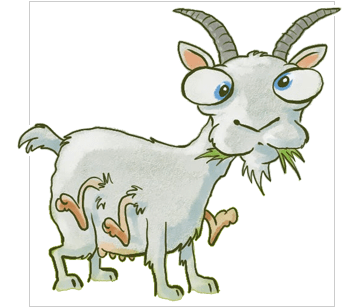
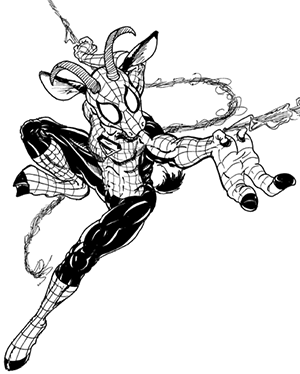
BioSteel is a trademark name for a high-strength fiber material made of a spider silk-like protein extracted from the milk of genetically modified goats, made by Nexia Biotechnologies. Biosteel and other biopolymers are being researched to provide lightweight, strong, and versatile materials for a variety of medical and industrial applications. Nexia Biotechnologies plans to use the spider silk from the milk of transgenic goats for bullet proof vests and anti-ballistic missile systems.
The company has successfully generated distinct lines of goats that produce in their milk recombinant versions of either the dragline silk proteins. When the female goats lactate, the milk, containing the recombinant silk, is harvested and subjected to traditional chromatographic techniques in order to purify the corresponding recombinant silk proteins to homogeneity. The purified silk proteins are then dried, dissolved using appropriate solvents and transformed into microfibers using wet-spinning fiber production methodologies.
Posted in Money, Technology |
Leave a Comment »
March 9, 2011

Bob Peak (1927 – 1992) was an American commercial illustrator best known for innovative design in the development of the modern movie poster. United Artists studio hired Peak in 1961 to design the poster images for the film ‘West Side Story.’ The success of Peak’s work on that film led to work on posters for designer Bill Gold.
In the mid-1970’s Peak’s style would become familiar to fans of science fiction films when he created the poster art for the futuristic film ‘Rollerball’ (1975), which was followed by the first six ‘Star Trek’ films, ‘Superman’ (1978), ‘Excalibur’ (1981), ‘In Like Flint,’ and ‘Apocalypse Now’ (1979). By the 1980’s only the movie poster artist Drew Struzan was in as much demand by film directors.
Posted in Art, Money |
1 Comment »
March 9, 2011

In Computer science, ‘The Cloud‘ is a marketing term for the Internet. In the case of electricity, users can simply use it. They do not need to worry where the electricity is from, how it is generated, or transported. At the end of the month, they will get a bill for the amount of electricity they consumed. The idea behind cloud computing is similar: The user can simply use storage, computing power, or specially crafted development environments, without having to worry how these work internally.
The cloud is a metaphor for the Internet based on how the internet is described in computer network diagrams; which means it is an abstraction hiding the complex infrastructure of the internet.
Posted in Language, Money, Technology |
Leave a Comment »
March 9, 2011

Moleskine is an Italian brand of notebooks. Moleskine books are typically bound in coated paper cardboard, with an elastic band to hold the notebook closed, a sewn spine that allows it to lie flat when opened, cream color paper, rounded corners, a ribbon bookmark, and an expandable pocket inside the rear cover. Among artists who used similar black notebooks were Oscar Wilde, Vincent van Gogh, Pablo Picasso, Ernest Hemingway and Henri Matisse.
read more »
Posted in Art, Money |
Leave a Comment »
March 9, 2011

Moog synthesizer [mohg] (pronounced like ‘vogue’) may refer to any number of analog synthesizers designed by Dr. Robert Moog or manufactured by Moog Music, and is commonly used as a generic term for analog and digital music synthesizers. The company pioneered the commercial manufacture of analog synthesizers in the early 1950s. The technological development that led to the creation of the Moog synthesizer was the invention of the transistor, which enabled researchers like Moog to build electronic music systems that were considerably smaller, cheaper and far more reliable than earlier vacuum tube-based systems.
The Moog synthesizer began to gain wider attention in the music industry after it was demonstrated at the Monterey International Pop Festival in 1967. The commercial breakthrough of a Moog recording was made by Wendy Carlos in the 1968 record ‘Switched-On Bach,’ which became one of the highest-selling classical music recordings of its era. In 1974 the German electronic group Kraftwerk further popularized the sound of the synthesizer with their landmark album ‘Autobahn,’ which used several types of synthesizer including a Minimoog. German-based Italian producer-composer Giorgio Moroder helped to shape the development of disco music also used Moog synthesizers.
Posted in Art, Money, Technology |
Leave a Comment »
March 9, 2011
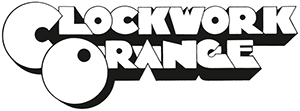
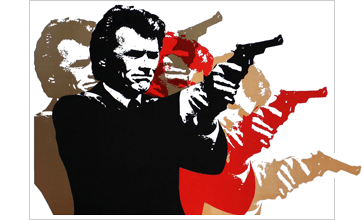
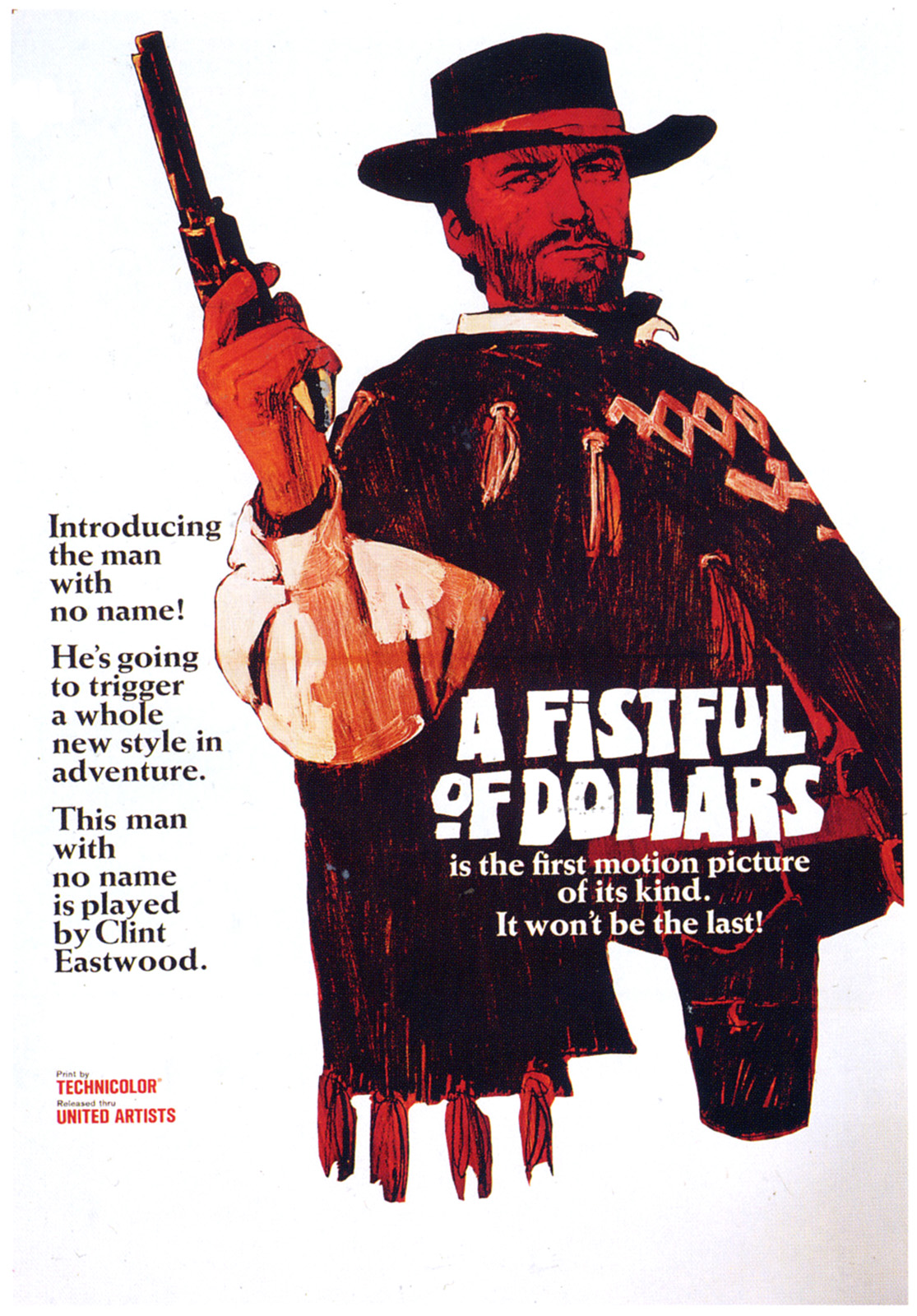
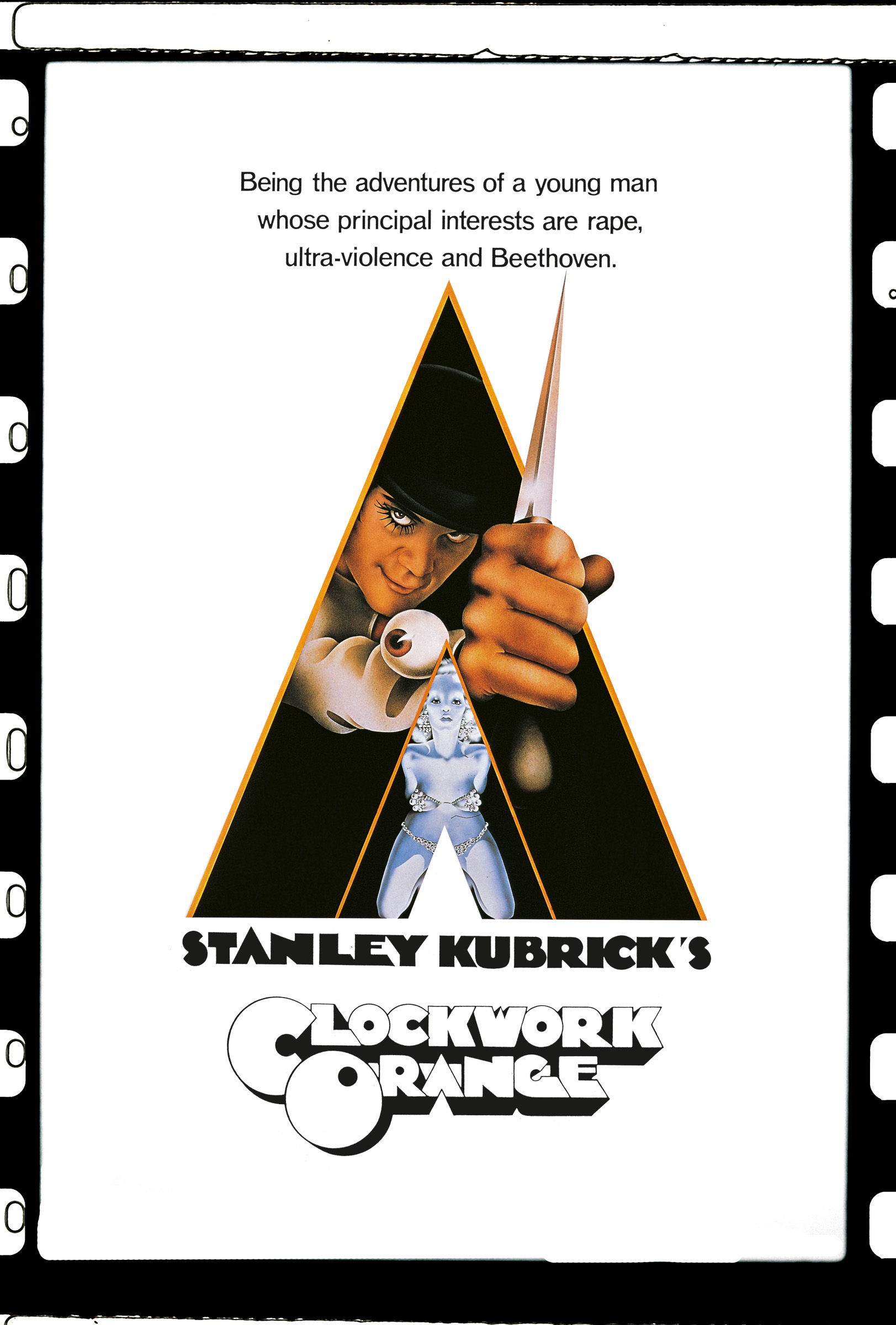
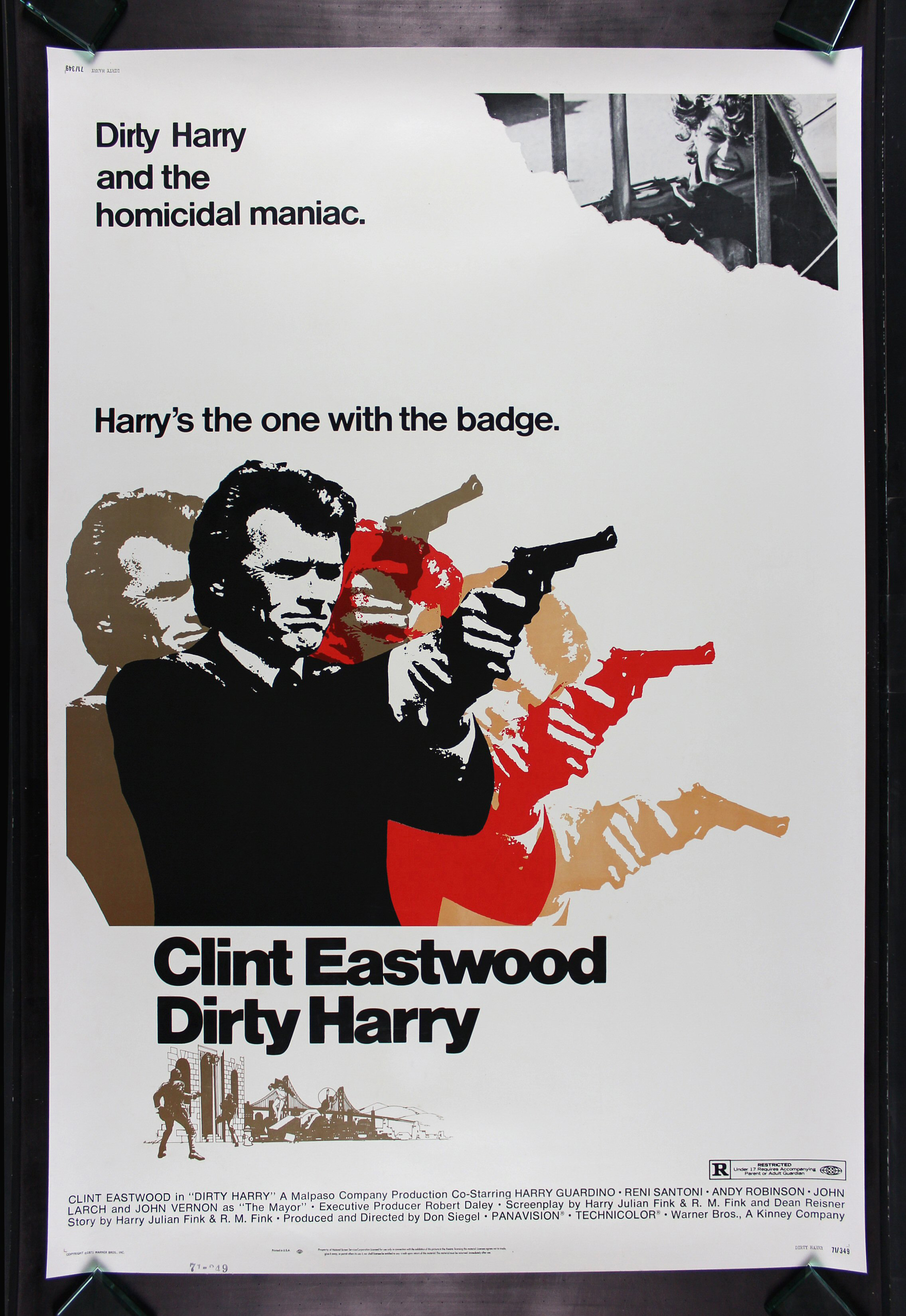
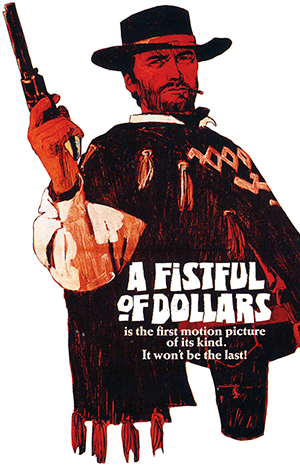
Bill Gold (b. 1921) is an American graphic designer best known for thousands of movie poster designs. During his 60-year career he worked with some of Hollywood’s greatest filmmakers, including Clint Eastwood, Alfred Hitchcock, Stanley Kubrick, Elia Kazan, Ridley Scott, and many more. Among his most famous film posters are those for Casablanca, A Clockwork Orange, and The Sting. Gold designed (and often photographed) posters for 35 consecutive Clint Eastwood films, from Dirty Harry (1971) to Mystic River (2004).
All of Gold’s posters have had a distinctive style. Each poster gave a film its unique identity, often creating the only lasting impression of a film that many would get. Gold’s ever-changing style reflected a wide range of current tastes, trends, and approaches, yet never strayed from the tried-and-true basics of film promotion. Together, Bill Gold’s poster art represents many of the most important American films since the advent of color photography.
Posted in Art, Money |
Leave a Comment »
March 8, 2011

Michel Fournier (b. 1944) is an adventurer and retired French Air Force colonel. He has been involved in planning several attempts to break freefall jumping height records, but has yet to be successful. In 1998, the French space agency chose Fournier to conduct a record jump to test the ability of astronauts to survive reentry without a space craft. This project was quickly canceled. In 2003, Fournier attempted his first privately-financed jump but the balloon ripped while being filled. ‘The New York Times’ reports that Fournier has spent nearly $20 million on his two private attempts.
Fournier was scheduled to carry out the Grand Saut (Big Jump) project in 2008, which would have seen him ascend to 40 km (25 mi) in a balloon and freefall 34 km (21 mi) to earth before opening his parachute at 6 km (3.7 mi). In the process he was expected to break the sound barrier, and reach speeds upward of 1,000 miles per hour. His freefall was expected to last 15 minutes. Joseph Kittinger set the previous parachute record by jumping from 31,333 meters (102,799 ft) in 1960 (with a small parachute for guidance) under Project Excelsior. Roger Eugene Andreyev from the Soviet Union holds the longest freefall record of 24,483 meters (80,325 ft) in 1962.
Posted in Games, Money, Technology |
Leave a Comment »
March 8, 2011
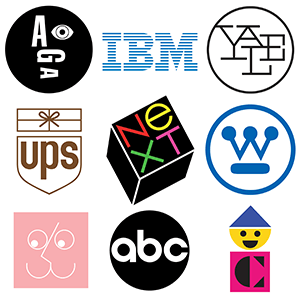

Paul Rand (1914 — 1996) was an American graphic designer, best known for his corporate logo designs, including the logos for IBM, UPS, Enron, Westinghouse, and ABC. He was one of the originators of the Swiss Style of graphic design, which emphasizes cleanliness, readability and objectivity.
read more »
Posted in Art, Money, Philosophy |
Leave a Comment »
March 8, 2011


Graphic design is the art of communication, stylizing, and problem-solving through the use of type, space, and image. Graphic design often refers to both the process (designing) by which the communication is created and the products (designs) which are generated.
Common uses of graphic design include identity (logos and branding), publications (magazines, newspapers and books), print advertisements, posters, billboards, website graphics and elements, signs and product packaging. For example, a product package might include a logo or other artwork, organized text and pure design elements such as images, shapes and color which unify the piece. Composition is one of the most important features of graphic design, especially when using pre-existing materials or diverse elements.
read more »
Posted in Art, Money, Technology |
Leave a Comment »
March 8, 2011

Saul Bass (1920 – 1996) was an American graphic designer and filmmaker, best known for his design on animated motion picture title sequences. During his 40-year career he worked for some of Hollywood’s greatest filmmakers, including most notably Alfred Hitchcock, Otto Preminger, Stanley Kubrick, and Martin Scorsese. His most famous title sequences are the animated paper cut-out of a heroin addict’s arm for Preminger’s ‘The Man with the Golden Arm,’ the text racing up and down what eventually becomes a high-angle shot of the UN building in Alfred Hitchcock’s ‘North by Northwest,’ and the disjointed text that races together and apart in ‘Psycho’ (1960).
Saul Bass designed the sixth AT&T Bell System logo. He also designed AT&T’s ‘globe’ logo after the breakup of the Bell System. Bass also designed Continental Airlines’ 1968 ‘jetstream’ logo which became the most recognized airline industry logo of the 1970s, and several other major corporate logos.
Posted in Art, Money |
Leave a Comment »
March 8, 2011

Alex Ross (b. 1970) is an American comic book artist. He is praised for his realistic, human depictions of classic comic book characters. Since the 1990s he has done work for Marvel Comics and DC Comics (e.g. Marvels and Kingdom Come, respectively), as well as being involved in creating independent works featuring superheroes (e.g. Astro City and Project Superpowers).
Because his painting style is time-consuming, he primarily serves as a plotter and/or cover artist. Ross’ rendering style, his attention to detail, and the perceived tendency of his characters to be depicted staring off into the distance has been satirized in Mad magazine.
read more »
Posted in Art, Money |
Leave a Comment »