March 3, 2011
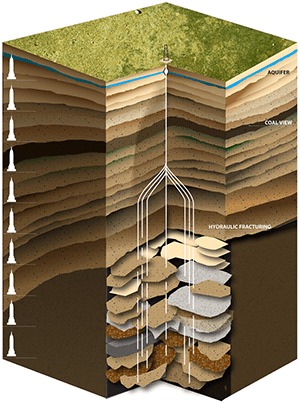
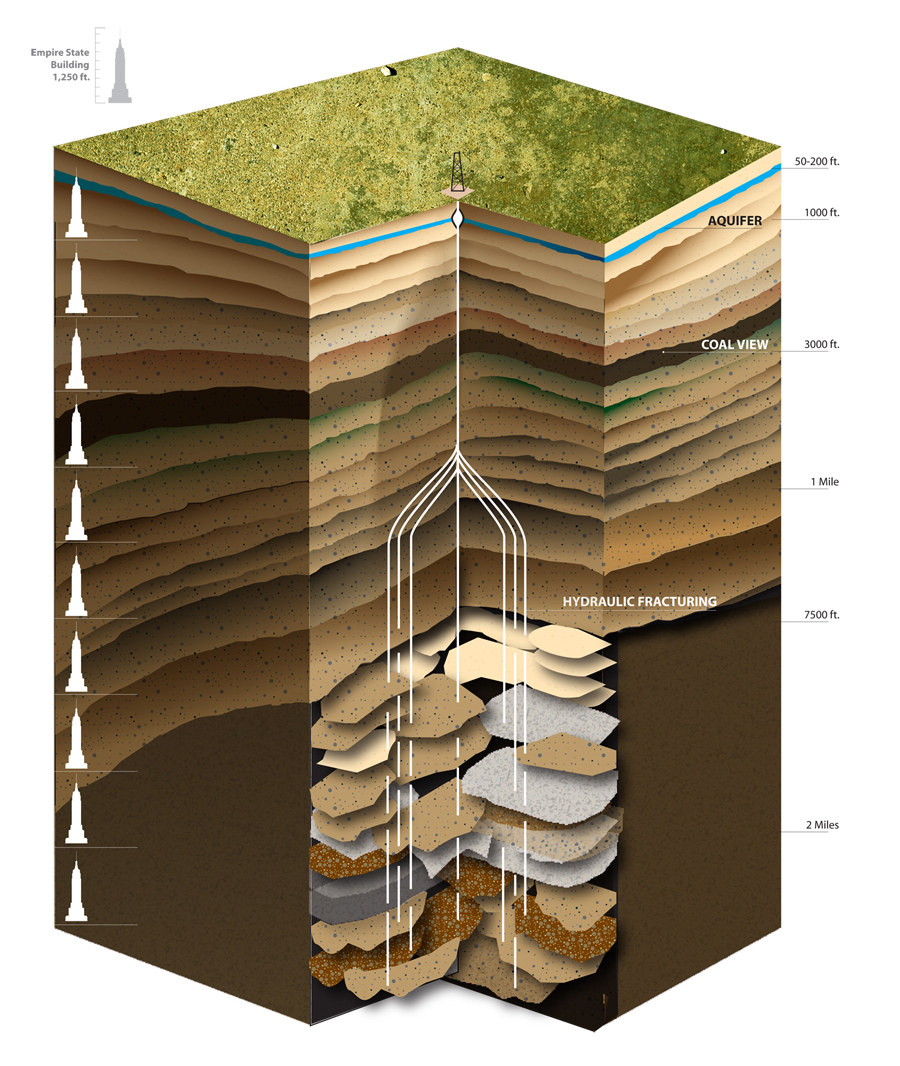
Hydraulic fracturing (‘fracking‘) is a process that results in the creation of fractures in rocks. The most important industrial use is in stimulating oil and gas wells, where hydraulic fracturing has been used for over 60 years. The fracturing is done from a wellbore drilled into reservoir rock formations to increase the rate and ultimate recovery of oil and natural gas.
Considerable controversy surrounds the current implementation of hydraulic fracturing technology in the United States. Environmental safety and health concerns have emerged and are being debated at the state and national levels. Natural hydraulic fractures include volcanic dikes, sills and fracturing by ice as in frost weathering. Man-made fractures are typically maintained after the injection by introducing a proppant, a material, such as grains of sand, ceramic, or other particulates, that prevent the fractures from closing when the injection is stopped.
Posted in Money, Politics, Technology |
Leave a Comment »
March 2, 2011
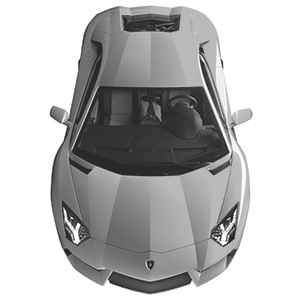
Lamborghini Aventador LP700-4 is the name of the high-performance two-door, two-seat sports car that replaces the Murciélago in the Italian automaker’s lineup. It was launched at the 2011 Geneva Motor Show. It features a brand new 6.5 litre V12 engine, producing 700 hp. It was designed by Filippo Perini of Lamborghini Centro Stile under the direction of Lamborghini chief of design Manfred Fitzgerald.
The etymology of the name comes from Lamborghini’s traditional fascination with the world of bullfighting. In this case, the Aventador was named for a Spanish fighting bull, that bore the number 32 singed on his hide, from the breeding stables of the sons of Don Celestino Cuadri Vides. Aventador gained fame in 1993 in the town of Zaragoza, Spain after a notably spirited, bloody and violent battle with a torero that led to the bull’s death.
Posted in Money, Technology |
Leave a Comment »
March 2, 2011

Al Jazeera (literally, ‘The Island,’ referring to the Arabian Peninsula) is an international news network headquartered in Doha, Qatar. Initially launched as an Arabic news and current affairs satellite TV channel with the same name, Al Jazeera has since expanded into a network with several outlets, including the Internet and specialty TV channels in multiple languages. The original Al Jazeera channel’s willingness to broadcast dissenting views, for example on call-in shows, created controversies in the Arab states of the Persian Gulf. The station gained worldwide attention following the September 11, 2001 attacks, when it was the only channel to cover the war in Afghanistan live from its office there.
The original Al Jazeera channel was started in 1996 by an emiri decree with a loan of 500 million Qatari riyals (US$137 million) from the Emir of Qatar, Sheikh Hamad bin Khalifa. By its funding through loans or grants rather than direct government subsidies, the channel claims to maintain independent editorial policy. Much of the staff came from the BBC World Service’s Saudi-co-owned Arabic language TV station, which had shut down after two years of operation because of censorship demands by the Saudi Arabian government.
Posted in Language, Money, Politics |
Leave a Comment »
March 2, 2011
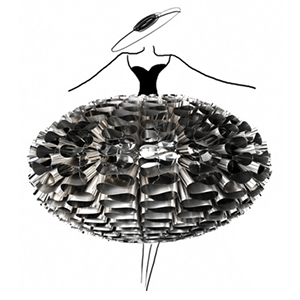
Haute couture [oht koo-toor] (French for ‘high sewing’ or ‘high dressmaking’) refers to the creation of exclusive custom-fitted clothing. Haute couture is made to order for a specific customer, and it is usually made from high-quality, expensive fabric and sewn with extreme attention to detail and finished by the most experienced and capable seamstresses, often using time-consuming, hand-executed techniques.
read more »
Posted in Art, Money |
Leave a Comment »
March 2, 2011

Bernard Arnault (b. 1949) is a French businessman. He is the founder, chairman, and CEO of LVMH, a large luxury goods conglomerate consisting of over fifty luxury brands, including Louis Vuitton, Dior, and Fendi. According to Forbes Magazine, Arnault is the world’s 7th and Continental Europe’s richest person, with a 2010 net worth of $US27.5 billion.
Posted in Money |
Leave a Comment »
March 2, 2011
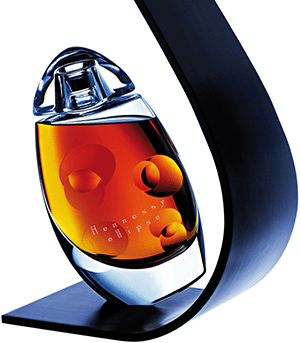

LVMH (Moët Hennessy • Louis Vuitton) is a French holding company and the world’s largest luxury goods conglomerate. It is the parent of around 60 sub-companies that each manage a small number of prestigious brands including Dom Pérignon, Belvedere Vodka, Marc Jacobs, and TAG Heuer. These daughter companies are, to a large extent, run autonomously. The group was formed after mergers brought together champagne producer Moët et Chandon and Hennessy, a leading manufacturer of cognac. In 1987, they merged with fashion house Louis Vuitton to form the current group.
Christian Dior, the luxury goods group, is the main holding company of LVMH, owning 42.38% of its shares, and 59.3% of its voting rights. Bernard Arnault, majority shareholder of Dior, is Chairman of both companies and CEO of LVMH. His successful integration of various famous aspirational brands into the group has inspired other luxury companies into doing the same. Thus Gucci (now part of the French conglomerate PPR) and Richemont have also created extended portfolios of luxury brands. The oldest of the LVMH brands is wine producer Château d’Yquem, which dates its origins back to 1593.
Posted in Art, Food, Money |
Leave a Comment »
March 2, 2011
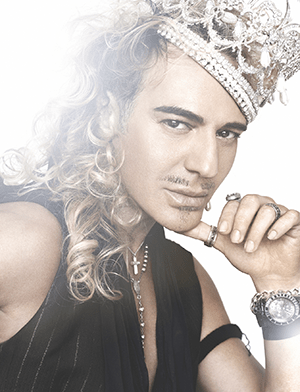
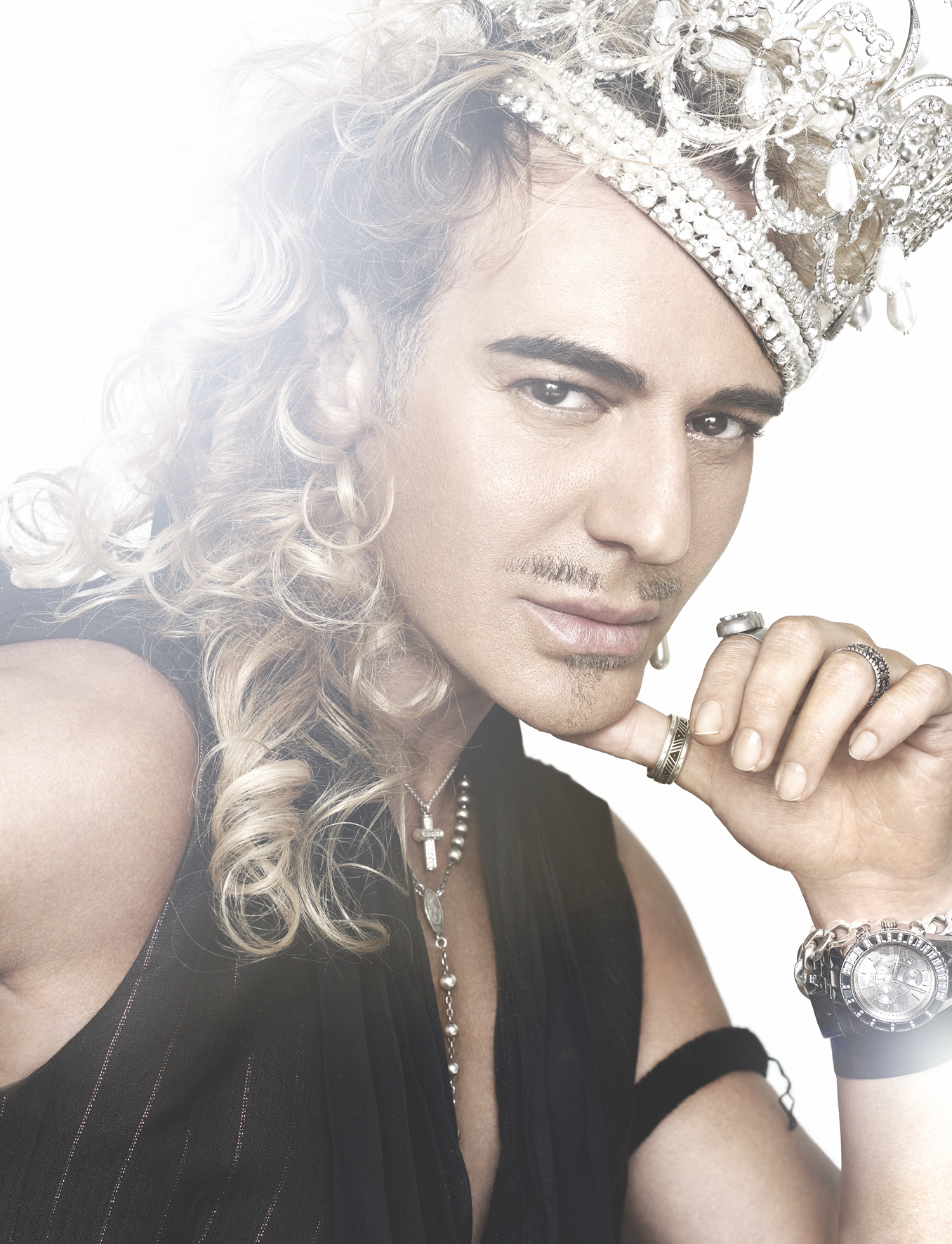
John Galliano (b. 1960) is a British fashion designer who was head designer of French haute couture houses Givenchy and Christian Dior. He led Dior from 1996 to 2011, when he was abruptly dismissed following his arrest over an alleged anti-Semitic tirade in a Paris bar.
The same day, a video surfaced of Galliano on a similar rant in the same bar the previous December. He was convicted of making ‘public insults based on origin, religious affiliation, race or ethnicity,’ and fined €6,000.
read more »
Posted in Art, Money, Politics |
1 Comment »
March 2, 2011

News Corporation is the world’s third-largest media conglomerate (behind The Walt Disney Company and Time Warner). The company’s Chairman & Chief Executive Officer is Rupert Murdoch. News Corp was created in 1979 by Murdoch as a holding company for News Limited (which he inherited in 1952 following the death of his father, Sir Keith Murdoch). The main asset left to him was ownership of the Adelaide afternoon tabloid, The News.
News Ltd. made its first acquisition in the United States in 1973, when it purchased the San Antonio Express-News. Soon afterwards it founded the National Star, a supermarket tabloid, and in 1976 it purchased the New York Post. In 1981 News Corp bought half of the movie studio 20th Century Fox, buying the other half in 1984. In 1996, Fox established the Fox News Channel, a 24-hour cable news station to compete against Ted Turner’s rival channel CNN. In 2007 News Corporation reached an agreement to purchase Dow Jones, publishers of The Wall Street Journal, for an estimated $5.6 billion.
Posted in Language, Money |
Leave a Comment »
March 2, 2011

Pleo is an animatronic dinosaur toy designed to emulate the appearance and behavior of a week-old baby Camarasaurus. It was designed by Caleb Chung, the co-creator of the Furby.
Chung selected this species of dinosaur because its body shape, stocky head, and relatively large cranium made it ideal for concealing the sensors and motors needed for lifelike animation. Each Pleo ‘learns’ from its experiences and environment through a sophisticated artificial intelligence and develops an individual personality.
Posted in Games, Money, Technology |
Leave a Comment »
March 2, 2011

Marvel vs. Capcom is a series of fighting games created by Capcom in which characters created by Marvel Comics and Capcom’s own characters appear together. While it was the first Vs. series involving Capcom, the Marvel brand exists to distinguish it from Capcom’s other Vs. series with SNK (Capcom vs. SNK), and Tatsunoko Production (Tatsunoko vs. Capcom: Ultimate All-Stars).
The Marvel characters depicted in these games were often based on their incarnations in various 1990s animated series (particularly X-Men), and were often voiced by the same voice actors.
Posted in Games, Money |
Leave a Comment »
March 2, 2011
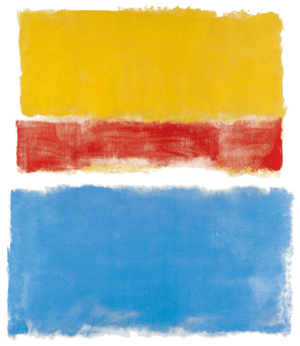
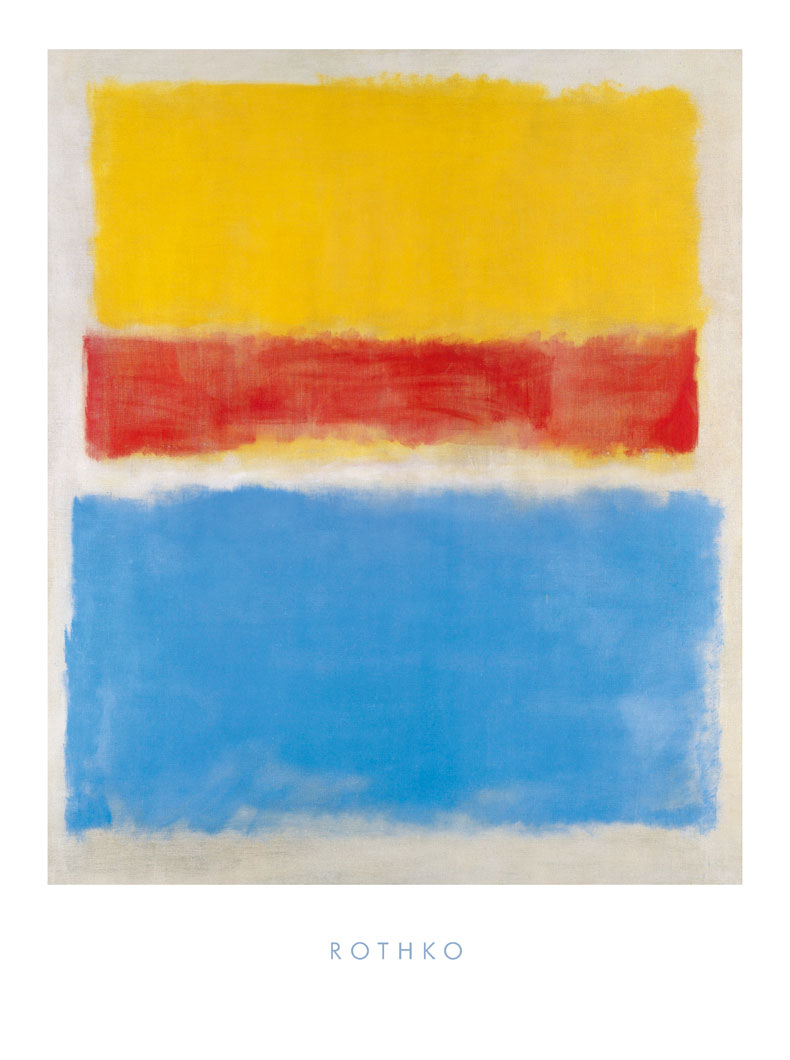
Mark Rothko (1903 – 1970) was a Latvian-born American painter. He is classified as an abstract expressionist, although he rejected the label, and even resisted classification as an ‘abstract painter.’ 1946 saw the creation of Rothko’s transitional ‘multiform’ paintings. He gradually transitioned from surrealistic, myth-influenced works of the early part of the decade to the highly abstract, Clyfford Still-influenced forms of pure color. For Rothko, these blurred blocks of various colors, devoid of landscape or human figure, let alone myth and symbol, possessed their own life force. They contained a ‘breath of life’ he found lacking in most figurative painting of the era.
He started with the application of a thin layer of binder mixed with pigment directly onto uncoated and untreated canvas on which he painted significantly thinned oils, creating a dense mixture of overlapping colors and shapes. His brush strokes were fast and light. Rothko used several original techniques that he tried to keep secret even from his assistants. Electron microscopy and ultraviolet analysis showed that he employed natural substances such as egg and glue, as well as artificial materials including acrylic resins, phenol formaldehyde, and modified alkyd. One of his objectives was to make the various layers of the painting dry quickly, without mixing of colors, such that he could soon create new layers on top of the earlier ones.
Posted in Art, Money |
Leave a Comment »
March 1, 2011

Ubuntu [ooh-boon-too] is a free operating system that uses the Linux kernel (the central component of most computer operating systems). The word ‘ubuntu’ is an old African word meaning ‘humanity.’ With an estimated global usage of more than 12 million users, Ubuntu is designed primarily for desktop use, although netbook and server editions exist as well. Web statistics suggest that Ubuntu’s share of Linux desktop usage is about 50%, and indicate upward-trending usage as a web server.
Ubuntu is sponsored by the UK-based company Canonical Ltd., owned by South African entrepreneur Mark Shuttleworth. Canonical generates revenue by selling technical support and services tied to Ubuntu, while the operating system itself is entirely free of charge.
Posted in Money, Politics, Technology |
Leave a Comment »



 The Daily Omnivore