February 27, 2011

The Pascha is a 12 story brothel in Cologne, Germany. With about 120 prostitutes, over 80 employees and up to 1000 customers per day, it is the largest brothel in Europe. The brothel was opened in January 1972 in the Hornstraße, under the name ‘Eros Center.’ It was Europe’s first high rise brothel. The city of Cologne wanted to eliminate the red light district ‘Kleine Brinkgasse’ in the city center and issued a license to build the new brothel on land owned by the city in the outskirts of town. The house rents 126 rooms on 7 floors to prostitutes for a fee of 180 Euros per day, which includes meals, medical care, and the 20 Euros of tax that authorities collect per prostitute per day.
The women come from many countries; about 30% of them are German. They typically sit outside of their rooms and negotiate with customers who wander the hallways. Some of the women live in their rooms, others rent a second room to stay in, while still others stay in their own apartments in Cologne. The house is open 24 hours a day; customers of the prostitutes pay an entrance fee of 5 Euros and then negotiate directly with the women, who work independently and keep all of the money. One floor is reserved for low-cost service, and another one for transsexual prostitutes. The house also contains a regular hotel, a table dance nightclub with separate entrance, several bars, and a separate club-style brothel on the top floor.
Posted in Money, Sex, World |
1 Comment »
February 27, 2011

SweeTango, a registered trademark for a cultivar of apples produced in Minneiska, Minnesota. It is a newly released hybrid brand apple that debuted in 2009. It is a pinkish apple consisting of a yellow background that is intermittent with red coloration. The surface of the apple has several distinguishing visual characteristics. The prominent white lenticels appear freckle-like on the fruit. The name comes from those that have tasted this new brand of apple. They say they taste sweet as well as tart at the same time, sweet and tangy.
University of Minnesota produced this variety of apple from their breeding program. Their 80 acre Horticultural Research Center near Victoria, Minnesota, produced the Minneiska variety apple from Honeycrisp and Zestar apple varieties, which they also specially breed. Others apple varieties they have developed in their facility are Fireside, Haralson, and Honeygold.
Posted in Food, Money, Science |
Leave a Comment »
February 27, 2011

Maoz is a chain of falafel fast food restaurants, serving purely vegetarian fare and promoting the ‘vegetarian lifestyle.’ The chain was founded by a husband and wife, Nahman Milo and Sima Bar-On, Israelis, who were living in Amsterdam. The first restaurant opened in 1991, and the first store outside The Netherlands opened in 1996. There are now 22 franchises globally, located in the Netherlands, The United States, France, Spain, the United Kingdom, Australia, and India.
Originally, restaurants offered only falafel, but the menu in some locations has since been expanded to include other vegetarian items, such as pommes frites (Belgian-style french fries). Muma Vegetarian is a copycat restaurant in Los Angeles.
Posted in Food, Money, World |
Leave a Comment »
February 27, 2011
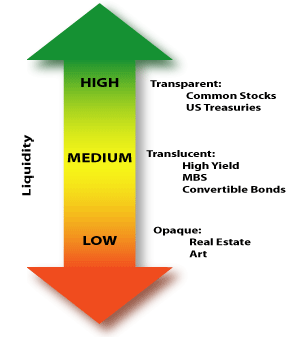
In business, economics or investment, market liquidity is an asset’s ability to be sold without causing a significant movement in the price and with minimum loss of value. Money, or cash in hand, is the most liquid asset, and can be used immediately to perform economic actions like buying, selling, or paying debt, meeting immediate wants and needs. An act of exchange of a less liquid asset with a more liquid asset is called liquidation. Liquidity also refers both to a business’s ability to meet its payment obligations, in terms of possessing sufficient liquid assets, and to such assets themselves.
Posted in Language, Money |
Leave a Comment »
February 27, 2011
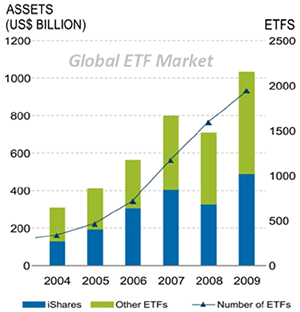
An exchange-traded fund (ETF) is an investment fund traded on stock exchanges, much like stocks. An ETF holds assets such as stocks, commodities, or bonds and trades at approximately the same price as the net asset value of its underlying assets over the course of the trading day.
An ETF combines the valuation feature of a mutual fund, which can be bought or sold at the end of each trading day for its net asset value, with the liquidity feature of a stock, which trades throughout the trading day at prices that may be more or less than its net asset value. ETFs have been available in the US since 1993 and in Europe since 1999. ETFs traditionally have been index funds, but in 2008 the U.S. Securities and Exchange Commission began to authorize the creation of actively managed ETFs.
Posted in Money |
Leave a Comment »
February 27, 2011
Rhythms del Mundo (lit. ‘World Rhythms’) is a 2006 nonprofit album, which fuses Cuban musicians including Ibrahim Ferrer and Omara Portuondo of the Buena Vista Social Club with artists such as Dido, Arctic Monkeys, U2, Coldplay, Sting, Jack Johnson, Maroon 5, Franz Ferdinand, Kaiser Chiefs and others. A follow-up album, Rhythms del Mundo Classics, was released in 2009. Album proceeds benefits the environmental nonprofit organization Artists Project Earth, which raises funds for climate change projects and disaster relief efforts.
Posted in Art, Money, Politics |
Leave a Comment »
February 24, 2011

Stadium Events is the English title of the video game ‘Running Stadium’ by Bandai. The game was released for the NES in Japan in 1986, in the United States in 1987. It was one of two games released in North America that were designed and branded for the Family Fun Fitness mat, a short-lived running pad accessory for the NES. The North American, or NTSC, version of Stadium Events is universally accepted as the rarest and most valuable licensed NES game. A copy sold January 2011 on ebay for $22,806.00, the highest price ever paid for a video game
The two Family Fun Fitness-branded games that had already been released, as well as Bandai’s version of the running pad accessory, were pulled from shelves and presumed destroyed. Because of this odd sequence of events, only 2000 copies are believed to have been produced, of which it is estimated that 200 copies reached consumers before being recalled. Today, collectors who follow the online sale of rare video games believe that fewer than 20 complete copies of the game exist, only two of which are known to be factory sealed.
Posted in Games, Money |
Leave a Comment »
February 24, 2011
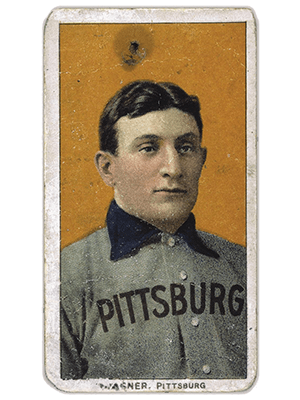
The T206 Honus Wagner baseball card depicts Pittsburgh Pirates’ Honus Wagner, a dead-ball era baseball player who is widely considered to be one of the best players of all time. The card was designed and issued by the American Tobacco Company (ATC) from 1909 to 1911 as part of its T206 series. Wagner refused to allow production of his card to continue, either because he did not want children to buy cigarette packs to get his card, or because he wanted more compensation from the ATC. Only 60 to 200 cards were ever distributed to the public.
In 1933, the card was first listed at a price value of US$50 in Jefferson Burdick’s The American Card Catalog, making it the most expensive baseball card in the world at the time. It has retained that title and is currently worth up to $2.8 million. The most famous T206 Honus Wagner is the ‘Gretzky’ card. The card has a controversial past, as some speculate that it was once altered, based on its odd texture and shape. In 1991 the card was sold to ice hockey figures Wayne Gretzky and Bruce McNall for $451,000. In 2007 they sold privately to an anonymous collector for $2.35 million.
Posted in Games, Money |
1 Comment »
February 24, 2011
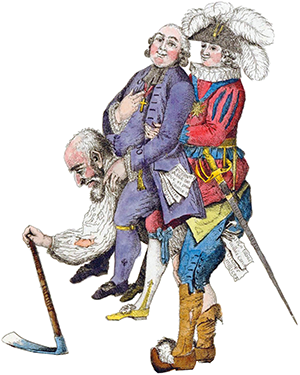
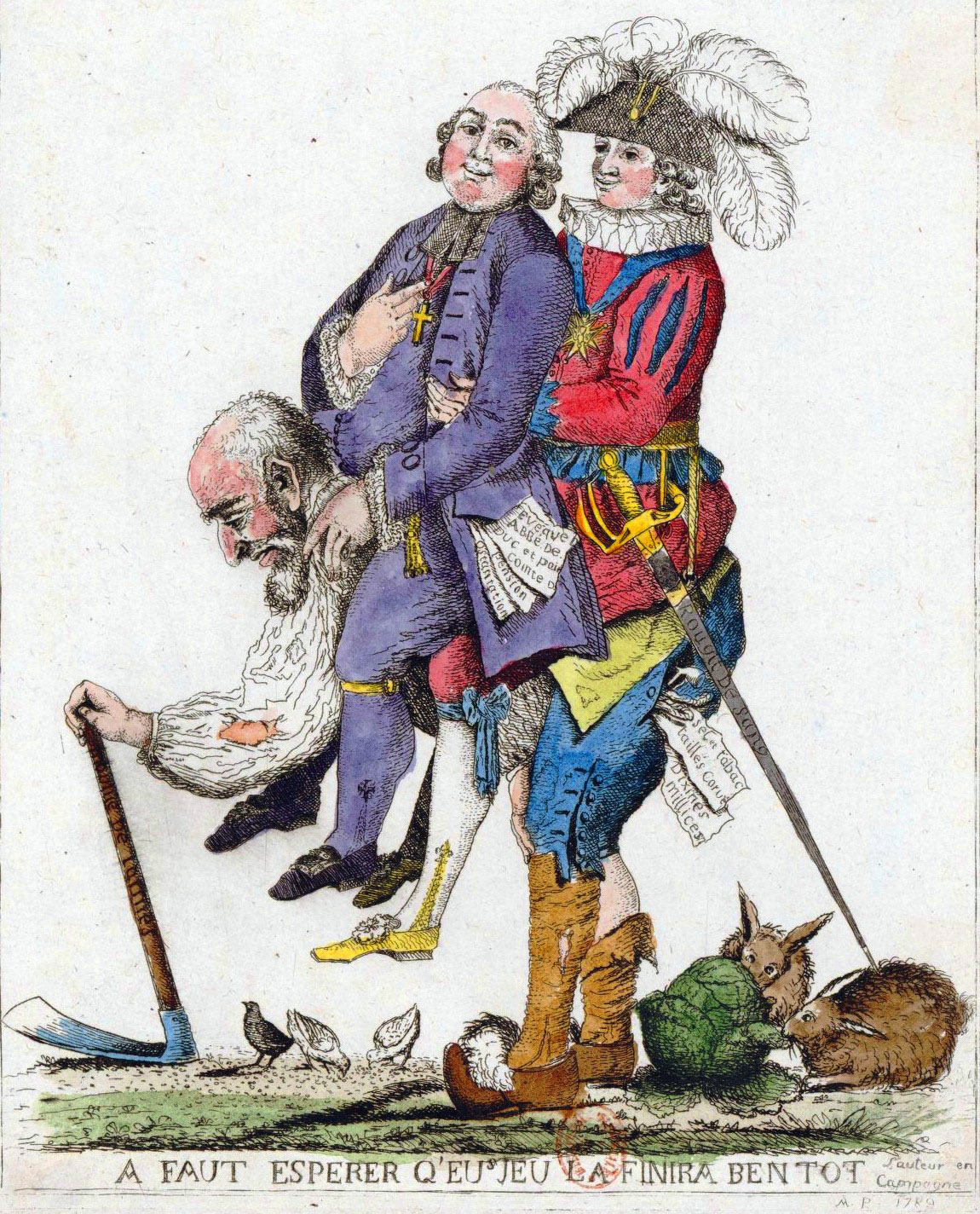
Estates of the realm were the broad divisions of a hierarchically conceived society in the Middle Ages and in Early Modern Europe. The first estate was typically the clergy, the second estate was the nobility, and the third estate was the commoners. While various realms inverted the order of the first two, commoners were universally tertiary, and often further divided into burghers (also known as bourgeoisie) and peasants; in some regions, there also was a population outside the estates.
An estate was usually inherited and based on occupation, similar to a caste. Legislative bodies or advisory bodies to a monarch were traditionally grouped along lines of these estates, with the monarch above all three estates. Meetings of the estates of the realm became early legislative and judicial parliaments. Monarchs often sought to legitimize their power by requiring oaths of fealty from the estates.
Posted in Language, Money, Politics |
Leave a Comment »
February 24, 2011
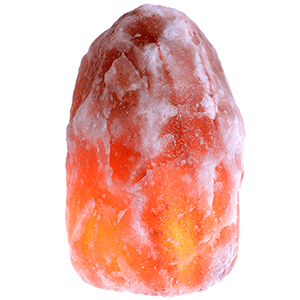
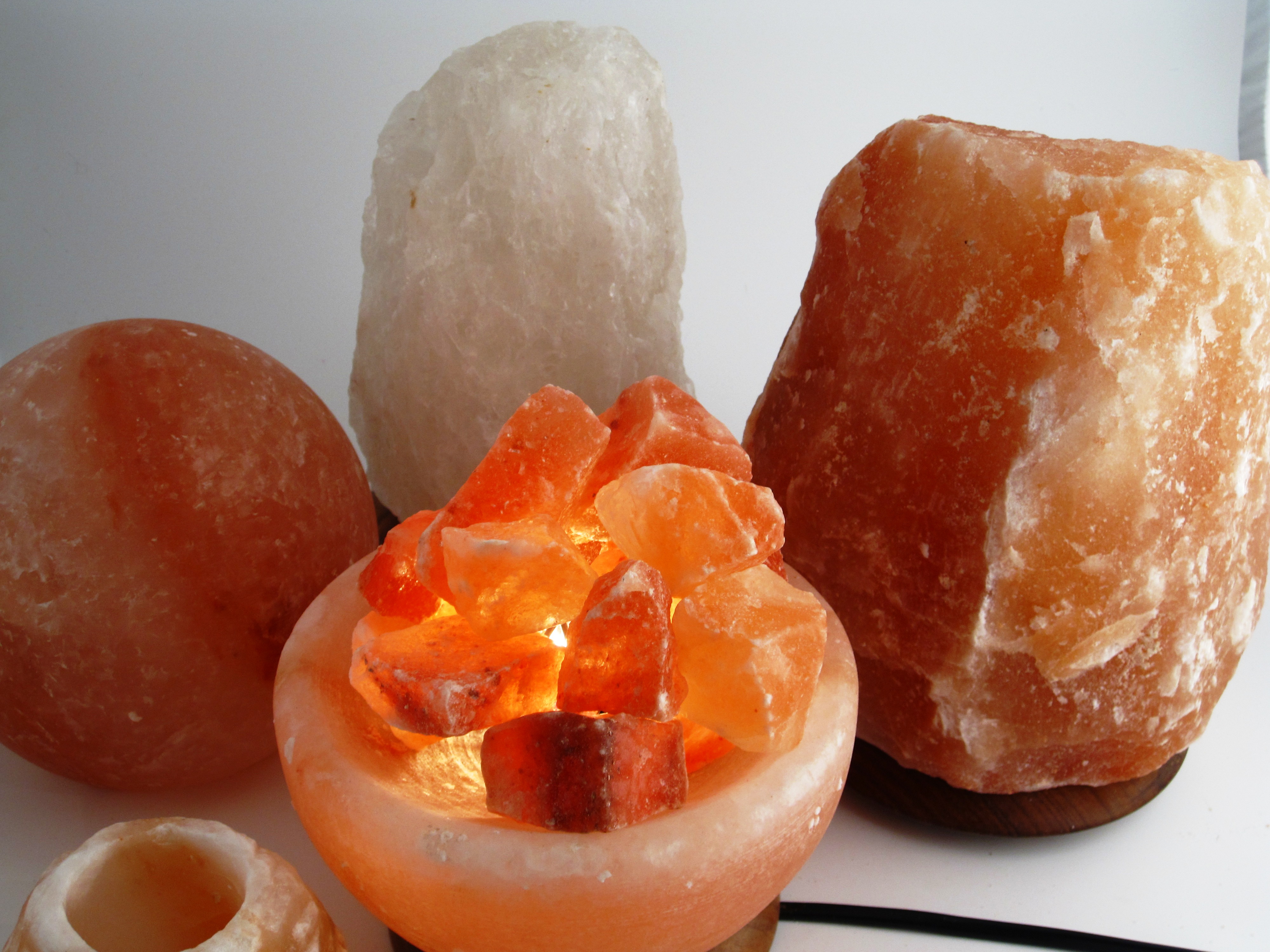
Himalayan salt is a marketing term for Halite (commonly known as rock salt) from Pakistan. It is mined in the Khewra Salt Mines, the second largest salt mine in the world, located about 300 km from the Himalayas, and about 160 kilometres from Islamabad, in the foothills of the Salt Range. The salt sometimes comes out in a reddish or pink color, with some crystals having an off-white to transparent color. It is commonly used for cooking similar to regular table salt, brine, and bath products.
Rock salts mined in several parts of the world, including Hawaii, Utah, Bolivia, the Murray-Darling basin of Australia, Peru, and Poland are marketed as Himalayan salt or pink salt. The color results from iron oxide. More recently, large crystal rocks are also used as Salt lamps. A salt lamp is a lamp carved from a larger salt crystal, often colored, with an incandescent bulb or a candle inside. The lamps give an attractive glow and are suitable for use as nightlights or for ambient mood lighting.
Posted in Food, Language, Money |
Leave a Comment »
February 23, 2011
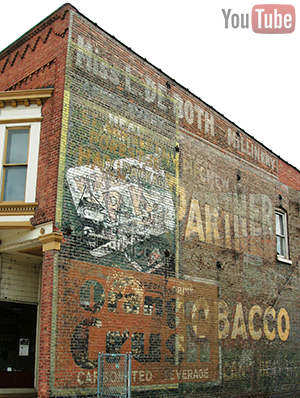
‘Ghost sign‘ is a term for old hand-painted advertising signage that has been preserved on a building for an extended period of time. The signage may be kept for its nostalgic appeal, or simply indifference by the owner. They are also called ‘fading ads’ and ‘brickads.’ In many cases these are advertisements painted on brick that remained over time. Many ghost signs still visible are from the 1890s to 1960s. Such signs were most commonly used in the decades before the Great Depression.
As signage advertising formats changed, less durable signs appeared in the later 20th century, and ghost signs from that era are less common. Kathleen Hulser of the New York Historical Society, said, ‘[The signs] evoke the exuberant period of American capitalism. Consumer cultures were really getting going and there weren’t many rules yet, no landmarks preservation commission or organized community saying: ‘Isn’t this awful? There’s a picture of a man chewing tobacco on the corner of my street.’
Posted in Art, Language, Money |
Leave a Comment »
February 22, 2011
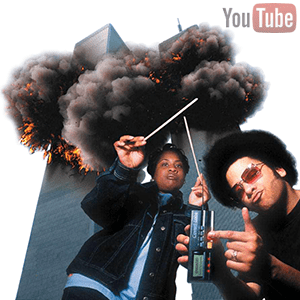
The Coup is a political hip hop group based in Oakland, California. It formed as a three-member group in 1992 with emcees Boots Riley and E-Roc along with DJ Pam the Funkstress. E-Roc left on amicable terms after the group’s second album. The duo is politically Marxist in its music and aligns itself with other radical hip-hop groups such as Dead Prez. The group’s music is characterized by electronic sounds and bass-driven backbeats overlaid by humorous, cynical and sometimes violent lyrics criticizing capitalism, American politics, patriarchal exploitation, and police brutality, among other things.
In Novemeber 2001, The Coup released ‘Party Music’ to widespread praise and condemnation. The original album cover art depicted Pam and Boots standing in front of the twin towers of the World Trade Center as they are destroyed by huge explosions, and Riley is pushing the button on a guitar tuner. The cover art was finished in June 2001. In response to the uncanny similarity of the artwork with the WTC attack of 9/11, the album release was held back until alternative cover art could be prepared.
Posted in Art, Money, Politics |
Leave a Comment »