
Hi-C is a juice drink made by the Minute Maid division of The Coca-Cola Company. Hi-C was created by Niles Foster in 1946. By 1958 it had become an American supermarket staple, available nationwide. Foster’s original formula contained orange juice concentrate, peel oil and orange essences, sugar, water, citric acid and ascorbic acid (vitamin C). The name ‘Hi-C’ stressed the vitamin content. Hot-packed in enamel-lined 56-ounce cans, the product needed no refrigeration before opening.
Grape, the second flavor introduced, evolved naturally from the fact that the Geneva, Ohio, co-packer was also processing fresh grapes. Apple and cherry drinks were introduced as a result of the fresh fruit processing operations at the Paw Paw, Michigan, co-packer plant. The contract packing concept is still used today by the Coca-Cola Foods Division. In 1987, Ecto-Cooler was a product tie-in with the cartoon series ‘The Real Ghostbusters,’ based on the 1984 live-action film.
Hi-C
Slush

A slush or a slushie is a flavored frozen drink. Frozen carbonated beverages, typified by the Slurpee or ICEE, are made by freezing a carbonated drink. These machines are complicated and expensive, and notably require a carbon dioxide supply. They make a very fine and ‘dry’ slush. Frozen uncarbonated beverages are made by freezing a non-carbonated juice or liquid. These machines do not require a pressure chamber, and so are much cheaper and easier to maintain. They make a slightly wetter slush. They are notable in the wide variety of drinks they create, including coffee-flavored ices and alcoholic drinks like margaritas and daiquiris.
Conventional slush drinks, typified by the Slush Puppie, use a single slurry made by freezing a sweetened base, similar to apple juice. This slurry is mixed at serving time with a flavoring syrup. These drinks are notable in that the flavored syrup can be drawn out of the drink, leaving a relatively-unflavoured base ice behind. ‘Instant’ slush drinks (beverages that turn to slush upon opening) are formed via supercooling (e.g. Slush-It!, the Chill Chamber which allows businesses to store beverages at below freezing temperatures, and supercooled Sprite from Coca-Cola which required special vending machines).
Small Is Beautiful

Small Is Beautiful: Economics As If People Mattered is a collection of essays by British economist E. F. Schumacher. It is often used to champion small, appropriate technologies that are believed to empower people more, in contrast with phrases such as ‘bigger is better.’ First published in 1973, ‘Small Is Beautiful’ brought Schumacher’s critiques of Western economics to a wider audience during the 1973 energy crisis and emergence of globalization.
Schumacher argues that the modern economy is unsustainable. Natural resources (like fossil fuels), are treated as expendable income, when in fact they should be treated as capital, since they are not renewable, and thus subject to eventual depletion. He further argues that nature’s resistance to pollution is limited as well. He concludes that government effort must be concentrated on sustainable development.
Wicked Problem

‘Wicked problem‘ is a phrase originally used in social planning to describe a problem that is difficult or impossible to solve because of incomplete, contradictory, and changing requirements that are often difficult to recognize. Moreover, because of complex interdependencies, the effort to solve one aspect of a wicked problem may reveal or create other problems.
A problem whose solution requires a great number of people to change their mindsets and behavior is likely to be a wicked problem. Therefore, many standard examples of wicked problems come from the areas of public planning and policy. These include global climate change, natural hazards, healthcare, the AIDS epidemic, pandemic influenza, international drug trafficking, homeland security, nuclear weapons, and nuclear energy and waste.
Bread and Circuses

‘Bread and Circuses‘ (Latin: panem et circenses) is a metaphor for a superficial means of appeasement. In the case of politics, the phrase is used to describe the creation of public approval, not through exemplary or excellent public service or public policy, but through the mere satisfaction of the immediate, shallow requirements of a populace. The phrase also implies the erosion or ignorance of civic duty amongst the concerns of the common man (l’homme moyen sensuel).
In modern usage, the phrase has become an adjective to deride a populace that no longer values civic virtues and the public life. To many across the political spectrum, left and right, it connotes the triviality and frivolity that in popular culture is supposed to have characterized the Roman Empire prior to its decline.
Paul Verhoeven

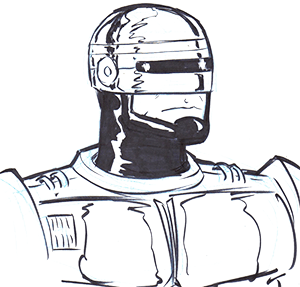
Paul Verhoeven (b. 1938) is a Dutch film director, screenwriter, and producer who has made movies in both the Netherlands and the United States. Explicitly violent and/or sexual content and social satire are trademarks of both his drama and science fiction films. He is best known for directing the American feature films RoboCop (1987), Total Recall (1990), Basic Instinct (1992), Showgirls (1995), Starship Troopers (1997), and Hollow Man (2000).
Alamo Drafthouse

The Alamo Drafthouse is an American cinema chain founded in 1997 in Austin, Texas, United States. It has screens in nine locations across Texas and one in Winchester, Virginia. The company began as a second-run movie theater, and distinguished itself by the food and drink service offered inside the theater, including cold beer. The seating is arranged with rows of cabaret style tables in front of each row of seats, with an aisle between each row to accommodate waiter service. Customers write their orders on slips of paper, which are picked up by black-clad waiters moving quietly between the rows.
Charles Saatchi
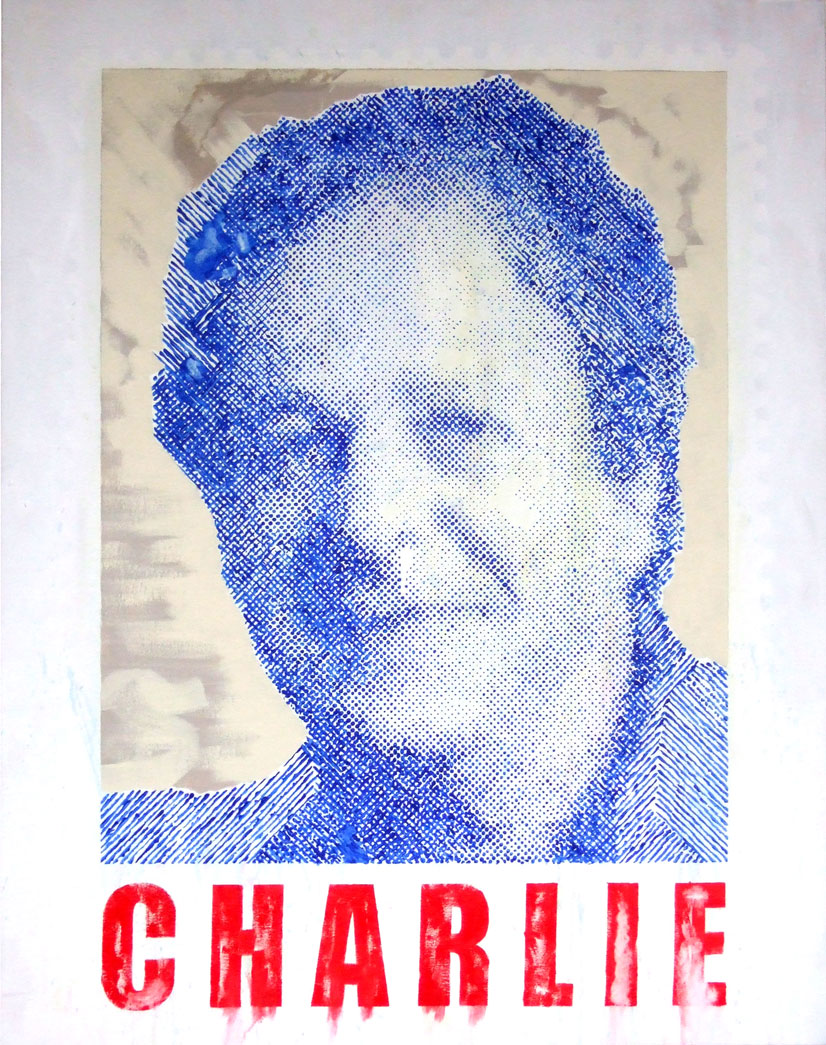
Charles Saatchi (b. 1943) is the co-founder with his brother Maurice of the global advertising agency Saatchi & Saatchi, and led that business – the world’s largest advertising agency in the 1980s – until they were forced out in 1995. Later that year the Saatchi brothers formed a new agency called M&C Saatchi. Charles is the second of four sons born to a wealthy Iraqi Jewish family in Baghdad. The name ‘Saatchi’ means ‘Watchmaker’ in Turkish. He attended Christ’s College, a secondary school in North London. During this time he developed an obsession with U.S. pop culture, including the music of Elvis Presley, Little Richard, and Chuck Berry. He also manifested an enthusiasm for collections, from cigarette cards and jukeboxes to ‘Superman’ comics and nudist magazines.
Charles is known worldwide as an art collector and owner of the Saatchi Gallery, and in particular for his sponsorship of the Young British Artists (YBAs), including Damien Hirst and Tracey Emin. He is a notorious recluse, even hiding from clients when they visited his agency’s offices, and has only ever granted two newspaper interviews. He does not attend his own exhibition openings; when asked why by the Sunday Telegraph, he replied: ‘I don’t go to other people’s openings, so I extend the same courtesy to my own.’
Wildcat Strike

A wildcat strike is a strike action taken by workers without the authorization of their trade union officials. This is sometimes termed unofficial industrial action. Wildcat strikes were the key fighting strategy during the events of May 1968 in France, during which the country saw its largest general strike, resulting in the economy coming to a virtual standstill.
The strike involved eleven million workers for a continuous two weeks, and its impact was such that it almost caused the collapse of President Charles de Gaulle’s government. Groups revolted against modern consumer and technical society and embraced left-wing positions that were critical of authoritarianism and Western capitalism.
Steal This Book

Steal This Book is a book written by Abbie Hoffman in 1970 and published in 1971, which includes advice on growing cannabis, starting a pirate radio station, living in a commune, stealing food, shoplifting, stealing credit cards, preparing a legal defense, making pipe bombs, and obtaining a free buffalo from the Department of the Interior. It discusses various tactics of fighting as well as giving a detailed list of affordable and easy ways to find weapons and armor that can be used in the event of a confrontation with law enforcement. The book advocates rebelling against authority in all forms, governmental and corporate.
In the book, Hoffman referred to America as the ‘Pig Empire’ and stated that it was not immoral to steal from it. In fact, Hoffman wrote, it was immoral not to do so. The term was picked up by the Yippies, and was widely used by what became known as the ‘Woodstock Nation.’ As the book ages, the specific details of the various techniques and advice Hoffman gives have become largely obsolete for technological or regulatory reasons.
Recuperation

Recuperation [ri-koo-puh-rey-shuhn] is the process by which socially radical ideas are commodified and incorporated into mainstream society. It is the opposite of détournement, in which conventional ideas and images are commodified with radical intentions. Recuperation was first proposed by Marxist theorist Guy Debord and the Situationists. The term sometimes carries a negative connotation among radicals because recuperation often bears the consequence (whether intended or unintended) of fundamentally altering the meanings behind ideas and symbols due to their appropriation into mainstream culture, often to the dismay of the radical groups who originated them.
A dynamic similar to recuperation often occurs in the sphere of the punk rock subculture: many musical styles developed from punk rock (such as Grunge, Thrash metal, Metalcore, Post-punk, Indie rock, New Wave, Emo, and Pop punk) have garnered mainstream popularity; artists of these genres have signed to major labels, and have become household names in the mainstream culture. Kurt Cobain, in his journals, often expressed resentment at how his own band played into this situation. The formerly punk-rock group Chumbawumba, has attempted to subvert the recuperation concept by intentionally ‘selling out’ but then using their earned money to donate to the radical causes.
Buy Nothing Day

Buy Nothing Day (BND) is an international day of protest against consumerism observed by social activists. Typically celebrated the Friday after American Thanksgiving in North America and the following day internationally. It was founded by Vancouver artist Ted Dave and subsequently promoted by ‘Adbusters’ magazine in Canada. The first Buy Nothing Day was organized in Vancouver in September 1992. In 1997, it was moved to the Friday after American Thanksgiving, also called ‘Black Friday,’ which is one of the 10 busiest shopping days in the United States.
Outside North America and Israel, Buy Nothing Day is the following Saturday. Adbusters was denied advertising time by almost all major television networks except for CNN, which was the only one to air their ads. Soon, campaigns started appearing in the United States, the United Kingdom, Israel, Austria, Germany, New Zealand, Japan, the Netherlands, France, and Norway. Participation now includes more than 65 nations.



