February 11, 2011
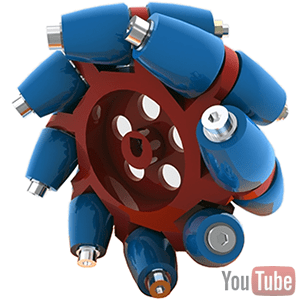
The Mecanum wheel is one design for a wheel which can move in any direction. It is sometimes called the Ilon wheel after its Swedish inventor, Bengt Ilon, who came up with the idea in 1973 when he was an engineer with the Swedish company Mecanum AB. It is a conventional wheel with a series of rollers attached to its circumference. As well as moving forward and backward like conventional wheels, they allow sideways movement by spinning wheels on the front and rear axles in opposite directions.
Posted in Money, Technology |
Leave a Comment »
February 11, 2011
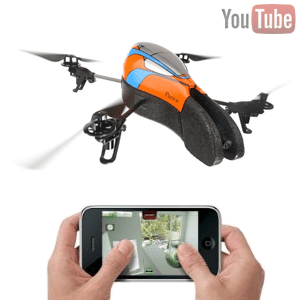
The Parrot AR.Drone is a RC quadricopter with cameras attached to it built by French wireless products manufacturer Parrot. It is designed to be controllable with an iPhone, iPad, or an iPod Touch. Parrot demos the device with 2 games, a virtual combat called ‘DRONE WAR’ with solo and multiplayer mode and a ‘ROBOT’ solo game demo against a virtual Robot. Parrot has launched ARdrone.org Open API game development platform, to gather game studios and developers. It sells for around $300 on Amazon.com.
Posted in Games, Money, Technology |
Leave a Comment »
February 10, 2011

A spite house is a building constructed or modified to irritate neighbors or other parties with land stakes. Spite houses often serve as obstructions, blocking out light or access to neighboring buildings, or as flamboyant symbols of defiance. Because long-term occupation is at best a secondary consideration, spite houses frequently sport strange and impractical structures. Spite houses are much rarer than spite fences. This is partially attributable to the fact that modern building codes often prevent the construction of houses likely to impinge on neighbors’ views or privacy.
Probably the most famous spite house was the Richardson Spite House in New York City at Lexington Avenue and 82nd Street. Built in 1882 and demolished in 1915, it was four stories tall, 104 feet (31.7 m) long, and only five feet (1.5 m) wide. Joseph Richardson, the owner of the plot of the same dimensions, built it after the owner of the adjacent plot, Hyman Sarner, unsuccessfully tried to purchase the land. Sarner considered the plot useless by itself and offered only $1000; Richardson demanded $5000. After the deal fell through, Richardson had an apartment building constructed on his land. It was a functional (albeit impractical) apartment building with eight suites, each consisting of three rooms and a bath.
Posted in Humor, Money |
Leave a Comment »
February 10, 2011

Nickelodeon compounds refers to a number of molding substances for children’s play that were created and sold by the children’s television channel Nickelodon and toy company Mattel in the 1990s. Like most molding compounds, they could be kept in their container to retain plasticity, or molded and allowed to harden overnight. They featured a wide variety of compounds with different attributes. The first compound, whose idea was taken from the show ‘You Can’t Do That on Television,’ was Nickelodeon ‘Slime,’ first manufactured in the 1980s.
The most popular compound, ‘Gak,’ was inspired by the game show ‘Double Dare.’ It made a ‘fart’ noise when squeezed into its clear, star-shaped container. In 1994 ‘Floam,’ originally called ‘bubble-gak,’ a compound composed of microbeads in a foam-like substance, was released. ‘Smud’ was much like Play-Doh, but slicker and would not dry out if left out of its container. ‘Skweeez’ was also like Play-Doh but had a more Marshmallow-like feel. ‘Gooze’ was similar to ‘Gak’ but more watery. ‘Sqand,’ or ‘Magic sand,’ begins as ordinary sand, but is dyed and coated in a hydrophobic substance.
Posted in Humor, Money, Technology |
Leave a Comment »
February 9, 2011

Patricia Piccinini (born in 1965 in Freetown, Sierra Leone) is an Australian artist and hyperrealist sculptor. Her art work came to prominence in Australia in the late 1990s.
Her major artworks often reflect her interests in issues such as bioethics, biotechnologies and the environment. Other Australian artists who work in a similar idiom are Martine Corompt, Sam Jinks and Ron Mueck.
Posted in Art, Money, Politics |
Leave a Comment »
February 9, 2011

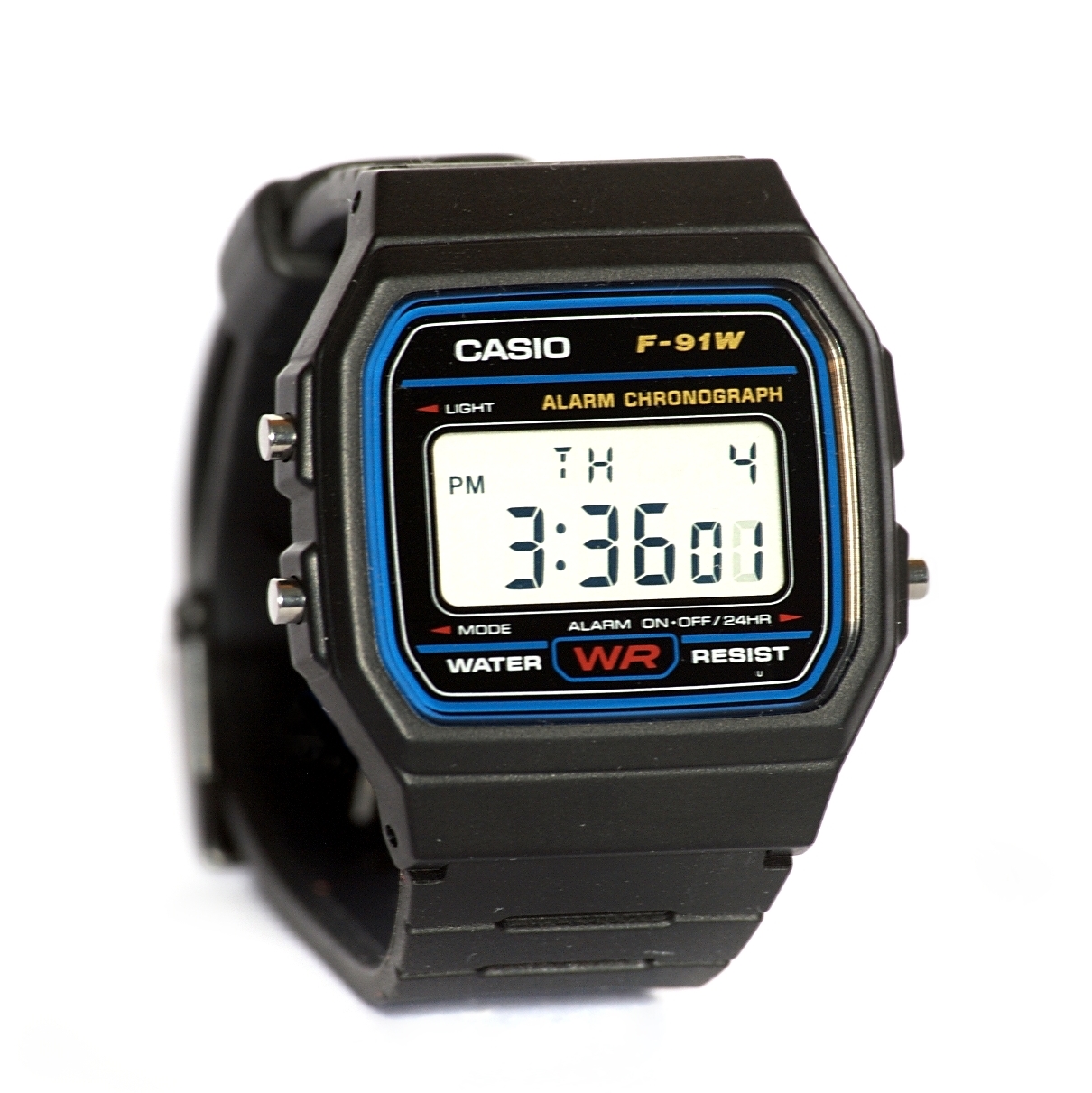
The Casio F91W is an inexpensive quartz digital watch, manufactured by the Japanese firm Casio Computer Co., Ltd.. It was introduced in 1991. This watch is widely available throughout the world. It is widely noticeable due to its classic Casio shape. Prices vary, normally in the $7.50 – $15 range. United States intelligence officials have identified the F91W as a watch that terrorists often use when constructing time bombs.
Posted in Money, Technology, World |
Leave a Comment »
February 8, 2011
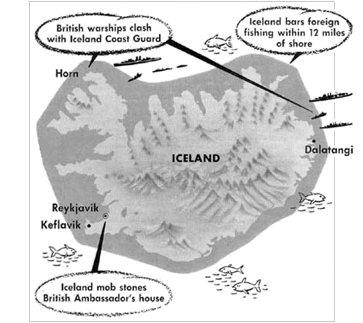
The Cod Wars were a series of confrontations in the 1950s and 1970s between the United Kingdom and Iceland regarding fishing rights in the North Atlantic. In 1972, Iceland unilaterally declared an Exclusive Economic Zone extending beyond its territorial waters, before announcing plans to reduce overfishing. It policed its quota system with the coast guard, leading to a series of net-cutting incidents with British trawlers that fished the areas. As a result, a fleet of Royal Naval warships and tug-boats were employed to act as a deterrent against any future harassment of British fishing crews by the Icelandic craft.
The conflict involved several cases of vessels ramming each other. The dispute ended in 1976 after Iceland threatened to close a major NATO base in retaliation for Britain’s deployment of naval vessels within the disputed 200 nautical mile (370 km) limit. The British government conceded, and agreed that after 1 December 1976 British vessels would not fish within the previously disputed area.
Posted in Food, Money, War |
Leave a Comment »
February 8, 2011
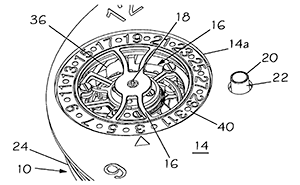

A tourbillon [tor-bee-yon] (French for ‘whirlwind’) is an addition to the mechanics of a watch escapement (the device which converts continuous rotational motion into an oscillating or back and forth motion; the source of the ‘ticking’ sound produced by watches and clocks).
Developed around 1795 by the French – Swiss watchmaker Abraham-Louis Breguet from an earlier idea by the English chronometer maker John Arnold a tourbillon counters the effects of gravity by mounting the escapement and balance wheel in a rotating cage. Originally an attempt to improve accuracy, tourbillons are still included in some expensive modern watches as a novelty and demonstration of watchmaking virtuosity. The mechanism is usually exposed for display on the watch’s face.
Posted in Art, Money, Technology |
Leave a Comment »
February 7, 2011

Andreas Gursky (b. 1955) is a German visual artist known for his enormous architecture and landscape color photographs, some ten feet or more wide, and most employing a high point of view. As of early 2007, Gursky holds the record for highest price paid at auction for a single photographic image. His print 99 Cent II, Diptych, sold for GBP 1.7 million (USD $3.3 million) at Sotheby’s, London. Before the 1990s, Gursky did not digitally manipulate his images.
In the years since, Gursky has been frank about his reliance on computers to edit and enhance his pictures, creating an art of spaces larger than the subjects photographed. Visually, Gursky is drawn to large, anonymous, man-made spaces—high-rise facades at night, office lobbies, stock exchanges, the interiors of big box retailers (See his print 99 Cent II Diptychon). His style is described by art critics as enigmatic and deadpan. There is little to no explanation or manipulation on the works. His photography is straightforward.
Posted in Art, Money, Technology |
Leave a Comment »
February 7, 2011
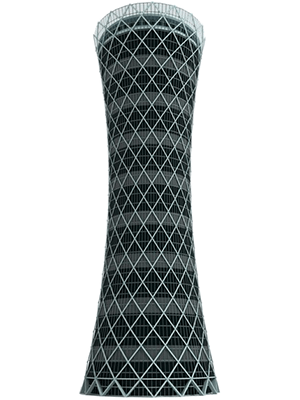
Doha [doh-hah] (Arabic for ‘the big tree’ or ‘the sticky tree’) is the capital city of the state of Qatar. Located on the Persian Gulf, it has a population of around one million. Doha is Qatar’s largest city, with over 80% of the nation’s population residing in the city or its surrounding suburbs, and is also the economic center of the country.
Much of Qatar’s oil and natural gas wealth is visible in Doha, which is home to the headquarters of the country’s largest oil and gas companies. Doha’s economy is built on the revenue the country has made from its oil and natural gas industries, and the Qatari government is rapidly trying to diversify the Qatari economy in order to move away from this dependence on oil. As a result, Doha is currently experiencing a very large boom, with the city developing very rapidly.
Posted in Money, Technology, World |
Leave a Comment »
February 7, 2011

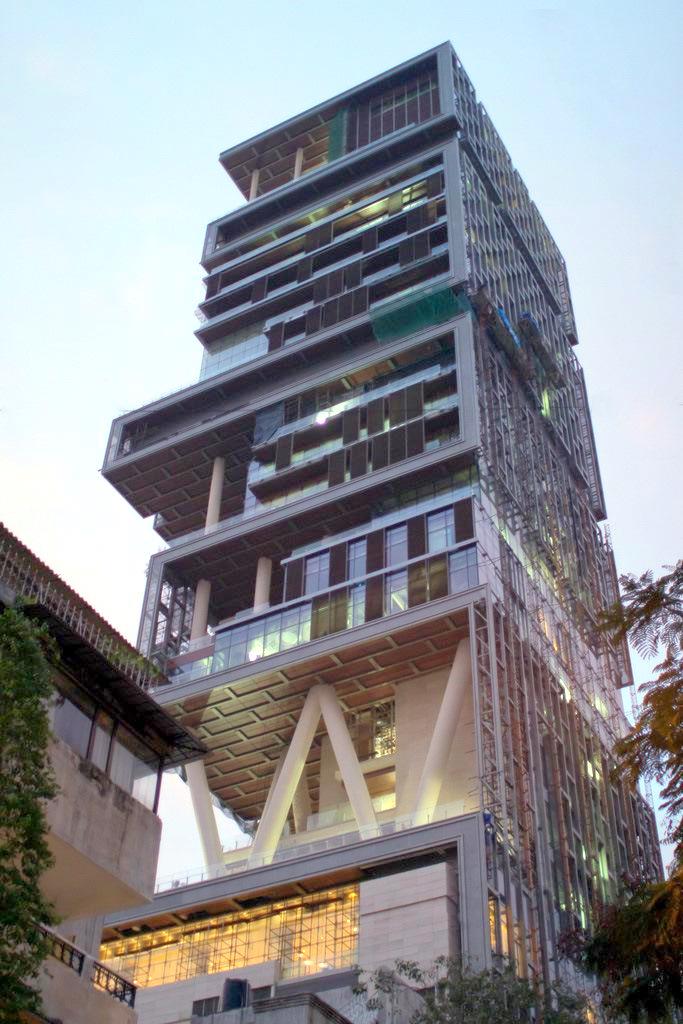
Antilia is the name of a twenty-seven floor personal home in South Mumbai belonging to India’s richest man, Mukesh Ambani, the billionaire Chairman of Reliance Industries (India’s largest private sector conglomerate). The home is staffed by 600 full time employees and houses Ambani, his wife Nita, their three children, and Ambani’s mother. Indian media frequently reported that Antilia is the world’s most expensive home costing US$1 billion. It is named after a mythical island in the Atlantic Ocean. The building is situated on a 4,532 m2 (48,780 sq ft) plot at Altamont Road on the famed Cumballa Hill South Mumbai, where land prices are upward of US$10,000 per square meter.
The structure was designed by U.S. architects using principles of Vaastu, Indian traditional geomancy akin to Chinese feng shui, to maximize ‘positive energy.’ No two floor plans are alike, and the materials used in each level vary widely. The home includes: 400,000 square feet (37,000 m2) of living space; parking space for 168 cars; a one-floor vehicle maintenance facility; 9 elevators in the lobby; 3 helipads and an air traffic control facility; a health spa; a theater with a seating for 50; multiple swimming pools, three floors of hanging gardens, and a ballroom.
Posted in Money, Technology, World |
Leave a Comment »
February 7, 2011
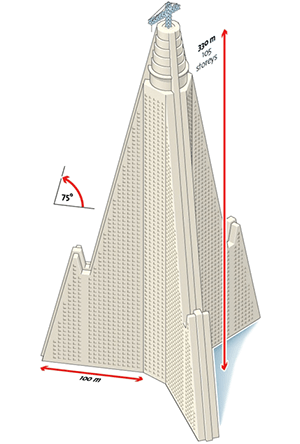
The Ryugyong Hotel is a 105-floor skyscraper under construction in Pyongyang, North Korea. Construction began in 1987, but was halted in 1992 due to the economic disruptions that afflicted the country following the fall of the Soviet Union.
The hotel stood topped out but without windows or interior fittings for the next sixteen years. Construction resumed in April 2008, under the supervision of the Orascom Group of Egypt, which has invested heavily in the North Korean mobile telephony and construction industries.
Posted in Money, Technology, World |
Leave a Comment »







 The Daily Omnivore