February 2, 2011

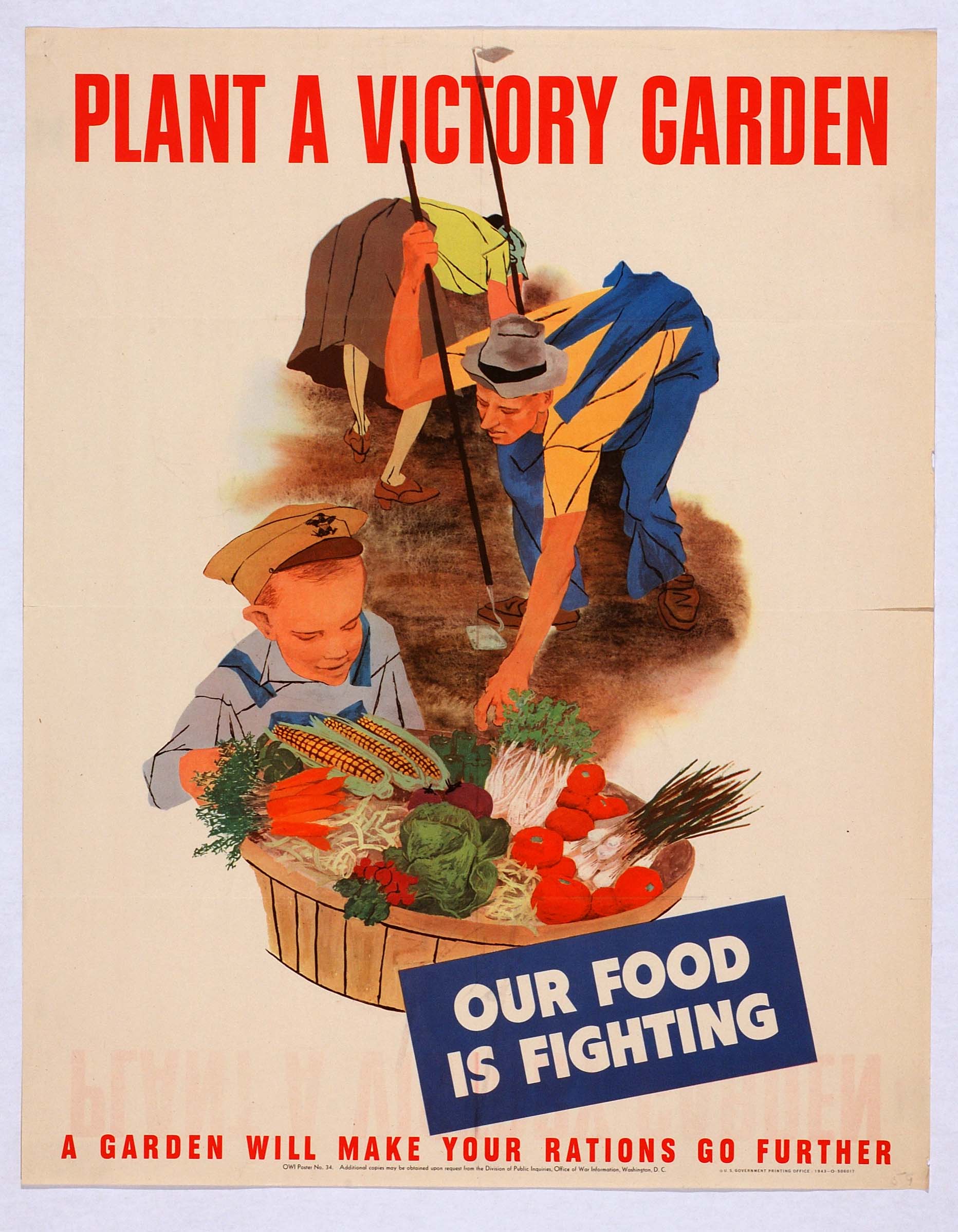
Victory gardens, also called war gardens, were vegetable, fruit and herb gardens planted at private residences and public parks in United States, United Kingdom, Canada and Germany during World War I and World War II to reduce the pressure on the public food supply brought on by the war effort. In addition to indirectly aiding the war effort these gardens were also considered a civil ‘morale booster’ — in that gardeners could feel empowered by their contribution of labor and rewarded by the produce grown. This made victory gardens become a part of daily life on the home front.
Posted in Food, Money, War |
Leave a Comment »
February 2, 2011
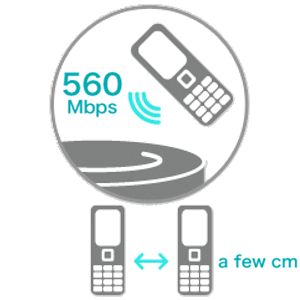
Near field communication or NFC, is a short-range high frequency wireless communication technology which enables the exchange of data between devices over about a 10 centimeters (3.9 in) distance. The technology combines the interface of a smartcard and a reader into a single device. An NFC device can communicate with both existing smartcards and readers, as well as with other NFC devices, and is thereby compatible with existing contactless infrastructure already in use for public transportation and payment. NFC is primarily aimed at usage in mobile phones.
Posted in Money, Technology |
Leave a Comment »
February 1, 2011

A script doctor is a highly-skilled screenwriter, hired by a film or television production, to rewrite or polish specific aspects of an existing screenplay, including structure, characterization, dialogue, pacing, theme, and other elements. Script doctors generally do their work uncredited, for a variety of commercial and artistic reasons. Script doctors are usually brought in during the development and pre-production phases of a film, to address specific issues with the script, as identified by the financiers, production team, and cast. They may also be employed during post production, to help address narrative problems that crop up during the editing process.
The use of script doctors was first revealed at the 1973 Academy Awards when Francis Ford Coppola thanked Robert Towne for his work on The Godfather. Since then, the use of script doctors has been downplayed within the industry, to avoid overshadowing the work of the original writers. Under the WGA screenwriting credit system, a screenwriter must contribute 50 percent to the story and/or characterization in order to qualify for credit. Uncredited screenwriters are not eligible to win the Academy Award for Best Screenplay or the Writers Guild of America Awards.
Posted in Art, Language, Money |
Leave a Comment »
February 1, 2011

In vitro meat, also known as cultured meat, is an animal flesh product that has never been part of a complete, living animal. Several current research projects are growing in vitro meat experimentally, although no meat has yet been produced for public consumption. The first-generation products will most likely be minced meat, and a long-term goal is to grow fully developed muscle tissue. Potentially, any animal’s muscle tissue could be grown through the in vitro process.
Posted in Food, Money, Science |
Leave a Comment »
January 31, 2011

Vajazzling is the act of applying glitter and jewels to a woman’s nether regions for aesthetic purposes.
Posted in Art, Money, Sex |
Leave a Comment »
January 31, 2011

Christian Louboutin (b. 1964) is a footwear designer who launched his line of high-end women’s shoes in France in 1991. Since 1992, his designs have incorporated the shiny, red-lacquered soles that have become his signature. In 2007 Louboutin filed an application for U.S. trademark protection of this red sole design.
Louboutin received inspiration for his lethal-looking stilettos from an incident that occurred in his early 20s. He had visited a museum and noticed that there was a sign forbidding women wearing sharp stilettos from entering for fear of damage to the extensive wood flooring. This image stayed in his mind, and he later used this idea in his designs. ‘I wanted to defy that,’ Louboutin has said. ‘I wanted to create something that broke rules and made women feel confident and empowered.’
Posted in Art, Money |
Leave a Comment »
January 31, 2011
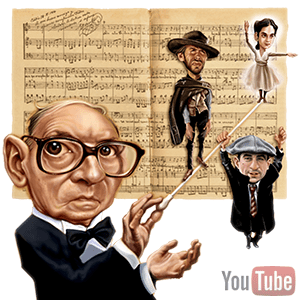
Ennio [en-yo] Morricone [mor-ee-cone-ay] (b. 1928) is an Italian composer and conductor, considered one of the most prolific and influential film composers of his era. He is well-known for his long-term collaborations with international acclaimed directors such as Sergio Leone, Brian De Palma, Barry Levinson, and Giuseppe Tornatore.
He wrote the characteristic film scores of Leone’s Spaghetti Westerns A Fistful of Dollars (1964), For a Few Dollars More (1965), The Good, the Bad and the Ugly (1966) and Once Upon a Time in the West (1968). In the 80s, Morricone composed the scores for John Carpenter’s horror movie The Thing (1982), Leone’s Once Upon a Time in America (1984), Roland Joffé’s The Mission (1986), Brian De Palma’s The Untouchables (1987) and Giuseppe Tornatore’s Cinema Paradiso (1988).
Posted in Art, Money |
Leave a Comment »
January 31, 2011

Spaghetti Western, also known as Italo-western, is a nickname for a broad sub-genre of Western film that emerged in the mid-1960s, so named because most were produced and directed by Italians. The typical team was made up of an Italian director, Italo-Spanish technical staff, and a cast of Italian and Spanish actors, sometimes a fading Hollywood star and sometimes a rising one like the young Clint Eastwood in three of Sergio Leone’s films. The films were typically shot in inexpensive locales resembling the American Southwest, primarily the Andalusia region of Spain, Almería, Sardinia, and Abruzzo.
Because of the desert setting and the readily available low-cost southern Spanish or southern Italian extras, typical themes in spaghetti westerns include the Mexican Revolution, Mexican bandits, and the border region shared by Mexico and the United States. Originally, spaghetti westerns were characterized by their production in the Italian language, low budgets, and a recognizable highly fluid and minimalist cinematography which eschewed many of the conventions of earlier Westerns. This was partly intentional and partly the context of a different cultural background.
Posted in Art, Money, World |
Leave a Comment »
January 28, 2011
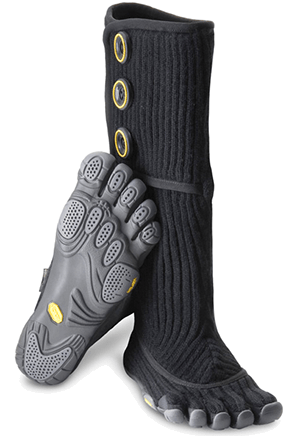
FiveFingers are a type of shoe manufactured by Vibram. Originally developed as a ‘barefoot alternative’ for sailing and climbing, the footwear has thin, flexible soles that are contoured to the shape of the human foot, including visible individual sections for the toes. Vibram FiveFingers are meant to replicate being barefoot and allow for the natural biomechanics of the foot to work.
Posted in Health, Money, Technology |
Leave a Comment »
January 28, 2011

The Heineken WOBO (World Bottle) was a beer bottle designed for use as a building material in the developing world. According to the company, when brewing magnate Alfred Heineken was in Curaçao in 1960 he saw many bottles littering the beach because the island had no economic means of returning them to bottling plants. He was also concerned with the lack of affordable building materials and the inadequate living conditions plaguing Curaçao’s lower-class. Envisioning a solution for these problems, he asked Dutch architect N. John Habraken to design what he called ‘a brick that holds beer.’
The bottle was designed to be interlocking, laid horizontally and bonded with cement mortar with a silicon additive. A 10 ft (3.0 m) x 10 ft (3.0 m) shack would take approximately 1,000 bottles to build. In 1963, 100,000 WOBO’s were produced in two sizes, 350 and 500 mm. This size difference was necessary in order to bond the bottles when building a wall, in the same way as a half brick is necessary when building with bricks. Unfortunately, most of them were destroyed, and they are now very rare and have become a collector’s item.
Posted in Food, Money, Technology |
Leave a Comment »
January 26, 2011

The Shard is an 87-story skyscraper in London that forms part of the London Bridge Quarter development. The Shard’s construction began in 2009 and finished in late 2012. Standing approximately 306 metrs (1,004 ft) high, it is currently the tallest building in the European Union. It is the second-tallest freestanding structure in the UK, after the concrete tower at the Emley Moor transmitting station.
It was designed by the Italian architect Renzo Piano, and replaced Southwark Towers, a 24-story office block built on the site in Southwark in 1975. The Shard was developed by Sellar Property on behalf of LBQ Ltd, and is jointly owned by Sellar Property and the State of Qatar.
Posted in Art, Money, Technology |
Leave a Comment »
January 26, 2011

In computer terminology, a honeypot is a trap set to detect, deflect, or in some manner counteract attempts at unauthorized use of information systems. Generally it consists of a computer, data, or a network site that appears to be part of a network, but is actually isolated and monitored, and which seems to contain information or a resource of value to attackers.
A honeypot is valuable as a surveillance and early-warning tool. They should have no production value, and hence should not see any legitimate traffic or activity. Whatever they capture is therefore malicious or unauthorized. One practical application of this is a honeypot that thwarts spam by masquerading as a type of system abused by spammers. Honeypots can carry risks to a network, and must be handled with care. If they are not properly walled off, an attacker can use them to break into a system.
Posted in Language, Money, Technology |
Leave a Comment »