January 20, 2011

A mashup is a song or composition created by blending two or more pre-recorded songs, usually by overlaying the vocal track of one song seamlessly over the instrumental track of another. To the extent that such works are ‘transformative’ of original content, they may find protection from copyright claims under the ‘fair use’ doctrine. Though the term ‘bastard pop’ first became popular in 2001, the practice of assembling new songs from purloined elements of other tracks stretches back to the beginnings of recorded music.
If one extends the definition beyond the realm of pop, precursors can be found in Musique concrète, as well as the classical practice of (re-)arranging traditional folk material and the jazz tradition of reinterpreting standards. In addition, many elements of bastard pop culture have antecedents in hip hop and the DIY ethic of punk.
Posted in Art, Money, Politics |
Leave a Comment »
January 20, 2011

Archie Meets the Punisher or The Punisher Meets Archie was a one-shot comic book intercompany crossover published under two separate covers by Marvel Comics and Archie Comics in 1994. It featured the unlikely meeting of Marvel’s murderous vigilante, the Punisher, and Archie Comics’ all-American teenager, Archie Andrews. The book was written by Batton Lash, with artwork by John Buscema (drawing the Punisher characters) and Stan Goldberg (drawing the Archie characters).
Posted in Art, Humor, Money |
Leave a Comment »
January 19, 2011

Leprosy colony money was special money which circulated only in leprosy sanatoriums due to the fear that the leprosy bacteria would infect other people. Leprosy, however, is in fact not easily transmitted by casual contact, and such transmission as there is only happens through long term, constant and intimate contact with leprosy sufferers and not contact with everyday objects used by sufferers. The system of special colony money was used between 1901 and around 1955.
Posted in Health, Money |
Leave a Comment »
January 19, 2011

OK Soda was a soft drink created by Coca-Cola in 1993 that aggressively courted the Generation X demographic with unusual advertising tactics, including endorsements and even outright negative publicity. It did not sell well in select test markets and was officially declared out of production in 1995 before reaching nation-wide distribution.
The drink’s slogan was ‘Things are going to be OK.’ The project was cancelled by Coca-Cola just seven months after its kickoff, and the soft drink was never widely released to the public.
read more »
Posted in Food, Money, Politics |
1 Comment »
January 19, 2011

The prosperity gospel is a religious belief found among Christians, primarily in the United States, centered on the notion that God provides material prosperity for those he favors. It has been defined by the belief that ‘Jesus blesses believers with riches’ or more specifically as the teaching that ‘believers have a right to the blessings of health and wealth and that they can obtain these blessings through positive confessions of faith and the ‘sowing of seeds’ through the faithful payments of tithes and offerings.’
It is not a clearly defined denomination, but a strain of belief that runs through the Pentecostal Church and a number of mainstream evangelical churches, with varying degrees of intensity. It arose in the United States after World War II championed by Oral Roberts and became particularly popular in the decade of the 1990s.
Posted in Money, Philosophy |
Leave a Comment »
January 19, 2011
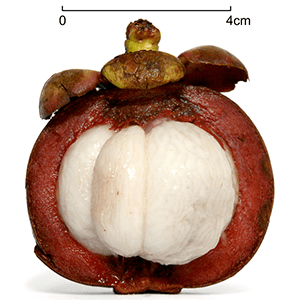
The purple mangosteen [mang-guh-steen] is a tropical evergreen tree believed to have originated in Indonesia. The rind (exocarp) of the edible fruit is deep reddish purple when ripe. Botanically an aril (like pomegranate fruit), the fragrant edible flesh can be described as sweet and tangy, citrusy with a flavour and texture similar to a peach. It is sometimes called the ‘Queen of Fruit,’ owing to an apocryphal legend of Queen Victoria offering a reward of 100 pounds sterling to anyone who could deliver to her a fresh mangosteen. An ultratropical tree, the mangosteen must be grown in consistently warm conditions, as exposure to temperatures below freezing for prolonged periods will generally kill a mature plant. Experienced horticulturists have grown this species outdoors, and brought them to fruit in extreme South Florida.
Due to restrictions on imports, mangosteen is not readily available in certain countries. Although available in Australia, for example, they are still rare in the produce sections of grocery stores in North America and Europe. Beginning in 2007 for the first time, fresh mangosteens were sold from specialty produce stores in New York City for as high as $45 per pound, but wider availability and lower prices have become common in the United States and Canada. Before ripening, the mangosteen shell is fibrous and firm, but becomes soft and easy to pry open when the fruit ripens.
Posted in Food, Money |
Leave a Comment »
January 19, 2011

A pin-up girl is a model whose mass-produced pictures see wide appeal as popular culture. Pin-ups are intended for informal display, e.g. meant to be ‘pinned-up’ on a wall. Pin-up girls may be glamour models, fashion models, or actresses. The term pin-up may also refer to drawings, paintings, and other illustrations done in emulation of these photos.
The term was first attested to in English in 1941; however, the practice is documented back at least to the 1890s. The pin-up images could be cut out of magazines or newspapers, or be from postcard or chromo-lithographs, and so on. Such photos often appear on calendars, which are meant to be pinned up anyway. Pin-ups are also referred to as ‘cheesecakes’ the male counterpart being ‘beefcake.’
read more »
Posted in Money, Politics, Sex |
Leave a Comment »
January 18, 2011

The YikeBike mini-farthing is a folding electric bicycle. It weighs 9.8 kilograms (22 lb) and when folded, it is small enough to fit in a backpack. The YikeBike was invented by Grant Ryan and designed by a team in New Zealand over 5 years. It is the smallest and lightest electric folding bicycle in the world and retails for $3595 US.
The vehicle has no chain pedal, gear box, mechanical brake, cables or levers. These functions are provided by a 1.2 kW electric motor and controller. The YikeBike has electronic anti-skid brakes. There are also built-in lights, indicators and brake lights for safety. Top speed is 15 miles per hour, and the bike can travel about six miles per charge.
Posted in Money, Technology, World |
Leave a Comment »
January 18, 2011

Daiwa House is Japans largest homebuilder, specializing in prefabricated houses. It was founded in 1955 in Osaka. The Emergency Disaster Vehicle o1 (EDV-01) is a Daiwa concept habitat. It is an easily transported, self-contained shelter and amenities to be deployed during a disaster.
Once in place, the top portion of the EDV expands, doubling the space. This second level is a living area with beds and a desk. The first floor is contains the necessities: a water-free toilet, functional kitchen, refrigerator, and a bathroom with shower. The unit is completely self-sufficient, using roof-mounted solar panels, ambient water-vapor condensers, and fuel cells to provide a livable space. The EDV-01 also generates its own fuel, hydrogen, through electrolysis.
Posted in Money, Technology, World |
Leave a Comment »
January 18, 2011

The Union: The Business Behind Getting High is a 2007 documentary film by Canadian filmmaker Brett Harvey. The film explores the illegal growth, sale and trafficking of marijuana. The film follows host Adam Scorgie as he examines the underground market, interviewing growers, police officers, criminologists, economists, doctors, politicians and pop culture icons, revealing how the industry can function despite being a criminal enterprise.
The history of marijuana and the reasons for its present prohibition are discussed, often comparing it to the prohibition of alcohol in the United States in the 1920s, suggesting that gang drug warfare and other negative aspects associated with marijuana are a result of prohibition, not the drug itself. The gangs that grow and traffic the drugs are likened to those that appeared in major U.S. cities during the Prohibition, with the intention of profiting from the sale of illegal alcohol.
Posted in Drugs, Money, Politics |
Leave a Comment »
January 18, 2011


Gainclone or chipamp is a term commonly used to describe a type of audio amplifier made by do-it-yourselfers. The Gainclone is probably the most commonly built and well-known amplifier project amongst hobbyists. It is simple to build and involves only a few readily accessible, inexpensive parts.
In 1999, 47 Labs introduced the Gaincard amplifier, which had fewer parts, less capacitance and simpler construction than anything preceding it. The DIY community started building replicas or ‘clones’ of the Gaincard using integrated circuits from National Semiconductor and other manufacturers. Most designs are very effective and produce high quality sound, even though some audiophiles consider chip-based amplifiers to be inferior to their discrete counterparts.
Posted in Art, Money, Technology |
Leave a Comment »
January 18, 2011

Slab City is a camp in the Colorado Desert in southeastern California, used by RV owners and squatters. It takes its name from the concrete slabs and pylons that remain from abandoned World War II Marine barracks (Camp Dunlap). A group of servicemen remained after the base closed, and the place has been inhabited ever since (although the number of residents has declined since the mid 1980s). Several thousand campers, many of them retired, use the site during the winter months. These ‘snowbirds’ stay only for the winter, before migrating north in the spring to cooler climates. The temperatures during the summer are unforgiving; nonetheless, there is a group of around 150 permanent residents.
Most ‘Slabbers’ subsist on welfare and have been driven to the Slabs through poverty. The site is both decommissioned and uncontrolled, and there is no charge for parking. The camp has no electricity, no running water or other services. Many campers use generators or solar panels. Supplies can be purchased in nearby Niland, California, located about three miles away. Located just east of State Route 111, the entrance to Slab City is easily recognized by the colorful Salvation Mountain, a small hill approximately three stories high which is entirely covered in acrylic paint, concrete and adobe and festooned with Bible verses. It is an ongoing project of over two decades by permanent resident Leonard Knight.
Posted in Money, Politics |
Leave a Comment »