January 6, 2011

The TI-83 series of graphing calculators is manufactured by Texas Instruments. The original TI-83 is itself an upgraded version of the TI-82. Released in 1996, it is one of the most used graphing calculators for students. TI replaced the TI-83 with the TI-83 Plus calculator in 1999, which included flash memory, enabling the device’s operating system to be updated if needed, or for large new Flash Applications to be stored, accessible through a new Apps key.
The Flash memory can also be used to store user programs and data. In 2001 the TI-83 Plus Silver Edition was released, which featured approximately nine times the available Flash memory, and over twice the processing speed (15 MHz) of a standard TI-83 Plus.
Posted in Education, Money, Technology |
Leave a Comment »
January 6, 2011

Palladium [puh-ley-dee-uhm] is a chemical element with the chemical symbol Pd and an atomic number of 46. Palladium is a rare and lustrous silvery-white metal that was discovered in 1803 by William Hyde Wollaston, who named it after the asteroid Pallas, which was named after the epithet of the Greek goddess Athena, acquired by her when she slew Pallas.
Palladium, along with platinum, rhodium, ruthenium, iridium and osmium form a group of elements referred to as the platinum group metals (PGMs). Platinum group metals share similar chemical properties, but palladium has the lowest melting point and is the least dense of these precious metals.
read more »
Posted in Money, Science |
Leave a Comment »
January 6, 2011


A hallmark is an official mark or series of marks struck on items made of precious metals — platinum, gold, silver and in some nations, palladium. In a more general sense, the term hallmark can also be used to refer to any distinguishing characteristic or trait Historically, hallmarks were applied by a trusted party: the ‘guardians of the craft’ or nowadays by an assay office.
Hallmarks are a guarantee of certain purity or fineness of the metal as determined by formal metal (assay) testing. Hallmarks are often confused with ‘trademarks’ or ‘maker’s mark.’ Hallmarks are an official mark of guaranteed metal content, trademarks are the mark of a manufacturer to distinguish his products from other manufacturers’ products.
Posted in Money, Politics |
Leave a Comment »
January 6, 2011

The MGB is a sports car launched by MG Cars in 1962 to replace the MGA and manufactured until 1980. The MGB was a relatively modern design at the time of its introduction. It utilized a monocoque structure that reduced both weight and manufacturing costs as well as adding chassis strength. This was a considerable improvement on traditional body-on-frame construction. The MGB’s performance was brisk for the period, with a 0–60 mph time of just over 11 seconds, aided by the relatively light weight of the car. Handling was one of the MGB’s strong points. The 3-bearing 1798 cc B-Series engine produced 95 hp (71 kW) at 5,400 rpm.
In 1974, as US air pollution emission standards became more rigorous, US-market MGBs were de-tuned for compliance. As well as a marked reduction in performance, the MGB gained an inch in ride height and the distinctive rubber bumpers which came to replace the chrome for all markets. Nearly half million MGBs were produced and about a third of them remain today (on the roads and garages of their owners). With plenty of cars available and a large supply of reasonably priced parts, MGBs are very inexpensive cars. Prices fluctuate depending of year and condition, early chrome-bumper cars and MGB GTs carrying a premium.
Posted in Money, Technology |
1 Comment »
January 6, 2011


Hammacher Schlemmer is a retailer and mail order dealer founded in 1848. They claim to be the oldest continuously published catalog in the United States, with annual catalog circulation exceeding 30 million.
read more »
Posted in Money, Technology |
Leave a Comment »
January 6, 2011

Herbert Vogel (b. 1922) and Dorothy Vogel (b. 1935) are American art collectors. Herbert worked as a clerk for the United States Postal Service. Dorothy was a librarian employed by the Brooklyn Public Library. Together they built a large and impressive contemporary art collection on their modest income. Though their focus is conceptual art and minimalist art, the collection also includes noteworthy post-minimalist work.
They amassed a collection of over 4,782 works, which they kept in their New York City apartment. In 1992, they decided to transfer the entire collection to the National Gallery of Art. More recently, in late 2008, they launched The Dorothy and Herbert Vogel Collection: Fifty Works for Fifty States along with the National Gallery of Art, the National Endowment for the Arts, and the Institute of Museum and Library Services. The program will donate 2,500 works to 50 institutions across 50 states and will be accompanied by a book with the same name.
Posted in Art, Money |
Leave a Comment »
January 5, 2011


Shepard Fairey (b. 1970) is a contemporary artist, graphic designer, and illustrator who emerged from the American skateboarding scene. He first became known for his ‘André the Giant Has a Posse’ (…OBEY…) sticker campaign, in which he appropriated images from the comedic supermarket tabloid ‘Weekly World News.’ His work became more widely known in the 2008 U.S. presidential election, specifically his Barack Obama ‘HOPE’ poster.
Fairey’s first art museum exhibition, titled ‘Supply & Demand’ like his earlier book, was in Boston at the Institute of Contemporary Art in the summer of 2009. The exhibition featured over 250 works in a wide variety of media: screen prints, stencils, stickers, rubylith illustrations, collages, and works on wood, metal and canvas. As a complement to the ICA exhibition, Fairey created public art works around Boston. The artist explains his driving motivation: ‘The real message behind most of my work is ‘question everything.”
read more »
Posted in Art, Money, Politics |
Leave a Comment »
January 5, 2011

Tower Optical is a small, Connecticut-based company which has manufactured a binocular tower viewer used at major tourist sites in the United States and Canada since 1932. The company’s large, silver-colored devices are used at Niagara Falls, the Empire State Building, the Golden Gate Bridge and other locations. Only about 35 of the viewers are manufactured each year, but several thousand are maintained by the company. Tower Optical has various arrangements with owners of the sites where the devices are located. Where the viewers are free, they are leased; at other locations, revenue is shared between the company and the site owner.
Each machine can hold up to 2,000 quarters, and earns somewhere between $1,200 and $10,000 per year. The company was founded by Towers S. Hamilton in 1933 in his Norwalk machine shop. His son, Towers W. Hamilton, later became the owner. His wife, Gladys (Kip) Hamilton, worked with him in the business for many years and on his death in 1989, she took over the company. She died in 2006, and at some point she passed the business on to her daughter, Bonnie Rising, who still owned the company as of 2010, when she had six employees, including her son, Gregory, and her husband, Douglas.
Posted in Money, Technology |
Leave a Comment »
January 3, 2011


Academi (previously known as Xe Services and Blackwater Worldwide)—is a private military company founded in 1997 by former Navy SEALs Erik Prince and Al Clark. Academi is currently the largest of the U.S. State Department’s three private security contractors, and provided diplomatic security services in Iraq to the United States federal government on a contractual basis. Academi also has a research and development wing that was responsible for developing the Grizzly APC (an armored urban combat vehicle) along with other military technology. The company’s headquarters is located in Arlington County, Virginia.
In explaining Blackwater’s purpose in 1997, Prince stated that ‘We are trying to do for the national security apparatus what FedEx did for the Postal Service.’ Blackwater USA received its first government contract after the bombing of the USS Cole off of the coast of Yemen in October 2000. Blackwater trained over 100,000 sailors. Documents obtained from the Iraq War documents leak of 2010 argue that Blackwater employees committed serious abuses in Iraq, including killing civilians.
read more »
Posted in Money, Politics, War |
Leave a Comment »
January 3, 2011

Personal rapid transit (PRT), also called personal automated transport (PAT) or podcar, is a public transportation mode featuring small automated vehicles operating on a network of specially-built guide ways. PRT is a type of automated guideway transit (AGT), which also includes systems with larger vehicles, all the way to small subway systems.
read more »
Posted in Money, Technology |
Leave a Comment »
January 3, 2011

Masdar (Arabic for ‘source’) is a project in Abu Dhabi, in the United Arab Emirates. Its core is a planned city, designed by the British architectural firm Foster + Partners. Masdar City will rely entirely on solar energy and other renewable energy sources, with a sustainable, zero-carbon, zero-waste ecology, and is designated as a car-free zone.
It is being built by the Abu Dhabi Future Energy Company, a subsidiary of Mubadala Development Company, with the majority of seed capital provided by the government of Abu Dhabi. Construction is underway 11 mi east-south-east of the city of Abu Dhabi, beside Abu Dhabi International Airport. Skeptics are concerned that the city will be only symbolic for Abu Dhabi, and that it may become just a luxury development for the wealthy, a city sized gated community.
read more »
Posted in Money, Technology, World |
Leave a Comment »
January 2, 2011
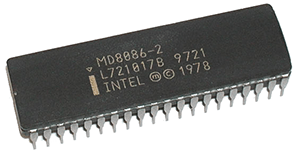

x86 refers to a family of instruction sets based on the 8086 CPU, which was launched by Intel in 1978. The architecture has been implemented in processors from Intel, Cyrix, AMD, VIA, and many others, and is still dominant in the microprocessor market. An instruction set is a list of all the instructions that a processor can execute (e.g. add, subtract, move, load, store, etc.). Many additions and extensions have been added to the x86 instruction set over the years, almost consistently with full backward compatibility.
There have been several attempts, also within Intel itself, to break the market dominance of the inelegant x86 architecture that descended directly from the first simple 8-bit microprocessors. But, continuous refinement of x86 microarchitectures, circuitry, and semiconductor manufacturing have made x86 hard to replace. The scalability of x86 chips such as the eight-core Intel Xeon and 12-core AMD Opteron is underlining x86 as an example of how continuous refinement of established industry standards can resist the competition from completely new architectures.
Posted in Money, Technology |
Leave a Comment »




 The Daily Omnivore