December 3, 2010

The Omnivore’s Dilemma: A Natural History of Four Meals is a nonfiction book by Michael Pollan published in 2006.
As omnivores – the most unselective eaters – humans are faced with a wide variety of food choices, resulting in a dilemma. Pollan investigates industrial food, organic food, and foraged food.
read more »
Posted in Food, Money, Politics |
Leave a Comment »
December 3, 2010

The Masters of Beef Advocacy (MBA) is an industry-funded program that trains college students to promote agribusiness. Since its launch in March 2009, the MBA has trained nearly 3,000 students and farmers to spread the ‘positive beef message.’ Daren Williams, the communications director for the National Cattlemen’s Beef Association, helped start the MBA with $240,000 from the Beef Checkoff program.
The MBA program is a self-directed online training program designed to equip beef producers and industry allies with the information they need to be everyday advocates for the beef industry. MBA candidates will be required to complete six courses in beef advocacy, including: Modern Beef Production, Animal Care, Beef Safety, Beef Nutrition, and Environmental Stewardship.
Posted in Food, Money, Politics |
Leave a Comment »
December 3, 2010

Checkoff organizations collect funds, sometimes called checkoff dollars, from producers of a particular agricultural commodity and uses these funds to promote and do research on the commodity. The organizations must promote their commodity in a generic way, without reference to a particular producer. These organizations are responsible for familiar American advertising campaigns, including ‘Milk Does a Body Good,’ ‘Got Milk?’, ‘Pork. The Other White Meat,’ ‘The Incredible, Edible Egg,’ and ‘Beef: It’s What’s for Dinner.’
read more »
Posted in Food, Money, Politics |
Leave a Comment »
December 1, 2010
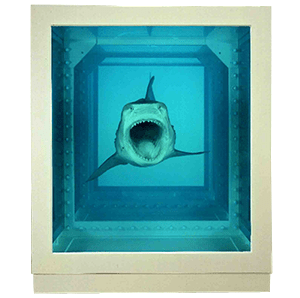

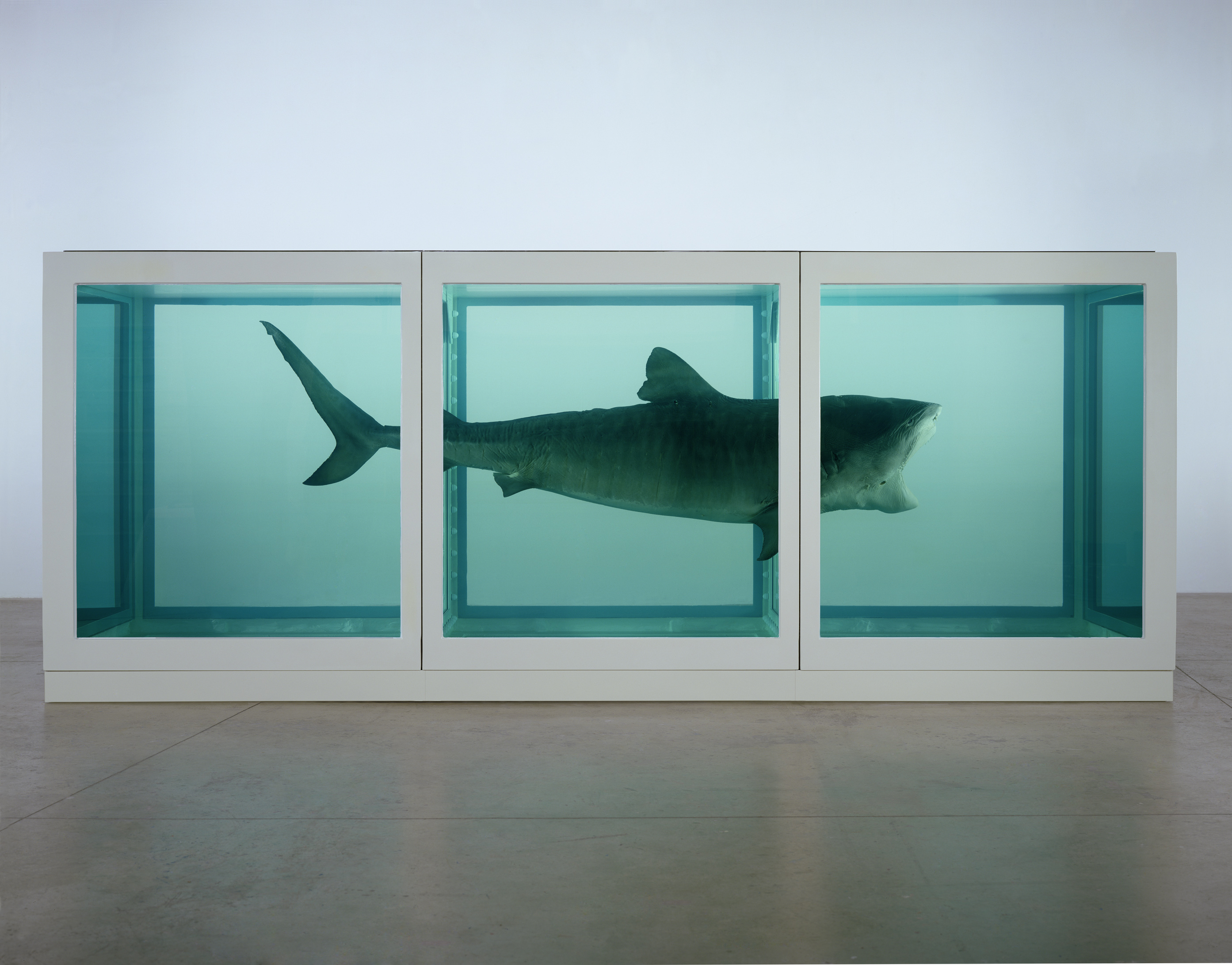
The Physical Impossibility of Death in the Mind of Someone Living is an artwork created in 1992 by Damien Hirst, an English artist and a leading member of the ‘Young British Artists’ (YBA). It consists of a tiger shark preserved in formaldehyde in a vitrine. It was originally commissioned in 1991 by Charles Saatchi, who sold it in 2004, to Steven A. Cohen for an undisclosed amount, widely reported to have been $8 – 12 million dollars.
Due to deterioration of the original 14-foot tiger shark, it was replaced with a new specimen in 2006. It is on display at the Metropolitan Museum of Art in New York City until 2010.
Posted in Art, Money |
Leave a Comment »
December 1, 2010

Asteroid mining refers to exploiting raw materials from asteroids and planetoids in space, especially near-Earth objects. Minerals and volatiles could be mined from an asteroid or spent comet to provide space construction material (e.g., iron, nickel, titanium), to extract water and oxygen to sustain the lives of prospector-astronauts on site, as well as hydrogen and oxygen for use as rocket fuel. In space exploration, these activities are referred to as in-situ resource utilization.
A relatively small metallic asteroid with a diameter of 1 mile contains more than $20 trillion US dollars worth of industrial and precious metals. The gold, cobalt, iron, manganese, nickel, palladium, platinum, and other metals that we now mine from the Earth’s crust, and that are essential for economic and technological progress, came originally from the rain of asteroids that struck the primordial Earth. Earth’s massive gravity pulled all such siderophilic (iron loving) elements into the planet’s core during its molten youth more than four billion years ago. Initially, this left the crust utterly depleted of such valuable elements. Asteroid impacts re-infused the depleted crust with metals.
Posted in Money, Science, Technology |
Leave a Comment »
December 1, 2010

Landfill mining and reclamation (LFMR) is the excavation and processing of solid wastes which have previously been landfilled to reduce the amount of landfill mass encapsulated within the closed landfill and/or to remove hazardous materials. In the process, mining recovers valuable recyclable materials, a combustible leachate (liquid that, in passing through matter, extracts solutes, suspended solids or any other component of the material through which it has passed), soil, and landfill space.
The aeration of the landfill soil is a secondary benefit regarding the landfill’s future use, and the combustible leachate is useful for the generation of power. The concept was introduced as early as 1953 at the Hiriya landfill near the city of Tel Aviv, Israel. Waste contains many resources with high value, the most notable of which are non-ferrous metals such as aluminium cans and scrap metal. The concentration of aluminium in many landfills is higher than the concentration of aluminum in bauxite from which the metal is derived.
Posted in Money, Technology |
Leave a Comment »
November 22, 2010

Elsa Schiaparelli [skap-uh-rel-ee] (1890 — 1973) was an Italian fashion designer. Along with Coco Chanel, her greatest rival, she is regarded as one of the most prominent figures in fashion in the early 20th century. Starting with knitwear, Schiaparelli’s designs were heavily influenced by surrealists like her collaborators Salvador Dalí and Alberto Giacometti. Her clients included the heiress Daisy Fellowes and actress Mae West. Schiaparelli did not adapt to the changes in fashion following World War II and her business closed in 1954.
read more »
Posted in Art, Money, World |
Leave a Comment »
November 22, 2010

Givaudan is a Swiss manufacturer of flavorings and fragrances. As of 2008, it is the world’s largest company in the industry. The company’s scents and flavors are developed most often for food and beverage makers, but they are also used frequently in household goods, as well as grooming and personal care products.
Givaudan’s flavors and solutions are usually custom-made and, like their competitors’ formulas, always sold under strict confidentiality agreements. Major competitors include Firmenich, International Flavors and Fragrances, and Symrise. Givaudan was founded as a perfumery company in 1895 in Zurich by Leon and Xavier Givaudan, although some parts of the modern company date back as far as 1796.
Posted in Money, Technology, World |
Leave a Comment »
November 20, 2010

Zero Halliburton is a company which manufactures hard-wearing travel cases and briefcases, mainly out of aluminum that have appeared in over 200 Hollywood movies and television shows, often as a MacGuffin (plot element). In addition to aluminum, Zero Halliburton cases are available in polycarbonate and Texalium (an aluminum-coated fiberglass). Famously, the Nuclear Football, the briefcase containing the launch codes the President of the United States would use to order a nuclear strike, is a modified Zero Halliburton case.
It was originally a Los Angeles metal fabrication company called Zierold, which in 1946 changed its name to Zero Corporation. In 1952 Zero, which until then had no relation to Halliburton, bought the luggage division of Halliburton, the Texas oilfield services company. Today, Zero Halliburton is a wholly-owned subsidiary of Japanese luggage manufacturer ACE. Erle P. Halliburton, the founder of Halliburton, had commissioned the aluminum case in 1938 from aircraft engineers because other luggage could not endure the rough travel through Texas oil fields in a pickup truck. In addition to being more durable than a leather or cloth case due to its rigidity, the aluminum case seals tightly against dust and water.
Posted in Money, Technology |
Leave a Comment »
November 19, 2010

Stephen Wozniak (b. 1950) is an American computer engineer who co-founded Apple Computer, Inc. with Steve Jobs and Ronald Wayne. His inventions and machines are credited with contributing significantly to the personal computer revolution of the 1970s. Wozniak created the Apple I and Apple II computers in the mid-1970s. Wozniak lives in Los Gatos, California. He is a member of a Segway Polo team, the Silicon Valley Aftershocks. His favorite video game is Tetris.] In the 1990s he submitted so many high scores for the game to Nintendo Power that they would no longer print his scores, so he started sending them in under the alphabetically reversed ‘Evets Kainzow.’
In 1980, Apple went public and made Jobs and Wozniak multimillionaires. However, Jobs had refused to allow some employees of Apple to receive stock options, so Wozniak decided to share some of his founder stock with the rest of the team by either giving them away for free or at a heavily discounted price. This was dubbed ‘The Woz Plan.’ Wozniak permanently ended his full-time employment with Apple in 1987, 12 years after creating the company. He still remains an employee (and receives a paycheck) and is a shareholder. He presently works for Fusion-io, a data storage and server company, in Salt Lake City, Utah as their chief scientist.
Posted in Money, Technology |
Leave a Comment »
November 19, 2010

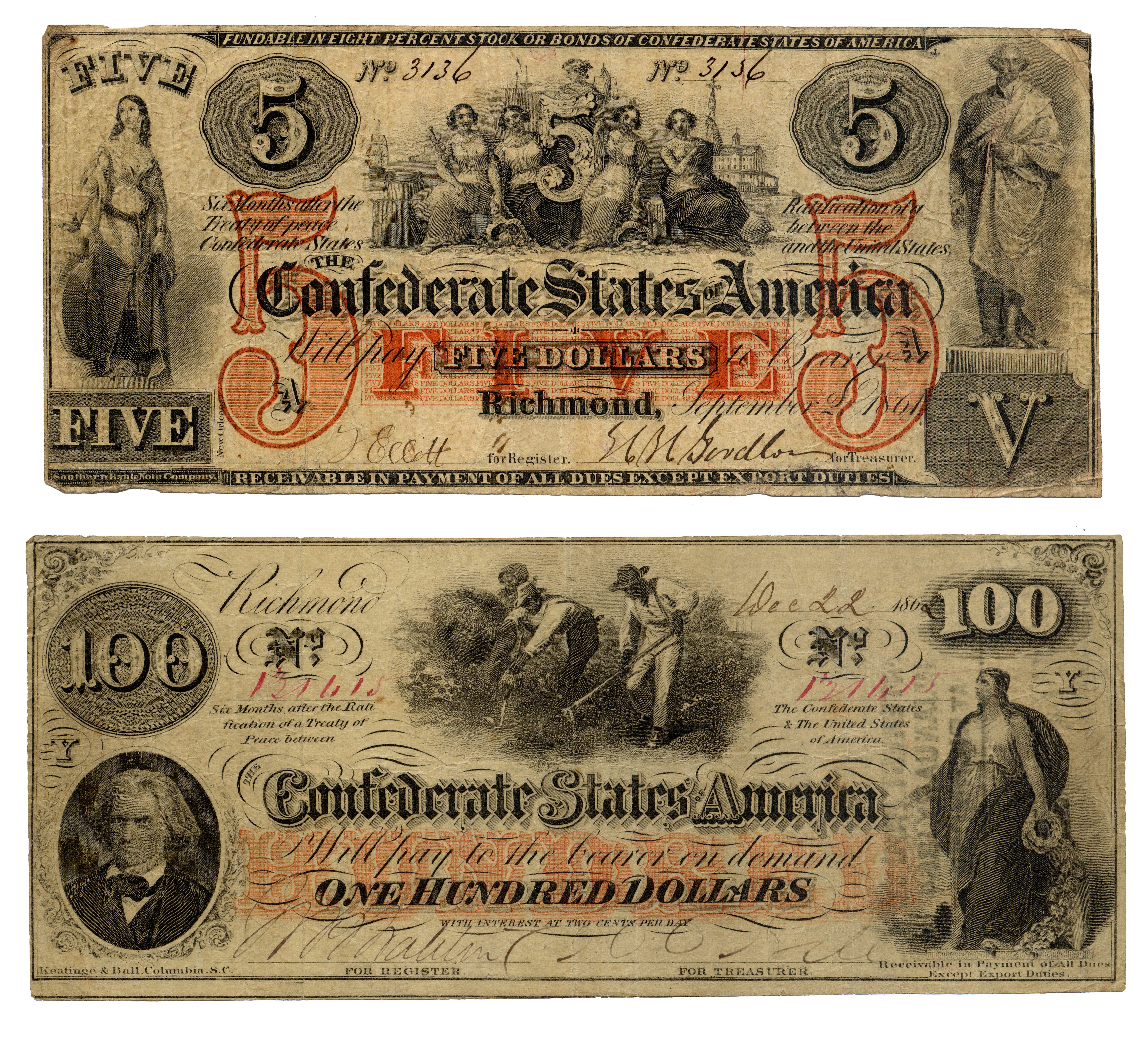
The Confederate States of America dollar was first issued into circulation in April 1861, when the Confederacy was only two months old, and on the eve of the outbreak of the Civil War. At first, Confederate currency was accepted throughout the South as a medium of exchange with high purchasing power. As the war progressed, however, confidence in the ultimate success waned, the amount of paper money increased, and their dates of redemption were extended further into the future.
The inevitable result was depreciation of the currency, and soaring prices characteristic of inflation. For example, by the end of the war, a cake of soap could sell for as much as $50 and an ordinary suit of clothes was $2,700. Near the end of the war, the currency became practically worthless as a medium of exchange. When the Confederacy ceased to exist as a political entity at the end of the war, the money lost all value as fiat currency.
Posted in Money, Politics, War |
3 Comments »
November 18, 2010

Troma Entertainment is an American independent film production and distribution company founded by Lloyd Kaufman and Michael Herz in 1974. The company produces low-budget independent movies that play on 1950s horror with elements of farce. Many Troma films contain social commentary and have developed cult followings. Troma films are B-movies known for their surrealistic nature, along with their use of shocking imagery. They typically contain overt sexuality, graphic violence, gore and nudity, so much that the term ‘Troma Film’ has become synonymous with these characteristics.
Troma’s slogan is ‘Movies of the Future.’ Troma is also known for reusing the same props, actors, and scenes over and over again. Examples include a severed leg, a penis Monster, and the flipping/exploding car filmed for the movie ‘Sgt. Kabukiman, NYPD,’ which is used in place of any other car that needs to crash and explode. Troma produced or acquired many early films featuring several rising talents, such as Carmen Elektra (‘The Chosen One’), Billy Bob Thornton (‘Chopper Chicks in Zombietown’), Vanna White (‘Graduation Day’), Kevin Costner (‘Sizzle Beach, U.S.A.’), Samuel L. Jackson (‘Def by Temptation’), Marisa Tomei (‘The Toxic Avenger’), Vincent D’Onofrio (‘The First Turn-On!’), ‘Paul Sorvino’ (Cry Uncle), Trey Parker and Matt Stone (‘Cannibal! The Musical’), before they were discovered.
Posted in Art, Humor, Money |
Leave a Comment »



 The Daily Omnivore